

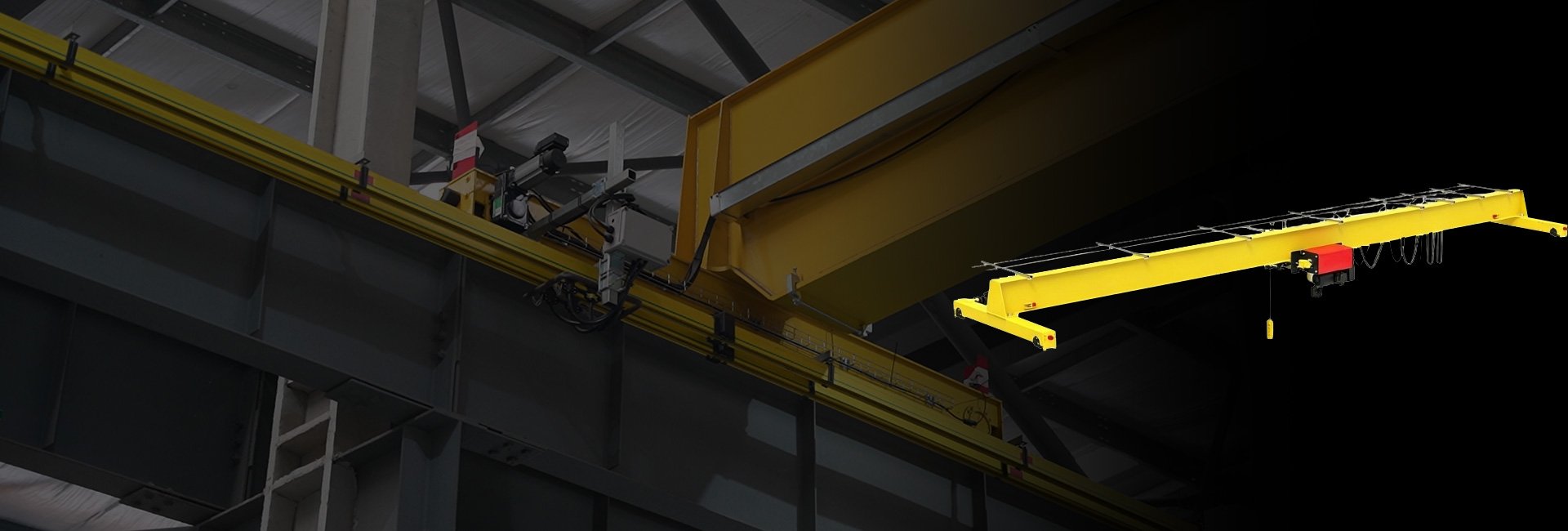
DINGYA - A Reliable 3 Ton Bridge Crane Manufacturer from China
DINGYA’s 3 ton bridge crane is specifically designed for efficient and precise material handling in workshops, warehouses, and assembly lines in light manufacturing plants. Its compact design allows for smooth operation in confined spaces, while its stable travel motion effectively minimizes load sway during frequent lifting operations.
As an experienced Chinese manufacturer of 3 ton bridge cranes, DINGYA offers optimized steel fabrication processes, professionally tailored electrical systems, and strict quality inspections to ensure the 3 ton bridge crane’s long-term, stable operation. Throughout our partnership, our engineering team provides layout drawings and prompt technical support to help you shorten project timelines and simplify installation coordination.
Products by Features
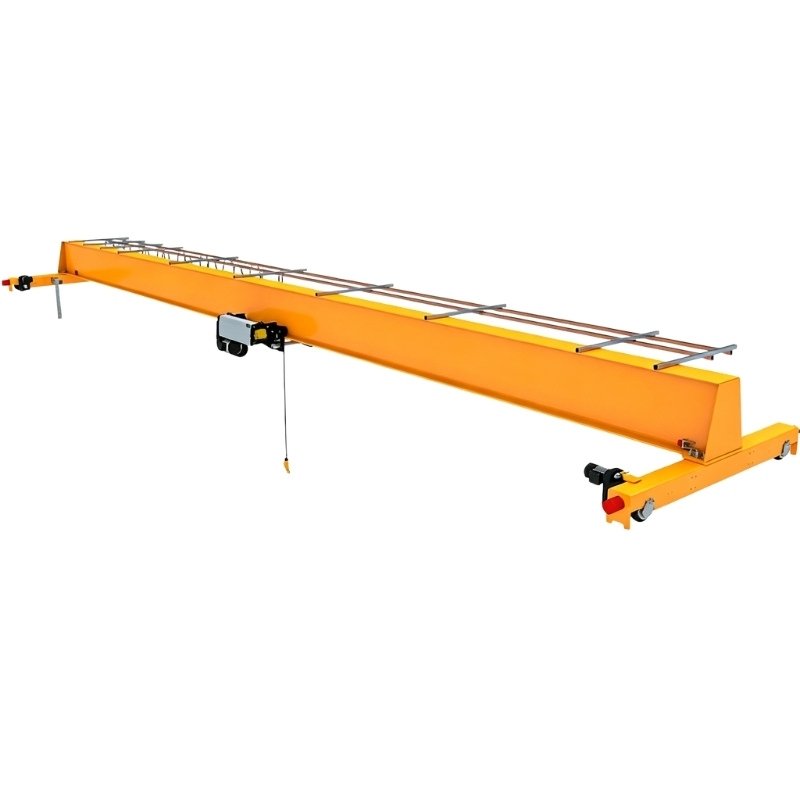
With its compact design, low installation costs, and reduced building stress, it is suitable for standard-span workshops with light to medium hoisting frequencies.
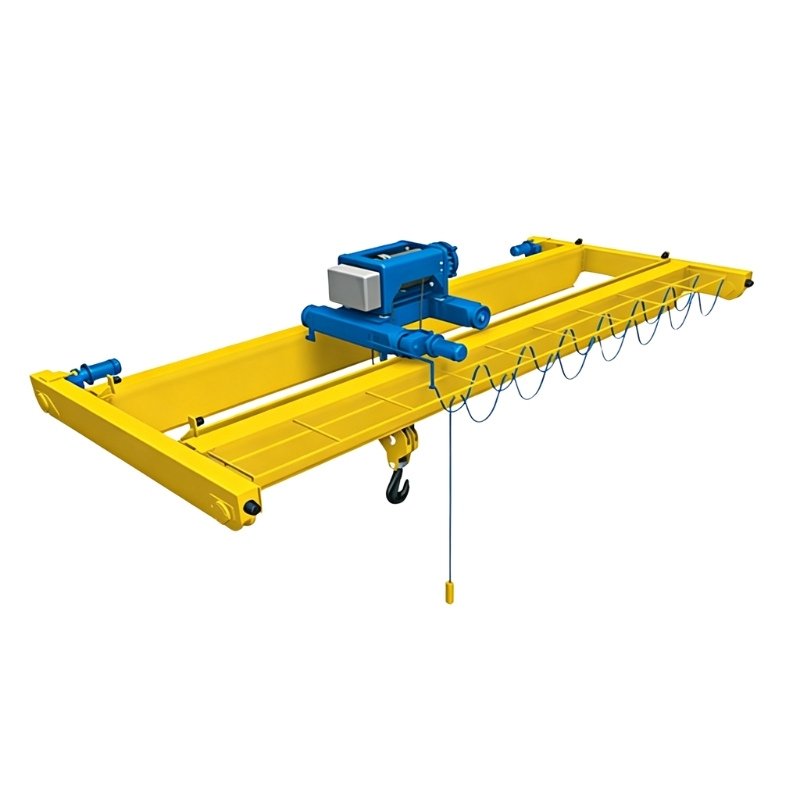
With a larger span, greater lifting height, and enhanced structural stability, it provides exceptional stability and heavy-duty performance under frequent lifting operations and harsh environments.
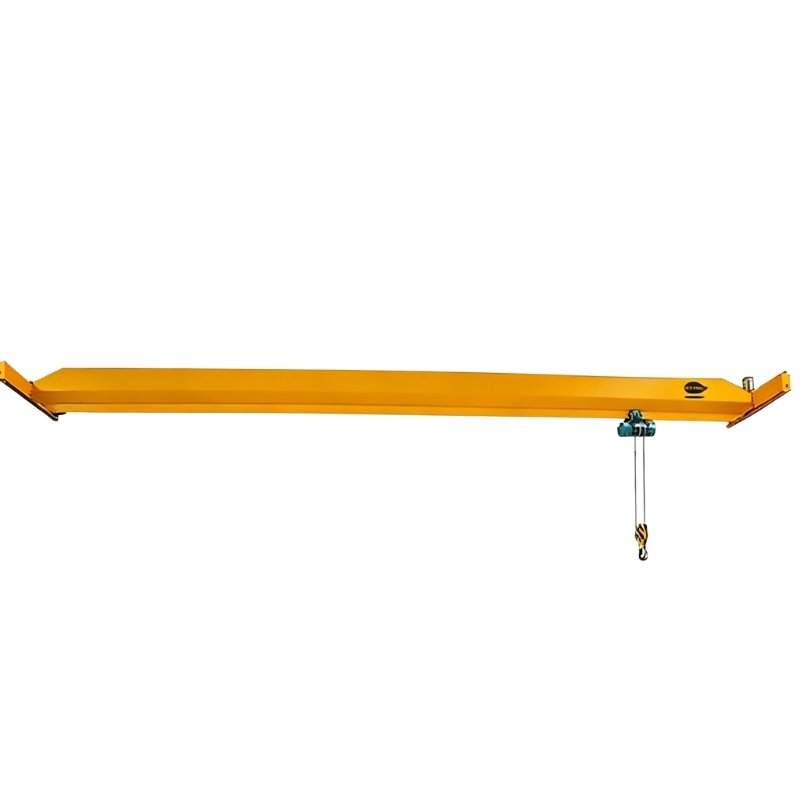
It runs on top-mounted runway rails, maximizing overhead clearance and lifting height, meeting larger span requirements, while providing adequate capacity and robust structural support for industrial buildings.
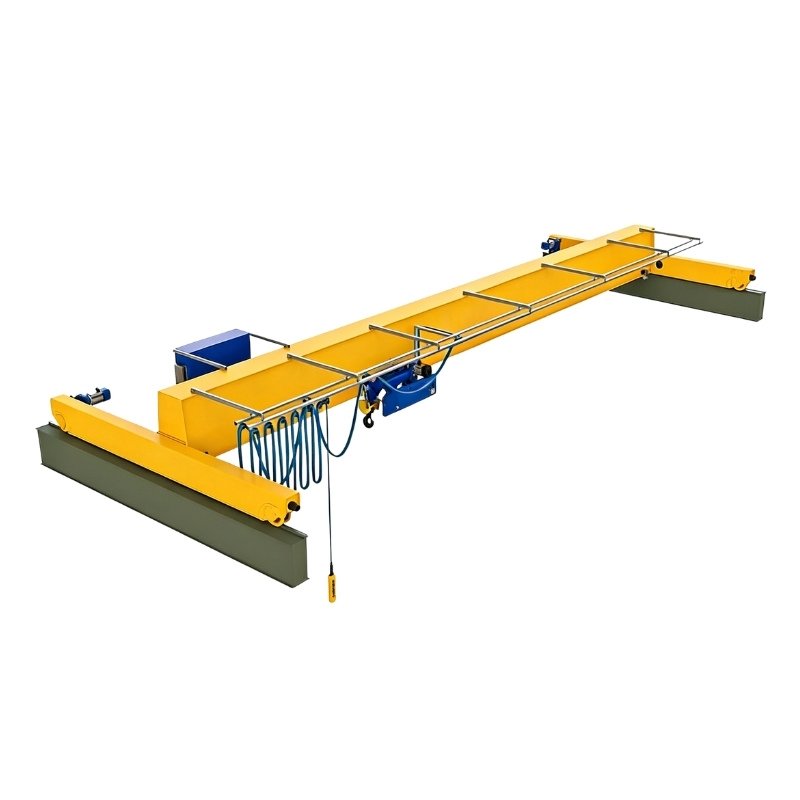
Suspends beneath runway beams to save floor space, Needing no supporting columns or runway brackets, making it ideal for low-ceiling factories with limited headroom.
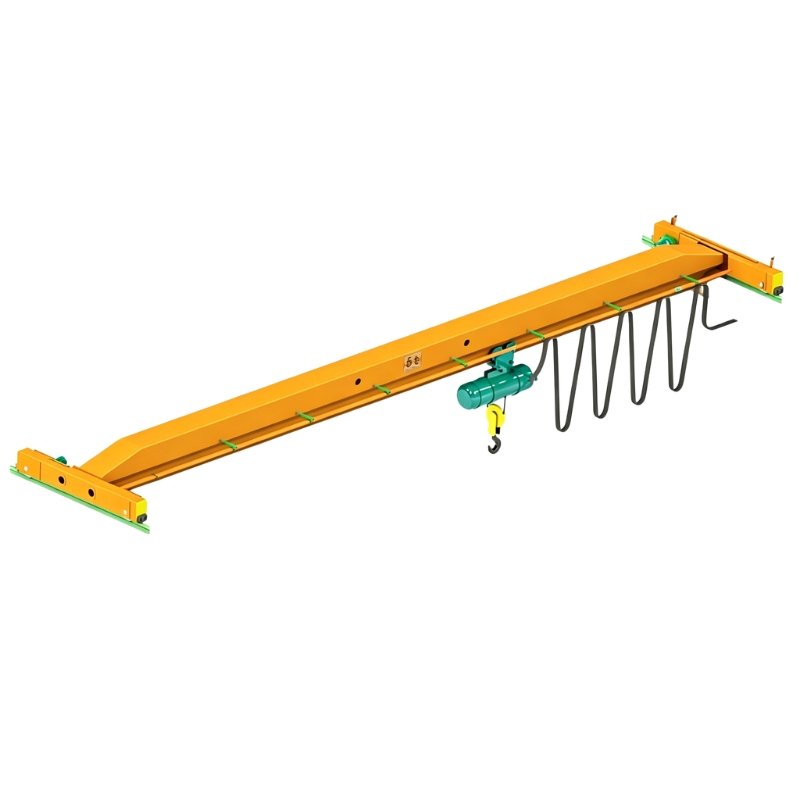
Equipped with a wire rope hoist, it offers stable lifting performance and smooth handling, and is durable, making it ideal for long-lift and heavy-duty cycle tasks.
Simplified Crane Structure
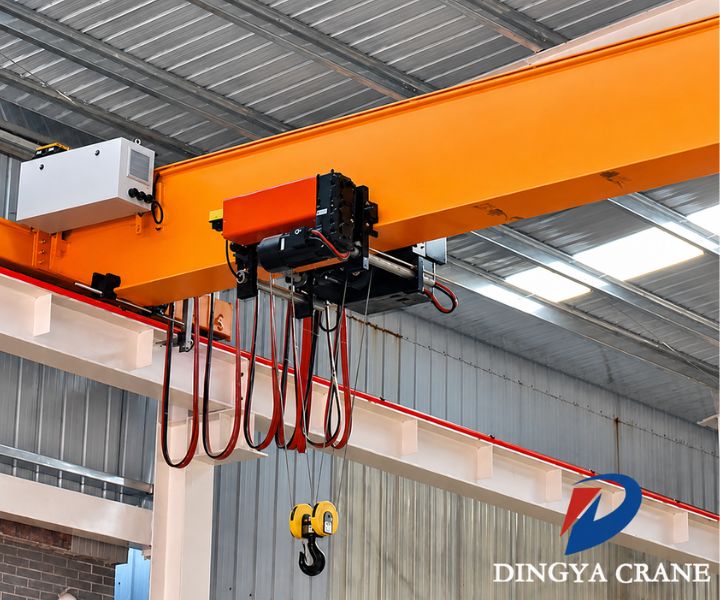
Our 3 ton bridge crane features a simplified structure that effectively reduces installation complexity, shortens your project timeline, and lowers your workshop modification costs. The optimized beam configuration and modular components make transportation, assembly, and future maintenance more efficient. At the same time, they ensure the reliable lifting stability required for daily industrial material handling. Our 3 ton bridge crane is particularly well-suited for factories that need to deploy equipment quickly and integrate it with existing runway systems.
Precision Load Control
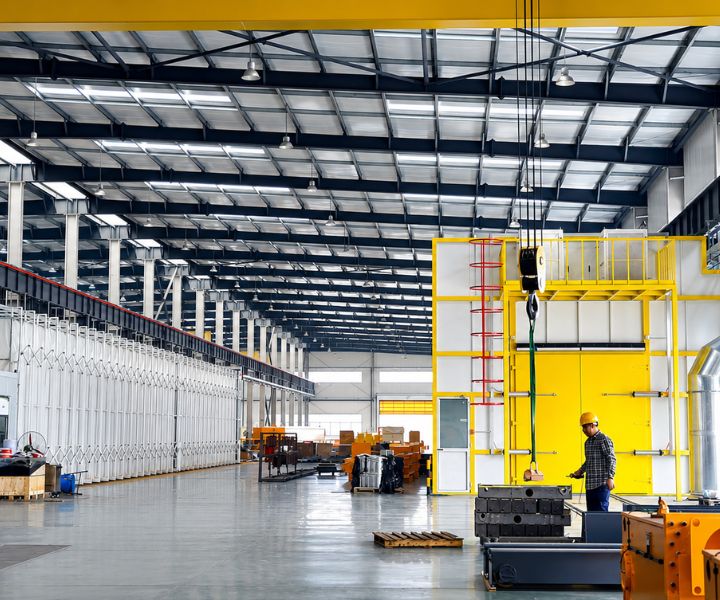
DINGYA’s 3 ton bridge crane offers stable and smooth travel and hoisting performance. Its acceleration and deceleration are very smooth, reducing load sway during lifting operations and helping your operators achieve precise positioning. The optional variable frequency control system further enhances the operational accuracy and safety. Our 3 ton bridge crane is particularly well-suited for consistent positioning and controlled movement in repetitive industrial operations, such as high-precision assembly lines and demanding machining environments.
Optimized Engineered Components
The durability and stability of DINGYA’s 3 ton bridge crane come from our high-quality engineered components. From high-performance hoist motors to durable end trucks, every core component is constructed using premium material grades and wear-resistant designs, ensuring a long service life. Carefully matched motors, gearboxes, electrical systems, and hoisting mechanisms maintain smooth performance during continuous daily operations. These optimized engineering components effectively reduce unexpected downtime, simplify maintenance procedures, and extend the service life of our 3 ton bridge crane.
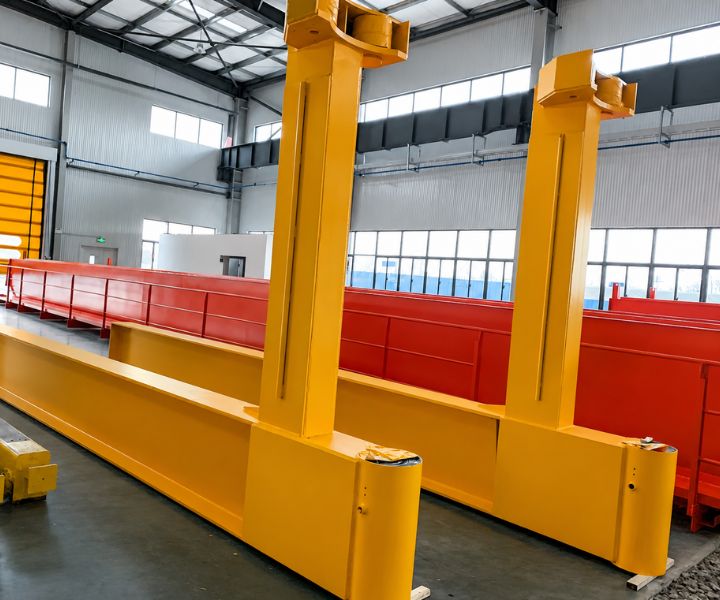
Applications of Our 3 Ton Bridge Crane
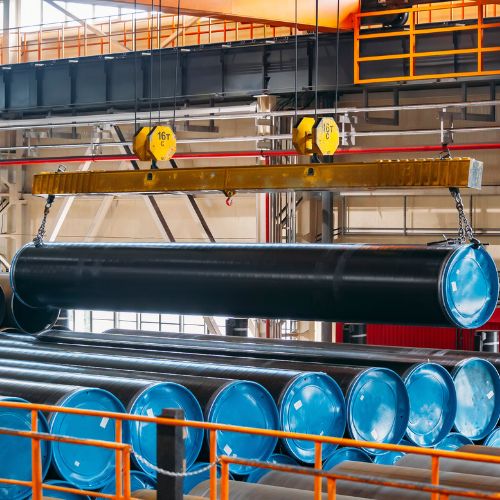
Our 3 ton bridge crane provides fast, precise, and continuous material handling in steel fabrication workshops, significantly improving your production efficiency. It can easily lift raw materials such as I-beams and steel plates. In addition, it supports beam positioning and welding workflow.
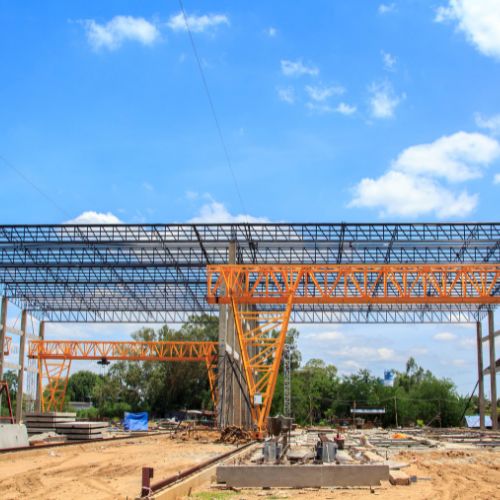
Designed specifically for high-frequency logistics operations, our 3 ton bridge cranes ensure rapid truck loading and smooth internal material transfer, accelerating your supply chain turnover. They help warehouses maximize vertical storage space and optimize the bulk material movement.
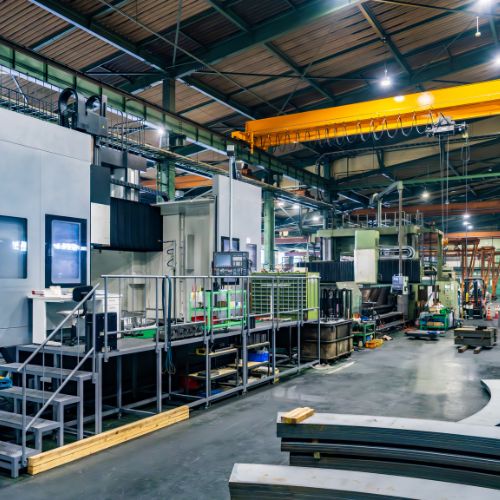
Our 3 ton bridge cranes provide your operators with millimeter-level control precision to lift and align heavy components safely, thereby reducing the manual labor risks, improving maintenance accuracy and service turnaround speed, and protecting your valuable industrial assets.
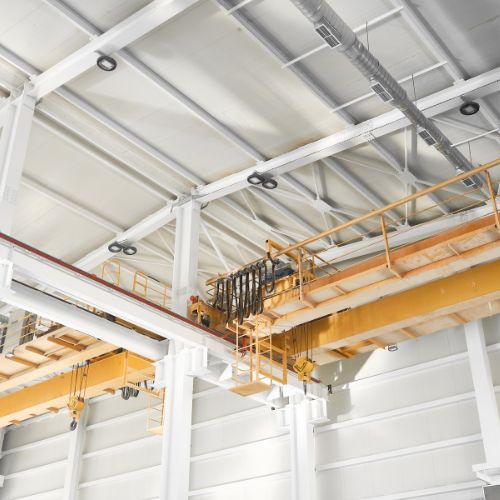
Our 3 ton bridge crane can integrate seamlessly into your assembly production line, working in sync to continuously deliver parts to each workstation. It enables employees to work more safely and comfortably while significantly boosting your productivity.
- Specification
| Lifting Capacity | 3 Ton |
| Lifting Height | Customized |
| Span | 4.5m – 31.5m |
| Hoist Type | Wire Rope / Chain Hoist |
| Crane Speed | Variable Frequency Optional |
| Control Method | Pendant / Remote / Cabin |
| Power Supply | As Local Standards |
| Duty Class | A3-A5 |
| Working Temperature | -20°C ~ 40°C |
The required headroom depends on your crane configuration, lifting height, and workshop layout. For example, a standard top-running single-girder 3-ton overhead crane typically requires a clearance of 4 to 5 feet between the runway beam and the lowest roof obstruction to accommodate the girder and hoist.
If your factory has a very low ceiling, selecting a suspended structure or a low-headroom hoist can reduce this requirement to under 3 feet. Before selecting a model, it is best to provide accurate workshop dimensions so that our engineers can help you recommend a configuration that saves space and ensures maximum hook travel.
The span is the distance between the runway rails, while the lifting height is the vertical distance from the ground to the highest hook position. An oversized span increases structural costs, while insufficient lifting height may affect operational efficiency.
Therefore, they should be determined according to your workshop’s actual dimensions and your material handling requirements. You should also ensure that the 3 ton bridge crane covers your core work area while leaving safe clearance from side walls.
Our engineers typically recommend specifications based on information you provide, such as workshop width, machine arrangement, lifting frequency, and load movement paths.
This depends on your specific situation. Although 3 tons is considered a medium load, the runway beam must be able to safely withstand the wheel load at full rated capacity during dynamic operation.
You need an engineer to calculate bending moments, deflections, and local stress on support columns or wall brackets in accordance with CMAA or local standards. If your plant does not meet these standards, structural reinforcement may be required.
A properly designed runway beam enhances crane stability, reduces structural deformation risks, and ensures the safe long-term operation of the installed 3 ton overhead crane.
Absolutely. As long as your 3 ton bridge crane is configured with the correct duty class, hoisting system, and electrical components. We typically recommend suitable crane solutions for your high-intensity industrial material handling scenarios based on lifting frequency, daily operating time, load handling patterns, and maintenance conditions.
If your production line requires continuous, high-efficiency cycles, standard light-duty configurations may fail too early due to motor overheating. We can help you upgrade components to CMAA Class D or ISO A5 standards, incorporating heavy-duty motors, advanced thermal protection, and wear-resistant gearboxes.
To choose the appropriate duty class for your 3 ton bridge crane, you need to calculate the average lifting frequency per hour and the typical weight relative to the 3-ton capacity to evaluate your daily operational intensity.
If you use the crane only a few times a day, CMAA Class B (ISO A3) offers excellent value for money. Standard production environments require CMAA Class C (ISO A4/A5) to handle medium-duty applications. If you need to deal with high-intensity, continuous industrial production environments, you should invest in a Class D model to prevent mechanical fatigue.
To receive an accurate quote and an accurate engineering design, you must provide us with precise key parameters. Essential data includes your required span, exact lifting height, workshop dimensions, and local power supply standards, including voltage, phase, and frequency.
In addition, please detail your specific operating environment and indicate whether there are special conditions such as dust, extreme temperatures, or corrosive environments. We may recommend customized configurations. In addition to these parameters, providing us with a layout diagram or photos of your workshop will help reduce installation issues later on and prevent unexpected customization costs.
A high-quality 3 ton bridge crane typically has a service life of 15 to 20 years. The exact lifespan depends largely on its duty class, component configuration, operating conditions, and routine maintenance. Cranes operating in light-duty maintenance workshops can even exceed 25 years of reliable service when operated according to specifications and maintained regularly.
Our 3 ton bridge cranes are equipped with high-quality motors, gearboxes, electrical systems, and steel structures, which help enhance durability and reduce mechanical wear. As long as you strictly adhere to maintenance standards and never overload the crane, you can significantly extend your equipment investment lifespan.
Yes, our 3 ton bridge crane has great engineering flexibility; no matter how challenging your workshop layout is, we can adjust the configurations, such as span and lifting height, to suit its structure according to your needs.
If your facility is narrow and compact, we may use a low-headroom hoist and cantilevered bridge extensions to maximize spatial utility and hook coverage. If your plant does not have existing concrete columns, we recommend the suspended 3 ton bridge crane, which can be installed without modifying the ground and utilizing the roof structure.
3 Ton Bridge Crane Cost Factors
Crane Structure Type
The structural complexity directly affects the steel consumption and production workload of 3 ton bridge cranes. For example, single girder structures generally have lower manufacturing and installation costs than double girder designs.
Span And Lifting Height
Larger spans and higher lifting heights will increase the costs of material consumption, hoisting system requirements, and structural reinforcement needs. Customizing them may also require additional engineering calculations and production adjustments costs.
Duty Class And Operating Frequency
The 3 ton bridge crane that operates in high-frequency needs more durable motors, electrical systems, brakes, and transmission components. Heavy-duty working-class cranes normally cost more but are more reliable in the long term.
Optional Features And Customization
Additional configurations resulting from industrial demand, such as VFD control, low headroom design, and anti-corrosion coatings, will affect the final project price.
Essential 3 Ton Bridge Crane Safety Features
Overload Protection System
The overload protection can prevent the lifting load of the 3 ton overhead crane from exceeding the rated 3 tons, so as not to cause excessive force damage to the crane or cause operating accidents.
Limit Switch Protection
The limit switch can control the hook travel and crane movement range, preventing mechanical damage caused by over-lifting, excessive lowering, and collision.
Anti-Sway And Smooth Control
The stable traveling systems can reduce the load swing of the 3 ton bridge crane during repeated lifting tasks, improve positioning accuracy, and operational safety.
Emergency Stop Function
The emergency stop buttons are essential for improving safety. In the unexpected situations that the machine cannot judge on its own, workers can press it to immediately shut down the 3 ton bridge crane movement.
Power Supply Options for A 3 Ton Bridge Crane
Standard Industrial Voltage Configurations
Common voltage options include 220V, 380V, 415V, 440V, and 460V, which can adapt to the voltage standards and needs of most regions.
Single-Phase And Three-Phase Systems
Three-phase power systems are more commonly used in 3 ton bridge cranes for their stable power output and reliable performance for continuous industrial lifting. Single-phase systems are suitable for light-duty or low-frequency applications with limited infrastructure.
Frequency Options
Support 50Hz and 60Hz according to your power infrastructure and project location.