
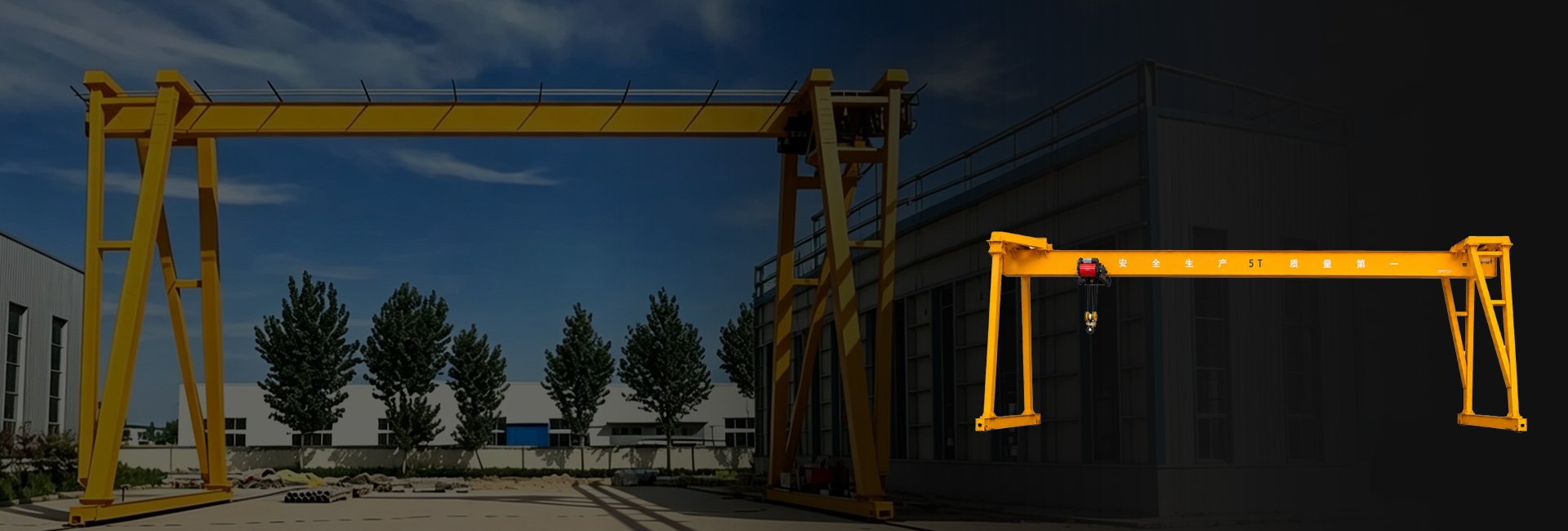
Dingya: Your Reliable Single Girder Gantry Crane Manufacturer in China
The single girder gantry crane is an industrial lifting equipment used for material handling. It consists of a main girder and two A-shaped legs on both sides. An electric hoist runs along the lower flange of the main girder. It solves the problems of loading, unloading, and short distance transportation of bulk and packaged goods.
Dingya’s single beam gantry crane is manufactured according to FEM, DIN, ISO and other standards, and has obtained CE certification. Whether it is a standard model or a customized single beam gantry crane with specific span requirements, we can make sure the durability and excellent performance of our products. If you are in need of high-quality single girder gantry cranes, please feel free to contact us.
Our Products
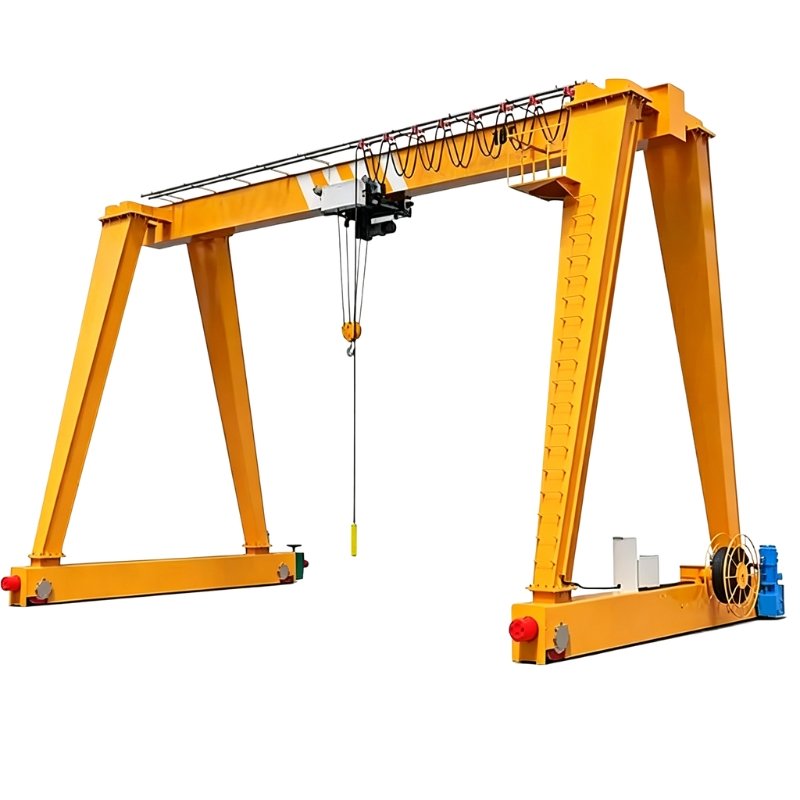
Adopting a high rigidity rectangular main beam and a hanging steel wire rope hoist, with the option of single or double cantilevers for flexible material positioning in multiple conditions.
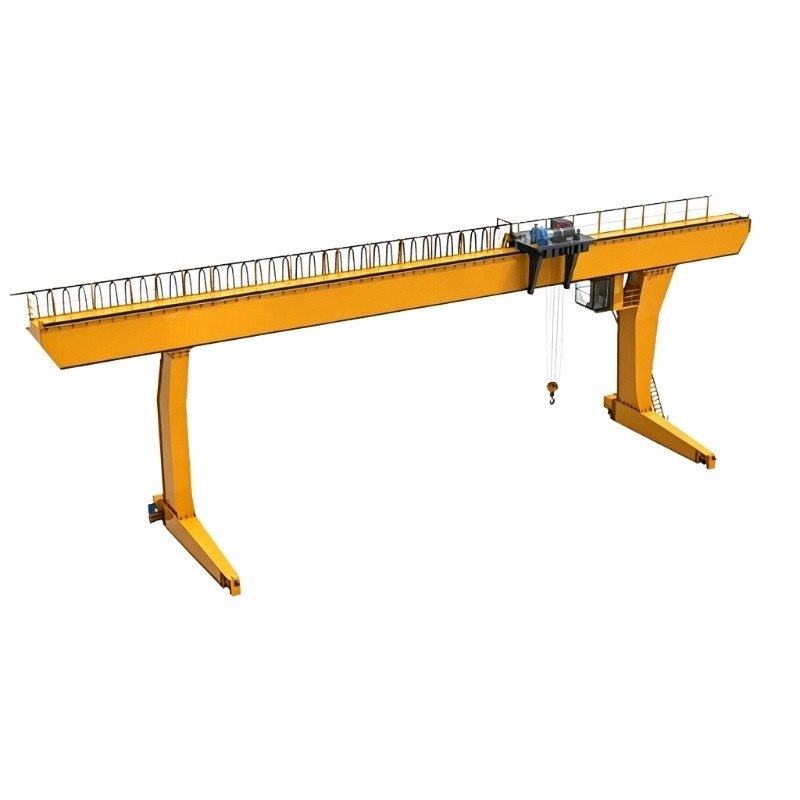
L-shaped support legs allow large cargo to pass through without obstacles, and two lifting mechanisms are available: a lower hanging wire rope hoist or an upper mounted trolley.
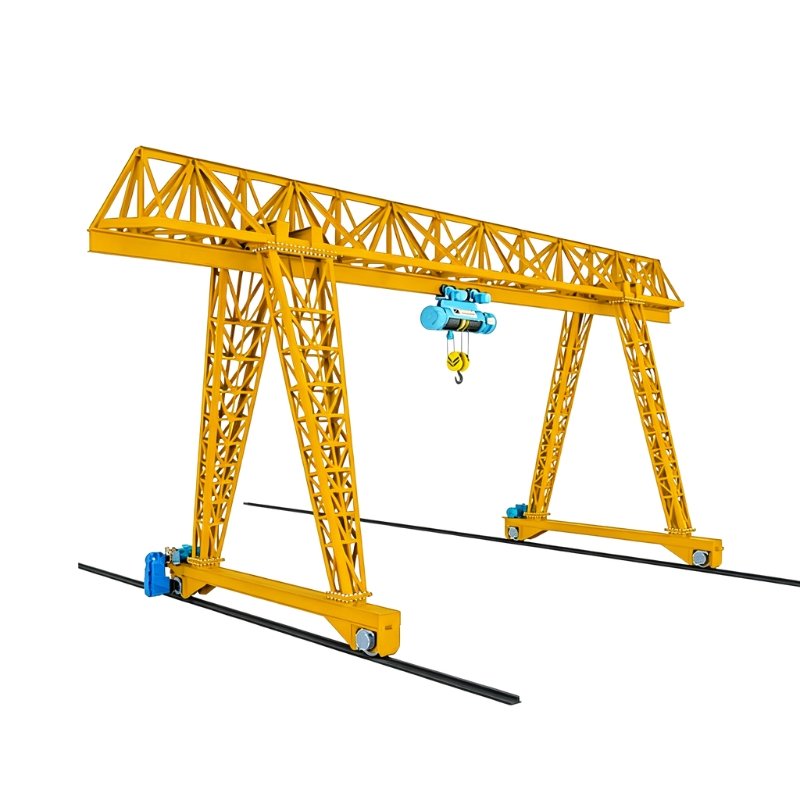
The main beam and the legs adopt a truss structure, which is lightweight and can maintain stable operation under high wind pressure.
Electronic Anti-Sway Technology
Our single girder gantry crane is equipped with an electronic anti-sway control system. It precisely controls the sway of the lifted load by adjusting the speed instructions of the electrical control system in real time. This system can automatically adjust the acceleration and deceleration curves of the drive motor when the crane starts or stops, limiting the sway of the lifted load. Within the entire lifting height range, it can precisely control the sway angle of the lifted load to within 0.25 degrees, without requiring manual adjustment by you. This reduces the risk of collision between the lifted object and surrounding equipment.
Pre-Camber Design of the Main Beam
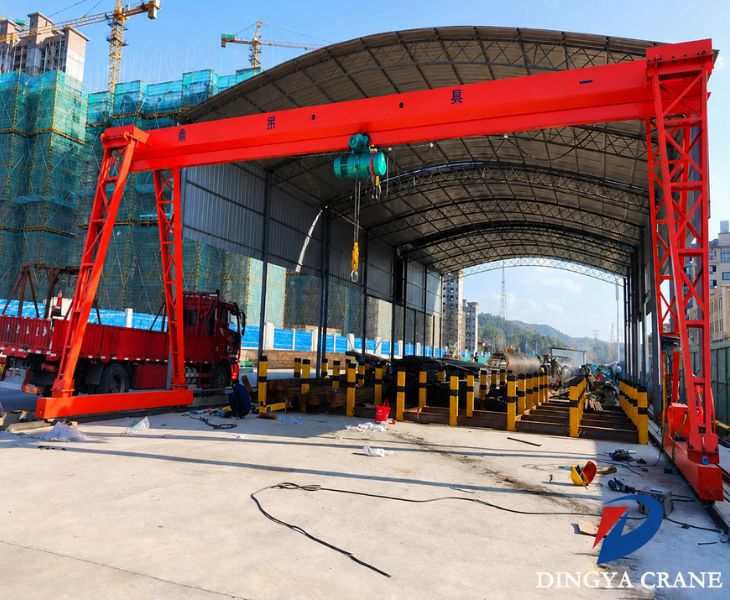
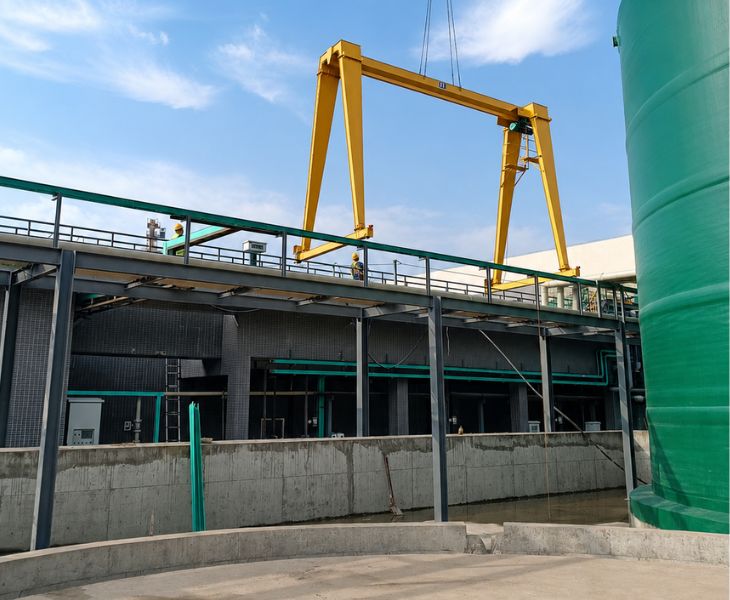
Dingya’s single beam gantry crane has reserved an upward curvature for the main beam during manufacturing. It is used to counteract the downward deflection caused by the load. The standard pre-camber is usually set at 0.9/1000 to 1.4/1000. The maximum curvature is located at the mid span position. Welded partitions are installed at regular intervals inside the box section main beam to form a closed box structure. This can prevent corrosion while enhancing the bending stiffness and torsional resistance of the main beam. This design helps you improve the service life and stability of your equipment, keeping long-term stable operation even in harsh environments.
Precise Positioning and Micro-Motion Control
Our single beam gantry crane is equipped with a variable frequency drive system, which can achieve smooth acceleration and deceleration control, reduce mechanical impact, and improve positioning accuracy. The lifting, traveling crane, and trolley are all equipped with micro-motion control functions, allowing the crane to move accurately at a very low speed when approaching the target position. At the same time, the variable frequency speed regulation can compress the starting current within 1.5 times the rated value, avoiding the impact during starting and making sure the safety of your equipment and personnel.
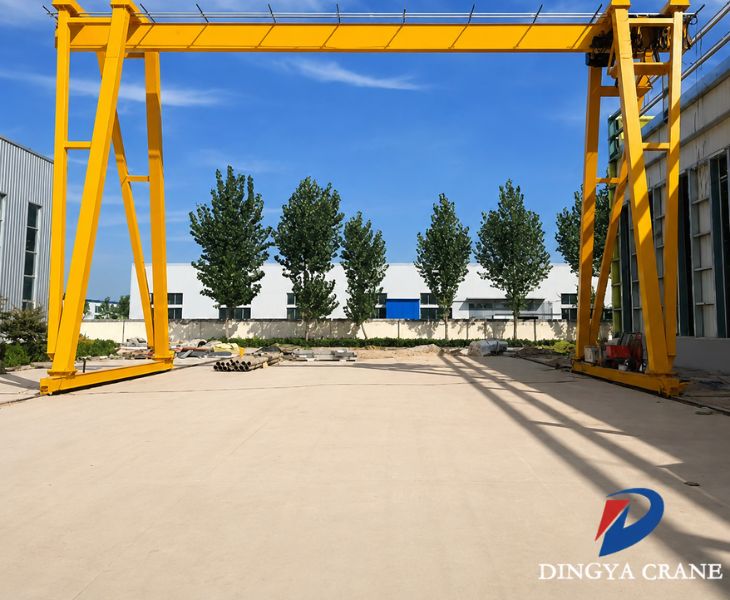
Applications of Our Single Girder Gantry Crane
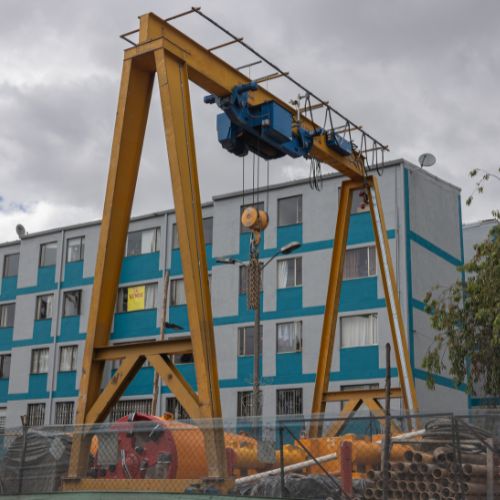
Single beam gantry cranes can transport and lift heavy materials such as steel and concrete on construction sites. With adjustable height and strong load-bearing capacity, it can help you complete material handling, improve work efficiency and safety.
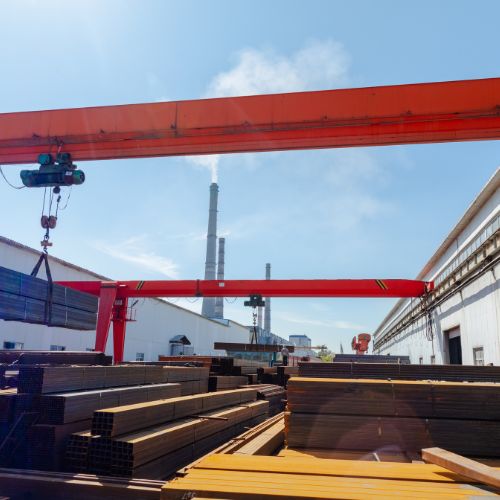
In the warehousing industry, single girder gantry cranes are used for vertical handling and storage of goods, especially in environments with limited space. Its compact structure and convenient operating functions help you improve space utilization and material management efficiency.
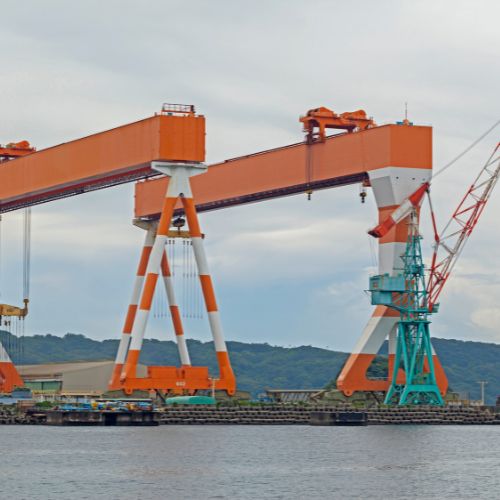
In shipyards, single beam gantry cranes are used for loading and unloading large materials and equipment on ships. Its strong load capacity and stability make sure the safety of your ship and equipment. And it can provide accurate material positioning over a large range.
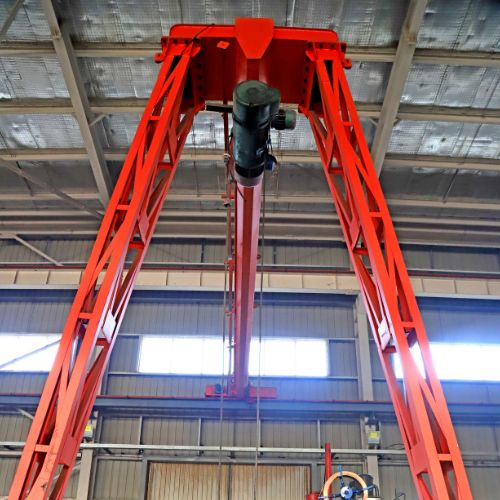
For example, in manufacturing workshops such as injection molding and automotive parts processing, single girder gantry cranes can provide fast and accurate material handling on the production line. It helps you reduce production downtime and improve production efficiency.
- Specification
| Parameter Category | Specification and Details |
| Lifting Capacity | 1 Ton — 50 Tons |
| Span Length | 6m — 35m (Customizable) |
| Lifting Height | 6m / 9m / 12m / 18m (Custom Options Available) |
| Structural Steel Grade | Q235B / Q345B / Q355D High-Tensile Carbon Steel |
| Duty Classification | A3 — A8 |
| Power Supply | 3 Phase, 380V / 480V, 50Hz / 60Hz |
| Protection Rating | IP54 / IP55 (Outdoor Grade) |
| Control Methods | Wireless Remote Control / Wired Control |
| Protective Device | Overload Protection, Limit Switch, Emergency Stop Button |
| Surface Treatment | Sa2.5 Sandblasting and Epoxy Zinc-Rich Painting |
You need to make a comprehensive judgment based on the crane load and the ground foundation conditions. For light-duty scenarios, you can choose lightweight rail profiles, which are easy to install and have lower costs. For medium and high-frequency heavy-load operations, heavy steel rails are suitable as they have a stronger bearing capacity.
Meanwhile, you should adjust the laying method according to the flatness of the site. A reasonable track can reduce running resistance, reduce component wear from the source, and keep the long-term stable operation of your single girder gantry crane.
Yes. Our single beam gantry crane supports a customized speed control configuration. For high-frequency precision operations, you can install a variable frequency drive module. Variable frequency regulation can achieve a slow start stop and buffer the impact force caused by inertia. This can adapt to your different work rhythms and protect the transmission components.
In addition to the material of the main beam, the span distance, working environment, and walking stability will all change the actual load-bearing limit of your crane. The larger the span, the greater the range of deformation of the main beam under stress. You need to adjust the actual load appropriately.
The outdoor temperature difference and the duration of continuous operation can also indirectly affect the stress state of the main beam. Standardized operating conditions are necessary to maintain the rated lifting performance of your single girder gantry crane.
You need to measure whether the span of the tracks in the original workshop and the new workshop is consistent. If the spans do not match, the crane wheels will not be able to fit onto the tracks. Next, check the type of the track rails. If the wheel width and the groove shape do not match, you need to replace the wheels in advance.
Finally, you also need to confirm the elevation of the track surface of the new track. If the new track is higher than the original track, the length of the lifting wire rope may not be enough. And you need to replace the rope in advance.
How to Choose a Single Girder Gantry Crane?
Determine the Actual Lifting Capacity and Reserve a Safety Margin
The lifting capacity is the fundamental parameter for selecting a single girder gantry crane. You cannot only rely on the net weight of the goods. In actual lifting operations, lifting tools, workholding fixtures, etc., will add additional loads. Long term close to full load operation of a single beam gantry crane will intensify the fatigue damage to the metal components.
You need to reserve a safety margin based on the daily maximum handling weight. This can avoid lifting hazards and prevent cost waste caused by excessive equipment performance.
Measure Span
The main beam span of a single girder gantry crane directly determines the working coverage area. You need to combine the width of the site and the layout of the tracks to determine it. If the span is too small, it will reduce the working coverage area. If it is too large, it will increase the crane’s own weight and your procurement cost.
At the same time, you need to reserve a safety clearance to prevent collisions between the crane and surrounding buildings or machinery during operation.
Determine the Lifting Height
The lifting height is related to the entire process of loading, unloading, stacking, and transportation of goods. You need to consider the stacking height of the goods, the size of the transportation vehicle, the top space, and reserve a safety margin.
A reasonable lifting height can prevent insufficient lifting distance, avoid problems such as the goods not landing properly or being restricted in stacking, and make sure the smooth operation of your daily handling process.
Match Duty Classification
The duty classification indicates the working intensity of the crane throughout its entire service life, and it is usually divided into A1 to A8. You should choose the appropriate level based on the frequency of use, lifting load, and the number of long-term working cycles.
For example, for low-frequency and light-load operations, you can choose an A3 or an A4 crane. For long-term continuous operation or near rated load operation, an A6 crane or above is required.
Consider the Working Environment
The working environment can affect the durability and operational safety of single beam gantry cranes.
For example, in open spaces, you need to consider the impact of wind. We suggest that you equip windproof devices such as anemometers, track clamps, and anchoring systems. When the safe wind speed is exceeded, the equipment can be automatically restricted from operation or locked.
In humid, dusty, or corrosive environments, you also need to consider anti-corrosion coatings, electrical protection levels, and drainage design.
Consider Expanding Capabilities
Your production scale and material types may change over time. When choosing a single girder gantry crane, you need to consider both current and future demands. For short-term temporary operations, you can choose the basic model to control the investment cost.
For long-term stable production operations, we recommend that you prioritize the use of models that are upgradeable and can be equipped with additional accessories. This reserves space for future functional expansion and reduces the extension of your crane’s service life.