
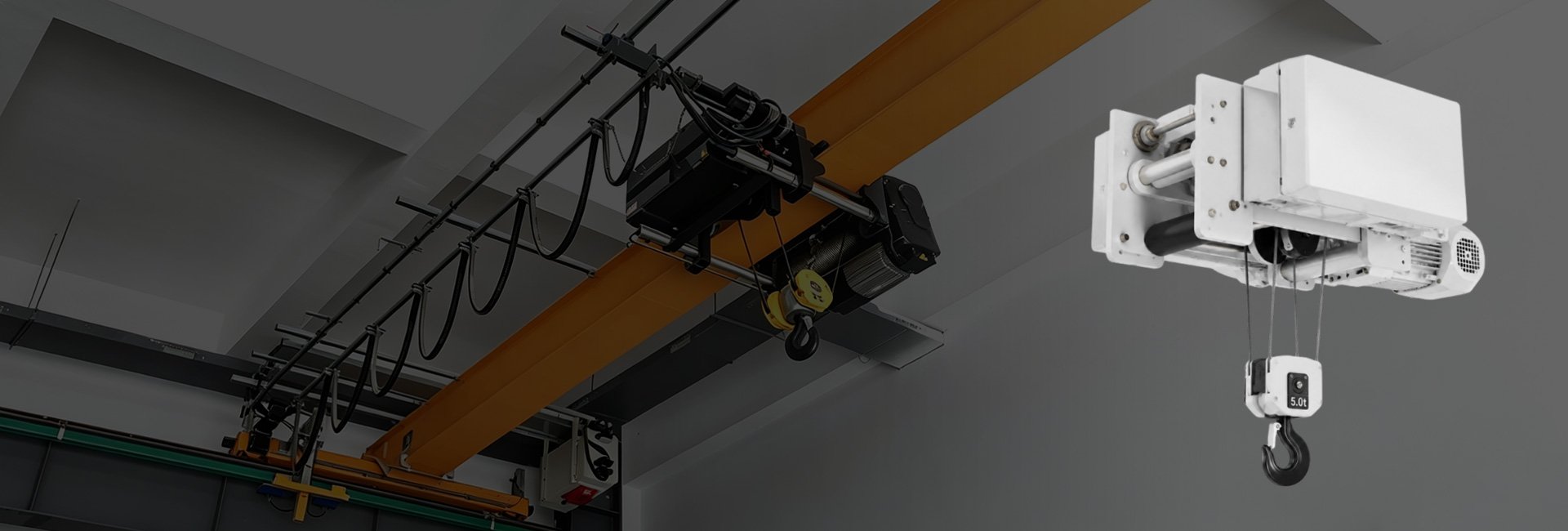
DINGYA - A Reliable Chinese Clean Room Hoist Manufacturer
DINGYA’s clean room hoist enables stable lifting, precise positioning, and quiet operation. The enclosed transmission structure, low-particle components, and smooth stainless steel surfaces can effectively reduce pollution during material handling. They are very suitable for GMP-controlled and ISO-classified cleanroom environments such as pharmaceutical plants, semiconductor workshops, biotechnology laboratories, and food-grade production areas.
As a professional Chinese clean room hoist manufacturer, DINGYA can provide customized lifting solutions according to cleanroom class, lifting capacity, installation layout, and industry needs. We support stainless steel fabrication, low headroom configurations, anti-static options, and international voltage standards for overseas projects. With fast response and detailed technical drawings, we help you speed up equipment deployment.
Products by Hoist Structure
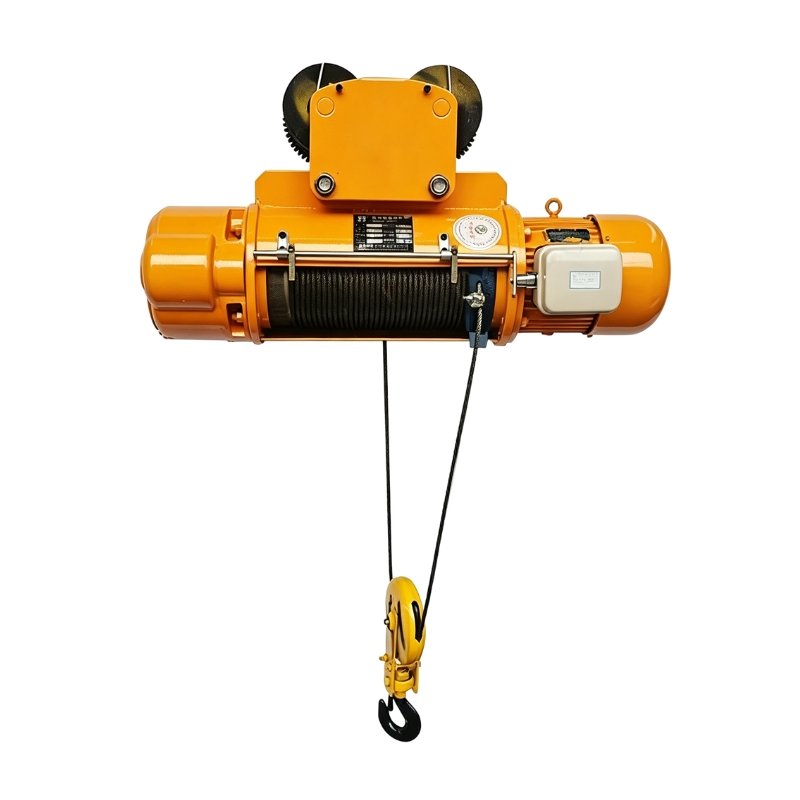
It has special-coated and high-strength wire rope and sealed drums to achieve stable and safe heavy-duty lifting without particle shedding in contamination-controlled production environments.
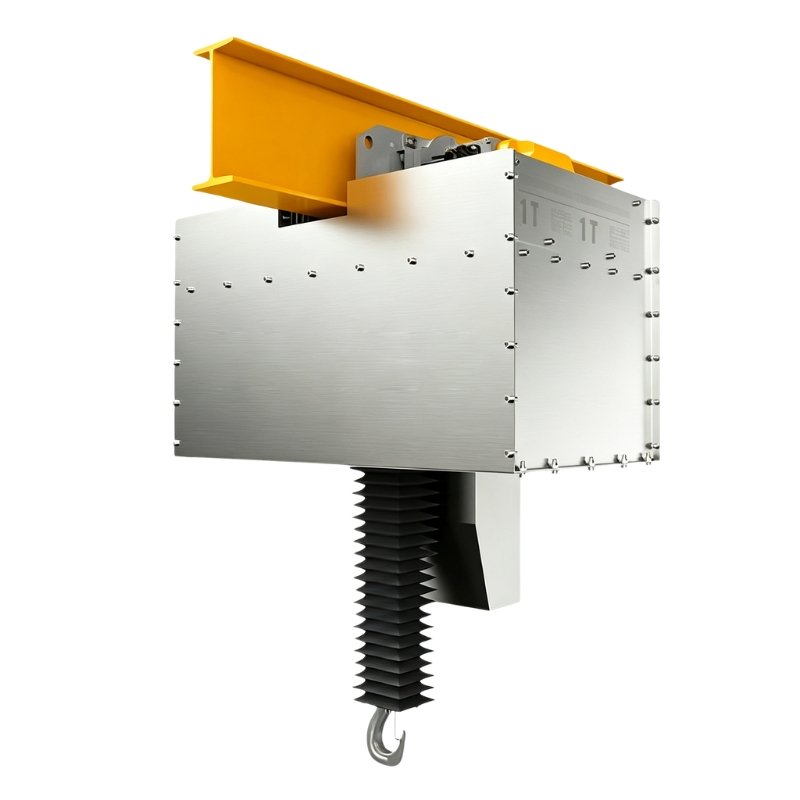
It is suspended from and travels along a fixed monorail track to move flexibly in high-purity and limited spaces, such as narrow corridors.
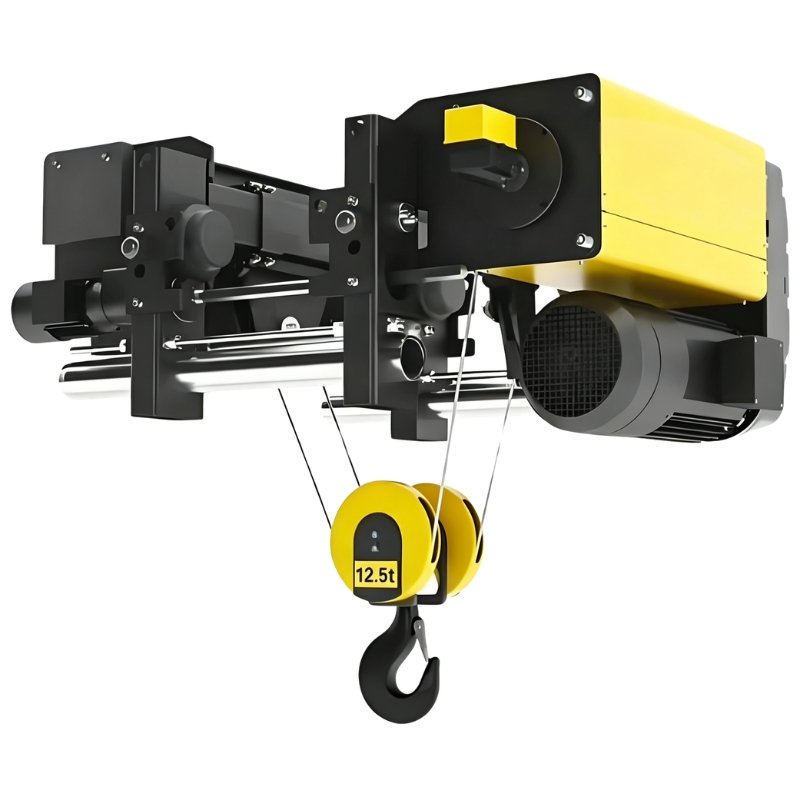
It sits atop dual parallel girders and can provide better load stability, lifting balance, and high lifting capacity when handling large or heavy semiconductor or medical equipment.
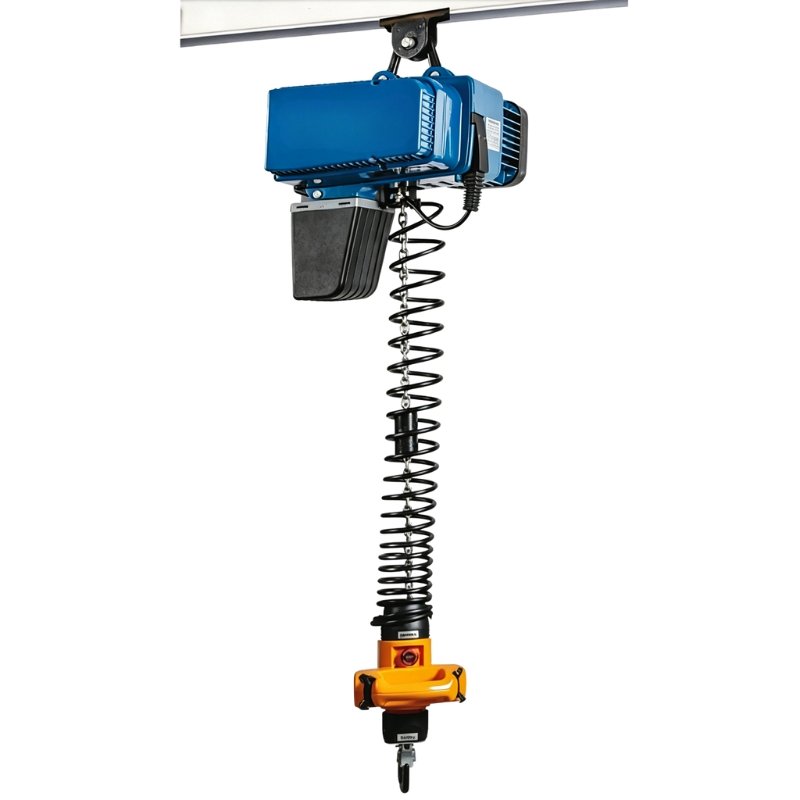
It is mounted permanently at a fixed lifting point. It has stable positioning and a simplified installation structure and is dedicated to repetitive lifting above special equipment or tanks.
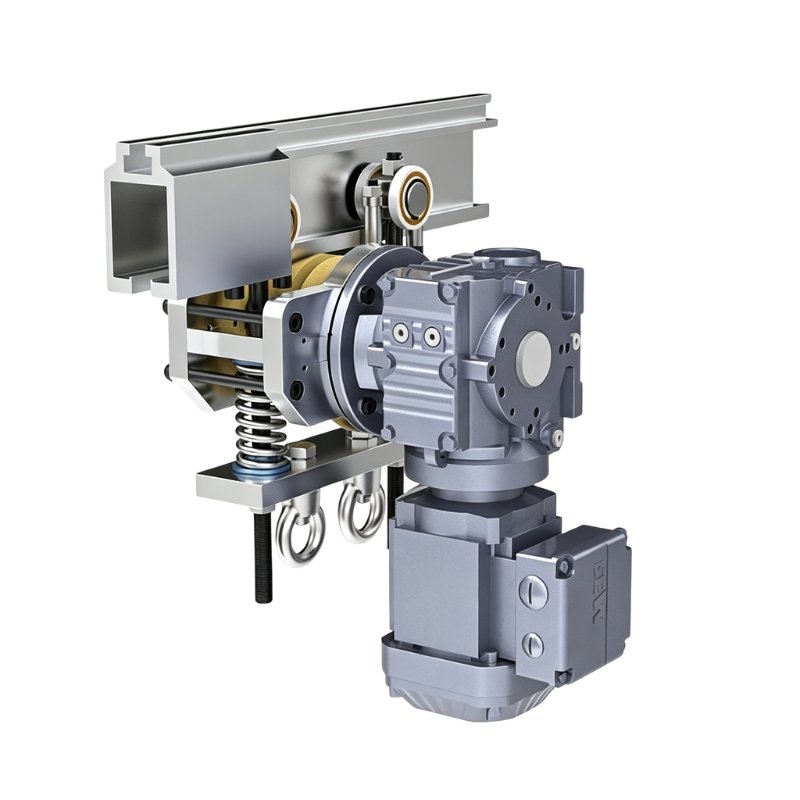
It is equipped with an electric trolley system and can travel smoothly along the horizontal axis, which reduces human labor inside clean rooms.
Anti-Static Protection
Our clean room hoist uses special anti-static materials and grounding systems to reduce static electricity accumulation during lifting operations, which greatly improves its operational safety and product protection, making it very suitable for production environments that need to prevent static electricity from damaging sensitive electronic components, such as semiconductor manufacturing, electronics assembly, and precision production environments.
Enclosed Transmission Structure
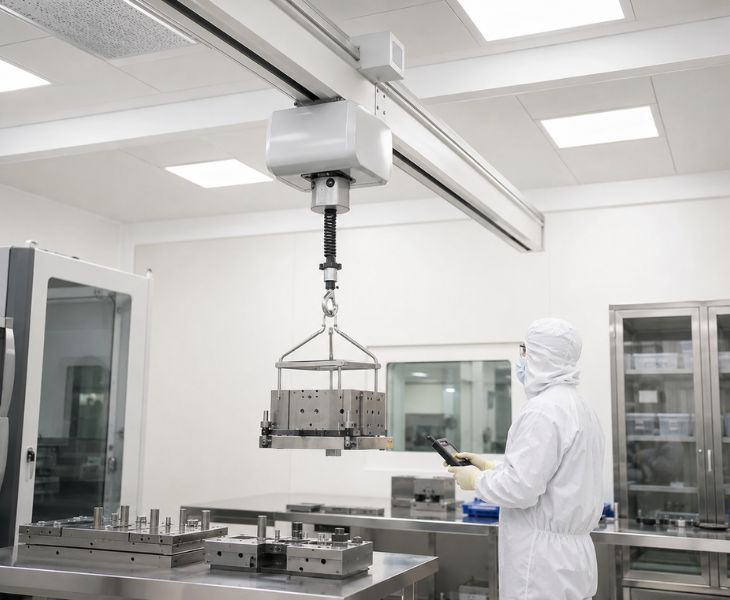
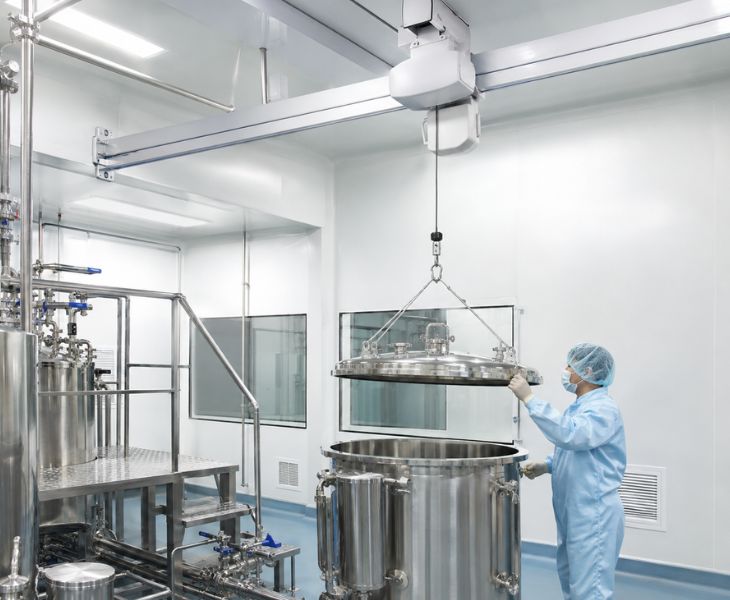
The enclosed transmission structure protects the internal drive systems from external pollutants and also reduces internal material leakage. The enclosed structure can protect the gears and transmission components from moisture, debris, and frequent sanitation procedures, thereby improving the long-term reliability of our clean room hoist. In addition, the sealed shell tightly seals the gears and parts that will generate dust and have lubricating oil inside, so it will never leak dust particles and lubricating oil to contaminate the cleanroom.
Applications of Clean Room Hoist
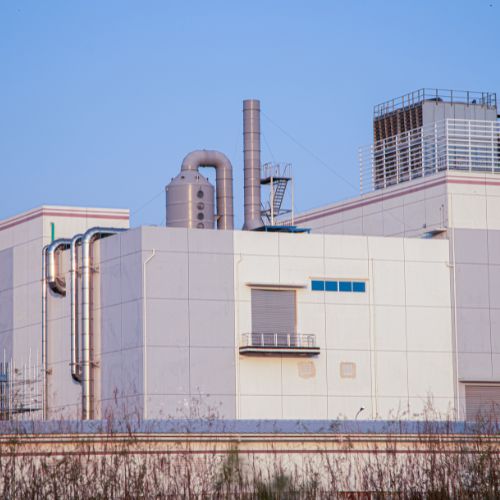
The GMP-controlled production areas of pharmaceutical companies need to achieve safe and hygienic ingredient transfer, equipment maintenance, and sterile production operations. Our clean room hoist minimizes contamination risks and meets strict pharmaceutical compliance requirements.
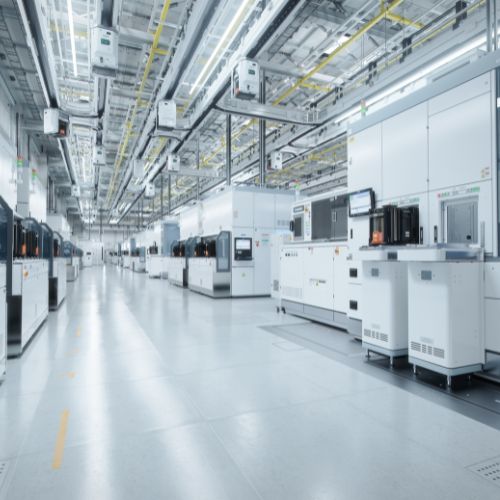
Our clean room hoist has anti-static configurations and an enclosed transmission structure. While ensuring precise and stable hoisting operations, it effectively minimizes airborne particles and static interference, protecting sensitive wafers, precision equipment, and high-value electronic components.
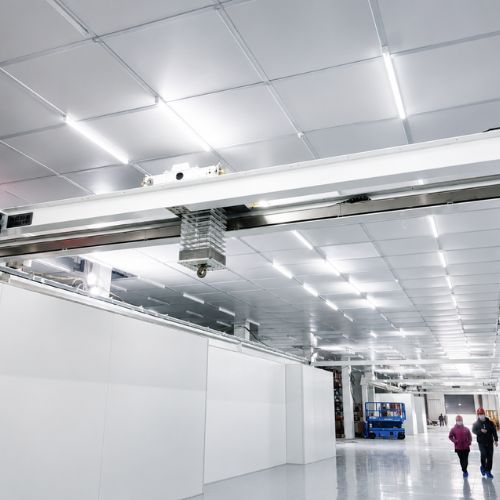
Smooth hygienic surfaces, low-noise operation, and precise load handling help our clean room hoist maintain stable cleanroom conditions in the sensitive environment of biotechnology laboratories.
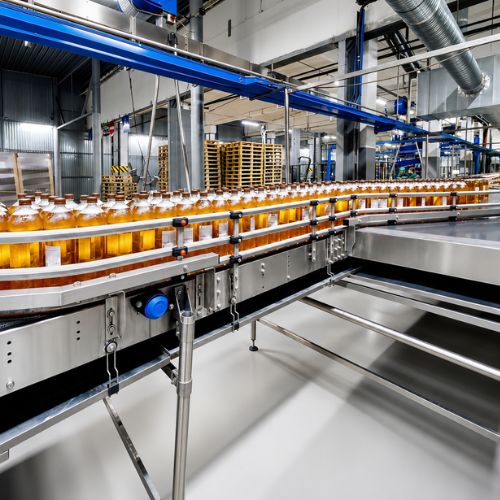
Our clean room hoist is corrosion-resistant and easy to clean, can withstand frequent disinfection, easily cope with food-grade hygiene applications, withstand high work intensity, and help food or beverage companies maintain the raw materials’ hygiene.
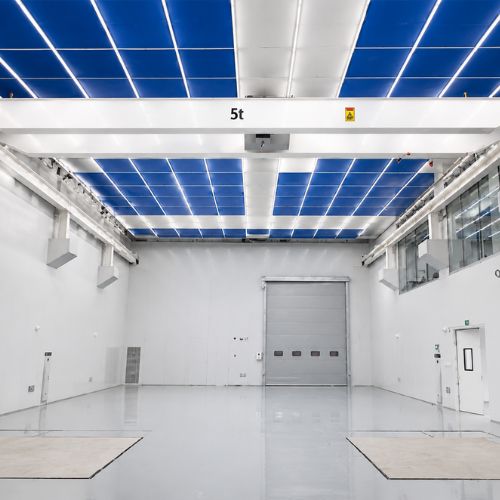
For medical device production lines, our clean room hoist can meet the strict requirements of cleanliness and compliance. It can also stably lift and lower large medical devices and finely handle sensitive medical components.
- Specification
| Capacity | 125kg – 10 Ton |
| Cleanroom Grade | ISO Class 5-8 |
| Material | 304/316 Stainless Steel |
| Lifting Speed | Custom |
| Control Method | Pendant / Remote |
| Voltage | Customized |
| Protection Class | IP55/IP65 |
| Certification | CE / ISO / GMP |
Standard hoists may release particles, grease, or rust during operation, so they are not suitable for sterile production areas with strict requirements on cleanliness and product quality. They are only suitable for ordinary industrial lifting.
A clean room hoist can effectively reduce dust generation and lubricant leakage, and is easier to clean. It meets GMP or ISO cleanroom requirements and can work in contamination-controlled environments such as pharmaceutical factories, semiconductor workshops, and food processing plants.
Because stainless steel is durable, corrosion-resistant, and has good hygienic performance, it helps the clean room hoist extend the service life and meet strict GMP and ISO cleanliness standards.
Smooth stainless steel surfaces are easier to clean and disinfect, reducing dust buildup and simplifying maintenance procedures. 304 or 316 stainless steel can effectively prevent rust, surface contamination, and bacterial growth in food-grade, pharmaceutical-grade, and laboratory-grade applications.
In addition, stainless steel performs better in high humidity or flushing environments, while ordinary painted steel is prone to corrosion.
Yes, we can customize the materials, sealing structures, surface finishes, lubrication systems, and control methods of clean room hoists according to different cleaning standards and your industry needs.
For semiconductor fabs requiring high ISO levels, such as Class 3, customization focuses on ultra-low particle emissions, using special non-friction materials and advanced static-dissipative components.
For the pharmaceutical and food industries governed by GMP, customization focuses on eliminating bacterial breeding spaces, using mirror-polished stainless steel surfaces, etc.
The clean room hoist cleaning and maintenance frequency depends largely on the cleaning room’s classification, operating environment, and operational intensity. In high-level pharmaceutical or food production facilities, it is generally recommended to clean the clean room hoist surface daily to prevent the accumulation of contamination.
Mechanical inspections should be conducted quarterly, focusing on seal integrity, brake responsiveness, and the wear status. Deep validation and particle emission testing are carried out yearly to re-certify the equipment according to ISO or GMP protocols. In addition, monthly or quarterly preventive maintenance is performed to prevent accidental breakdown.
Yes, our clean room hoist can be seamlessly integrated into various bridge crane systems, such as single girder cranes, double girder cranes, monorail systems, and underhung crane structures, to achieve efficient and hygienic three-dimensional material handling.
To maintain cleanroom integrity, the crane structure matching the clean room hoist must also meet the same clean standards, so it can be configured with smooth stainless steel components, sealed drive mechanisms, and anti-static features.
Yes. We have specialized clean room hoist models for washdown or high-humidity environments, typically using marine-grade 316L stainless steel and watertight seals to prevent moisture intrusion, corrosion, and bacterial growth.
They have a high protection rating, usually IP66 or IP69K, and can withstand high-pressure and high-temperature water flow flushing. All control handles, limit switches, and joints are hermetically sealed, allowing our clean room hoist to withstand strict chemical sanitization without electrical short circuits or structural degradation.
Features of GMP-Compliant Clean Room Hoist
Material & Surface Treatment
The clean room hoist’s core structural parts are made of low-carbon stainless steel, and the surfaces are polished. The roughness is usually between 0.4μm and 0.8μm. The smoother the surface, the harder it is for bacteria and microorganisms to attach.
Ordinary carbon steel coated with paint is strictly prohibited, because after long-term operation or frequent disinfection, the paint coating will peel off, and rust will become a serious contamination source.
Bioburden Control & Geometric Design
The overall appearance of the GMP-compliant clean room hoist must be circular or streamlined. Sharp corners or deep grooves are strictly prohibited. Minimize exposed bolts and fasteners, such as threads, to prevent mold from hiding and growing in thread gaps. All horizontal surfaces should have a slight slope to ensure that no water accumulates and bacteria cannot multiply.
Sanitization Resistance & High Protection
The plastic/rubber components on the clean room hoist can withstand the high-concentration long-lasting fumigation of VHP or ozone without blushing, embrittlement, or cracking. For GMP workshops that require frequent water gun flushing, the electrical box and motor must pass IP66 or even IP69K certification to ensure that no electrical short circuit occurs during flushing.
Lubrication Leakage Control
The clean room hoist gearbox uses NSF H1 certified food-grade lubricant inside, so that even if oil leakage occurs and contact with medicines, it will be completely non-toxic and harmless to humans within the specified range.
An integrated and removable stainless steel drip pan must be installed under the hoist’s drive and travel mechanism for physical safety. In the event of micro-leakage, it will prevent oil from dripping onto the drug production line below.