
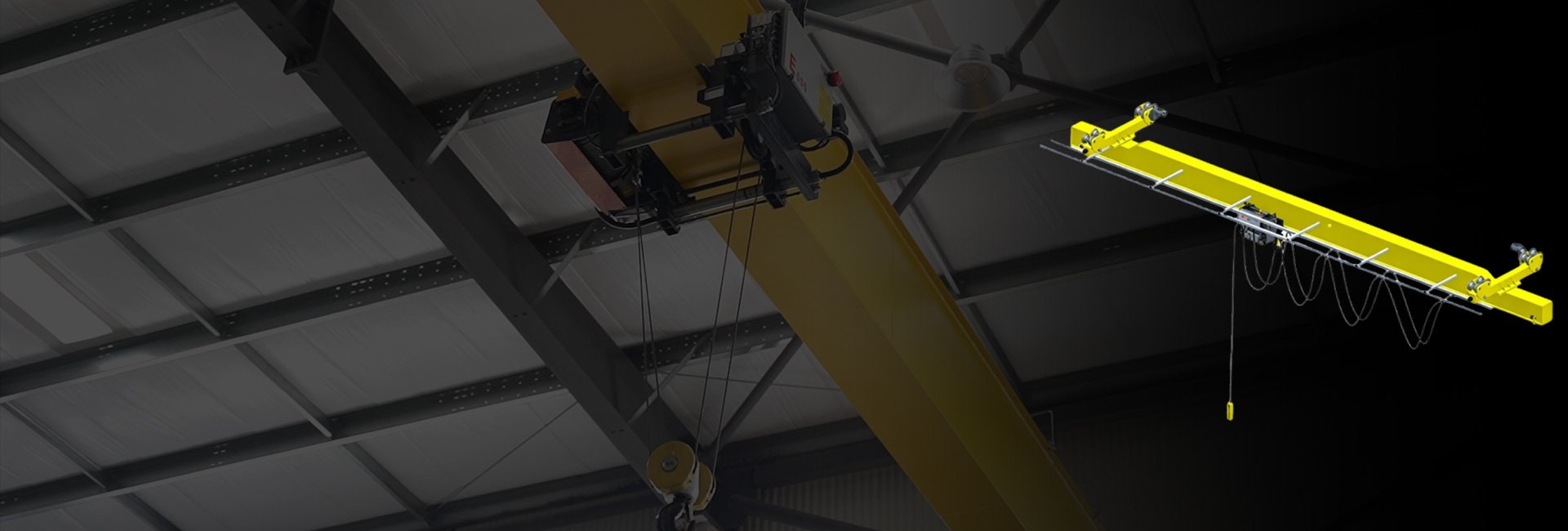
What is a Warehouse Bridge Crane?
Warehouse bridge cranes, also known as warehouse elevated cranes, are an effective material handling system that operates through overhead tracks within building spaces to provide complete warehouse lifting capabilities. All heavy materials can directly “reach the air” and arrive directly.
Our company provides warehouse bridge cranes as an experienced supplier who uses strict quality control measures together with standardized production procedures. Our company provides customized service. We will find the best solution for your needs regardless of your warehouse structure and your unique working environment. Place your order now!
Products By Types
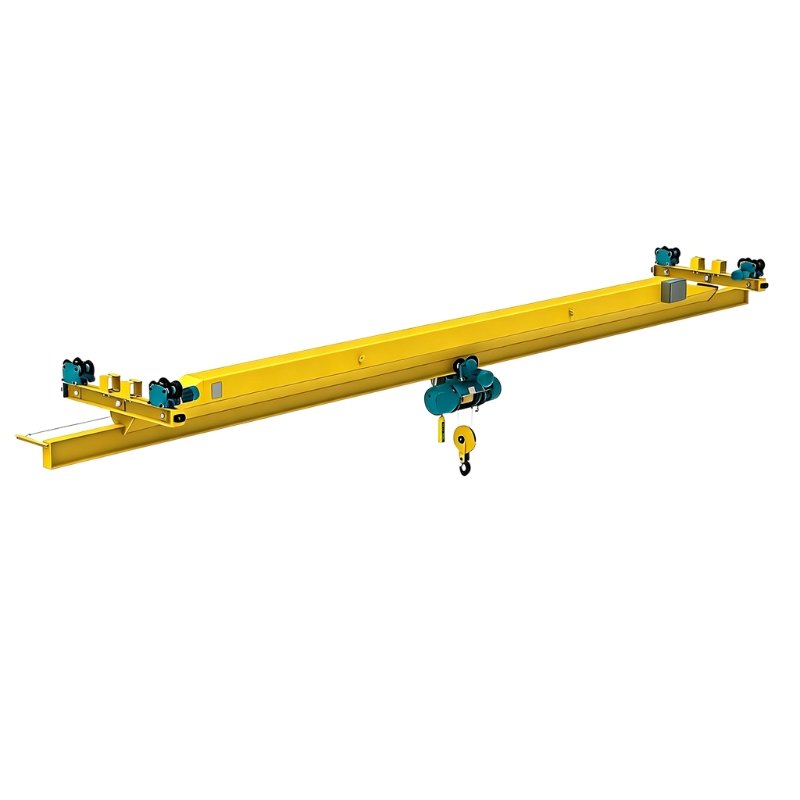
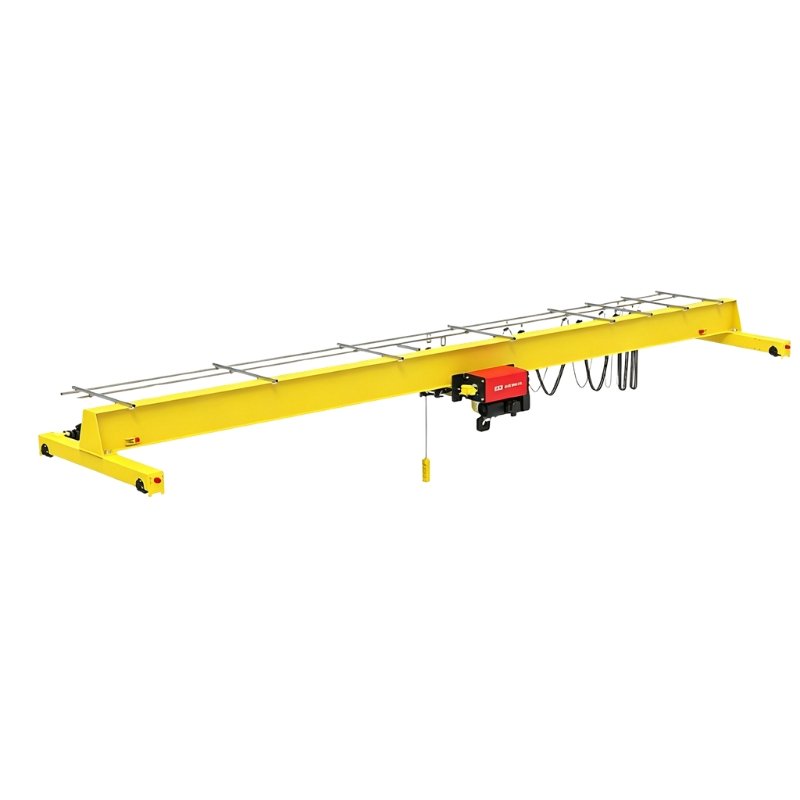
Only with a hanging bridge lifting trolley, lighter. Moreover, it has a low requirement for clearance height, and warehouses that are short in height can also be used.
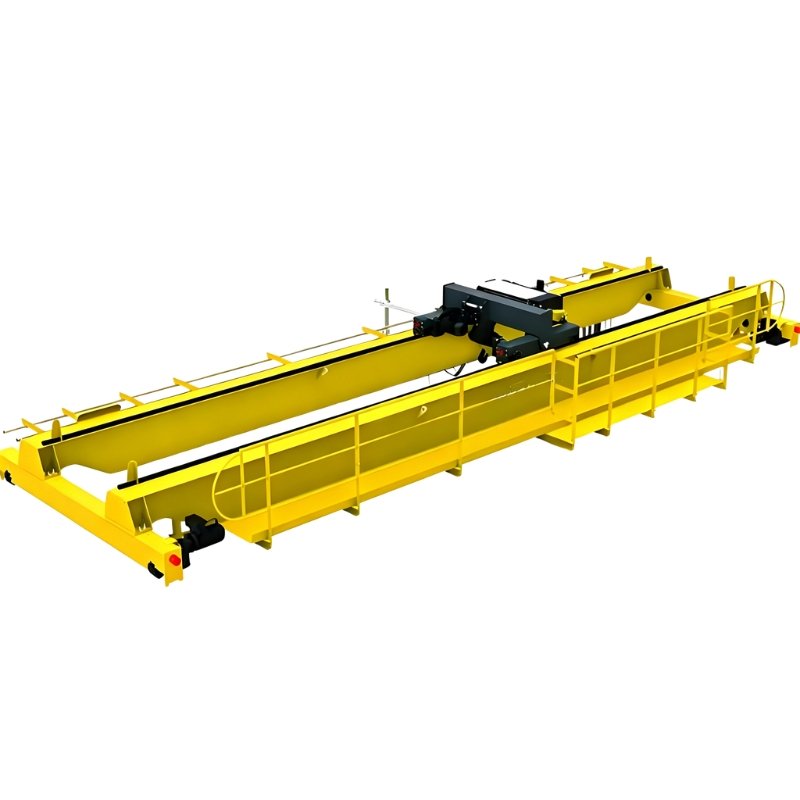
Double parallel main beams provide a stronger lifting capacity. If you need to lift heavy equipment, you can choose it.
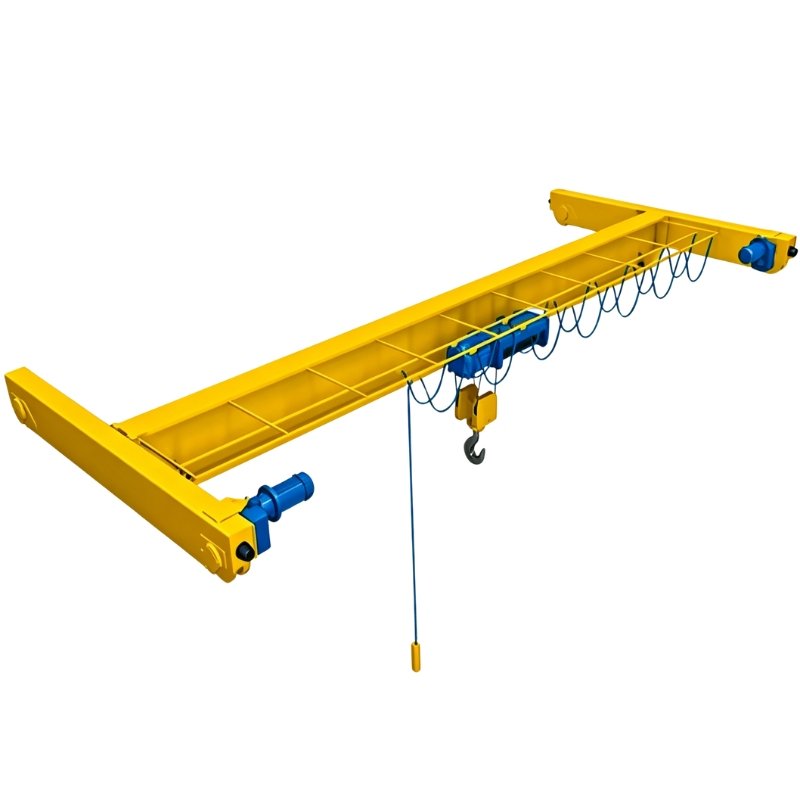
The small vehicle is transported along the track on the top of the main beam. The lifting capacity is high, which means it requires a large height for your factory building.
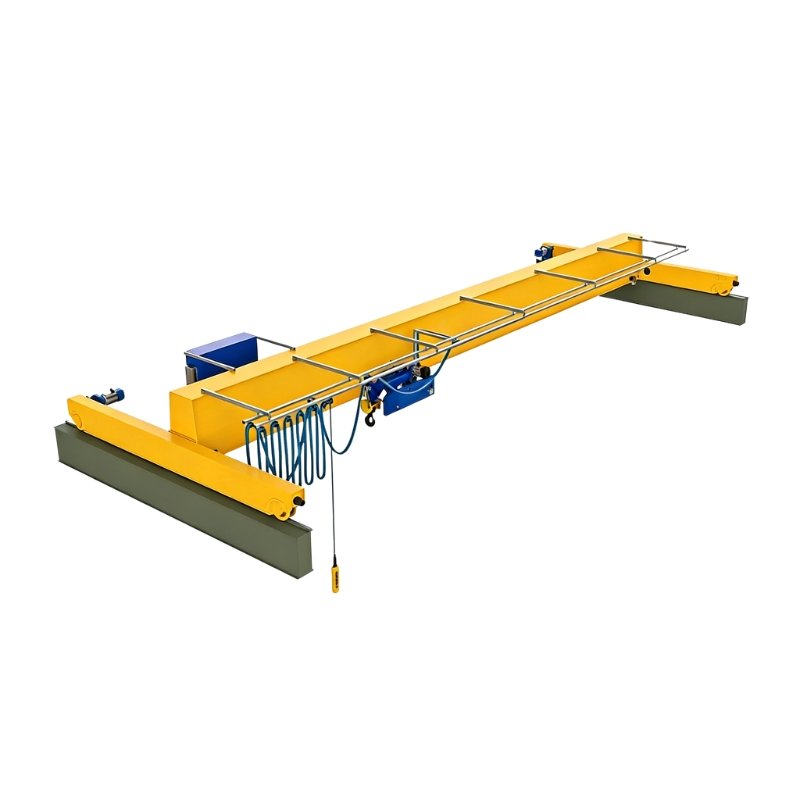
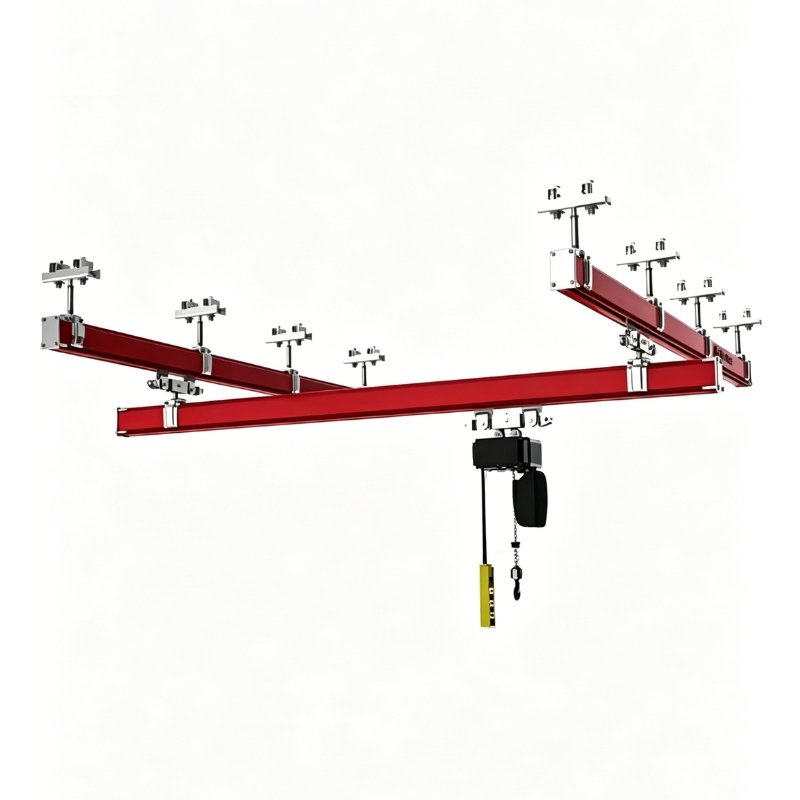
There is no need to install a track. The crane can be directly installed on the structural beams of the building. Suitable for irregular-shaped houses.
For some factories that are prone to dangerous fires and explosions, such as dust factories and oil and gas plants, using this type of crane will reduce the safety risks for you.
Specially designed for semiconductor and other precision environments, the crane, through a special sealing system, can meet the production of clean requirements.
Features of Warehouse Bridge Crane

The warehouse bridge cranes are precisely positioned and can transport your goods along the pre-set route without any errors.

This overhead crane operates in the air without interfering with the activities of ground workers. Ensures safety performance.

During the process of transporting the goods, the operator only needs to press the button to operate. It can save you manpower.

The crane can move goods flexibly between two or more points in the warehouse, thereby improving the project efficiency.
Millimeter-level Precise Positioning
The warehouse bridge cranes of DINGYA are equipped with an intelligent scheduling system.
We use advanced systems, which include high-precision control systems and variable frequency speed regulation technology, to achieve millimeter positioning accuracy.
They can also perform automatic path planning and execute precise object location and grasping tasks while maintaining continuous operation for 24 hours.
They enable users to achieve precise alignment while maintaining operational stability during both heavy loads and high-frequency tasks. There is no need to repeatedly manually adjust the position as usual. This significantly reduces your labor costs.
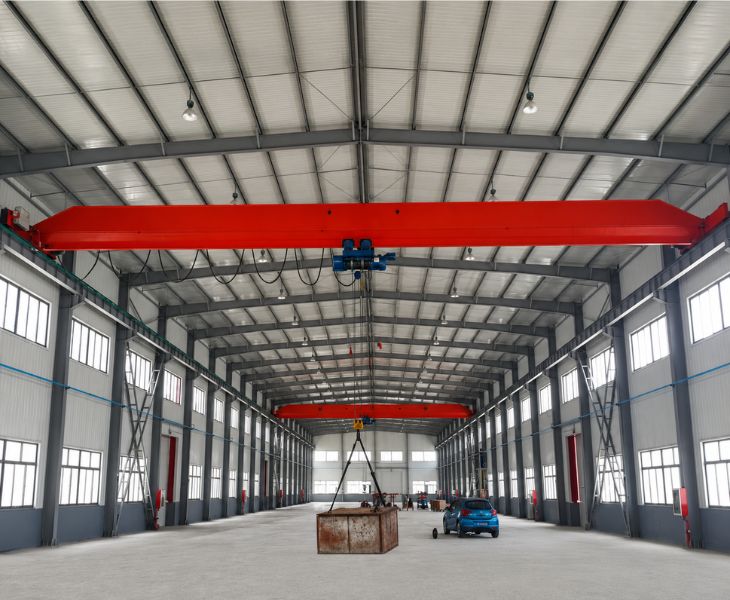
Applications of Warehouse Bridge Crane
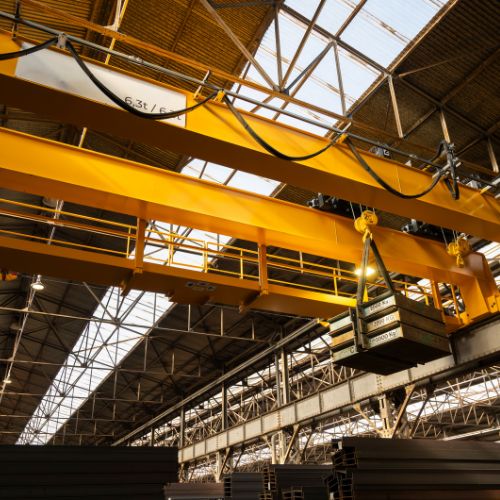
In production workshops such as those of machinery factories, warehouse bridge cranes can easily transport heavy components between various production areas.
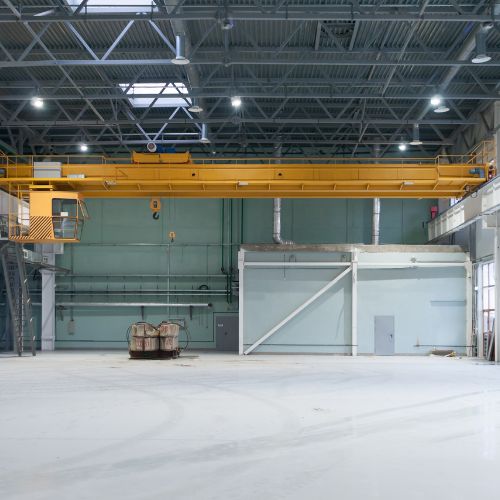
The goods in the logistics center are frequently transported in and out. The crane can help you load and unload the goods quickly, reducing the need for manual handling by people.
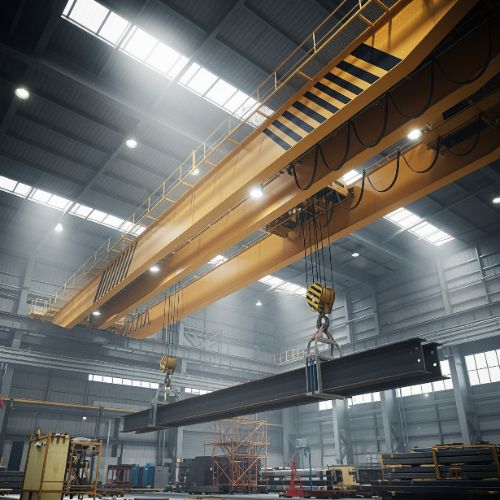
For some heavy steel materials and steel coils, the warehouse bridge cranes can achieve stable lifting and transportation, thereby reducing safety risks.
Below is a brief installation guide for the warehouse bridge crane. We can also provide you with online installation instructions to ensure that the crane can operate safely and officially.
- Evaluate the load-bearing capacity of the warehouse.
- Customized track layout and route.
- Install the track and secure the bridge.
- Lifting bridge frames, trolleys, and other main structures.
- Connect the circuit.
- Test whether it can operate safely.
Under normal circumstances, it is completely fine for you to use it for 20 to 30 years. The combination of heavy-duty steel construction, premium parts, and a smart wear tracking system enables operators to identify and fix performance issues before they become critical.
Bridge cranes require only one initial purchase, which provides decades of service, while forklifts need replacement after five to seven years.
The equipment requires only basic maintenance because it does not need a specialized maintenance team for its operation. The system will operate at optimal performance when you perform regular inspections of essential parts, apply lubrication, and complete basic maintenance tasks.
The use of bridge cranes provides superior efficiency and better space usage because these cranes can operate across their entire area without taking up any ground space. Gantry cranes operate better in outdoor environments while serving temporary needs.
You can tell us the environment you will be using and what you need the crane for. DINGYA will match you with the most cost-effective solution based on your actual working conditions, rather than simply selling equipment.
The entry-level systems start at several tens of thousands of dollars, while the fully automatic intelligent models are even more expensive. Customers who buy this product will receive their total costs back within two to three years because of lower labor expenses and no need to spend money on forklifts and equipment.
People who use effective lifting equipment will experience reduced work expenses because of improved productivity, which allows them to recover their costs within a brief timeframe.
The delivery speed is not fixed. It largely depends on whether you have chosen the standard model or if there are more specific requirements. But usually, it takes no more than sixteen weeks. If you are in a hurry to start the project, it would be best to contact us one month in advance. Leave more leeway for the project.
Sure. Many factories only installed the warehouse bridge cranes at a later stage. DINGYA will evaluate your facility’s structure through its load-bearing capacity and space dimensions and track installation requirements to create a reconstruction and strengthening plan for your facility. It allows you to upgrade equipment without building a new warehouse.
Yes. We will configure a collision prevention system and an intelligent control solution for you to ensure safe and efficient collaborative operations. We will also implement automatic spacing management together with priority scheduling to prevent dangerous operations that occur at short distances.
The operational capabilities of your business will improve through this method because it allows you to meet high-frequency business demands without using warehouse space.
Different types of cranes require different clearance requirements. The existing space of your facility can be fully utilized through our low clearance design solutions. The minimum clearance height requires 4 to 5 meters of space which depends on three factors: the hook height, the load size and the structural design.
We can create an efficient lifting solution for you that maintains your current building height restrictions while keeping construction costs down.
The primary application of bridge cranes exists within the indoor environments of warehouses. Our company also provides rainproof and anti-corrosion and reinforcement design solutions for customers who need equipment to operate outdoors.
If you have any requirements, we can add a weatherproof shell, anti-corrosion coating, and a sealed electrical system for you. As a crane manufacturer, we can provide you with customized warehouse bridge cranes that meet various of your requirements.
How to Choose a Warehouse Bridge Crane?
Assess Your Lifting Requirements
You need to first figure out the maximum weight for daily handling . Choosing a smaller size will limit efficiency, while choosing a larger size will increase costs.
Confirm the Span and Coverage Range
The width of your warehouse and the working area determine the design of the crane’s span. A reasonable span can achieve full coverage of the area and avoid dead corners.
Pay Attention to the Lifting Height and Clearance
The factory building’s height restriction makes low clearance design selection essential for your factory needs.
Choose the Appropriate Control Method
Handle control, remote operation or automated systems – different approaches directly affect your operational efficiency and labor costs. Remote control and intelligent systems serve as better long-term solutions for organizations that wish to decrease their dependence on human workers.
Consider the Working Frequency and Working Conditions
Do you use it infrequently or operate it continuously at high frequency? Different working conditions require different design standards. We will match a more durable and stable configuration based on your usage intensity to avoid frequent maintenance later and thus not affect production.
What is the Working Principle of a Warehouse Bridge Crane?
The warehouse bridge crane uses three coordinated movement axes to execute its operations which enable it to achieve precise load placement throughout its operational area.
- Bridge operation (long travel): The bridge system needs two horizontal beams together with end beams to support its complete bridge span.
- The lateral movement of the vehicle: The vehicle needs to be lifted up so it can move across the complete width of the facility by using the bridge’s main beam.
Lifting: The lifting mechanism uses steel cables and chains to control load movement between two height positions. It supports various lifting methods, which include hooks and magnets and grabs and specialized lifting accessories based on different application requirements.