
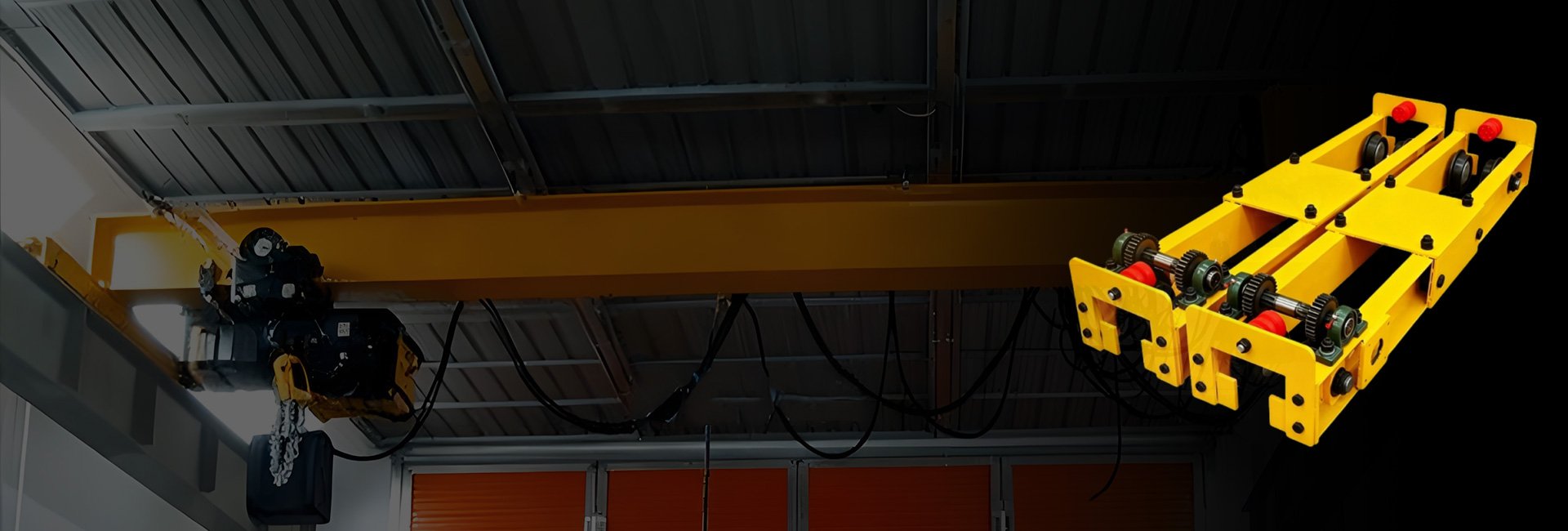
DINGYA - A Reliable End Carriage Supplier in China
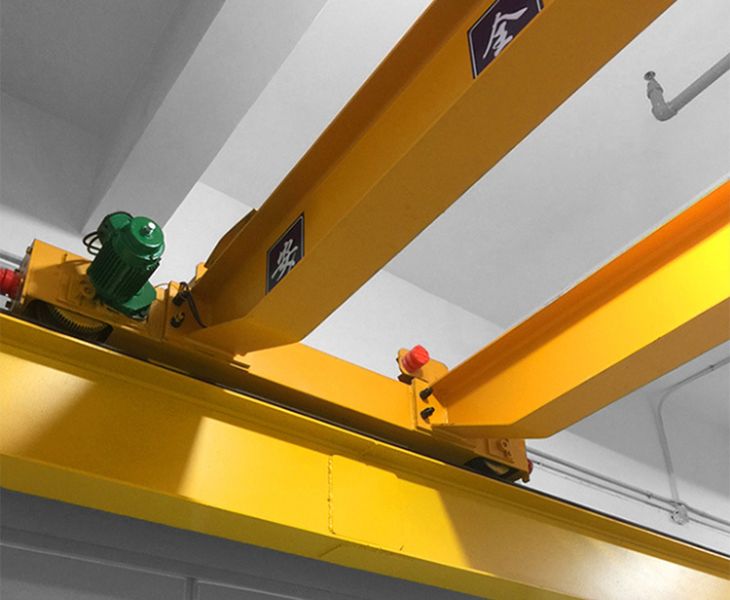
DINGYA’s end carriage systems enable overhead cranes to distribute load precisely and ensure the crane girders move stably. They are not only easy and flexible to install but also highly durable, maintaining stable performance even during continuous operation. They are widely used in many overhead cranes, making them ideal for various manufacturing conditions.
As an experienced Chinese end carriage manufacturer, DINGYA offers OEM and customized solutions based on your crane specifications. Our factory has mature manufacturing processes and strict dimensional control, and supports customization of wheelbase dimensions, motor configurations, wheel materials, and connection structures to accommodate your equipment.
Products by Features
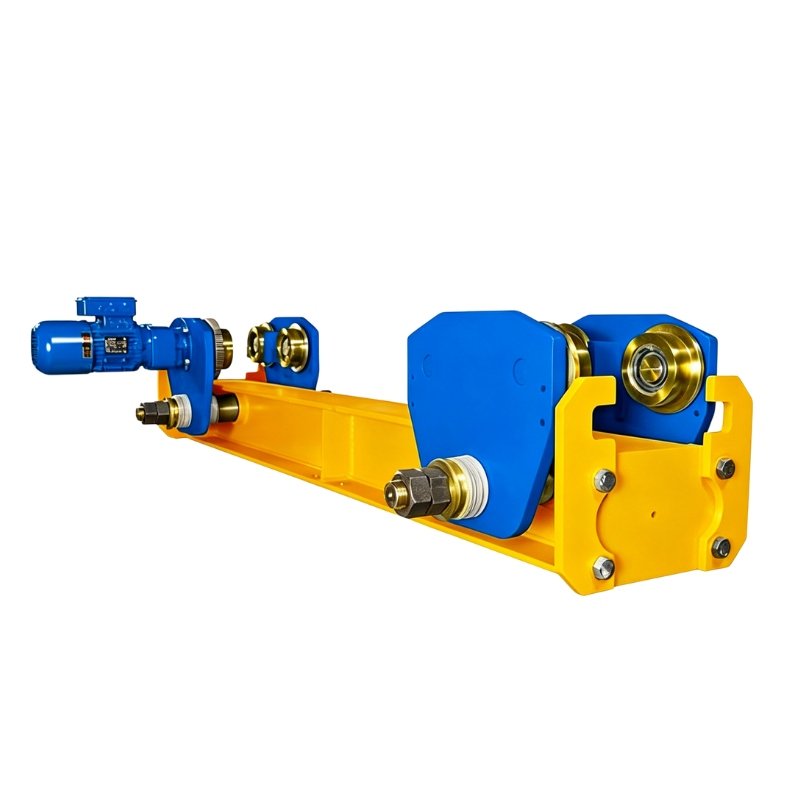
It runs above runway beams, offering greater load-bearing capacity and stability, which makes it ideal for cranes operating in high-clearance places and heavy-duty industrial environments.
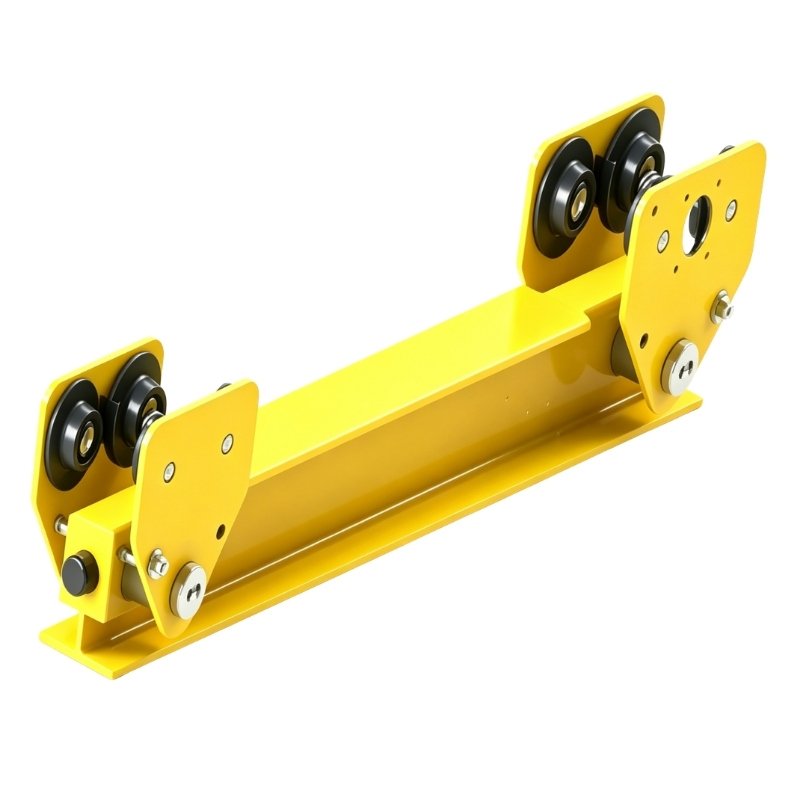
It is mounted beneath the runway beam of an underhung crane and runs suspended from the lower flanges of the I-beam, allowing for stable operation even in limited headroom.
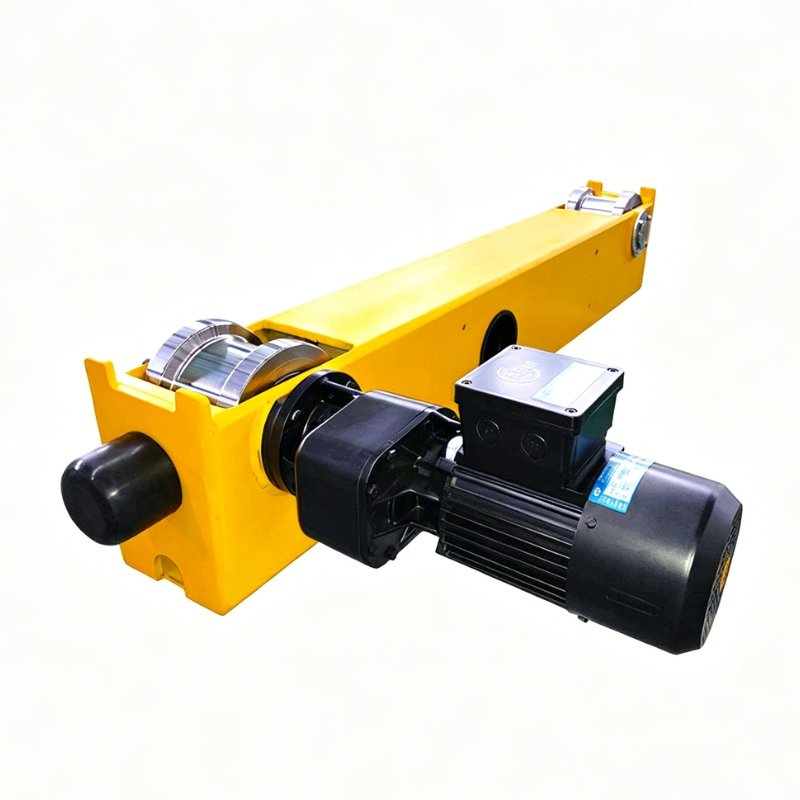
It is specifically designed for material handling in medium-duty and light-duty overhead cranes. It has a compact and lightweight design, is flexible to install, and is cost-effective.
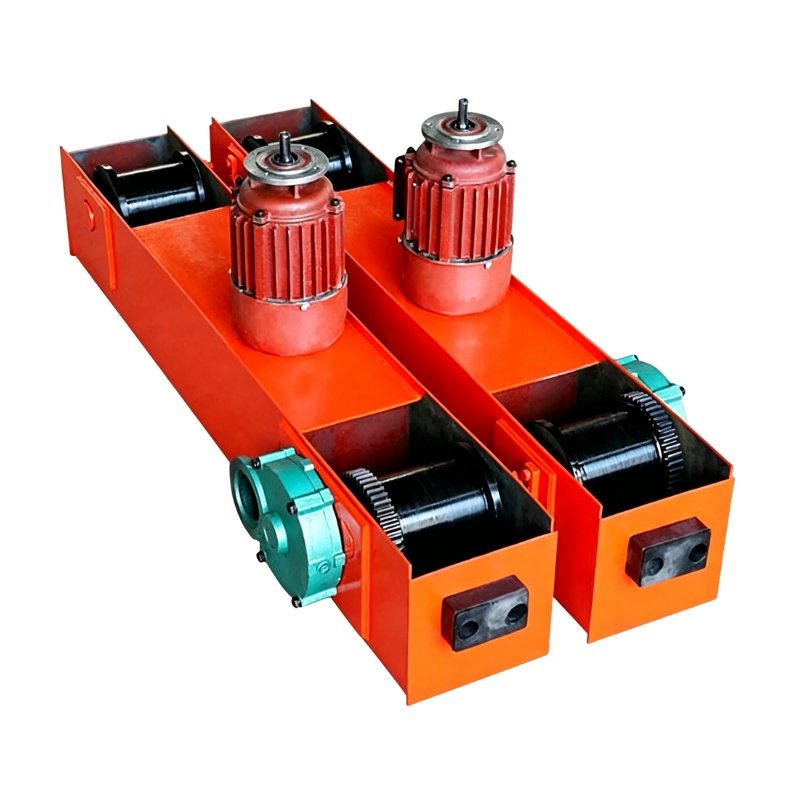
With its sturdy construction and heavy-duty wheels, it is capable of supporting heavy-duty cranes with high load capacities and long spans. It can withstand harsh operating conditions.
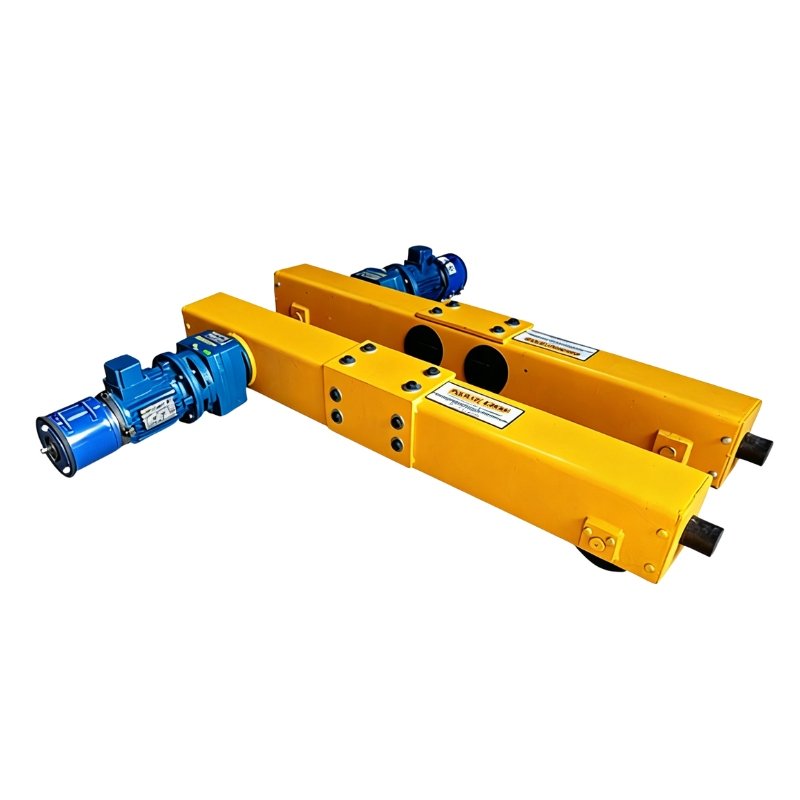
It has a modular, lightweight design that complies with FEM/DIN standards, and is equipped with high-precision components, which enhance crane efficiency, reduce noise, and simplify maintenance processes.
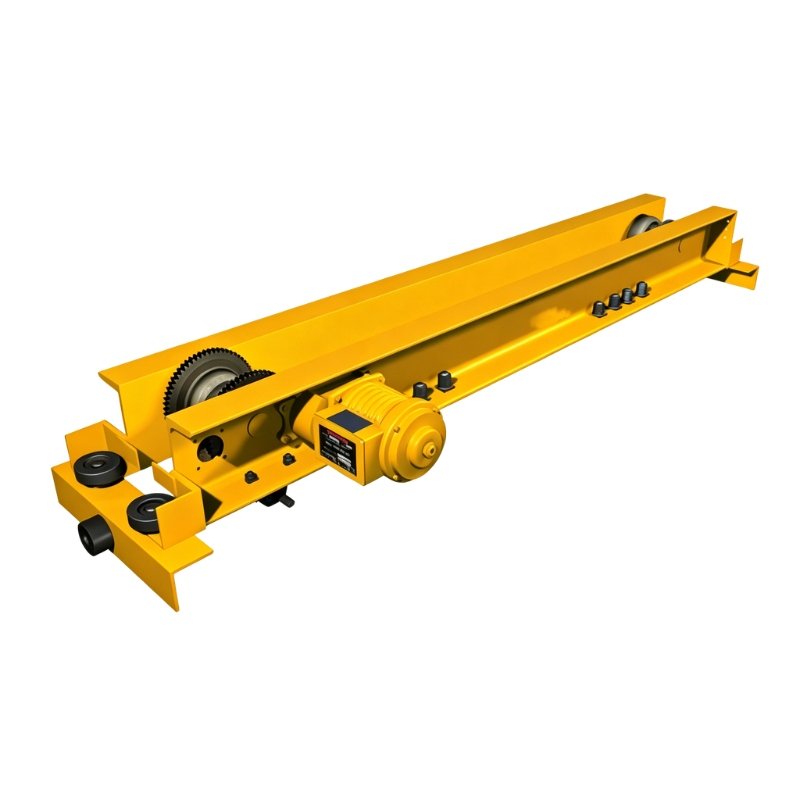
It uses multiple wheel assemblies to evenly distribute heavy loads and reduce stress on the tracks. It can ensure stable operation and track protection even when handling extremely heavy loads.
Low-Vibration Travel Operation
Our end carriages have precision-machined wheel sets and high-quality bearings. They can operate on the track smoothly and effectively reduce crane movement impact during starting and stopping. We also offer models controlled by variable-frequency motors, which provide bumpless synchronization and soft start transitions. The low-vibration travel operation of our end carriage systems ensures the safety of delicate loads, reduces wear on the wheels and tracks, and creates a quieter factory environment for you.
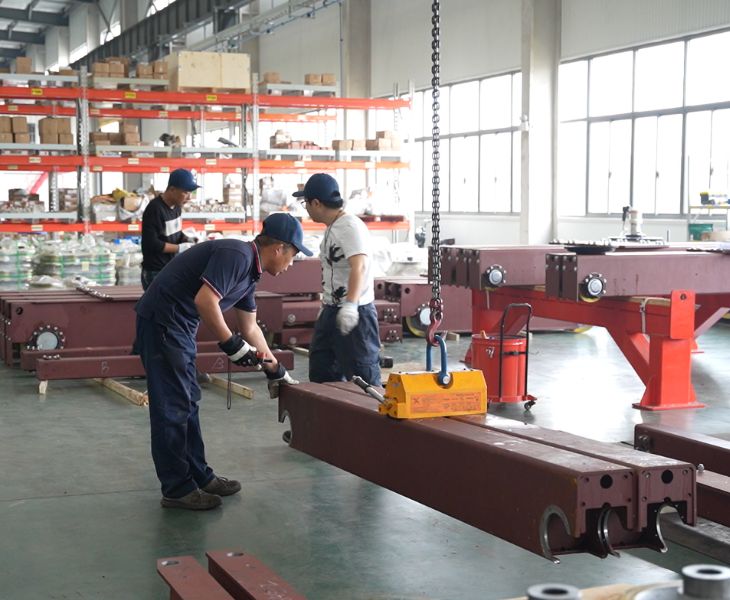
Reinforced Welded Construction
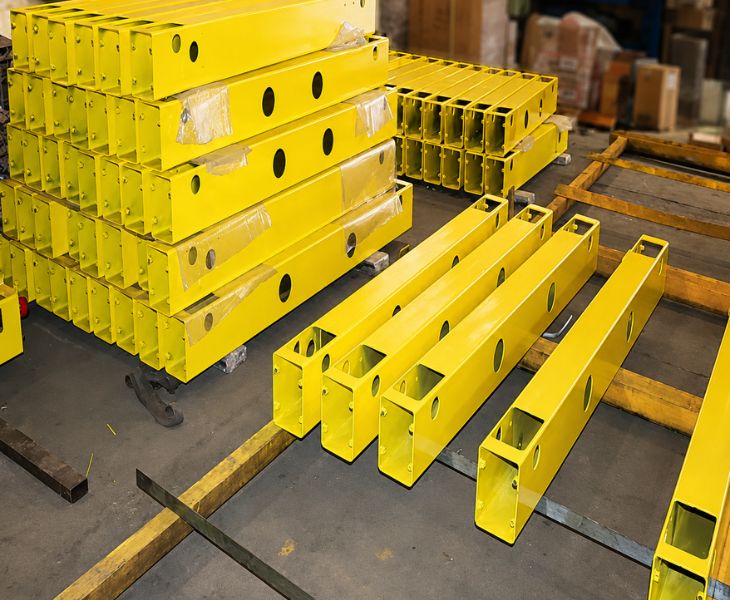
Our end carriages feature a reinforced welded construction using high-tensile steel plates and continuous fillet welds, enabling them to resist deformation and cracking. They are suitable for heavy-duty cranes and industrial environments, such as steel mills and warehouses, where extreme duty cycles are common. The reinforced welded construction not only enhances our end carriages’ durability but also improves the stability of your entire crane system, preventing misalignment between the rails and the wheel flanges.
Compact Space-Saving Structure
Our end carriage systems feature an integrated design that minimizes unnecessary structural bulk while maintaining the required load-bearing capacity. Their compact structure allows them to use space more efficiently and better adapt to workshops with low headroom. Within the same building span, they also allow for greater lifting heights. Despite the compact structure, our end carriages maintain sufficient rigidity and stability during continuous operation. In addition, they are quick and easy to install, so they are widely adopted.
Applications of End Carriage
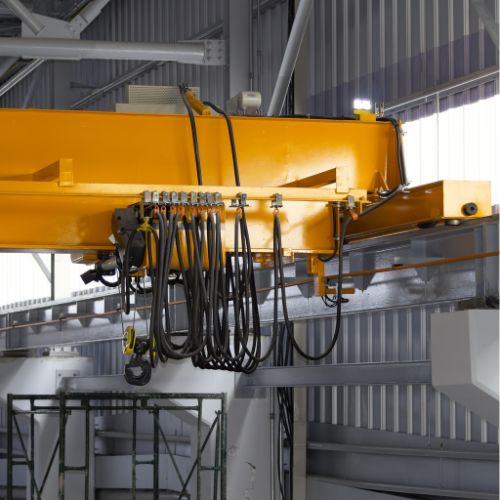
For overhead cranes operating on assembly lines and in manufacturing facilities, our end carriage system enables efficient and precise material handling. The consistent quality minimizes downtime, making it ideal for modern plants that frequently perform high-load industrial operations.
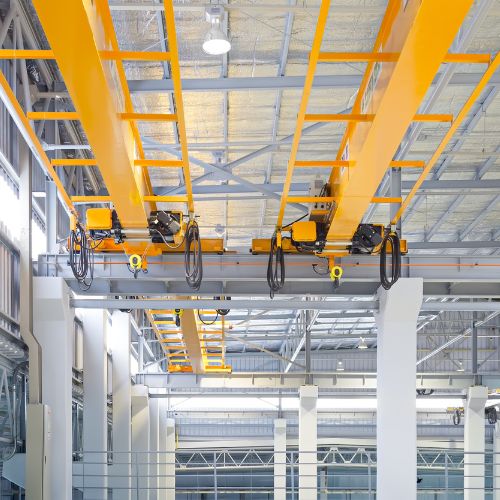
Warehouse and logistics centers require smooth and efficient material flow between storage and loading/unloading areas. Our end carriage solutions not only enable cranes to handle heavy loads efficiently but also ensure stability in high-intensity warehouse environments, minimizing operational downtime.
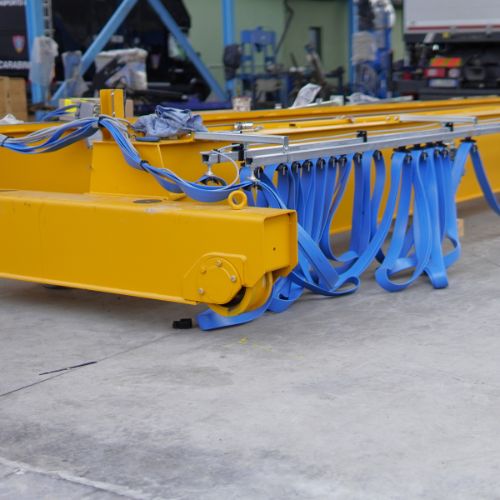
In heavy-duty industrial environments such as steel plants, machinery workshops, and metal processing facilities, where operational reliability and structural durability are of the utmost importance, our heavy-duty end carriages maintain stable performance even when subjected to high wheel loads.
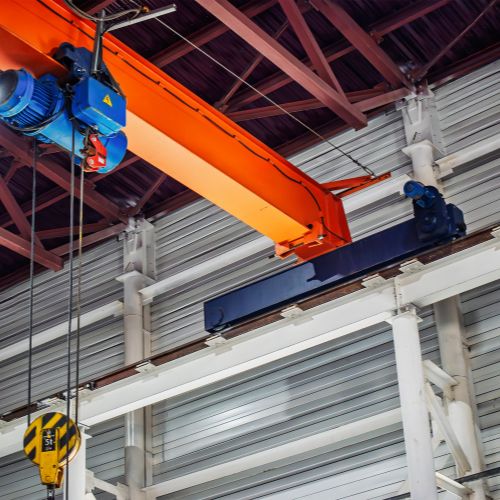
Power plants and energy facilities demand the highest levels of safety and operational stability. With the robust structure and low vibration, our end carriage system can help cranes provide reliable and efficient equipment handling, which significantly reduces accident likelihood.
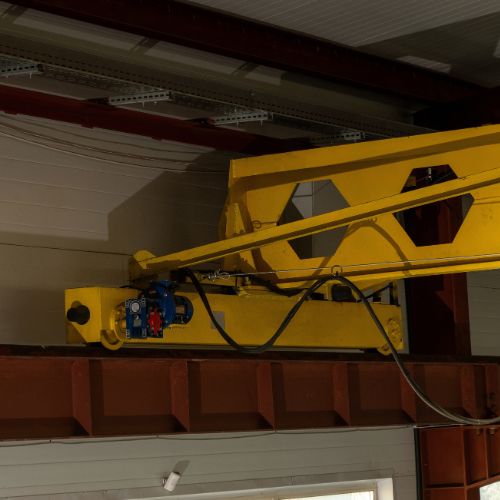
Chemical plants, hazardous workshops, and flammable materials handling environments have strict requirements for industrial safety. To address these needs, we offer reliable and durable end carriage systems for specialized explosion-proof cranes to ensure the safe and stable operation of your crane.
Modular end carriages are designed according to standardized specifications, which makes them highly versatile and can be flexibly adapted to different crane spans, wheel loads, and beam configurations.
They are widely used in single-girder overhead cranes, double-girder overhead cranes, suspended cranes, gantry cranes, and European-style overhead cranes. Modular end carriages are easy to install. Their routine maintenance and future upgrades are also very convenient.
Most bridge cranes use single-flange wheels on their end carriages, while gantry cranes or heavy-duty applications commonly use double-flange wheels to ensure stability. Overhead cranes, on the other hand, use flangeless wheels or tapered wheels.
In terms of materials, forged steel wheels offer exceptional strength and are widely used in heavy-duty bridge cranes. Ductile iron wheels provide excellent self-lubricating properties, reducing rail wear and noise in medium- and light-duty applications. Polyurethane-coated wheels are often used in environments where shock absorption and rail protection are critical.
To reduce maintenance costs for crane travelling systems, the first step is to select the end carriages equipped with high-quality wheels, bearings, motors, and gearboxes that are less prone to unexpected downtime. Ensuring precise wheel alignment during installation reduces mechanical stress and track wear, thereby avoiding high repair costs.
Using a variable-frequency drive can significantly reduce mechanical stress through soft starts and stops. Regular preventive maintenance is also crucial. You should regularly inspect and lubricate the tracks and promptly replace worn parts. If your crane uses a modular end carriage system, the maintenance process can be further simplified.
End carriage systems for light-duty cranes and medium-duty cranes typically use deep groove ball bearings, which offer low friction and smooth operation.
Bearings for heavy-duty cranes must be able to withstand high radial loads, so heavy-duty cranes’ end carriages often use spherical roller bearings, which can accommodate slight shaft misalignment.
In high-load applications that need higher axial and radial load capacities, tapered roller bearings are a more ideal choice in crane end carriage systems.
If you prioritize precision in speed control for your crane, choose a direct drive end carriage. It has a compact design, fast response times, and low mechanical transmission losses, and needs less maintenance.
If your crane is the heavy-duty, high-capacity model, choose the cost-effective geared drive end carriage. It uses the reducers to increase torque and offers greater stability during continuous operation.
For double trolley cranes, the geared drive end carriage is also better suited for ensuring trolleys’ synchronized movement and handling the complex dual-load coordinations.
Common Problems With Crane End Carriages
Wheel Misalignment And Rail Wear
Wheel misalignment in the end carriage system not only causes the crane to skew but also increases friction between the wheels and the rails, leading to unstable travelling, vibration, and abnormal rail wear. Over time, this can even damage bearings, motors, and structural components.
To ensure smooth crane operation and avoid excessive maintenance costs, besides installing wheels precisely, choosing our precision-machined end carriages also helps reduce the likelihood of this common issue occurring.
Structural Fatigue And Weld Cracking
Cranes operating under continuous heavy loads may experience structural fatigue if the end carriage frame lacks enough structural strength. Poor weld quality can also lead to cracks near load-bearing areas.
These issues can cause unexpected downtime and reduce operational safety. Our end carriages are constructed from high-strength steel and feature reinforced welded structures, ensuring excellent structural durability and a long service life.
Information Required To Customize An End Carriage
Crane Capacity And Span
The crane’s lifting capacity and span directly affect the end carriage’s dimensions, motor selection, wheel load calculations, and stable travelling. To ensure that the custom end carriage is properly matched to your crane’s main girder and track system, please provide us with accurate crane specifications when communicating with us.
Wheel And Rail Specifications
Different track types and wheel materials can affect crane stability, wear resistance, and maintenance frequency. Therefore, when customizing an end carriage, please provide us with detailed specifications such as the required wheel diameter, rail models, and travelling speed so that our engineers can optimize the wheel assembly and travelling mechanism configuration.
Working Environment And Power Supply
Your specific application environment is equally important in determining the design priorities for the end carriage; we will use this information to select materials and determine the protective configuration. For export projects, you will also need to provide electrical standards such as required voltage and frequency to ensure compatibility with local motors and drive systems.
How To Choose The Right End Carriage For An Overhead Crane?
Match The Crane Duty And Load Capacity
First, you need to determine your crane duty classification and maximum wheel load requirements. If your crane is light duty, choose an end carriage with a compact modular structure.
If your crane is designed for heavy-duty applications, you will need an end carriage with a reinforced frame and larger wheel assemblies. To ensure safe operation and a long service life for your crane, be sure to achieve the correct load matching.
Consider Installation Space And Crane Type
Top-running cranes, underhung cranes, single-girder cranes, and double-girder cranes require end carriages with different structures and configurations. Only an end carriage with the correct structure will be compatible with your crane. If your workshop height is limited, compact, space-saving designs are also necessary.
Evaluate Maintenance And Long-Term Operating Costs
While choosing a high-quality end carriage may have higher initial costs, it can significantly reduce the maintenance frequency and the risk of unexpected downtime. Our end carriages are constructed with high-quality wheel materials, precision bearings, and an optimized drive system, ensuring stable and reliable performance and helping you save on maintenance costs.
Surface Treatment Options Available For End Carriages
Industrial Painting Coating
Depending on the specific working environment and your requirements, we can provide industrial paint coatings in various thicknesses and to different standards to protect the end carriage from harsh conditions such as corrosion, moisture, and dust. This common surface treatment can also enhance the end carriage’s appearance.
Sandblasting Surface Preparation
Sandblasting the surface of the end carriage structure to remove rust, welding residue, and surface impurities can improve paint adhesion. This process also enhances the coating durability, which is crucial for end carriages that will be operating in harsh industrial environments.
Galvanizing And Special Protective Coatings
In environments such as ports, chemical plants, and outdoor settings where equipment is exposed to moisture or corrosion, galvanizing and special anti-corrosion coatings can reduce the risk of corrosion for end carriages, making them better suited for these environments.