
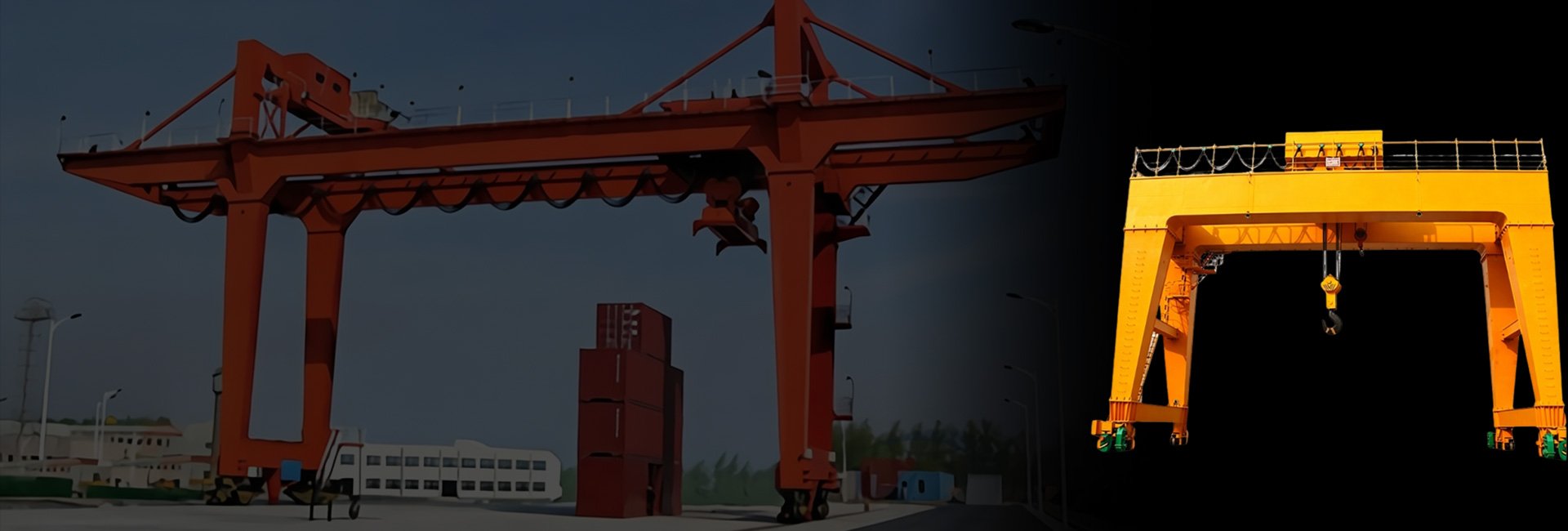
DINGYA - A Reliable Goliath Crane Supplier in China
DINGYA’s goliath crane is a kind of heavy-duty gantry lifting equipment specifically designed for lifting oversized materials in large outdoor work areas. It is widely used in shipyards, steel manufacturing plants, and infrastructure constructions, and is suitable for situations that need high lifting capacity and a large span. It can reduce reliance on multiple small cranes and thereby improve overall efficiency.
As a professional goliath crane manufacturer, our products are precisely engineered and meet the strict international quality standards. We use advanced welding processes and structural tests to produce stable and consistent goliath cranes. We also have rich export experience and can provide reliable delivery to customers around the world.
Our Products
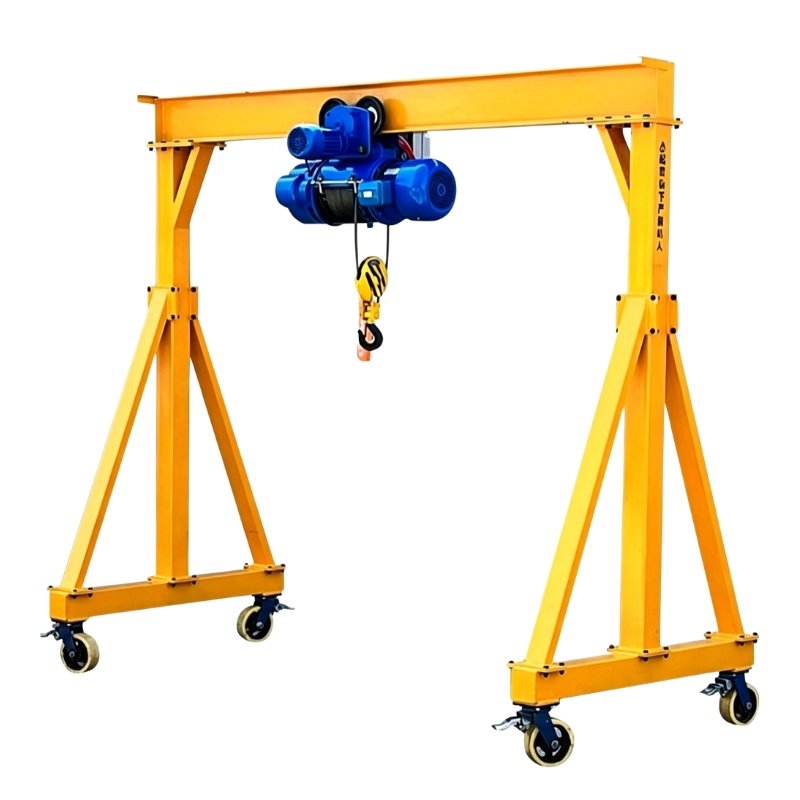
It has a single beam and can withstand moderate loads. It is easier to install and has better stability, so it is widely used in general industrial situations.
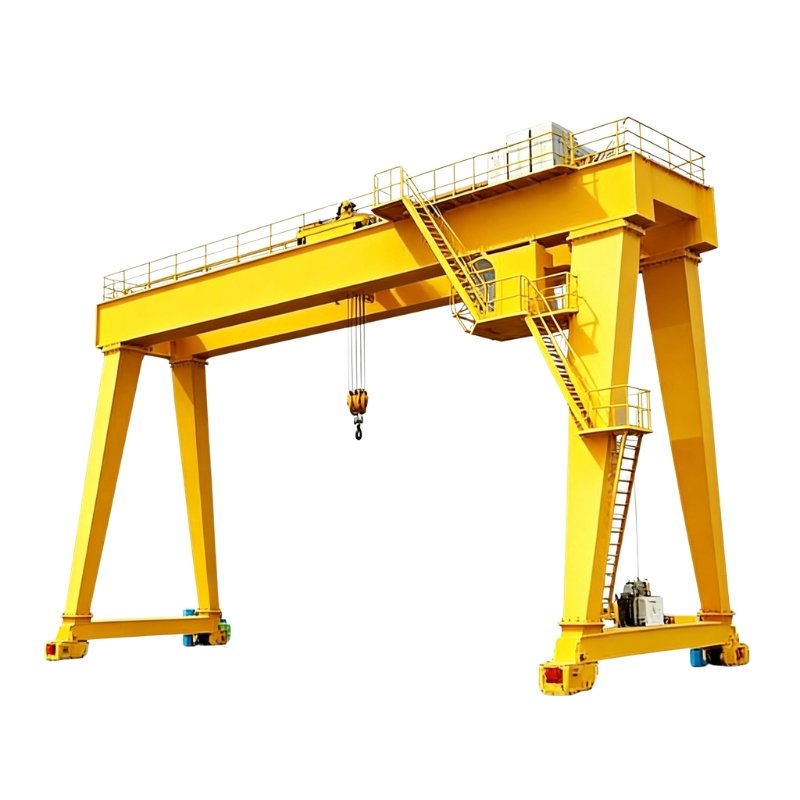
The double-beam structure can support greater lifting loads and spans, and enable the goliath crane to perform more stable and precise lifting operations in high-strength industrial environments.
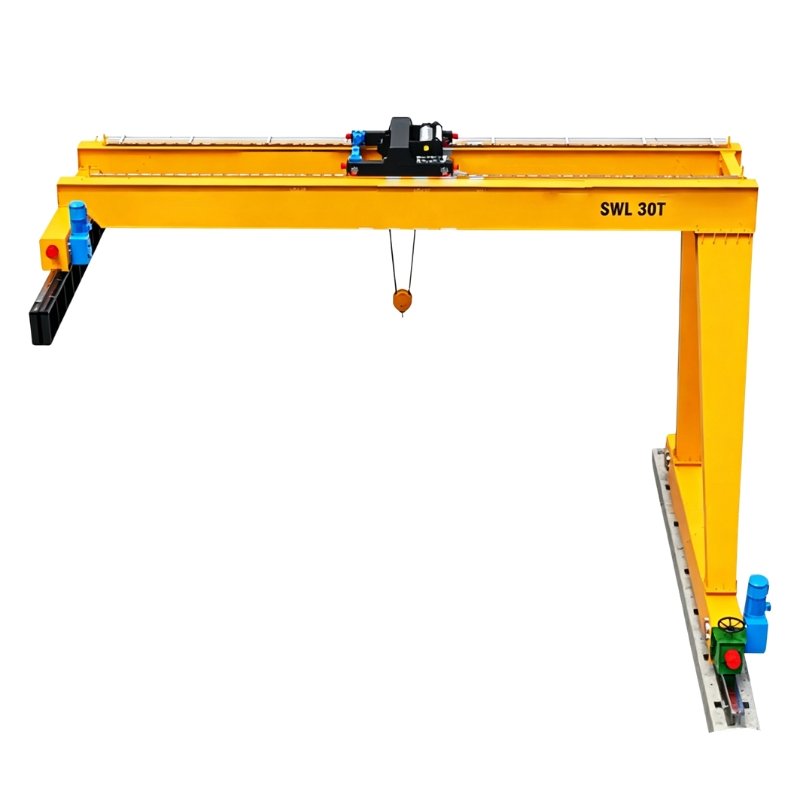
It relies on ground tracks on one side and runs on a track fixed to the building structure on the other side, which can reduce infrastructure costs in limited spaces.
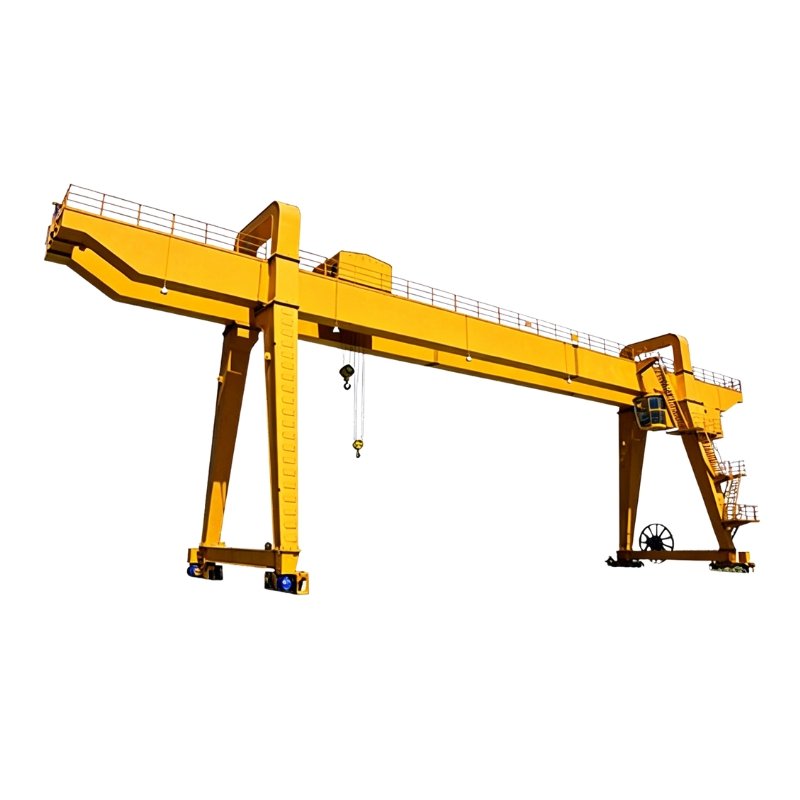
It is fully supported by the ground and runs along the track, which makes it suitable for outdoor operations. It does not rely on plant structures and has more flexibility.
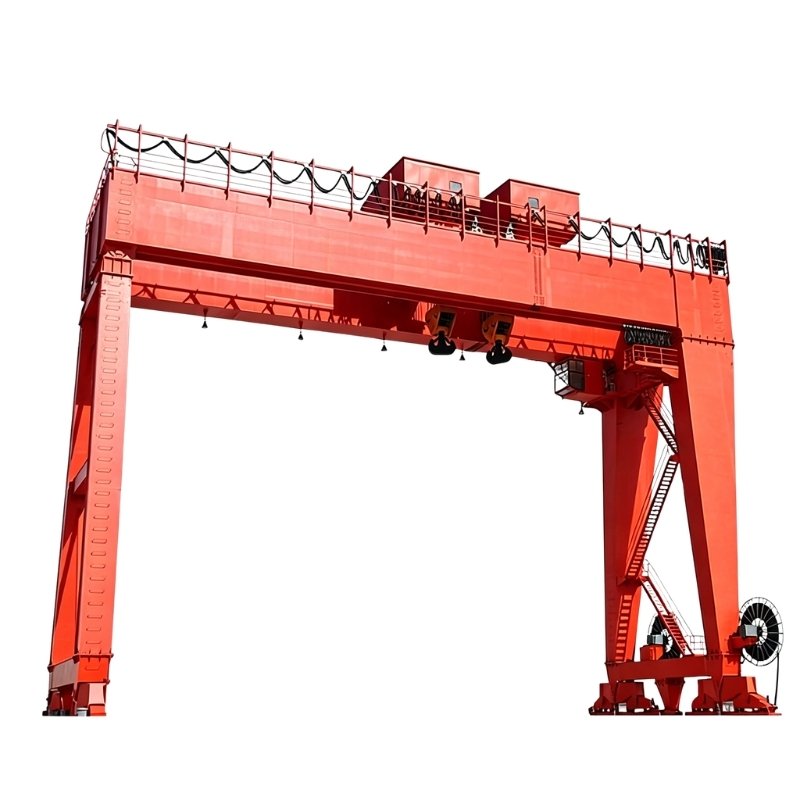
The box beam provides higher rigidity and can bear more loads. It has less deformation when carrying heavy loads during operations.
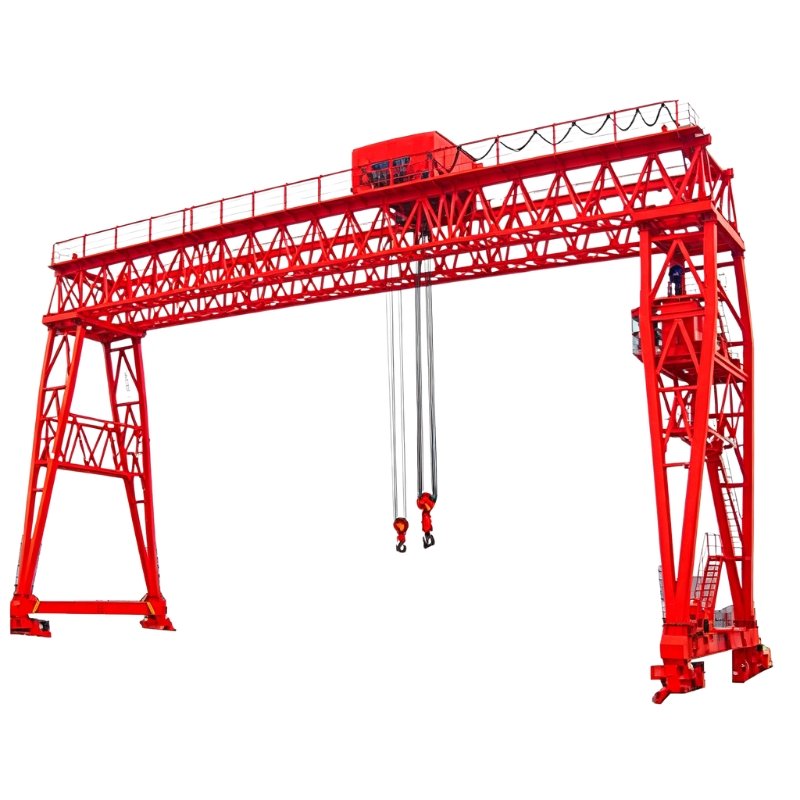
It has a lower deadweight, and its truss structure can effectively reduce wind resistance without reducing its structural strength and operating efficiency. This makes it ideal for outdoor work.
High Load Performance
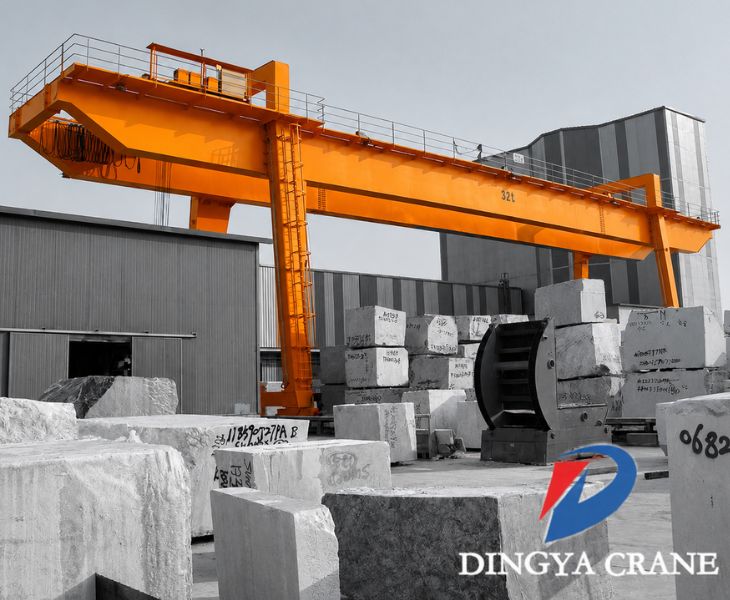
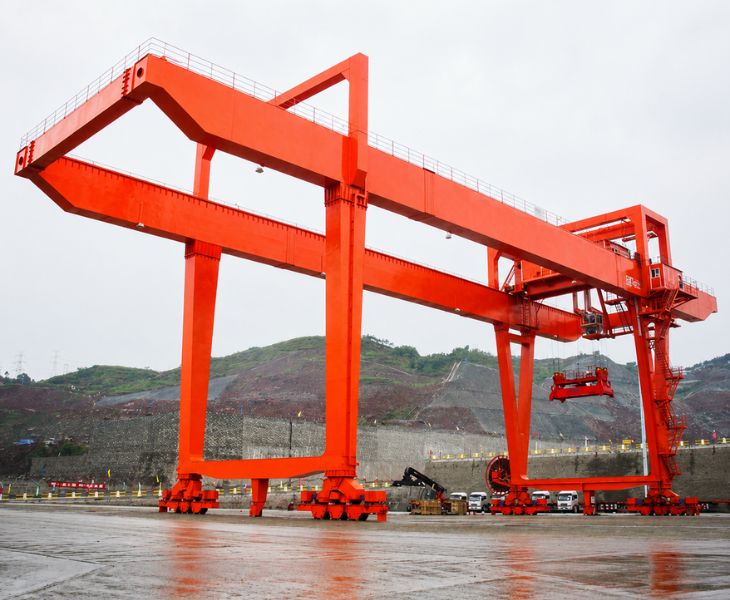
Our goliath cranes are built with a reinforced structural design that optimizes force distribution, which allows them to stably lift heavy components that weigh hundreds of tons without swaying. Our goliath cranes use a box-type main beam, and their support legs are also strengthened. Even when fully loaded or in a sudden stop or start, our goliath crane can operate smoothly and be accurately positioned, which protects employee safety in addition to ensuring your productivity.
Low Maintenance Costs
We build the goliath crane precisely with durable and high-quality materials, which reduce the goliath crane’s wear and tear, extend its life, and lengthen the maintenance cycles it needs, thereby reducing the maintenance frequency. Key wear parts are designed to be easily replaceable. The electrical components are sealed in an electrical cabinet, which prevents dust and moisture and reduces electrical failures. Choosing our goliath crane not only reduces your direct maintenance costs but also indirectly reduces losses caused by downtime.
Excellent Corrosion Resistance
The air in shipyards or coastal areas is humid and corrosive to steel. Our goliath crane is treated for corrosion resistance. Its main structure is coated with multiple layers of anti-corrosion coating. All fasteners have a metal coating that resists rust. Even the electrical cabinets are made of stainless steel. These tight protections allow our goliath crane to operate stably for many years and maintain a professional appearance even in harsh environments such as humidity, salt spray, and chemical attack.
Applications of Goliath Crane
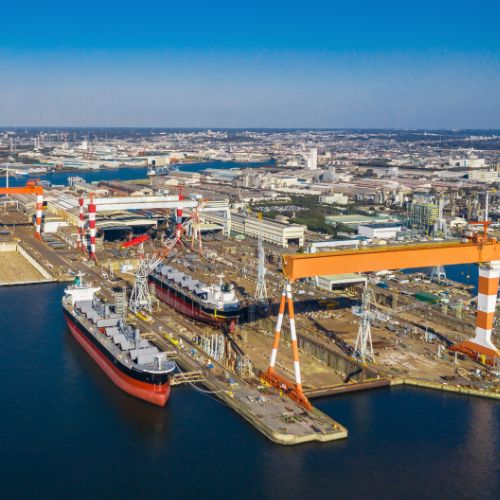
Our goliath crane can easily lift very large components such as ship blocks, offshore modules, and heavy steel structures. Whether building a giant ship or an oil platform, our goliath crane can complete the lifting work efficiently and accurately. They can steadily advance their projects even in salt spray.
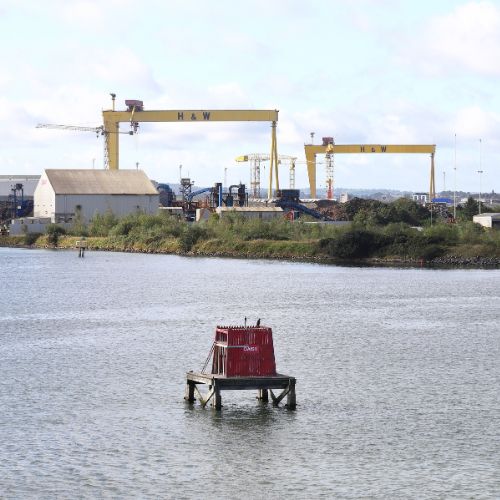
In heavy manufacturing, a goliath crane can efficiently handle large steel structures. They have a large span and can replace multiple small cranes. The goliath crane can turn around heavy materials more steadily and rapidly, and position them precisely to reduce damage. It can make production run more smoothly.
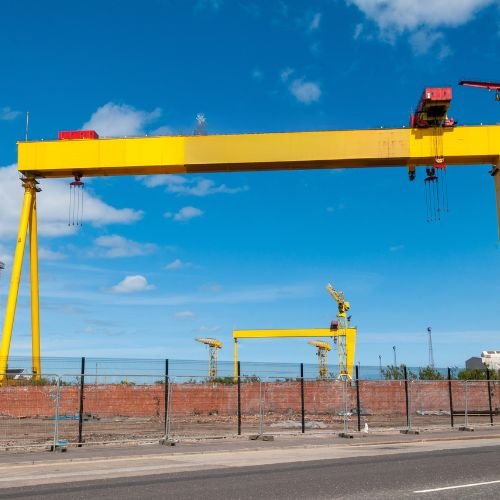
For infrastructure and large EPC projects, a goliath crane can provide heavy load support on site. Whether you are building bridges, power stations, or stadiums, our goliath crane can be quickly assembled on site. No matter how complex the process is, they can lift different parts into place accurately.
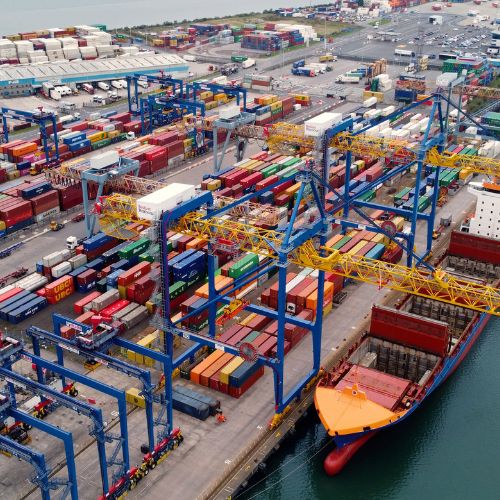
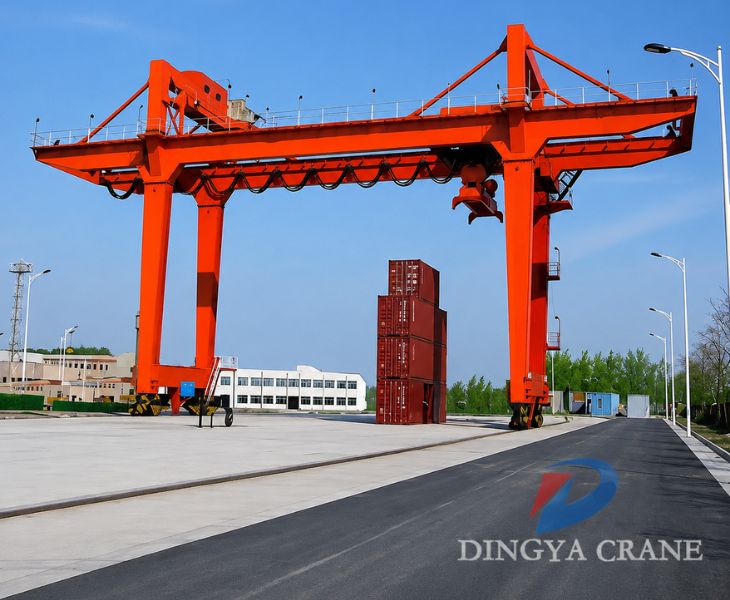
Cargo loading, unloading, and transshipment need the lifting devices’ assistance. Our goliath crane can connect to the yard power grid. They also combine mobility with large capacity, and can move flexibly between rows even when stacking multiple layers of containers, which greatly improves the turnover efficiency.
They are mainly different in scale, structural strength, and application situations. The goliath crane is a kind of large gantry crane specially designed for heavy engineering, while regular gantry cranes are mostly used in medium and light industrial work sites.
Goliath cranes typically have larger spans, higher lifting weights, and better structural strength. Regular gantry cranes are small, movable, and have smaller loads and spans.
The goliath crane typically works on rails, and its legs have extremely high torsional stiffness and dynamic load-bearing capacity, but the regular gantry crane’s legs can only bear moderate loads.
Load testing is used to verify whether a goliath crane can safely perform all functions with loads. New goliath cranes must pass the test before they can be put into use. The tests include no-load testing, static load testing, and dynamic load testing.
First, verify the crane’s smoothness and the safety limit switch’s sensitivity while working without loads. After that, hold 125% of the rated lifting capacity for a period of time to achieve static load testing. Finally, perform the dynamic load test with starting, stopping, and braking operations at various speeds to ensure that there is no control failure.
Transporting disassembled goliath cranes needs careful planning. They are usually disassembled into the main components, such as the main beam, outriggers, end beams, lifting system, and electrical system.
Each section will be marked, reinforced, and shipped with flat rack containers or bulk cargo shipping. According to the transport distance and local infrastructure, these components are transported on special heavy trailers, rail wagons, or barges.
If the components need to be transported overseas, they are usually carried by ocean vessels. It is important to prevent the steel structure’s deformation and corrosion. Transporting these large components may need an over-limit transport permit.
Installing a goliath crane on site includes inspecting the foundation, calibrating the track, and assembling structures step by step. First, check the foundation and track’s levelness, straightness, track gauge, and load-bearing capacity before assembling.
Install the support legs and lift the main beam with an auxiliary crane. Then install the electrical system, lifting mechanism, and control system. After assembly, calibrate the entire goliath crane to ensure its smooth operation.
The installation must be performed by professional engineers according to the drawings we provide to ensure the goliath crane can operate stably for the long term and meet safety standards.
To comply with OSHA and ANSI standards, goliath cranes must be equipped with an overload protection system to prevent the load from exceeding the goliath crane’s rated lifting capacity, a limit switch that stops the crane when it reaches the end of the track, and a stop button that can stop the operation immediately.
The anti-collision system can detect and prevent the goliath crane from colliding. Track sweepers can remove debris from the crane’s path. Audible driving alarms and clearly marked safety barriers are also very important. In addition, cranes must undergo regular inspections and load tests every four years.
Goliath cranes need reinforced concrete foundations and high-precision track systems to ensure safe operation. The foundation should be designed according to geological conditions and spans. It must also be able to support the crane’s deadweight plus its maximum load capacity. The track must be installed very precisely.
The straightness tolerance within the entire span must be within 3‑5 mm, the track gauge must be accurately aligned, and expansion joints must be set according to the temperature range. Poor track alignment can lead to wheel wear, bearing overload, and uneven leg stress.
Yes, modern goliath cranes can be equipped with remote control or semi-automated systems, which allow operators to control their lifting movements from a safe distance. This method improves the operation’s efficiency and accuracy, and reduces the close operations’ risks.
The automation system can be controlled by handles, radio remote control, and programmable logic controller to lift repetitively. Fully automatic systems used on goliath cranes are less common, but can also be achieved in specific industrial environments.
Besides, in remote mode, the goliath crane’s safety functions, such as overload protection, limit switches, and emergency stop mechanisms, are still available.
Preventing the rail from misaligning and the goliath crane from skewing starts with installation and inspection. When installing the goliath crane, the rail’s horizontal and straightness must be strictly controlled, and the wheel must be aligned. The track can be calibrated with laser equipment.
When operating the goliath crane, overloading or uneven lifting should be avoided. You should maintain regularly to detect wear, foundation settlement, or track deformation. Our goliath cranes provide a synchronous control system to correct offsets between the legs and prevent deflection. If the deflection exceeds the safety limit, the stop switch will be activated.
How to Maintain A Goliath Crane?
Routine Inspection of Structural Components
Inspect the main beams, legs, welds, and bolts for cracks, deformation, or fatigue problems regularly to ensure the goliath crane can operate safely.
Lubrication of Moving Parts
Lubricate the goliath crane’s wheels, bearings, gears, and lifting mechanisms in time to reduce their friction and wear, thereby improving its operating efficiency and service life.
Electrical System Maintenance
Inspect the goliath crane’s cables, electrical cabinet, motor, and connecting parts. If there is damage, the electrical parts must be replaced in time to ensure a stable and safe power supply.
Rail and Wheel Alignment Check
Correct the track regularly to ensure it is level and aligned.
Hoisting System Inspection
Check the wear of wire ropes, hooks, pulleys, and brake systems, and replace aging parts in time to avoid accidents.
Surface Treatment
Check the coating, and if there are exposed steel parts, touch up the paint to prevent the exposed parts from rusting. This is very important in humid environments.
Safety Device Testing
Test limit switches, overload protection, emergency stop devices, and alarm systems regularly to ensure that all safety devices operate normally.
Power Supply Options for A Goliath Crane
Electric Power Supply
This is the most common way to supply power for the goliath crane. It is suitable for operating continuously with high-frequency, and is environmentally friendly. It usually provides stable power by cable reels or busbar systems.
Cable Reel Systems
It is suitable for rail-mounted goliath cranes with long travel distances. The cables are retracted and released with the goliath crane’s operation.
Busbar Systems
It provides continuous power for goliath cranes through sliding contacts. Busbar systems have low maintenance requirements and are suitable for industrial operations with high intensity.
Diesel Generator Power
Diesel generation is suitable for remote areas without a grid. It can provide electricity for the goliath crane’s operation when the external grid is unavailable.
Hybrid Power Systems
The goliath crane, which can be connected to the grid and has a diesel generator as a backup power source, can still operate when the power is unstable or during a power outage, which prevents project interruption.