
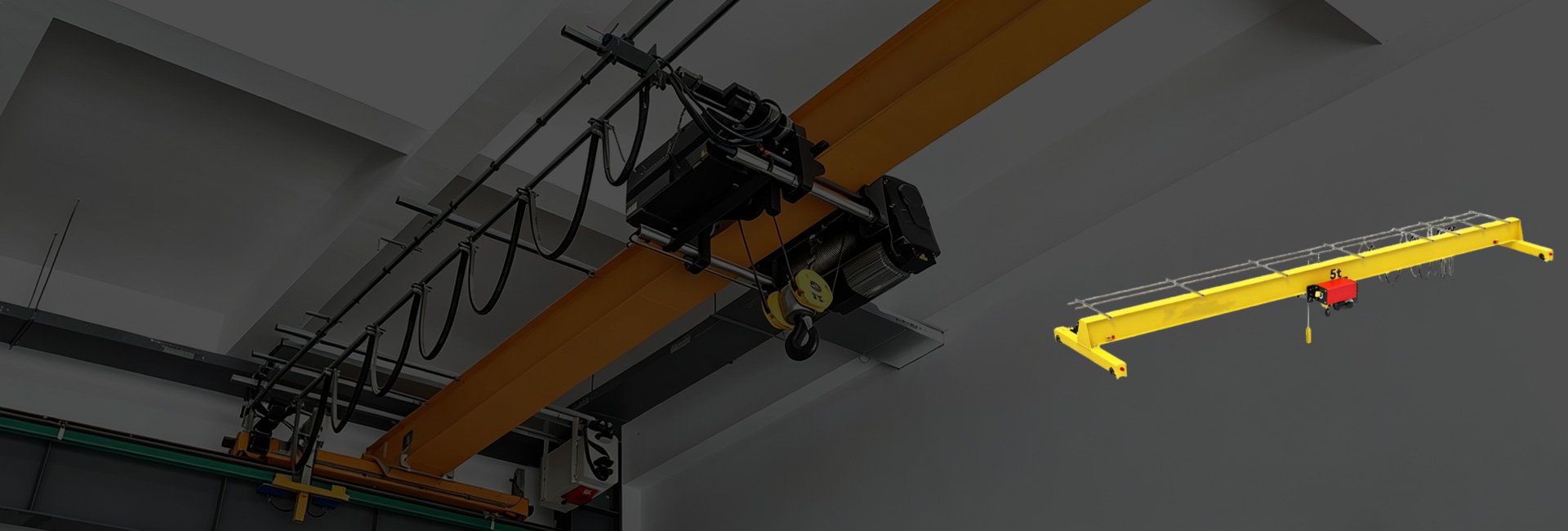
DINGYA - A Reliable Chinese Underhung Bridge Crane Supplier
DINGYA’s underhung bridge cranes are installed and run under the track beams, which makes them ideal for plants with limited headroom or structural load-bearing capacity. They efficiently handle materials on the fixed paths between different stations while keeping the plant ground clear.
As an experienced underhung bridge crane manufacturer, DINGYA can tailor an underhung bridge crane that can be seamlessly integrated into your existing production system and ensure the finished product’s performance with our strict quality control. Our underhung bridge cranes can be delivered on schedule, no matter which country or region you are in.
Products by Features
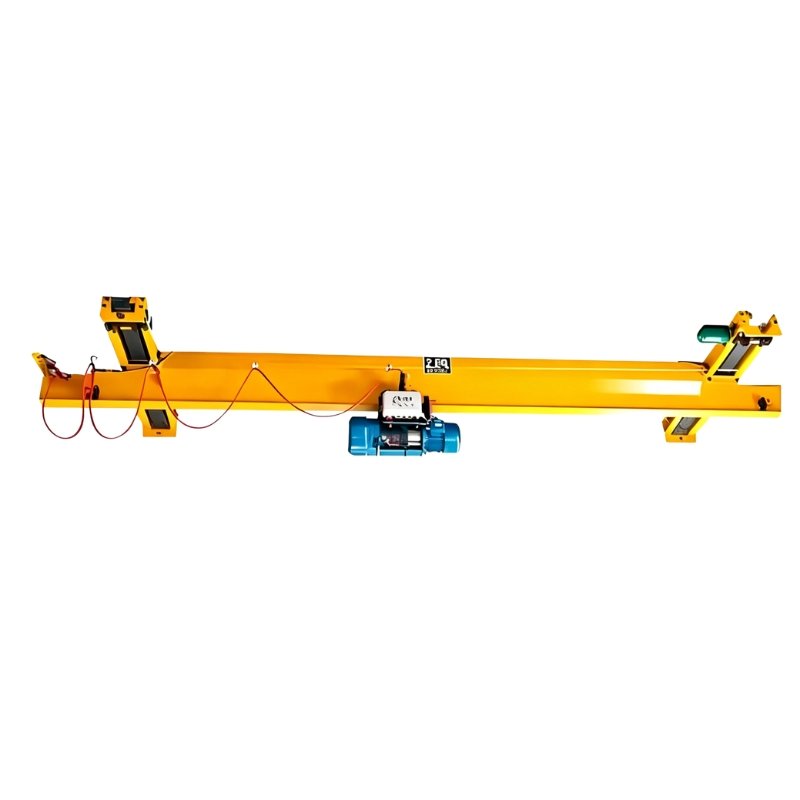
It has a single girder design, a lightweight, compact structure, and is easy to install. It is very cost-effective if you need to lift light to medium loads.
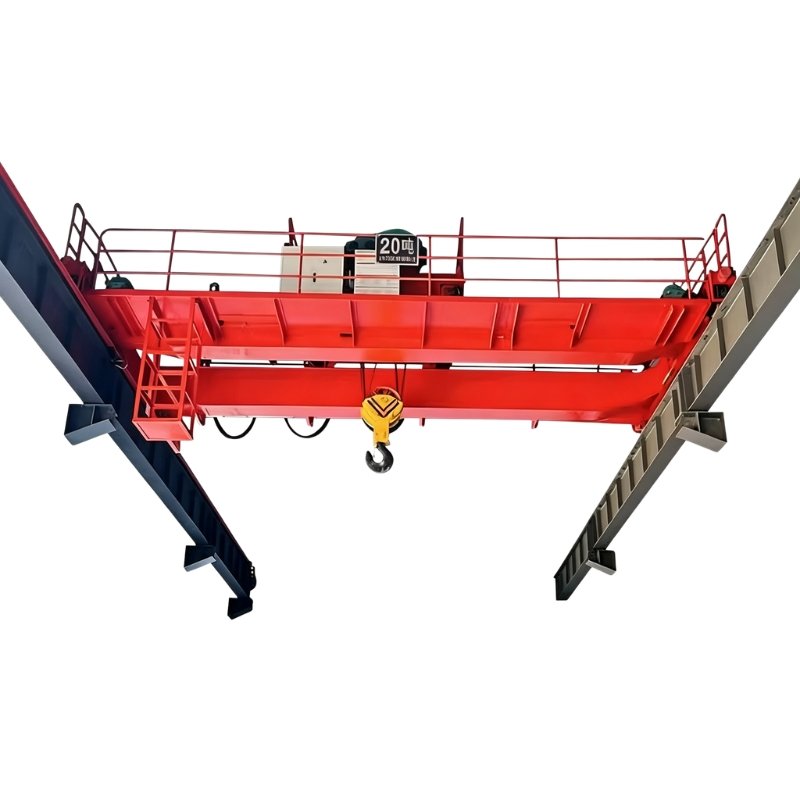
Two girders give it greater stability, allow it to bear more weight, and provide longer spans, which makes it suitable for handling heavy loads in industrial environments.
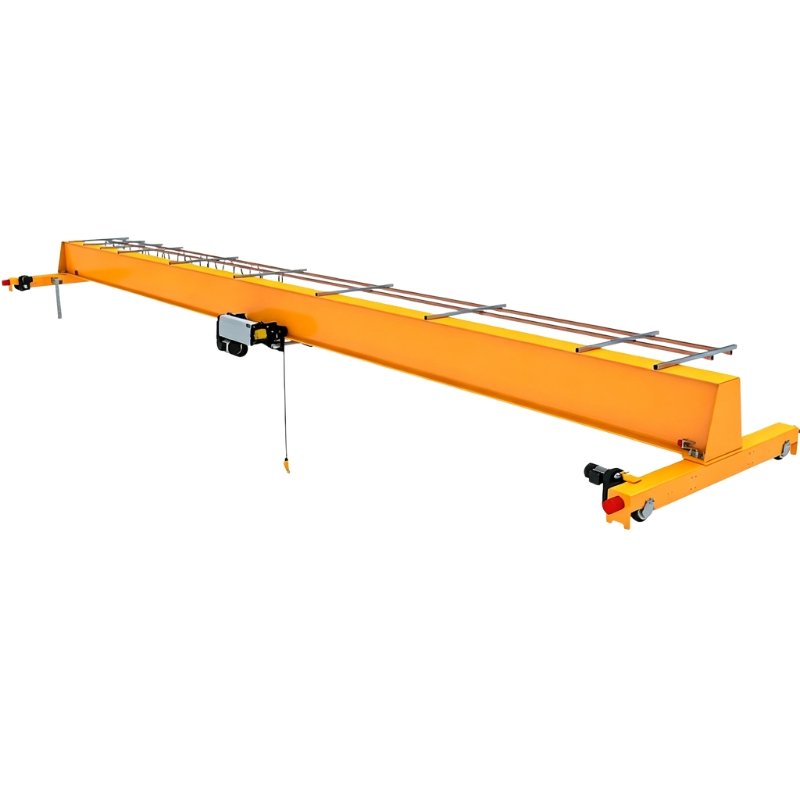
Box-section girders have high torsional rigidity and lower deflection, which allows them to maintain reliability even when lifting heavy loads frequently and continuously.
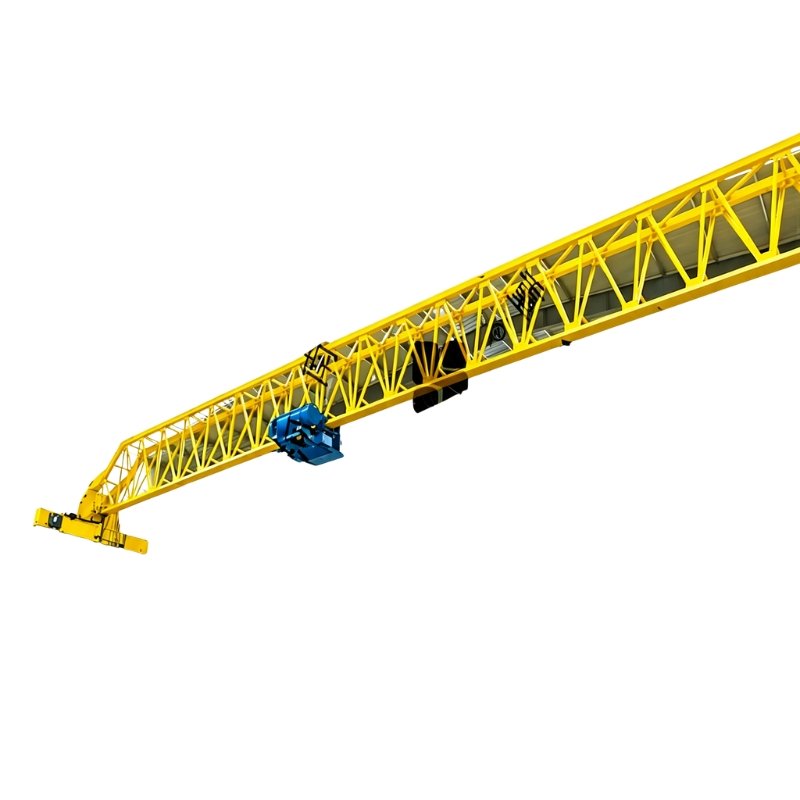
The truss structure reduces the crane’s deadweight, thereby reducing the overall load that needs to be carried. It is economical if your workshop has long spans.
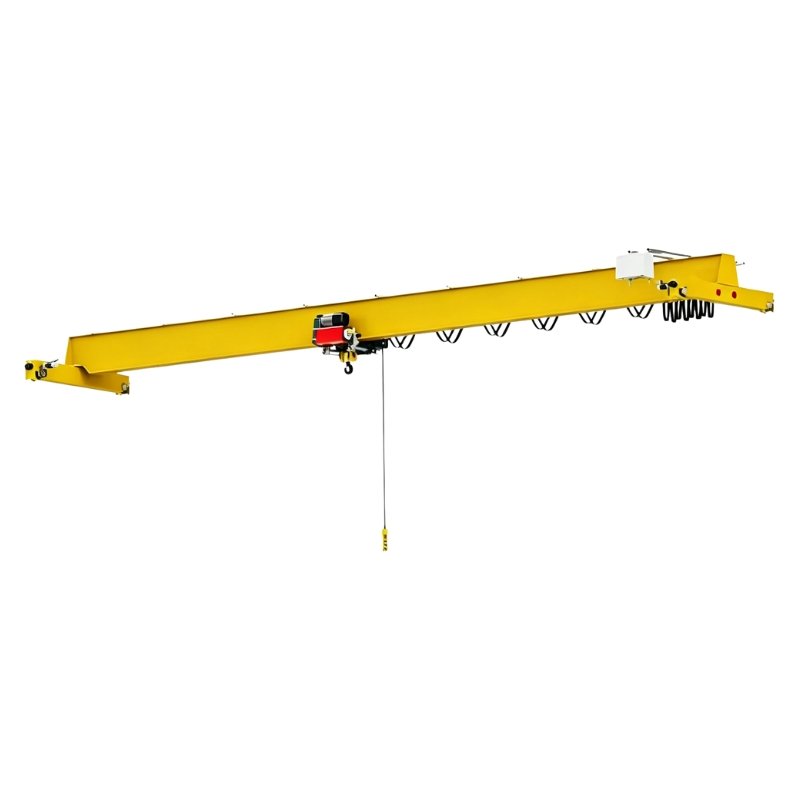
The VFD overhead crane system can meet your needs for smoothness and precision. It can reduce the swing and precisely position the load without delaying the overall efficiency.
High Positioning Accuracy
Our underhung bridge crane’s trolley and bridge can move and position precisely along the longitudinal and transverse directions, which helps workers place materials in the right places and helps your entire production process run smoothly. If you have high handling accuracy requirements for your production line, you can choose our products with the VFD overhead crane system, which has higher operating accuracy and can even adjust its travel speed precisely.
Flexible Lifting Coverage
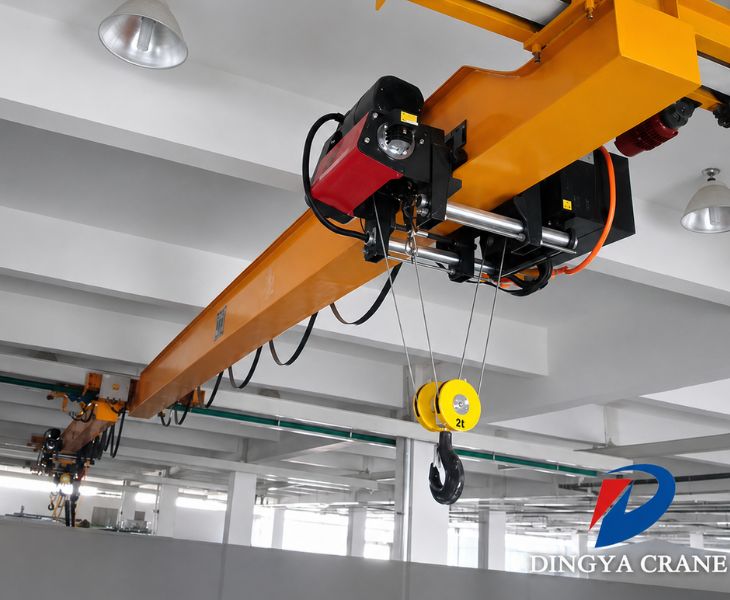
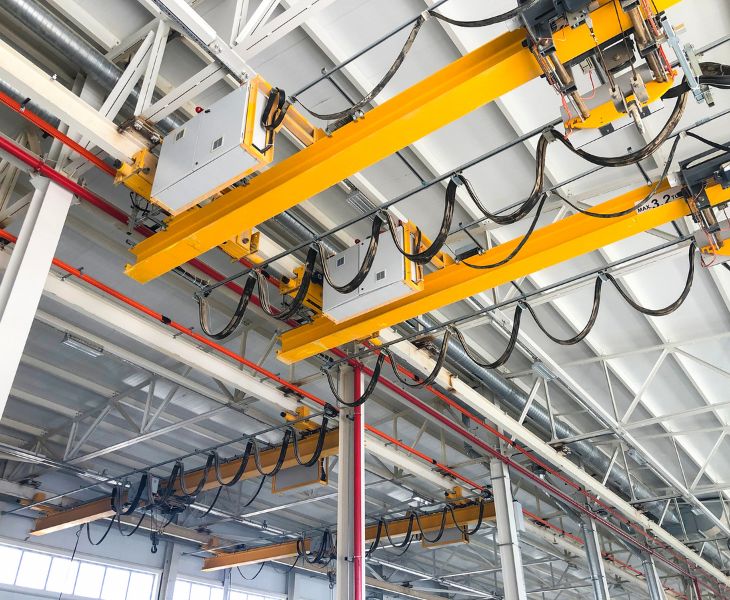
Unlike fixed monorail cranes, our underhung bridge cranes can customize runway layouts and spans according to your factory conditions to form a flexible working area that serves multiple workstations or even covers the entire workshop. If you want to extend the underhung overhead crane’s work area to adjacent workshops, you can also add interlocking sections or curved runways. Our underslung cranes’ flexible lifting coverage allows you to move materials efficiently across areas without the need for several hoists.
Stable Load Movement
Load swaying and motion stuttering can slow production and increase safety risks. Our underhung bridge crane moves steadily during operation without bouncing or vibration. The style equipped with a sensitive VFD overhead crane system can adjust the bridge and trolley’s speed and acceleration independently, and eliminate the vibration when the crane starts and stops. Your employees can work with peace of mind and efficiency, even when handling heavy or unbalanced loads.
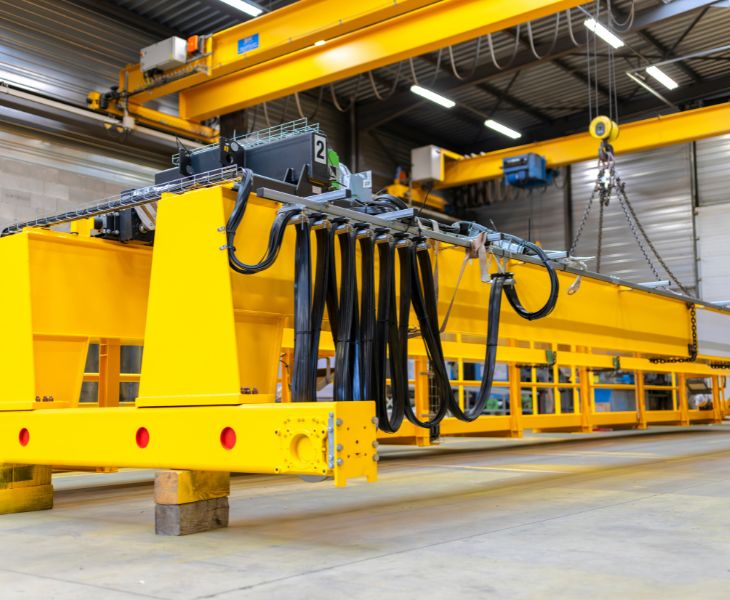
Applications of Underhung Bridge Crane
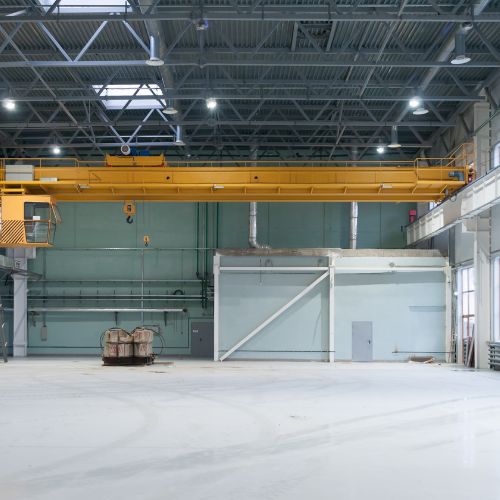
The underhung bridge crane can flexibly cover storage, packaging, and shipping zones, and transfer materials between them efficiently and smoothly. Lifting loads overhead also prevents packages from piling up in clutter, keeps the ground space clear, and allows workers and forklifts to pass conveniently.
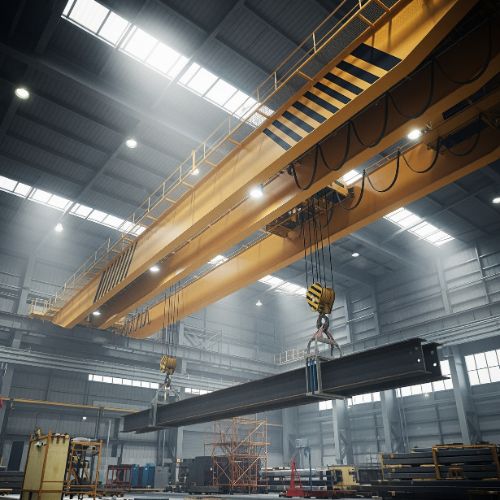
In the automotive industry, whether it is vehicle assembly, parts manufacturing, or maintenance work, our underhung bridge crane can flexibly move through different work areas, accurately lift loads, and protect automotive parts from damage, thus ensuring a smooth production process.
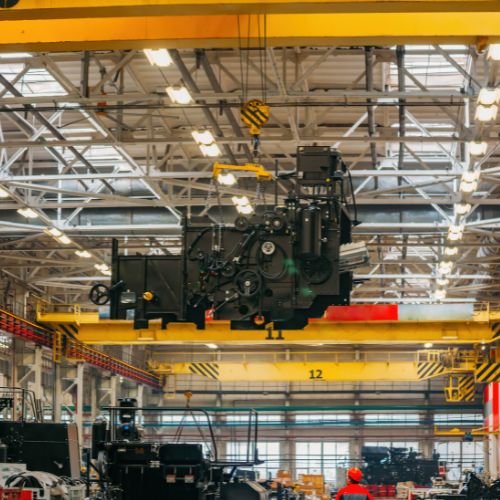
Steel, welded structures, and some other metal fabricated parts are difficult to handle by human labor. Our underhung bridge crane can take over the heavy and dangerous handling work, and smoothly transport bulky materials, which saves workers from heavy physical labor and improves processing efficiency.
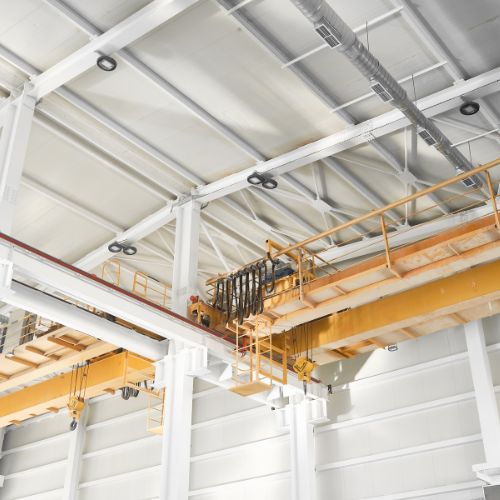
Underhung bridge cranes are also suitable for equipment maintenance and service, such as equipment repair and parts replacement. Unlike purely manual maintenance, with the underslung crane’s help, even large equipment or components can be moved easily and smoothly.
There are mainly three methods to power underhung bridge cranes. The most common is the festoon cable system for medium travel distances. It has a low cost and provides a stable and flexible power supply along the runway.
If your production intensity is high, a reliable conductor bar system with low maintenance costs is best for you. If your working layout is simple and the underhung crane’s travel is from short to medium, using cable reels is enough.
All three methods can ensure the underhung bridge crane’s safe and stable operation and need to be selected according to specific situations.
When installing the underhung bridge crane, you do not need to prepare additional support columns and independent track structures. The underslung cranes can run directly on your factory’s original roof or structural beams, which directly reduces material and construction costs.
You just need to attach the track directly to the building’s steel structure with clamps or bolts, which cuts down on engineering complexity and labor costs. If you choose the underhung bridge crane to upgrade your factory, the upgrade will be completed in a short period of time without large reconstruction, which saves a lot of downtime costs.
Installing underhung bridge cranes includes runway alignment, crane assembly, electrical connection, and testing. The time it takes depends on the span, capacity, and work conditions, but overall, it is generally faster than the top running cranes due to the fewer structural changes.
If you arrange for three people to install a standard small to medium system, it will generally take 3 to 10 days. If your plant structure is ready, the time can be further shortened. If you choose a custom underslung crane or a large-span underhung overhead crane, you may need more time for calibration and safety testing.
Their main differences are their structure and running position. The underhung bridge crane runs below the runway beams and makes better use of vertical space. You need less structural support and costs when installing it.
The top running crane runs above the runway beams and can provide you with a larger lifting capacity and a longer span. However, its rails need to be supported by separate columns or building brackets.
If you want to upgrade an existing low-headroom plant, an underhung overhead crane is undoubtedly a better choice.
Underhung bridge cranes use a suspended runway system, which is bolted or clamped below the roof trusses or structural beams. When the underslung crane is working, its end trucks travel on the runway beams’ bottom flange.
The runway’s tracks must be parallel and precisely aligned, and are usually I-beams or patented tracks. If you’re looking for performance and long life, choose patented tracks made of hardened steel. If your load is lighter and you don’t use the underslung crane frequently, standard I-beams offer better value for money.
Underhung bridge cranes are usually mounted suspended from reinforced steel roof trusses or from runway beams attached to the building structure, so your factory ceiling structure must be able to handle the underslung crane’s own weight and the static and dynamic loads generated when they operate.
Your building’s capacity must be evaluated by a structural engineer before installation. If your plant’s existing beams are insufficient, you should add auxiliary steel beams to ensure that the underhung overhead crane can operate smoothly.
Daily Maintenance for An Underhung Bridge Crane
Check Runway And Suspension Components
The suspended runway system’s alignment is important for the underhung bridge crane’s smooth operation. You need to check the runway beams, suspension brackets, wheels, and connecting bolts for looseness, wear, or deformation every day, as well as for excessive height differences or gaps in the rail joints.
Check Wire Ropes And Hooks
Check the wire ropes daily for broken wire, twisting, or corrosion. If the crane uses chains, check the chains for elongation or cracking. Test whether the anti-unhooking device is intact and the hook body is deformed. Any damaged lifting parts should be replaced immediately to avoid safety risks.
Lubricate Moving Parts Regularly
Key moving parts such as bearings, wheels, gears, and trolley assemblies need to be lubricated regularly to reduce friction and extend the underslung crane’s life. Use the industrial lubricants for bearings and gears recommended by us.
Test Electrical and Safety Systems
Electrical faults can cause the underslung crane to experience operating errors or downtime, so it is important to check buttons, remote controls, power supply, etc., daily. Also, check for loose terminal blocks and clean dust from electrical cabinets. In addition, test the anti-collision device and overload protection device regularly to see if they can work.
Keep Clean Working Conditions
Dust, oil, and debris can affect runway systems and equipment performance. For example, debris on the track can cause track deformation and wheel wear, and dust in the electrical cabinets can make electrical components overheat. Keeping equipment and work areas clean reduces the maintenance workload.
Installation Compliance for Underhung Bridge Cranes
Building Structural Capacity Assessment
Before installation, your building must be evaluated by a structural engineer to see if the existing structure can carry the underhung bridge crane’s loads and whether you need to add supplementary steel beams.
Follow Local Safety Standards and Regulations
The underhung bridge crane’s installation should comply with industry standards such as the underhung crane CMAA standard, the underhung crane FEM standard, the OSHA overhead crane compliance, and local regulations, which is not only to cope with inspections and prevent legal risks, but also to improve your production safety.
Ensure Accurate Runway Alignment
The runway’s span error, joint clearance, and joint height difference must be less than certain values; otherwise, the crane is prone to vibration and damage during operation. It is best to use a laser collimator to calibrate.
Proper Electrical Installation
Electrical systems such as power supply systems, grounding protection, cable arrangement, emergency stop circuits, and overload protection must be installed according to industrial standards.
Commissioning And Acceptance
The underhung bridge crane cannot be put into use immediately after installation. You need to test its load, check its operation, and debug its system to ensure it can operate stably.
Available Control Systems for Underhung Bridge Cranes
Besides the VFD overhead crane system, there are several other underhung crane control systems.
Wired Handheld Control Systems
Controlling the underhung bridge crane with a wired controller is one of the most common and low-cost control methods. It has a simple structure and is easy to maintain, and is suitable for low-frequency and light-load lifting works.
Radio Remote Control Systems
When using a radio remote control overhead crane, the operator can operate from a safe distance away from the load, where the field of view is better, which is very convenient for complex production environments.
Smart Control And Monitoring Systems
The smart crane control and monitoring system integrates PLC and sensors, which allows you to monitor your underhung overhead crane’s performance and working status in real time. Your operators can control the underhung bridge crane to move goods even when they are not in the workshop.
Integrated Multi-Crane Control Systems
If you use multiple cranes in a large workshop, you can connect them to a centralized control system to operate together, which can further improve your entire production efficiency.