
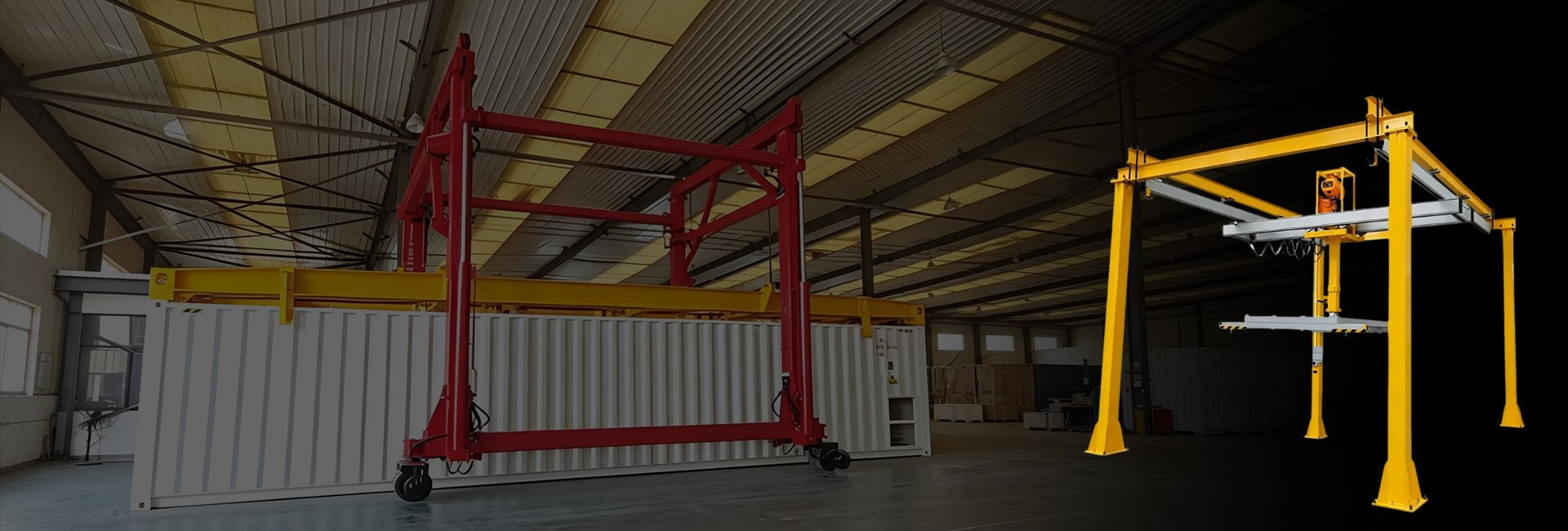
DINGYA - A Reliable Monorail Overhead Crane Supplier in China
DINGYA’s monorail overhead crane is an efficient material handling equipment for production lines and assembly stations. It can lift and convey heavy objects along a fixed path, and is very suitable for factory workshops that have limited space. It can transport production materials smoothly and orderly, thereby improving production efficiency and reducing manual handling’s risks.
As a professional monorail overhead crane manufacturer, DINGYA can design and build a dedicated monorail overhead crane for you according to your actual industrial layout and load needs. All of our monorail overhead cranes and their components are subject to strict quality inspection. No matter where your factory is all over the world, we can help you build reliable material handling systems.
Our Products
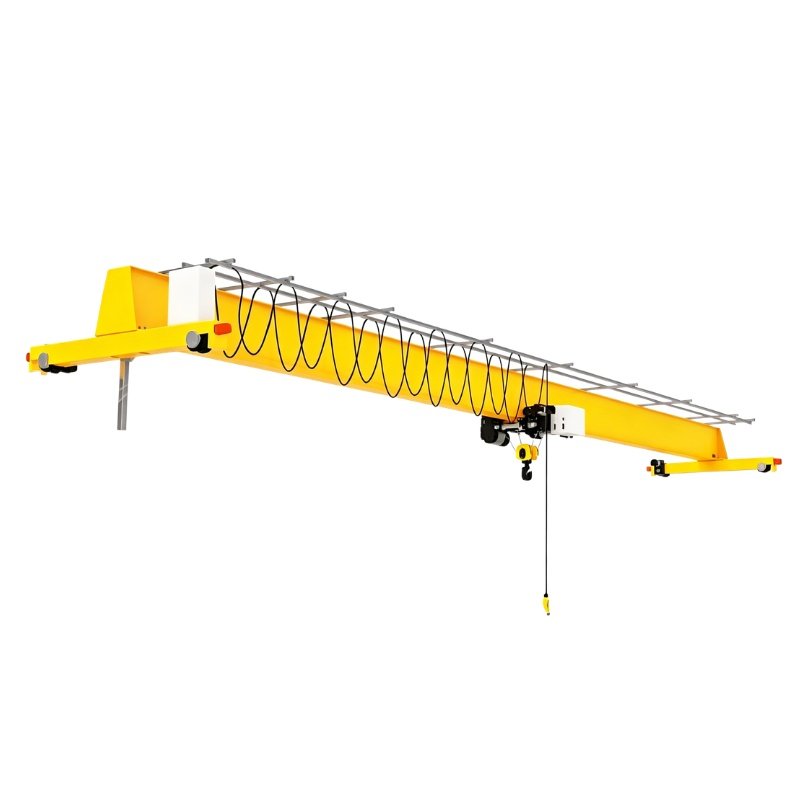
It is fixed directly to the ceiling, which needs to have enough load capacity. It can save floor space and is suitable for low-headroom workshops.
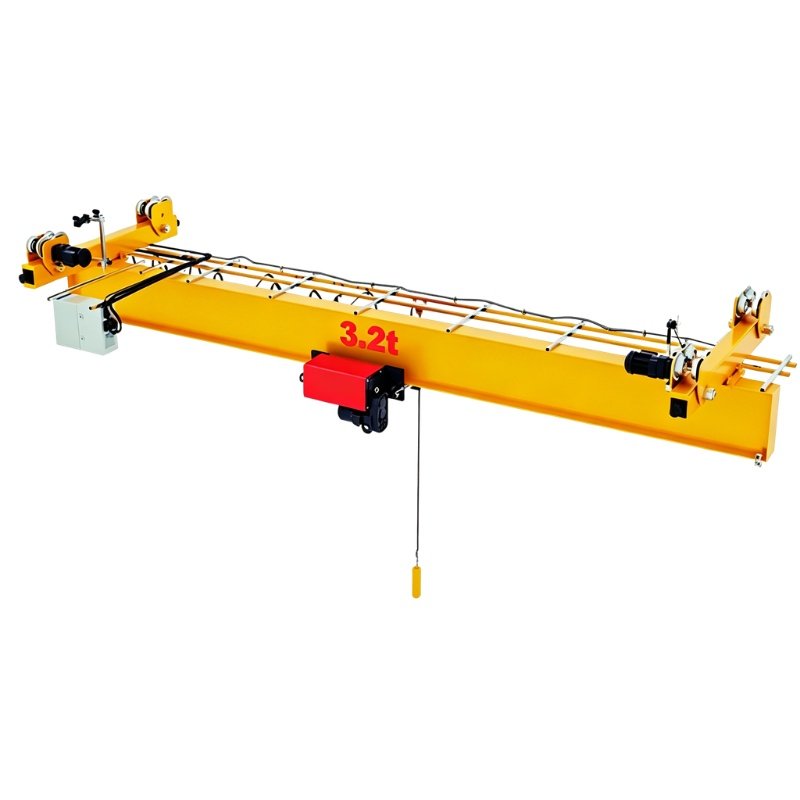
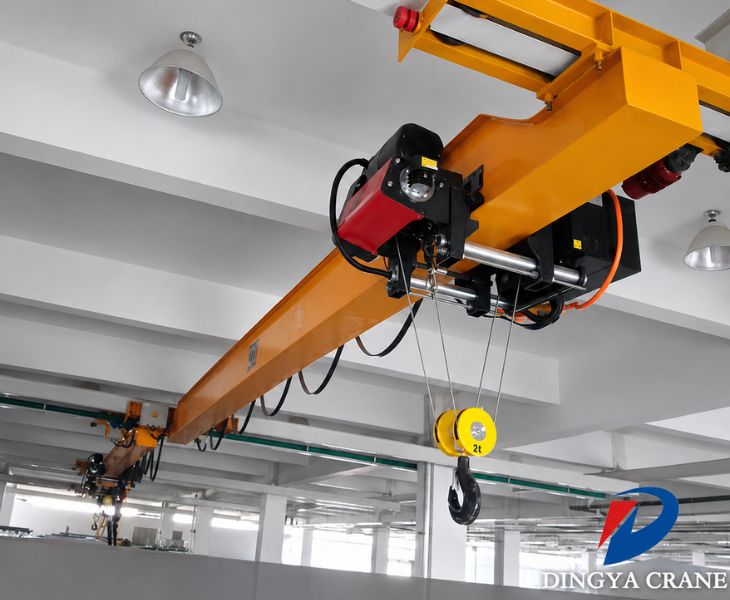
It is suspended from the overhead beams or roof trusses by steel rods, which can save ground space. Its layout is flexible and can be easily installed without additional columns.
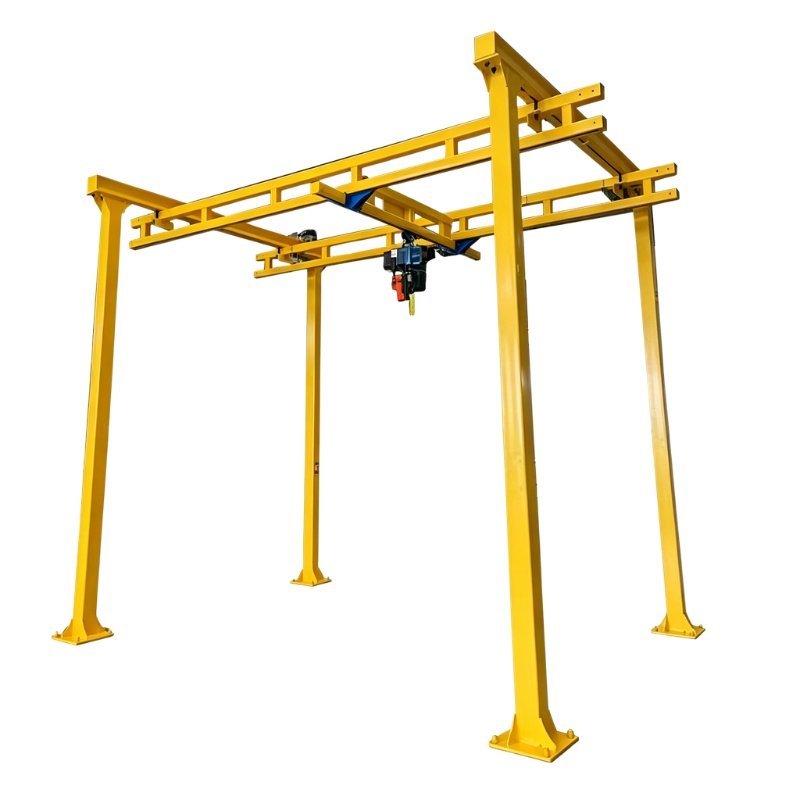
It is supported by ground columns rather than building reinforcement, and can be relocated, which makes it suitable for outdoor or buildings without enough roof strength.
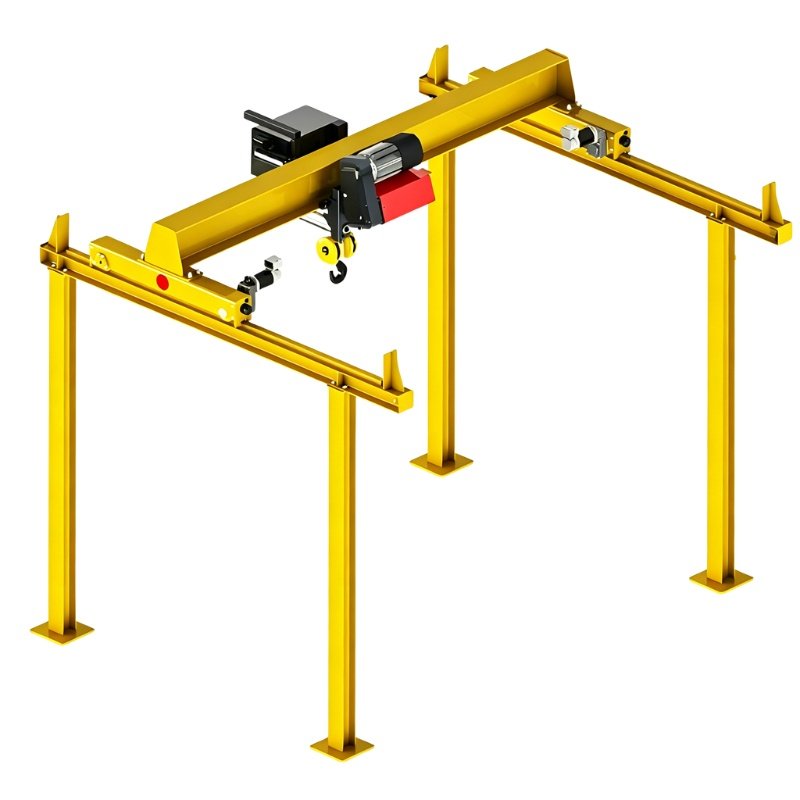
It is usually hung on either the existing building columns or specially added dedicated columns. It is ideal for production lines along the wall or a row of columns.
Compact Layout
The compact layout allows our monorail overhead crane to leave ample space for operators, forklifts, and production stations, even with limited space, such as narrow workshops. The single-track beam makes the crane have fewer requirements for plant structure and makes the best use of the site floor and the space above it. Tight curves and switches enable the crane to serve multiple stations. When a site cannot install a traditional bridge crane, our monorail overhead crane is a great option.
Fast Installation Speed
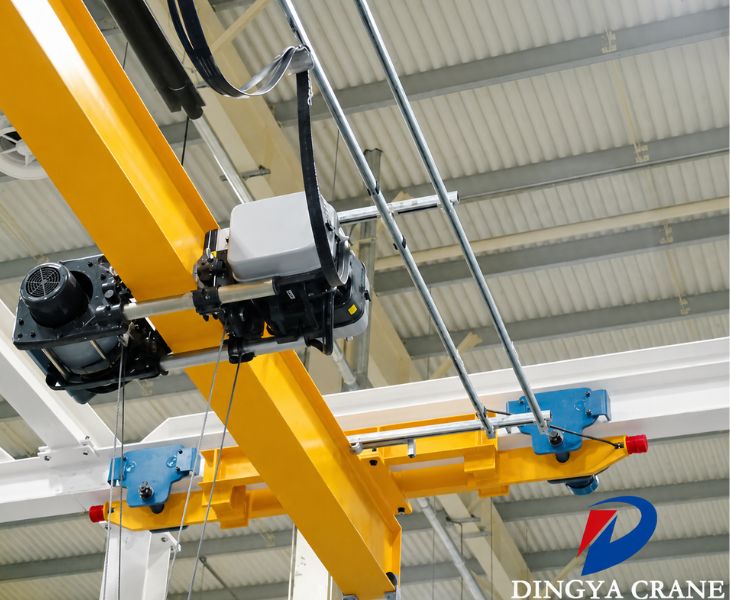
The monorail overhead crane can be quickly installed and then put into production. The modular design we use makes it take less time to assemble. Pre-assembled drive units and plug-and-play electrical connections have low interference with your ongoing production. Models that are installed based on the factory structure, such as ceiling-mounted monorail overhead crane and suspended monorail overhead crane, do not need to construct a foundation, and can be directly fixed with beam clamps or bolts.
High Handling Efficiency
Our monorail overhead cranes are designed with a fixed single-track system and can operate along preset paths. It has stable lifting mechanism and precise operation control and positioning capabilities. The monorail overhead crane connects all links of the production line through dedicated tracks. Its overhead handling method separates transportation from floor operations, while the integrated track design allows it to operate continuously and orderly in a defined production path.
Industries Served by Monorail Overhead Crane
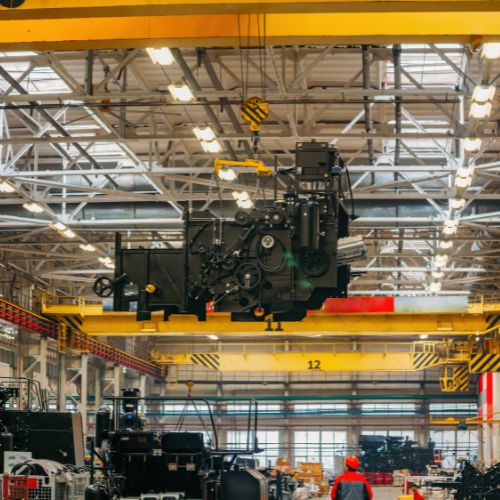
Automobile production needs to handle automobile parts such as engines and chassis between different stations. Our monorail overhead cranes can move along the production line’s curves and switches to deliver heavy components to the required stations in time. They speed up car assembly and reduce ground chaos.
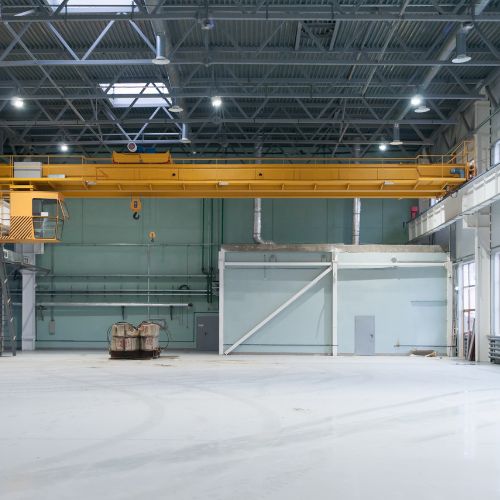
The logistics industry can use monorail overhead cranes to upgrade warehousing and logistics to achieve efficient and orderly logistics operations. It can move quickly vertically or horizontally in the tall warehouses, to deal with orders efficiently and lift items directly to the baling station, which reduces congestion.
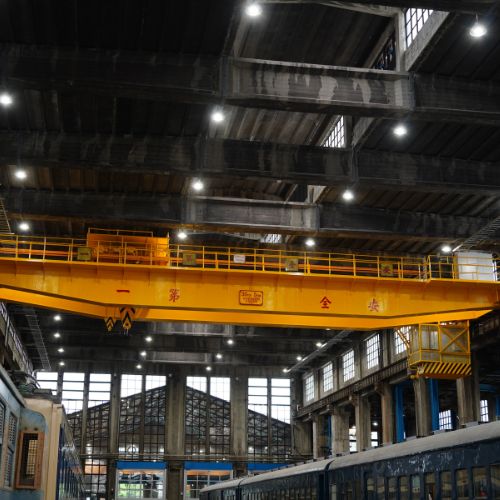
The energy and power generation industry can use monorail overhead cranes to maintain equipment and achieve high-frequency handling tasks in complex or narrow spaces. Generator rooms often have limited space overhead. Monorail overhead cranes can run along pre-set curved tracks to avoid colliding with fixed obstacles.
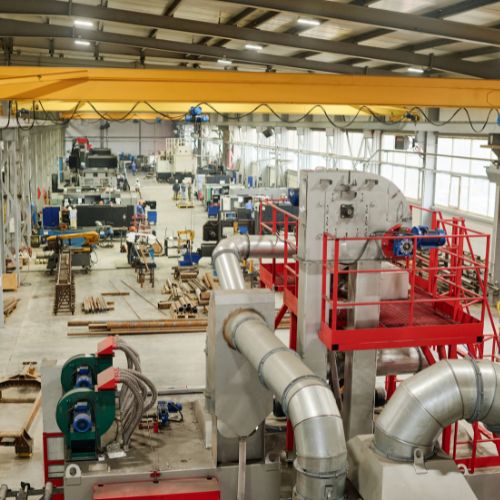
Mines and heavy plants are usually dusty and have large temperature differences. The monorail system has a simpler structure and is easier to keep free of dust and corrosion. They can be arranged along irregular plant structures and are used to lift parts for maintenance or transport raw materials.
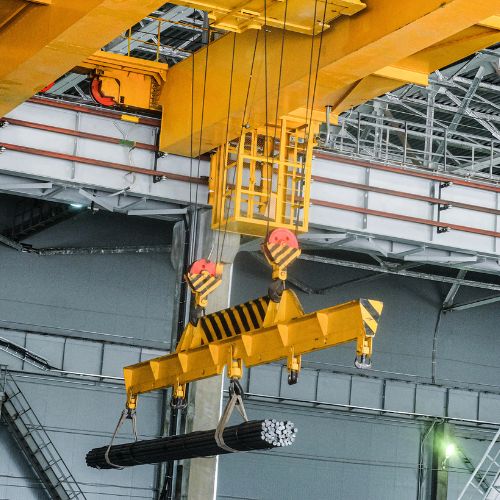
Production lines for transportation equipment are usually extremely long and straight. Monorail overhead cranes can extend hundreds of meters along the entire assembly line. It can also run multiple hoists on the same track to lift different components without interfering with each other.
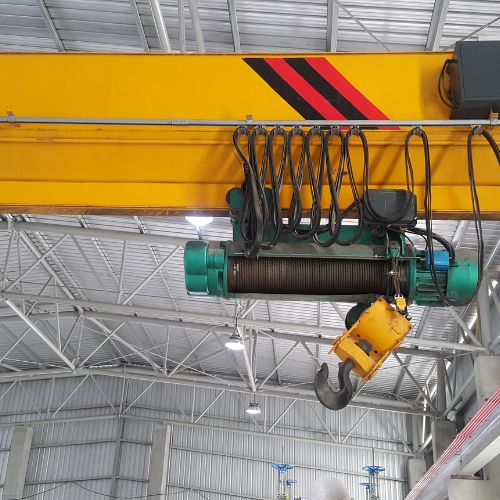
Electronic components are light, but move very frequently during production, and the monorail overhead crane can improve production efficiency. Besides, monorail overhead cranes should have a proper anti-static design and low particle generation to reduce risks.
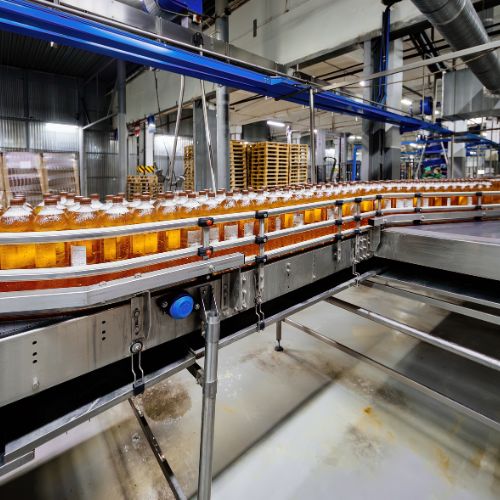
Hygiene is critical in the food and beverage industry. Our monorail overhead cranes have a structure built with stainless steel, sealed bearings, and flushable surfaces. They move materials in the air, which reduces the frequency of human hand contact to meet food production standards.
Yes, but it must be a specially designed and certified model. A standard monorail overhead crane will produce sparks during operation. For hazardous areas, such as chemical plants, granaries, and refineries, it is necessary to use monorail overhead cranes that meet explosion-proof standards, such as ATEX.
To prevent the risk of fire or explosion, they use spark-resistant and static-resistant materials and coatings, as well as closed tracks. Different hazard classes need different types of monorail overhead cranes, so always consult a certified engineer before installing any monorail overhead crane in a hazardous place.
The monorail overhead cranes’ maintenance mainly includes regular inspection, repair, or component replacement. You need to check the track, hoist chains, and wire ropes, and test limit switches every day.
The bearings, gears, and other components’ lubrication should be done at least once a month. You should also tighten loose bolts and inspect electrical cables and festoon systems every month. Track straightness and wheel wear need to be checked at least once a quarter.
Finally, besides initial testing, monorail overhead cranes should also undergo structural and load tests every year. Be sure to keep detailed maintenance records.
Yes, the monorail overhead crane can be connected to the factory automation system and operate synchronously with the production line through PLC control, sensors, and communication interfaces.
The integrated monorail overhead crane can be accurately positioned by barcode or RFID. If equipped with weight sensors, it can sense the status of items. You can also remotely monitor it through the SCADA. Multiple cranes integrated into the automation system can work synchronously on the same track without collision.
Automation reduces labor costs and improves the monorail overhead cranes’ efficiency. It is widely used in automobile assembly and smart manufacturing production lines.
Their main differences are their power source and applications. Manual monorail overhead cranes rely on human power to operate. It has low cost and light weight, but is slow, and is only suitable for light loads and infrequent lifting.
Electric monorail overhead cranes are driven by motors. They are highly efficient, precise, and can be used frequently, which makes them suitable for most industrial applications. Pneumatic cranes are driven by compressed air and are suitable for flammable and explosive hazardous environments due to their high safety, as well as wet or dusty places, but they are less efficient.
To reduce swing, a well-designed system and correct operation are both important. Our monorail overhead cranes are controlled with variable frequency drives to achieve a smooth start and stop.
They also have an anti-sway control system that automatically adjusts speed according to the load’s swing angle. In terms of operation, first ensure that the rails and wheels are in good condition.
Avoid sudden starts and stops, and reduce the speed when the monorail overhead crane is suspending loads. You can start by lifting slightly, then pause and wait for the object to be stable before moving horizontally.
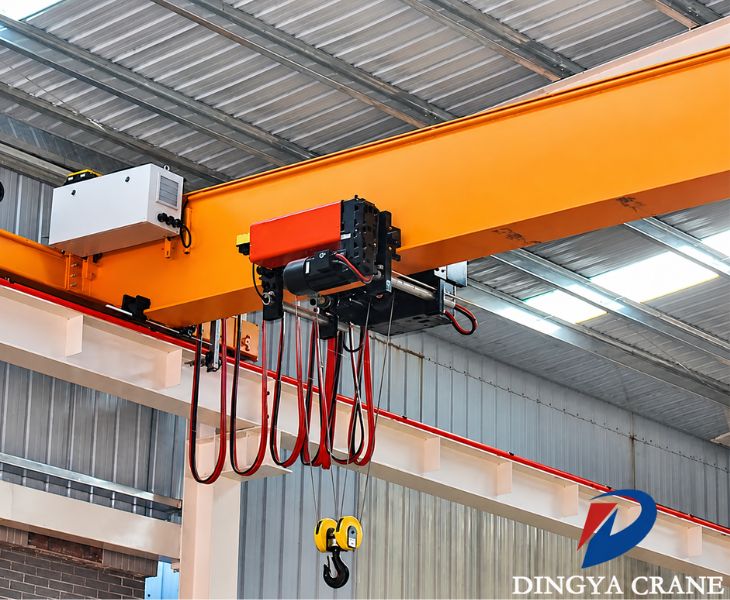
Common power supply methods include festoon cable systems and conductor bars. The festoon cable system is relatively flexible to install. Its cables slide with rolling trolleys. It is suitable for short to medium distances and has a low cost.
The conductor bars transmit power to the monorail overhead crane with the current collectors, which are like a tram. It can operate over long distances and is suitable for high-frequency use.
In some special situations, such as cross-regional operations, the monorail overhead cranes may use built-in batteries or cable reels as the power supply.
If tracks are misaligned during installation, the wheel will be subjected to uneven stress, which makes it scrape the track edges. If the load on the monorail overhead crane exceeds the wheel’s rated load, the wheel-rail pressure will increase.
Metal parts that lack lubrication can wear out faster due to direct contact. If there is debris such as dirt or welding slag on the track, the wheels will also be damaged. Also, be careful not to make the wheel start and stop frequently on curved rails during operation, as this will make the wheel subject to too many lateral forces.
In Europe, a monorail overhead crane must be CE certified and comply with the Machinery Directive. Some of its key components, such as hoists, should meet EN standards. In the U.S., OSHA and ANSI standards are usually required.
Electrical components may require UL certification, and the monorail overhead crane’s design should follow CMAA specifications. The regulations vary from state to state in the U.S., so you need to prepare documents like technical documents and test reports according to the destination’s specific regulations. We have rich experience and can help you meet all the requirements.
Safety Features of A Monorail Overhead Crane
Overload Protection System
It prevents damage to monorail overhead cranes’ structural components caused by operating above the rated load.
Electrical Protection System
It includes grounding, short circuit, and overload protection to ensure stable and safe operation of the monorail overhead crane’s electrical system.
Limit Switches
It is used to control the monorail overhead cranes’ lifting and walking, and can automatically stop its operation when there is a risk of overtravel or collision
Emergency Stop Function
When finding an abnormality, the operator can trigger it by pressing the stop button, and the system will immediately cut off the power supply or the control circuit to stop all movement.
Anti-Derailment Devices
It helps keep the wheels on track and reduces the risk of derailment.
Installation of A Monorail Overhead Crane
Site Assessment And Design
Evaluate the installation site, including the existing structure’s load-bearing capacity, headroom, column locations, and equipment layout, and determine the track layout accordingly.
Track And Support Installation
Install the monorail overhead crane’s tracks and their accessories on roofs, columns, or existing structures according to design drawings and ensure precise alignment.
Hoist And Trolley Setup
Install the trolley on the track to ensure smooth operation without any jamming. Then install the electric hoist on the trolley, connect the hoist and the hook, and adjust the lifting limit switch.
Electrical System Integration
Connect the monorail overhead crane’s power supply, control system, and safety device according to technical requirements. All wiring must comply with electrical standards and be properly grounded.
Testing And Commissioning
Conduct load testing, functional testing, and safety verification before putting the monorail overhead crane into use to ensure its stable operation.