
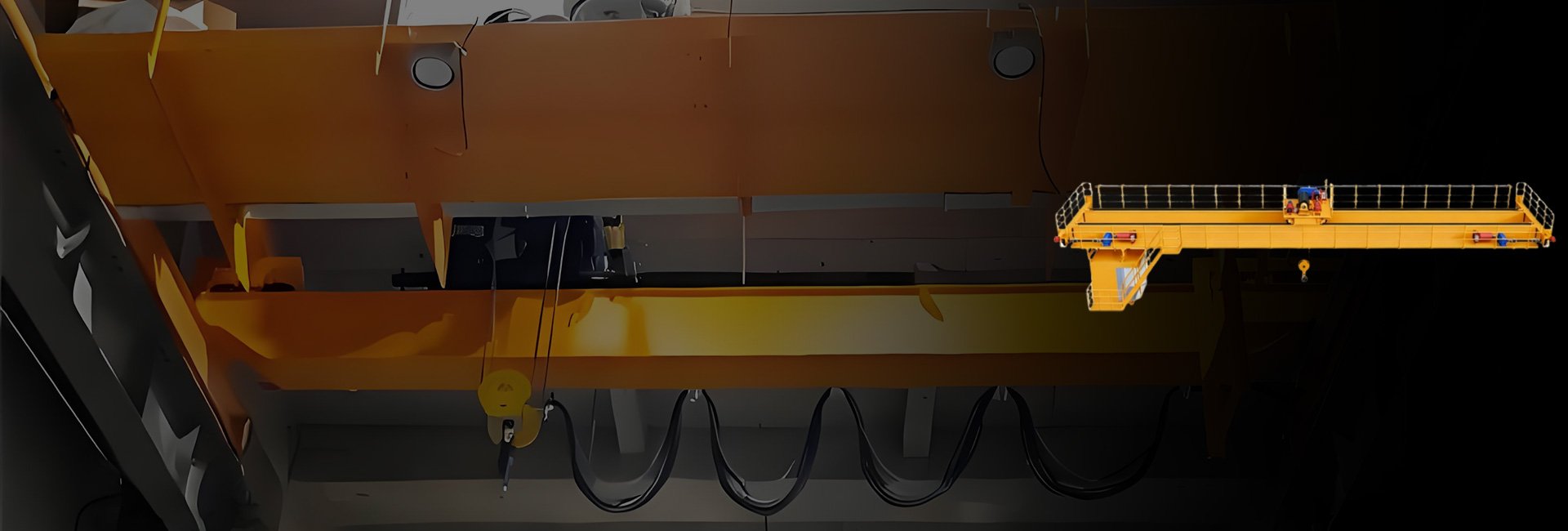
What is a Manufacturing Crane?
The manufacturing cranes of DINGYA are specially designed for various demanding industrial production environments. They can replace manual handling and help you achieve high-precision and heavy-duty material transportation. This thereby enhances the production efficiency of your factory.
DINGYA is a crane manufacturer with 20 years of rich production experience. We have professional engineers and skilled welders who can provide you with tailor-made manufacturing crane solutions. Now, go to the homepage and get a free consultation about which type of crane is suitable for your industry. We are available for a 24-hour online response.
Products By Types
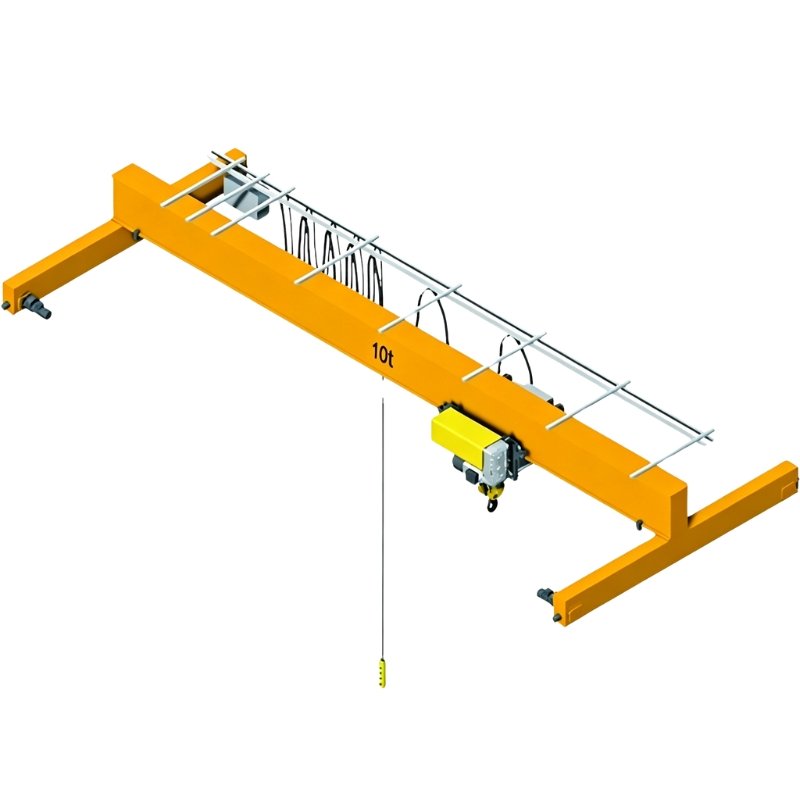
It is over a workshop crane running in the sky, and it does not take up much space. You need to install it on the load-bearing structure of the factory building.
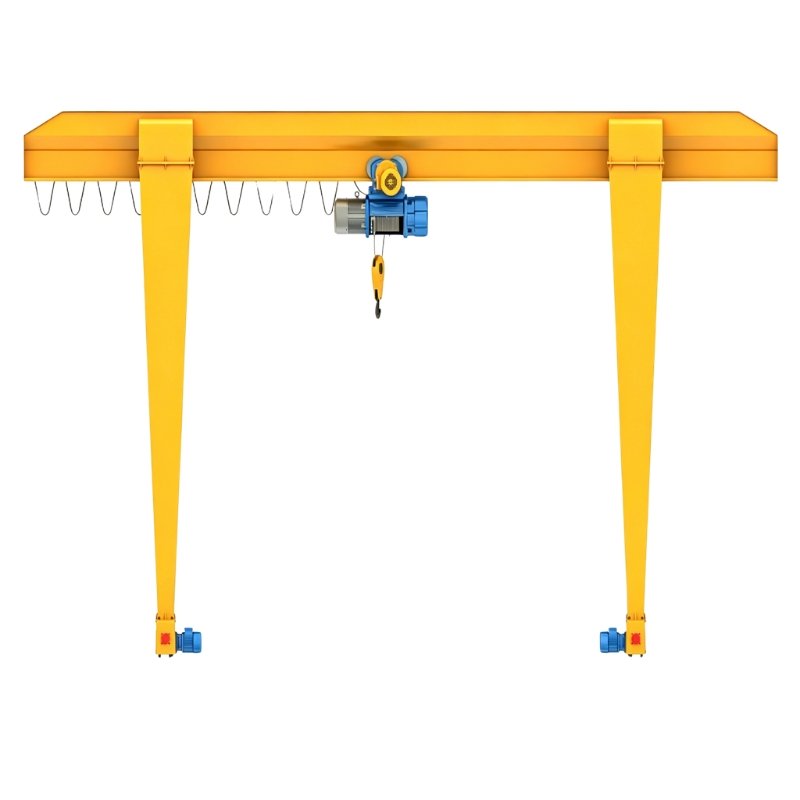
Does not rely on building installation, but comes with its own support legs. Open-air locations are often chosen, but they will occupy a certain amount of ground space.
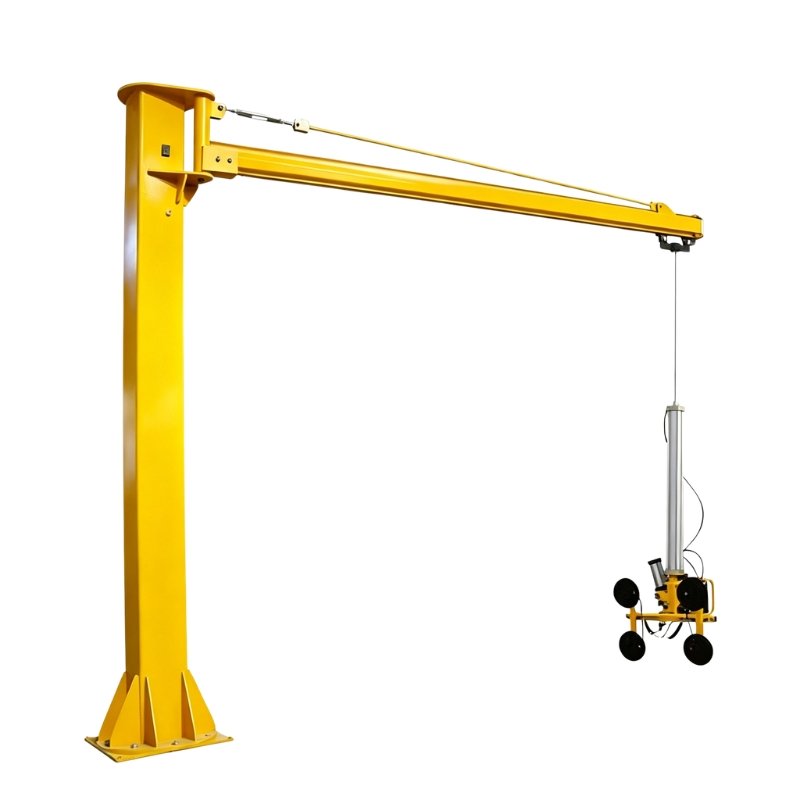
It is used for local material handling and occupies a very small area. Suitable for point-to-point operations to handle some lightweight materials.
Features of the Manufacturing Crane

The frequency converter system, combined with PLC control and anti-vibration cranes, can make your production more intelligent and more labor-saving.

When installing the crane, we can reserve the interface for you. In the future, upgrading the intelligent crane will be much more convenient for you.

We can achieve the coordinated operation of different types of industrial cranes through a control system, addressing the transportation of heavy, irregular, and complex materials.

The operational endurance of the manufacturing industry cranes is more durable. They can operate continuously without interruption, even for high working grades such as A7 and A8.

Its positioning accuracy can reach within ±20 mm, and for transporting precision instruments, it can achieve ±0.5 mm. You no longer need to make manual adjustments.

Industrial cranes are manufactured using special materials during the design phase, making them more resistant to high temperatures, high corrosivity, and dust.

The crane can be integrated with the MES/WMS factory management system, so you don’t need to send workers to operate the remote control.

For manufacturing plants that produce equipment, cranes can also be seamlessly integrated with the production lines. Significantly enhance your production efficiency.
Active Safety Protection System
- Hardware Protection: On the crane, we have installed overload limiters, collision prevention systems, and emergency stop devices. Eliminate the risks associated with crane lifting at the source.
- Control system: Built-in intelligent system, PLC real-time monitoring, preventing any accidents from occurring.
- Structural Safety: The primary girder of the crane has been engineered to withstand operational fatigue, while all its welded joints will be subjected to complete ultrasonic inspection. The crane can operate without any safety risks during both extended periods and high-intensity operational scenarios.
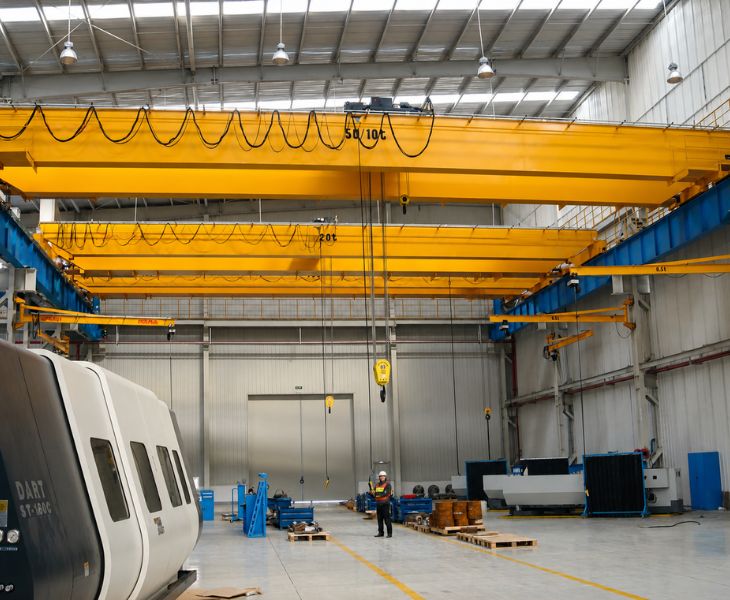
Applications of Manufacturing Crane
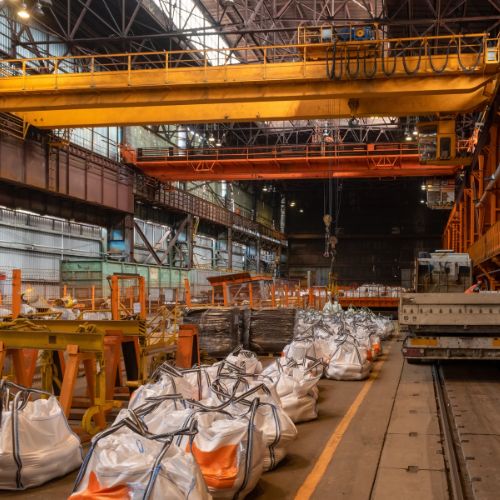
The design of our cranes enables them to endure severe operational conditions while maintaining the ability to handle A7/A8 high working grades.
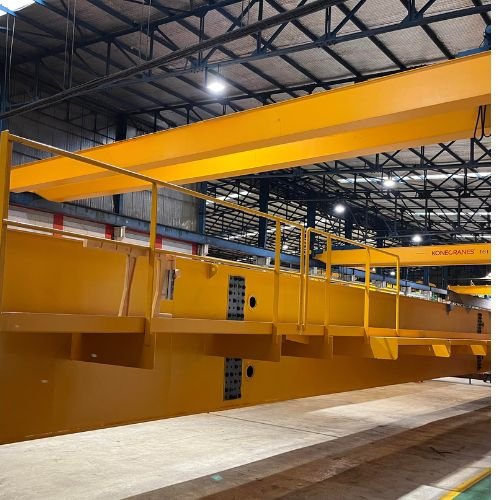
Factory buildings, such as automobile manufacturing plants, require the transportation of large quantities of parts. A manufacturing crane can enhance transportation efficiency.
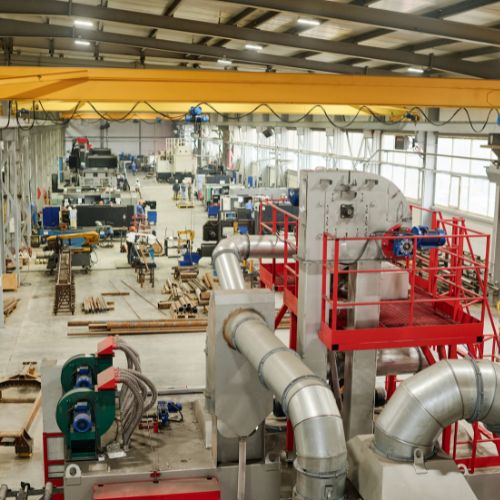
The millimeter-level positioning accuracy and smooth take-off and landing characteristics of our cranes perfectly match the requirements of precision processing scenarios.
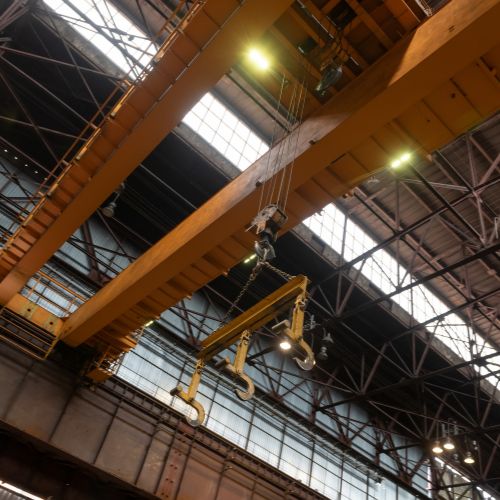
The WMS system provides seamless integration with our cranes, which allows automated goods handling and efficient product turnover while increasing warehouse capacity.
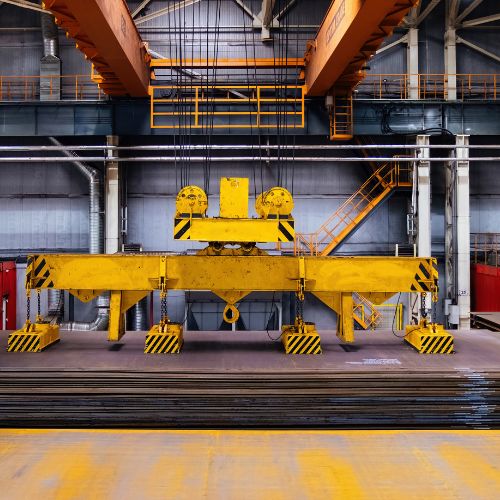
We create custom solutions that meet industry standards to address the specific lifting requirements of special work environments and special media conditions.
- Automatic cranes: They are suitable for high-frequency and large-scale standardized production lines because they enable complete unmanned operation.
- Semi-automatic cranes: They provide an ideal solution for businesses that require flexible production capabilities and operational efficiency in their mixed production facilities.
- The manual cranes: They deliver affordable solutions that satisfy the requirements of basic transportation tasks that need lightweight equipment and infrequent use.
We provide a full range of solutions, and based on your production capacity goals, factory conditions, and budget, we precisely match the optimal configuration for you.
The price of cranes depends on their type and tonnage, span, and automation level. We provide clear pricing information together with tailor-made solutions. We enable you to discover the most affordable solution regardless of your budget constraints. You can contact us anytime to receive your customized quote.
If you have the intention to purchase a crane, you can contact us directly on the homepage. We enable you to discover the most affordable solution regardless of your budget.
Manufacturing cranes all have their own advantages and disadvantages. For instance, gantry cranes have a small footprint but require reliance on the building of the factory. The gantry crane does not rely on the factory building, but the installation process takes a long time.
Although the cantilever crane has a low cost, its carrying capacity is very limited. The key is to determine which type of crane your industry actually needs, and that type will be the best choice.
We recommend that you follow the three-level maintenance system of “daily inspection, monthly inspection, and annual inspection”, with a particular focus on the conditions of the steel wire rope, brake, reducer, and electrical system.
DINGYA offers both original factory maintenance services and remote diagnostic support, which includes real-time alerts through an intelligent system. Your production line will operate without any unexpected downtime and will stop crane failures from happening.
DINGYA is a crane manufacturer that has received ISO international quality management system certification. We also comply with the CE European safety standards and the FEM European material handling specifications.
By purchasing our cranes, you are purchasing multiple guarantees. You don’t need to worry about quality issues and after-sales problems.
Forklifts operate with flexible movement capabilities, which enable their use in storage areas and short-distance transportation tasks. Cranes enable vertical lifting operations needed to handle heavy loads within fixed production facilities.
Cranes do not occupy the ground passage and have stronger compatibility with automated production lines, with lower long-term comprehensive operating costs. Cranes work better than any other equipment when your situation requires moving heavy workpieces, performing frequent lifts, and needing to upgrade without human operation.
What is the Working Principle of a Manufacturing Crane?
Power Drive
The crane’s motor functions as the primary power source, which drives all operational components of the crane system. Our system operates with advanced motors that utilize variable frequency drive technology for speed control. It achieves smooth operations during both startup and shutdown because it avoids abrupt stops and sudden start movements.
Three-dimensional Cooperation Motion
After being powered on, it enables three-dimensional movement, which allows it to operate in three different directions. The crane can exactly deliver your workpiece to any factory location. Ensure that your materials can be transported smoothly and quickly within the factory premises.
Precise Positioning Control
How to transport to the location you specify is the third step of the crane operation. The crane system achieves millimeter-level positioning accuracy through its combination of high-precision sensors and anti-shaking algorithms.
Intelligent Control and Data Acquisition
The background system tracks operational equipment through load data, operating status information, and fault reports. The system will create an alert when any unusual activity occurs. Your management team can view the equipment status at any time through a computer or mobile phone.
How to Select the Appropriate Crane for a Factory?
Taking into Account the Conditions of the Factory Building
The structural elements of factory buildings, which include their beams and columns, need to support bridge cranes. The factory building requires gantry cranes as an alternative solution when its existing structure is outdated, and its steel components lack sufficient strength.
The factory building selection process requires you to first comprehend its span and height dimensions, together with its structural load-bearing capacity.
Determine the Weight of the Goods
The chosen tonnage needs to meet operational requirements because it will either fall short of needs or exceed budget expenses when selected at its maximum capacity. We suggest that you not only consider the average load capacity but also use the maximum weight of actual workpieces as your benchmark, together with a 10%-20% safety margin.
Evaluate the Frequency of Usage
The frequency of use directly determines the selection of the crane’s working level. The production line requires a working level above A6 when operating two shifts with high frequency.
The equipment will fail because of overload when operating at the A6 level. The equipment requires A3 to A5; when used occasionally, there is no need to spend money on unnecessary features.
Examine the Degree of Automation of the Production Line
You should select a crane with intelligent control and system integration capabilities to meet your needs for your upcoming automated production line and MES system connection project.
Consider the Working Environment
Equipment with ordinary configurations will face operational challenges when high temperatures, dust, corrosive gases, and humidity conditions occur. We will conduct targeted protective designs based on your actual environment. The selection process requires this information to be communicated in clear terms.
Calculate the Total Cost
Many customers only compare the purchase price, but actual long-term expenses depend on three main factors, which include maintenance costs, energy consumption, and downtime losses from equipment failures.
A crane with solid quality and reliable after-sales service often saves much more money over a period of three to five years compared to cheaper models.