
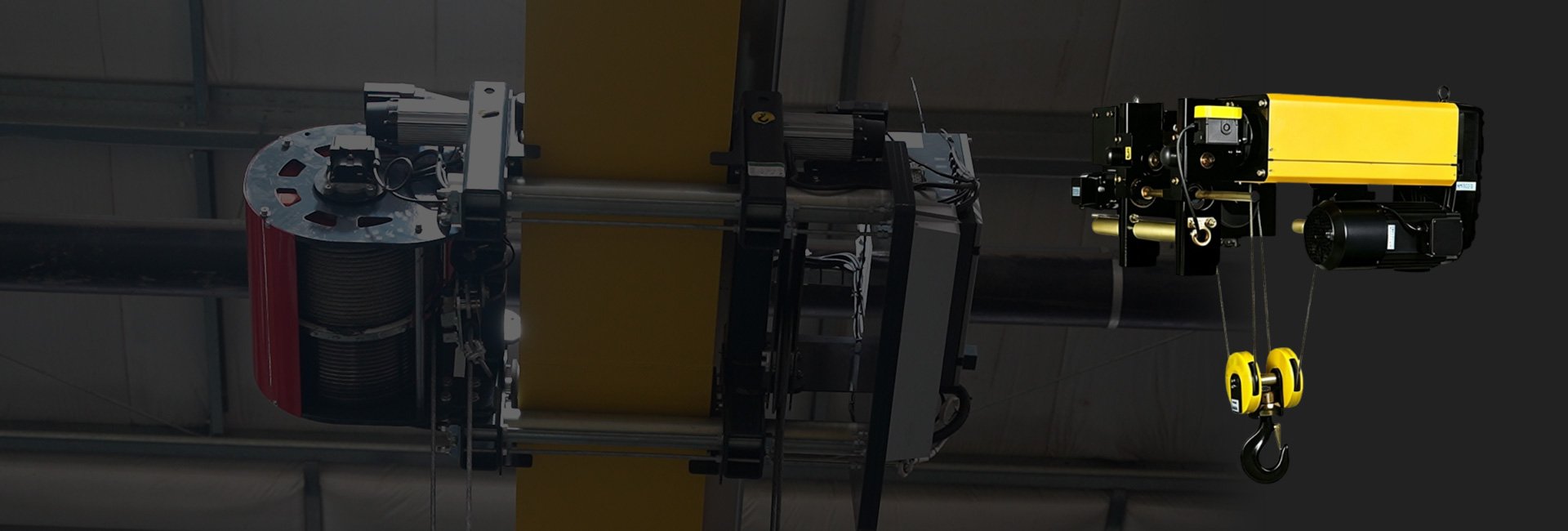
Dingya — Your Reliable Electric Wire Rope Hoist Manufacturer
Electric wire rope hoists are crucial equipment for lifting and handling medium to heavy-duty materials. Driven by a motor, the drum pulls the wire rope, achieving stable lifting and lowering of heavy objects. Compared to light-duty lifting equipment, they are more suitable for heavy-duty, high-lifting-height, and continuous operation. They are widely used in manufacturing, engineering, and heavy industrial environments.
Dingya’s electric wire rope hoists utilize thickened steel in key load-bearing components. Combined with precision machining processes, their overall load-bearing capacity and long-term stability are enhanced. Some models also feature a low headroom design, providing greater effective lifting space even in factory environments with limited height. Please contact Dingya if needed.
Our Products
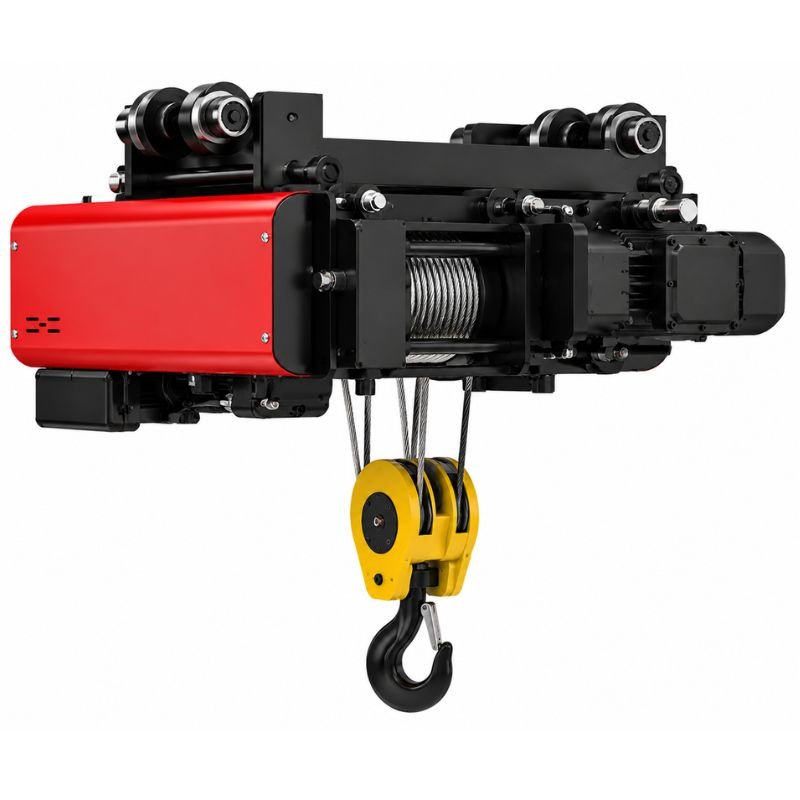
Fixed installation. Suitable for vertical lifting situations at a single workstation. Simple structure. Easy maintenance.
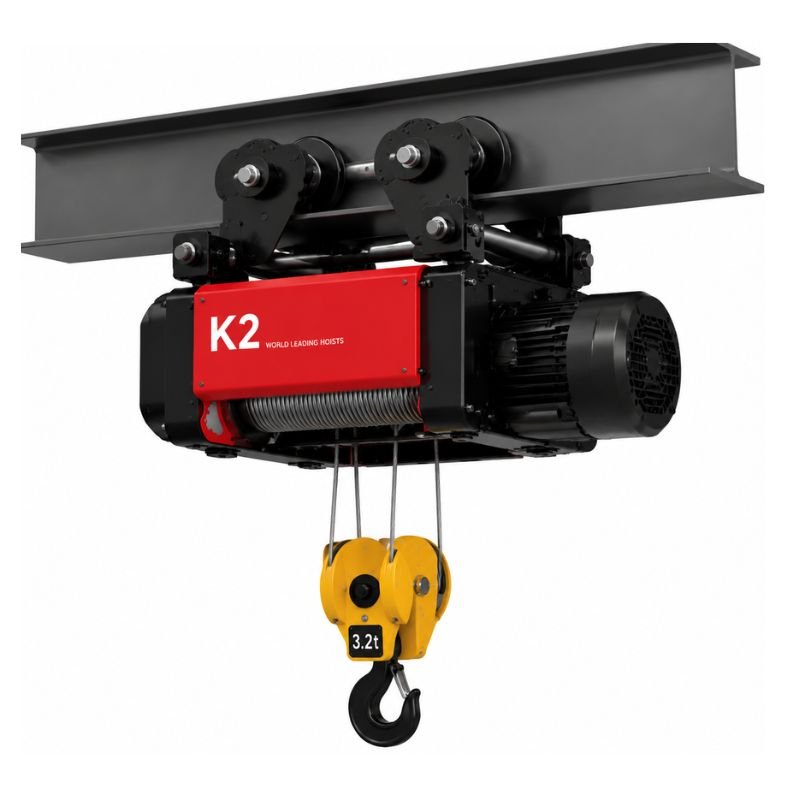
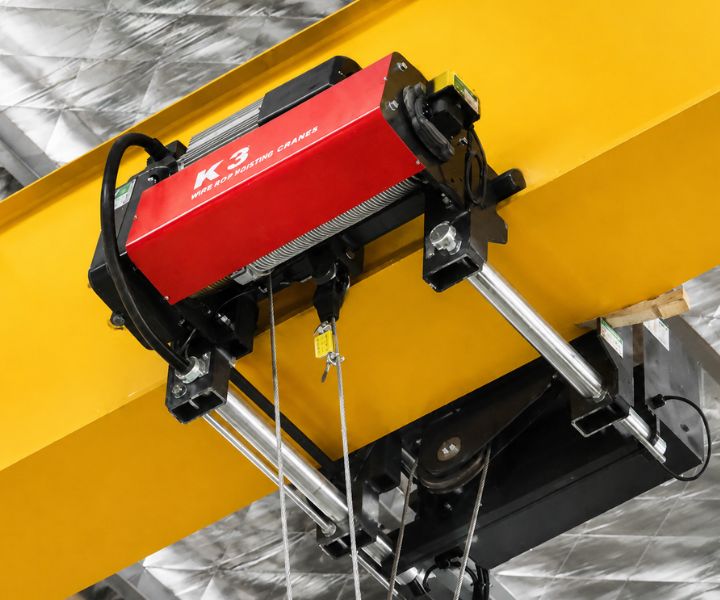
Equipped with a movement mechanism. Can move along an I-beam or track. Combines horizontal and vertical lifting
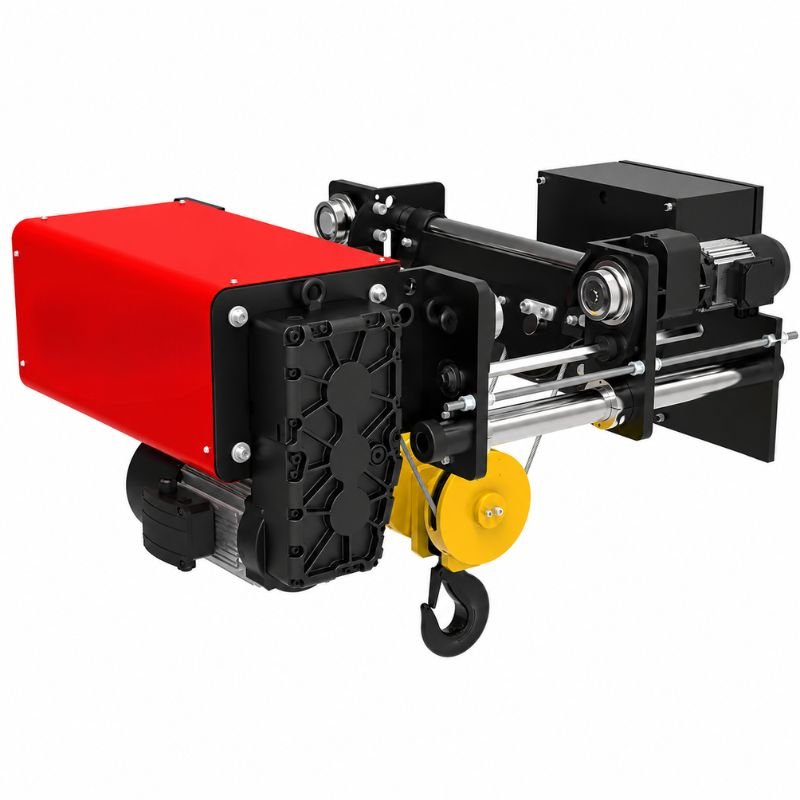
Optimized to reduce overhead space occupation. Suitable for facilities with limited ceiling height. Increases effective lifting height.
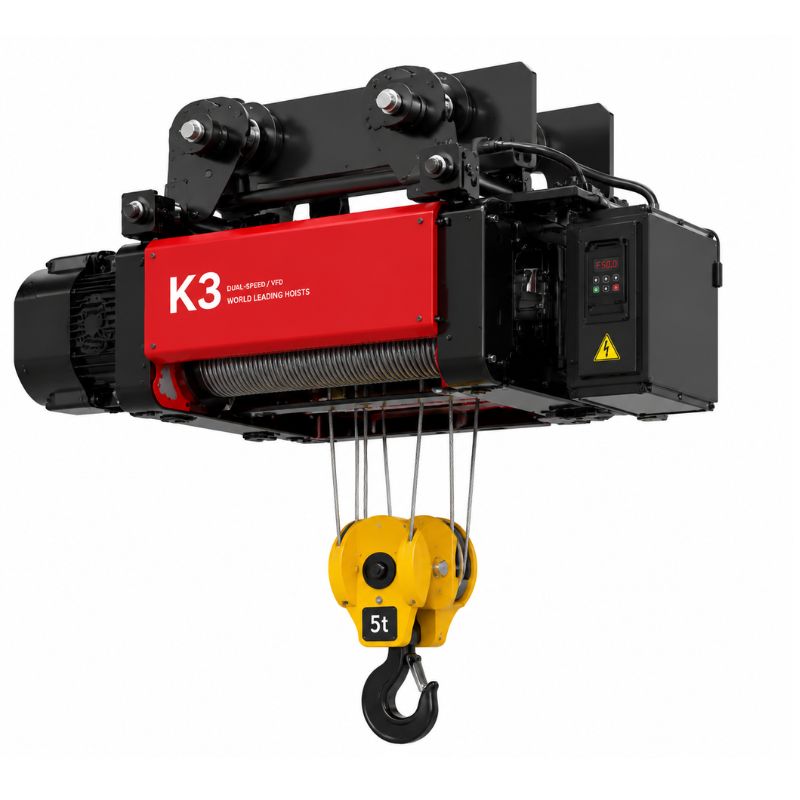
Supports speed switching or stepless speed adjustment. Suitable for working conditions requiring precise positioning or smooth lifting.
Higher Lifting Height
Our electric wire rope hoist adopts a drum and wire rope structure, offering significant advantages in high lifting height applications. It typically covers a lifting range of 6m to 30m or above. Compared to chain hoist structures, it is more stable during long-travel operation. Our wire rope is more durable and experiences more uniform stress, maintaining minimal swing and impact even at very high lifting heights.
Modular Electrical System
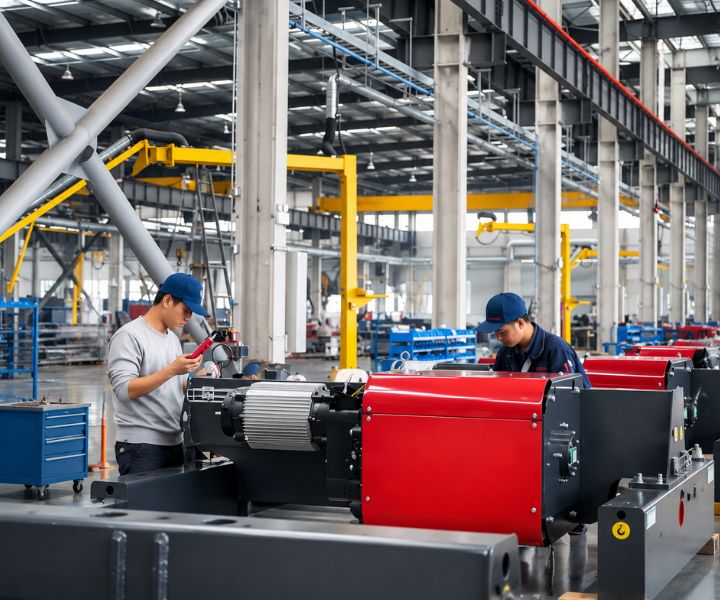
The electrical control system of Dingya’s electric wire rope hoist adopts a modular design, with each functional unit configured independently. When the equipment has been in operation for a long time or requires an upgrade, operators can maintain individual modules without disassembling the entire unit, greatly reducing downtime. It supports expansion with functions like VFD control and remote operation. This helps you flexibly adjust the configuration based on different project requirements.
Applications of Our Wire Rope Hoists
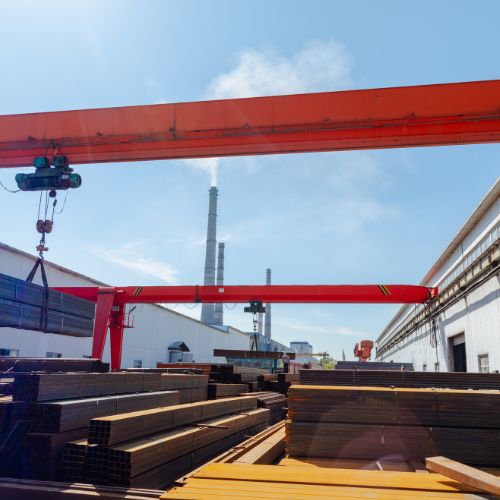
In construction and engineering projects, electric wire rope hoists are commonly used for steel structure installation, equipment lifting, and handling of large building materials. For contractors, they serve as reliable on-site lifting tools, improving construction efficiency and reducing manual operation risks.
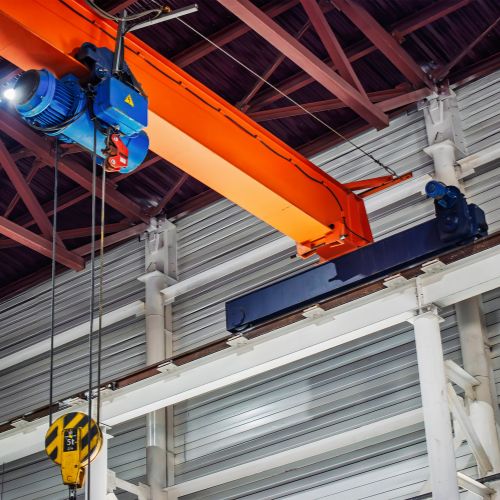
Electric wire rope hoists are mainly used for mold lifting, equipment assembly, and material transfer along production lines. Stability is especially critical in medium to high frequency usages. Compared to manual handling, they can improve work rhythm while ensuring safety.

In these centers, our wire rope hoists are very practical for loading, unloading, and internal transfer of heavy-tonnage goods. They are particularly suitable for applications requiring vertical lifting. Compared to forklifts, they are more flexible in space-constrained environments.
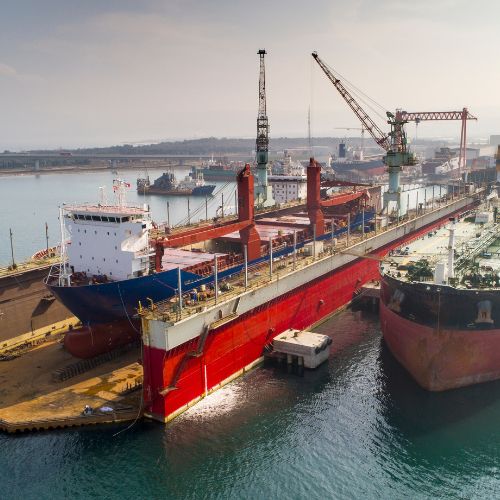
In the shipbuilding and repair industry, wire rope hoists are often used for lifting and installing large components, equipment, and hull parts. Such applications typically involve heavy loads and require higher durability from the equipment.
The biggest difference between the two lies in their load capacity and applicable working conditions. An electric wire rope hoist is more suitable for heavy tonnage, high lifting heights, and high-frequency continuous use.
An electric chain hoist has a more compact structure and is suitable for small to medium tonnage and space-limited applications. If your project involves heavy loads, long travel distances, or continuous operation, please consider the wire rope hoist first.
The common rated lifting capacity typically ranges from 1 ton to 50 tons, and some heavy industrial projects may require even higher capacities. When selecting, do not only look at the average lifting weight, but consider the maximum load on site and reserve a certain safety margin. For example, if the maximum weight on site is 4 tons, you should consider a 5-ton or higher rating configuration.
Yes, it can be customized. The common standard lifting heights are 6m, 9m, 12m, 18m, etc.
However, most projects support customization.
When making the actual selection, in addition to the height of your facility, you also need to consider the space occupied by the hook and lifting accessories themselves.If you have a high-rise facility or a special engineering project, you need to clarify the actual working conditions in the early stage.
The wire rope itself is directly related to safety and service life. A larger diameter generally means higher load capacity. Different structures affect flexibility and wear resistance. The material determines fatigue resistance.
For high-frequency use, please prioritize a wire rope configuration with higher strength and wear resistance. This will result in lower long-term maintenance and replacement costs.
It is not mandatory for all projects. However, it is recommended for many industries. The biggest advantages of a VFD are smoother starting and stopping, as well as adjustable speed control. If your project involves precision lifting, frequent starts and stops, or high-frequency use, a VFD will significantly improve the operating experience.
The most common power supply is three-phase 380V. For export projects, standards such as 400V or 415V are used depending on the destination country. Some small-capacity equipment also supports single-phase 220V power. However, for high-capacity or high-frequency use, three-phase power is generally more stable. When selecting equipment, it is best to confirm the site power conditions in advance.
The lifting speed of an electric wire rope hoist is typically between 3–12 m/min. The travel speed varies depending on the configuration. Speed is not simply about being faster; it must match the actual working conditions. For general material handling, efficiency-oriented speeds are suitable. For equipment installation or precision positioning, two-speed or VFD control is more appropriate.
Export projects typically need to meet the standards of the target market. For example, the CE standard is common for the European market. For regions such as the Middle East and Southeast Asia, more attention is given to voltage, electrical control, and safety configuration compatibility.
Key Components of Electric Wire Rope Hoists
Motor
The motor is the power source of the entire electric wire rope hoist. It determines whether the equipment can stably drive the load. Different tonnages require motors with different power ratings. If the motor is undersized, the hoist may experience overheating or lack of power during use.
Gearbox
The motor runs at high speed. However, lifting requires low speed and high torque. This conversion is achieved through the gearbox. A good gearbox allows the lifting process to be smoother without significant impact. It still provides sufficient power under heavy loads.
Drum
The function of the drum is to properly wind the wire rope in an orderly manner. Through rotation, it enables the lifting and lowering of heavy loads. The drum design directly affects the force condition and service life of the wire rope. If the rope layering is uneven or the design is poor, the wire rope will wear out quickly.
Wire Rope
The wire rope is the core component that directly bears the load. Its strength, diameter, and structure all affect the safety and durability of your equipment. A high-quality wire rope is more wear-resistant during long-term use. If your usage frequency is high, you must choose a more reliable configuration for this part.
Control Unit
The control unit is your interface for operating the equipment. It can be a pendant button or a remote control. It not only affects the convenience of operation but also relates to control precision. If the on-site operating environment is complex, please prioritize a configuration with remote control or a more stable control system.
How Does Wire Rope Hoist Work?
An electric wire rope hoist is essentially a system where a motor drives a wire rope to lift a heavy load.
Once powered on, the motor starts rotating. The gearbox reduces the speed and increases the torque. It then drives the drum to rotate, winding the wire rope up or paying it out. This allows the heavy load to move up and down.
When you operate the hoist, you simply control the lifting or lowering. As soon as you release the control or if there is a sudden power outage, the braking system immediately locks the load, preventing it from falling.
Safety Precautions for Operating Electric Wire Rope Hoist
Pre-Inspection of Wire Rope and Hook
Before use, take a minute to inspect the key components. Mainly check the wire rope for signs of significant wear or broken wires. Check the hook for deformation or sticking. This step helps you identify problems in advance and avoid issues during lifting.
Avoid Overloading and Skew Lifting
Use the equipment strictly according to its rated capacity. Try not to operate long term near the upper limit, and never overload. Also, do not lift at an angle. An electric hoist is designed for vertical loading. Skew lifting will cause abnormal stress on the wire rope and structure.
Ensure the Load Is Stable Before Moving
Many risks occur not at the moment of lifting but during the movement process. If the load is still swinging when first lifted, it is recommended to stabilize it first. Then move it horizontally. This helps avoid uneven loading or loss of control, making operation more manageable.
Understand the Function of the Emergency Stop Device
Electric wire rope hoists are generally equipped with several common emergency stop methods.
The most common is the emergency stop switch on the pendant button. Once pressed, the device immediately cuts off the control circuit, and all movements stop.
For wireless remote control operation, there is also an emergency stop button on the remote control, which serves the same function. Some systems will also automatically stop via limit protection when reaching the extreme position, preventing further upward or downward movement.
Operator Training
The equipment is not complicated, but proper operation is very important. Operators need to be familiar with basic controls, lifting rhythm, and common precautions. This makes actual use more efficient and reduces the risk of misoperation.
Maintenance Guide for Wire Rope Hoists
Wire Rope Lubrication and Wear Inspection
The wire rope is the component that bears the most direct force. With frequent use, it also wears out the fastest. It is recommended to perform regular lubrication on a daily basis to reduce friction and internal fatigue. Also check for broken wires, deformation, or localized flattening. If noticeable wear is found, replace it promptly.
Brake System Inspection
For the brake system, simply check for slipping or delayed braking. Pay special attention after heavy loads or frequent start-stop operations. If you notice longer braking distance or unusual noises, adjust or repair it promptly.
Motor and Gearbox Maintenance
The motor and gearbox are core power components. Mainly focus on whether operation is smooth and whether there is abnormal heating or noise. The gearbox requires regular oil level and condition checks. If these two components remain in good condition over time, the overall operation of the hoist is unlikely to have major problems.
Electrical System Inspection
For the electrical control part, mainly check whether the wiring connections are secure, whether the buttons or remote control are responsive, and whether there are any loose connections. Special attention should be paid to electrical protection in humid or dusty environments.
Regular Replacement of Wear Parts
Components such as wire ropes, brake pads, and seals all have a service life cycle. It is not recommended to wait until they are completely damaged before replacing them. You should perform regular replacements based on usage frequency. Although this requires ongoing investment, it ensures that the equipment remains in a stable condition.