
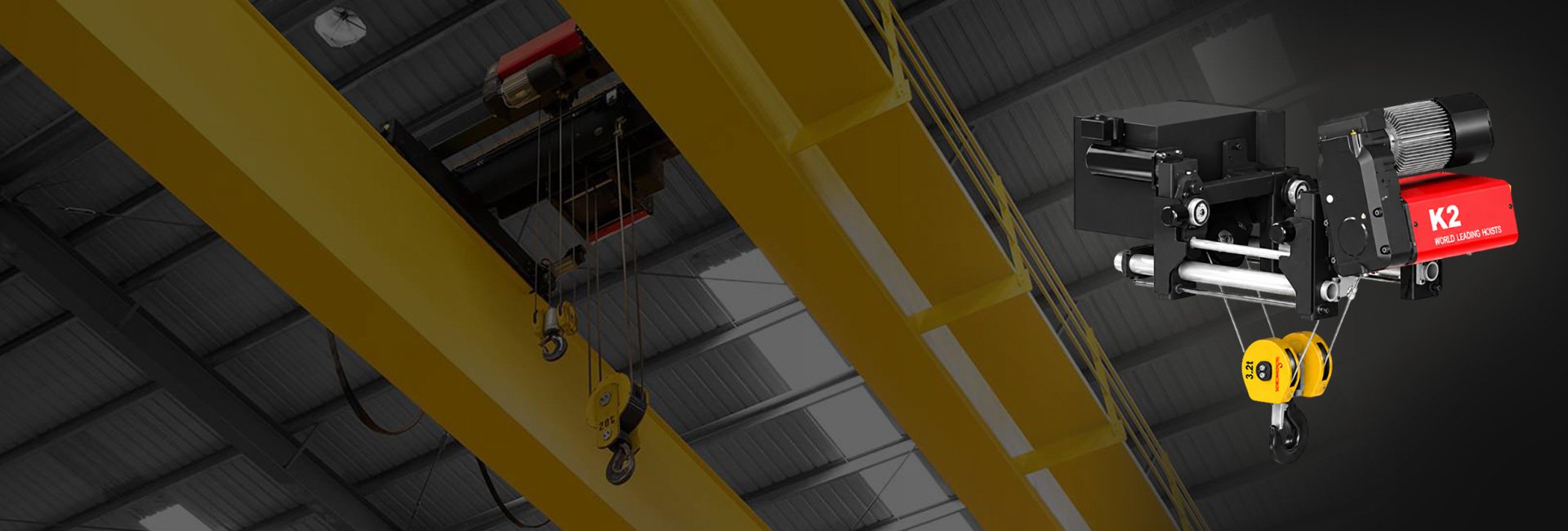
Dinya: Your Trustworthy Low Headroom Wire Rope Hoist Supplier in China
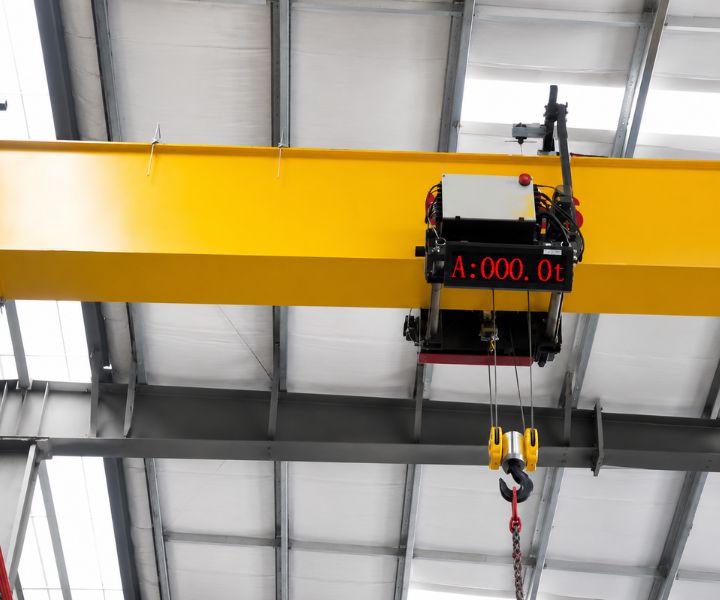
The low headroom wire rope hoist adopts a side-mounted drum and offset trolley structure. This design reduces the hook-to-beam distance. It is specifically used for workshops with lower ceilings, factory renovations, and single-track hoisting systems. It achieves the maximum effective lifting height without altering the building structure.
As a professional manufacturer, Dingya equips low headroom wire rope hoists with variable frequency speed regulation, modular and easy to maintain structures. This keeps smooth lifting while accurately responding to high-frequency operation cycles, making sure durability and safety for long-term use. Please contact us to find the most suitable low headroom solution for your confined space.
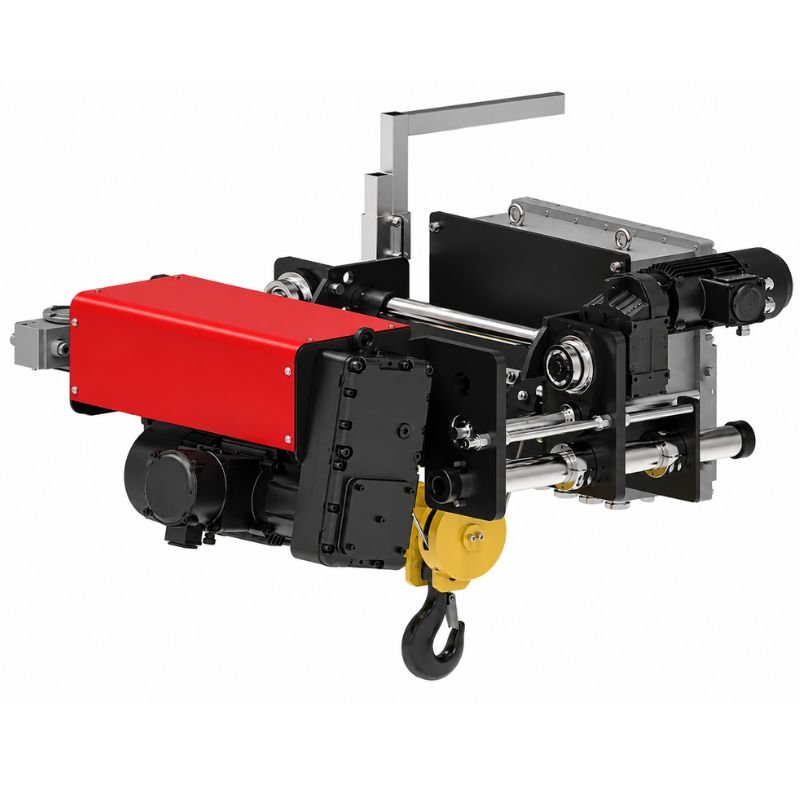
Adopting a compact offset trolley to minimize the distance between the hook and the beam, and maximize the lifting height under extreme clearance conditions.
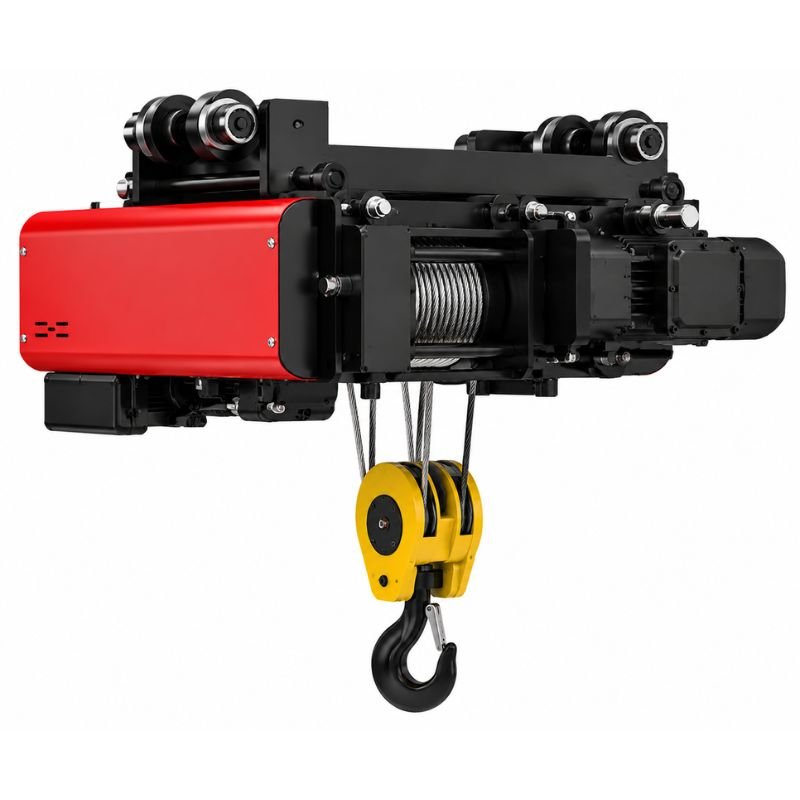
Designed for single beam travel with optimized wheel load distribution and stable longitudinal movement along the runway system.
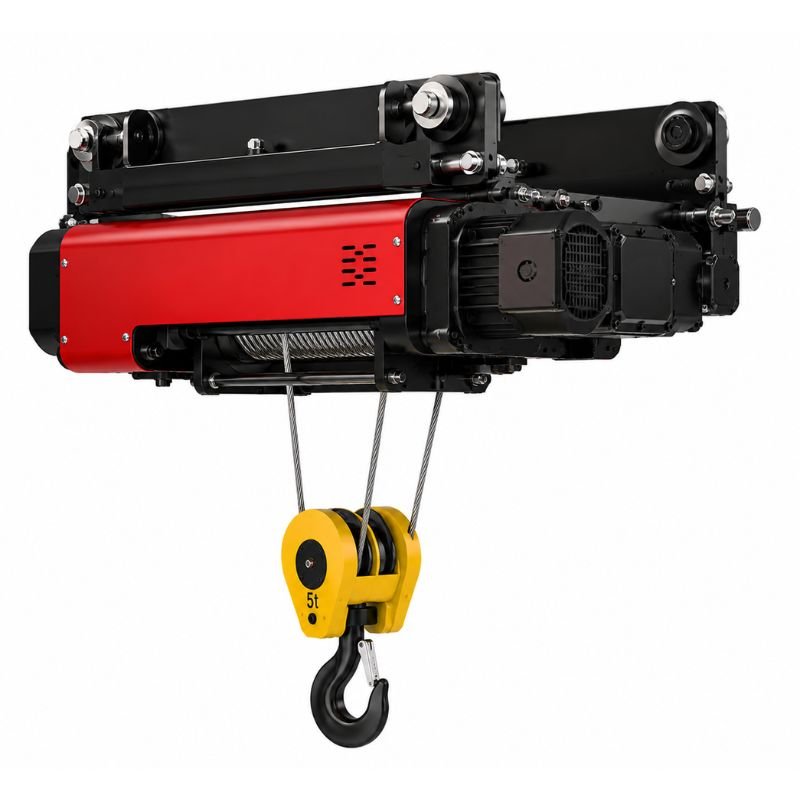
Integrating the motor, gearbox, and brake into a compact drive unit to reduce installation height and simplify crane integration.
Hardened Gear Transmission
The drive system of our low headroom wire rope hoist adopts a multi-stage reduction gearbox. The gears are enhanced in durability through heat treatment, ensuring that the transmission system maintains a stable output even under high-frequency start-up conditions. Compared to ordinary gears, this design can reduce the wear of the gears over a long period of operation, decrease the maintenance frequency, and thereby improve the stability of continuous operation.
Stable Rope Guiding Mechanism
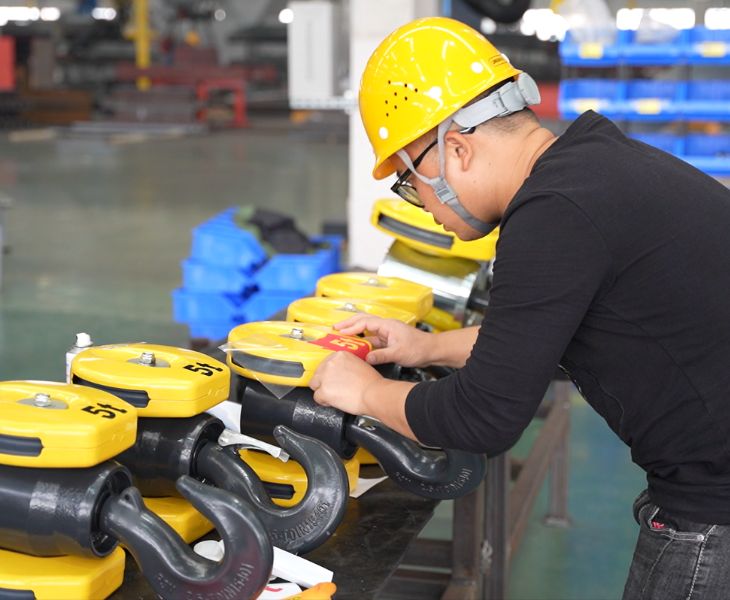
To prevent damage to the steel wire rope caused by slack or overlap, the drum of our low headroom wire rope hoist is equipped with a heavy-duty guide rope device made of ductile iron. It precisely controls the running path of the steel wire rope within the drum, making sure that the steel wire rope remains in a stable arrangement. This reduces local damage caused by tangled ropes, thereby extending the replacement cycle of the steel wire rope and reducing the probability of unexpected downtime.
Power Failure Safety Protection
The braking system of our low headroom wire rope hoist adopts a normally closed double-disc electromagnetic braking device. It will automatically trigger mechanical locking in case of power interruption or system failure. This makes sure that heavy objects will not fall in emergencies, thus avoiding safety accidents. Compared with ordinary braking structures, this electromagnetic system has a faster response speed and less friction heat accumulation, which prolongs the maintenance cycle of the braking components during frequent start-stop tasks.
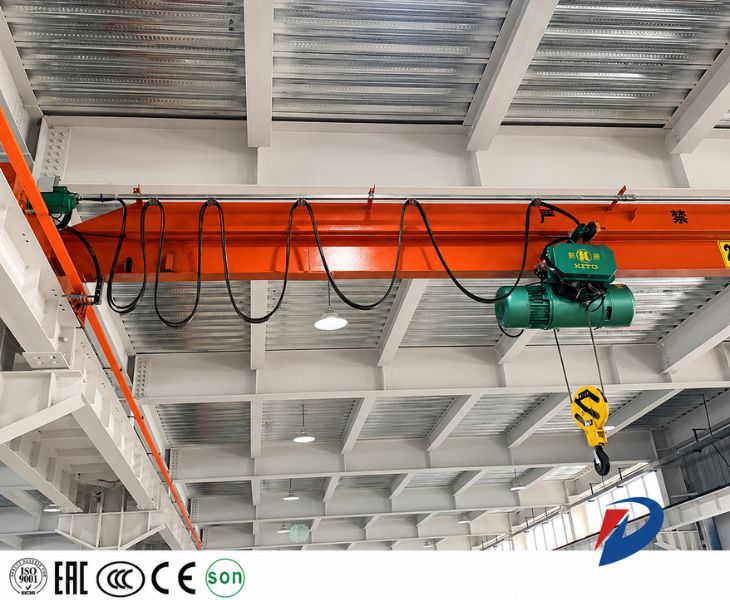
Applications of the Low Headroom Wire Rope Hoist
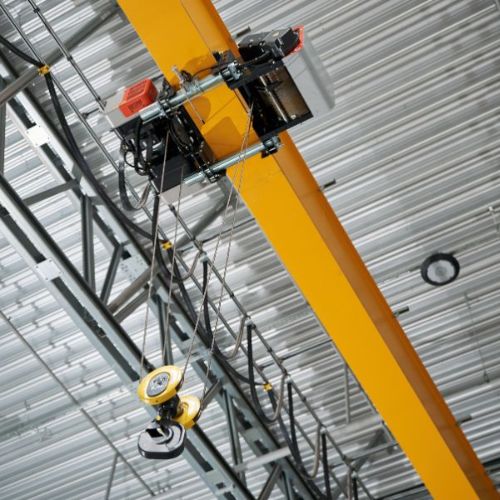
In the renovation of old factories, low headroom wire rope hoists can be adapted to the existing track system. Without raising the roof or rebuilding the steel structure, the actual lifting travel can be increased, reducing the downtime and investment during the renovation process.
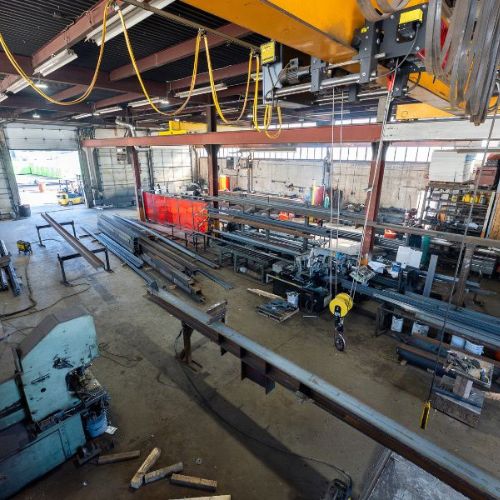
For the handling of steel structures and heavy components, low headroom wire rope hoists can provide more vertical clearance for large workpieces. This reduces the risk of collisions between the workpiece and equipment, platforms or the top of the factory during lifting operations.
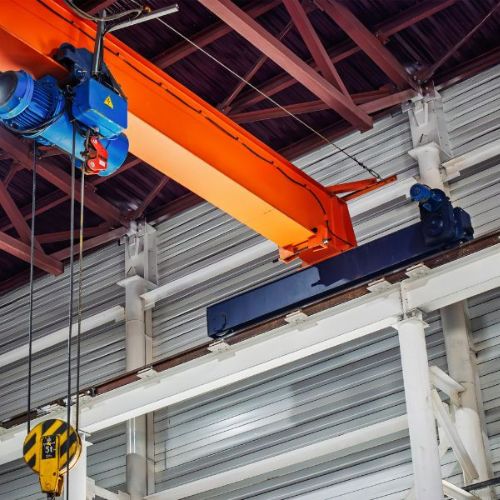
For warehouses with low ceilings, low headroom wire rope hoists can increase the available lifting range during the stacking and lifting of goods, thereby enhancing the space utilization efficiency without the need to adjust the building height.
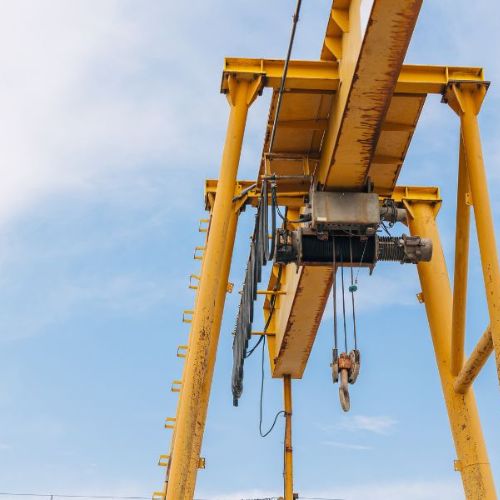
In equipment maintenance and assembly, the low headroom wire rope hoist can complete the disassembly and lifting of motors, reducers, and industrial components within a limited top space, making it convenient for maintenance personnel to carry out equipment maintenance operations.
You need to make sure that the model of the track beam, the flange width, the load-bearing capacity, and the installation straightness are compatible with the structure of the hoist’s trolley. Since the low headroom wire rope hoist adopts a sidewise operation structure, the wheel pressure distribution of the trolley is different from that of ordinary hoists. If the track specifications do not match, it may affect the running stability and increase the wear on the wheels.
For the steel wire ropes of low headroom wire rope hoists, you need to regularly clean the surface of water vapor and contaminants. Use special lubricants with moisture-proof properties to prevent internal rusting and lubrication failure.
The control box, motor and limit device should adopt a higher protection level of sealed structure to prevent condensate water from entering the electrical components and causing short circuits or poor contact.
At the same time, you should also regularly check whether there is damp corrosion or abnormal wear in the brake, rope guide and wheels.
During daily use, you can check whether there are any local broken wires, loose strands, abnormal bending or thinning on the surface of the steel wire rope. This usually indicates that the steel wire rope has entered a stage of high wear.
If there are abnormal load fluctuations, uneven rope pulling, or irregular metallic friction sounds during lifting, this also indicates that the steel wire rope may be approaching the replacement cycle. You need to conduct regular shutdown inspections to prevent sudden breakage of the steel wire rope and avoid lifting accidents.
Before long-term inactivity, you need to clean and re-lubricate the steel wire rope, remove surface moisture and contaminants to prevent rusting during storage. At the same time, you need to retrieve the hook to a safe position to prevent the steel wire rope from being subjected to continuous tension, which could cause local deformation.
For the electrical part, you need to disconnect the power supply and waterproofly wrap the electrical interfaces. Regularly conduct no-load test runs to prevent the internal gears and bearings from rusting and sticking due to prolonged inactivity.
The low headroom wire rope hoist reduces the space occupation between the hook and the main beam. For loads such as molds, steel structures, or large equipment components that occupy a lot of vertical space, it can reduce the probability of collision with beams or upper structures during lifting.
Meanwhile, due to the higher utilization rate of the lifting space, you can complete the overall lifting or precise positioning in one lifting operation. This improves the overall handling efficiency and operational stability of large workpieces.
The low headroom wire rope hoist is compatible with most mainstream cranes. It can be used in conjunction with single girder and double girder bridge cranes. It can also be equipped with gantry cranes and semi gantry cranes for lifting. At the same time, it can also be matched with underslung cranes.
Low Headroom Wire Rope Hoist vs Low Headroom Chain Hoist
Low headroom wire rope hoists and low headroom chain hoists are both used for lifting operations within confined spaces. However, they differ obviously in their transmission structure, load characteristics, operation mode, and maintenance requirements.
This affects the equipment procurement cost. It also impacts the utilization rate of your factory space and the long-term maintenance investment.
Lifting Structure Differences
The low headroom wire rope hoist achieves the lifting action by winding the wire rope around the drum. It is more suitable for longer lifting heights and continuous lifting and transporting of medium-heavy loads. The layered winding of the wire rope on the drum can provide a more stable force path. Therefore, during the lifting of large equipment, steel structures, and molds, it can always operate smoothly.
The low headroom chain hoist operates by the chain wheel driving the chain to rotate in a cycle. Its structure is more compact and is suitable for low-tonnage, short-stroke, and frequent start stop working conditions. Since the chain does not require a drum structure, it is easier to install in workstation-type lifting areas with limited local space.
Different Ways of Optimizing Space
Low headroom wire rope hoists usually reduce the distance between the hook and the main beam by using a side-mounted trolley and a side-mounted drum structure. Therefore, they can achieve a larger effective lifting stroke in bridge cranes and longer track systems.
The low headroom chain hoist reduces the overall height occupation by its compact body. It is more suitable for working conditions where the top space is extremely limited and the lifting capacity is relatively small.
For environments where the factory building is not tall enough but large workpieces need to be lifted, low headroom wire rope hoists are usually easier to maintain a stable lifting space.
Operating Stability and Load Control Capability
The low headroom wire rope hoist is more stable during long-distance lifting, which can reduce load sway and operational shock. It is easy to maintain stable lifting in large equipment installation, mechanical assembly, and high-precision positioning conditions.
The chain structure is more suitable for short distance repeated lifting. It has high flexibility in small assembly stations or high-frequency workpiece transportation conditions. But at larger tonnages or higher operating speeds, chain swing and operational vibration are usually more pronounced.
Different Maintenance Priorities
The maintenance of low headroom wire rope hoists usually focuses on wire rope lubrication, drum rope arrangement, and inspection of the status of the guide rope structure. Due to the long-term bending and winding conditions of the steel wire rope, you need to pay close attention to fatigue wear and wire breakage in the later stages.
The low headroom chain hoist mainly focuses on chain wear, the meshing condition of the chain wheels, and the internal accumulation of chain bags. Its maintenance is relatively simple. However, in high-frequency and heavy-load working conditions, local chain wear may be more concentrated.
For production lines that need to operate continuously for a long time, the wire rope structure is usually easier to maintain a stable service life. While in medium and light-duty conditions, the chain structure can reduce maintenance complexity and improve equipment layout flexibility.
How to Select a More Suitable Solution Based on Your Factory’s Operating Conditions?
If your project involves lifting large workpieces, long running tracks, or high-frequency continuous operations, low headroom wire rope hoists are more suitable. It has more advantages in load stability, lifting height utilization, and continuous operation capability.
For the handling of light to medium-sized workpieces, the assembly stations’ lifting operations, or in areas with extremely limited space, the low headroom chain hoist can reduce installation constraints through its more compact structure and improve equipment layout flexibility.
In addition, you should also conduct a comprehensive evaluation based on the factory clearance, track structure, work level, and future expansion needs. This is to avoid problems such as insufficient lifting capacity or restricted space utilization in the later stage.