

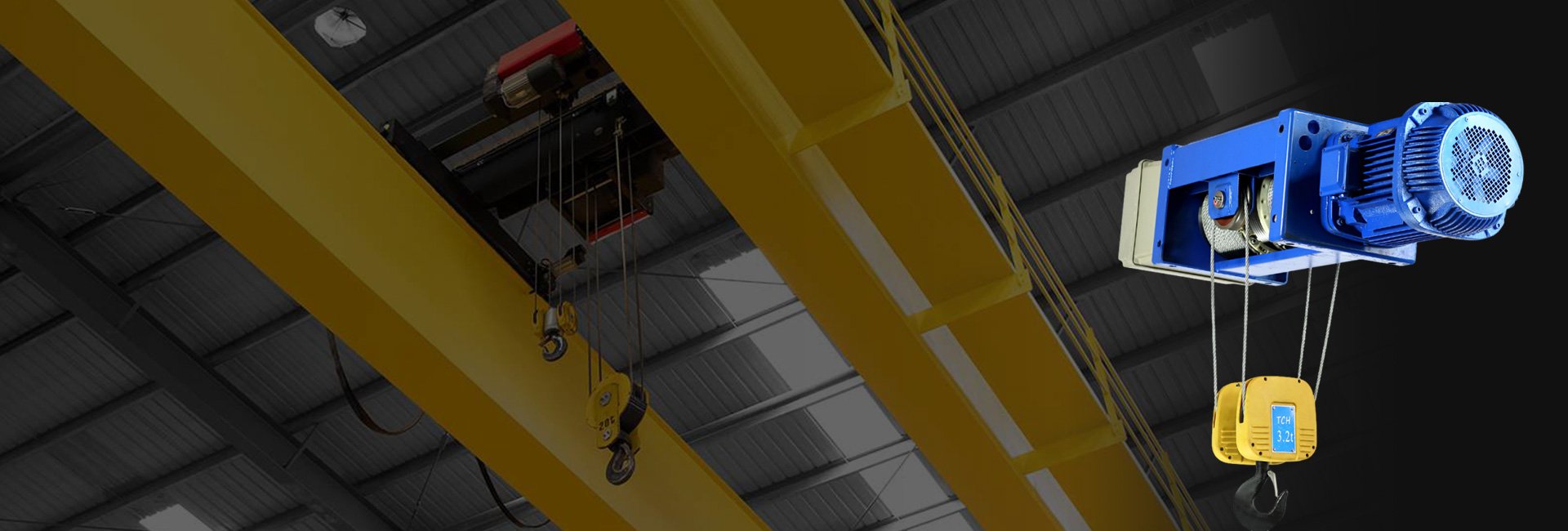
Dingya: Your Reliable Overhead Crane Hoist Manufacturer in China
The overhead crane hoist is a lifting device installed on a bridge crane. It is mainly used for lifting heavy objects and moving equipment in factories, warehouses, and production workshops. It achieves cargo lifting and lowering through steel wire rope or chain transmission, which can improve material handling efficiency and reduce positioning errors caused by manual transportation.
Dingya is committed to providing overhead crane hoists that meet FEM and ISO duty class requirements. We can provide you with low headroom structures, variable frequency control, and lifting speed configuration according to different working conditions. Consult our team today for customized overhead crane hoist solutions and competitive quotes.
Overhead Crane Hoist By Structural Configuration
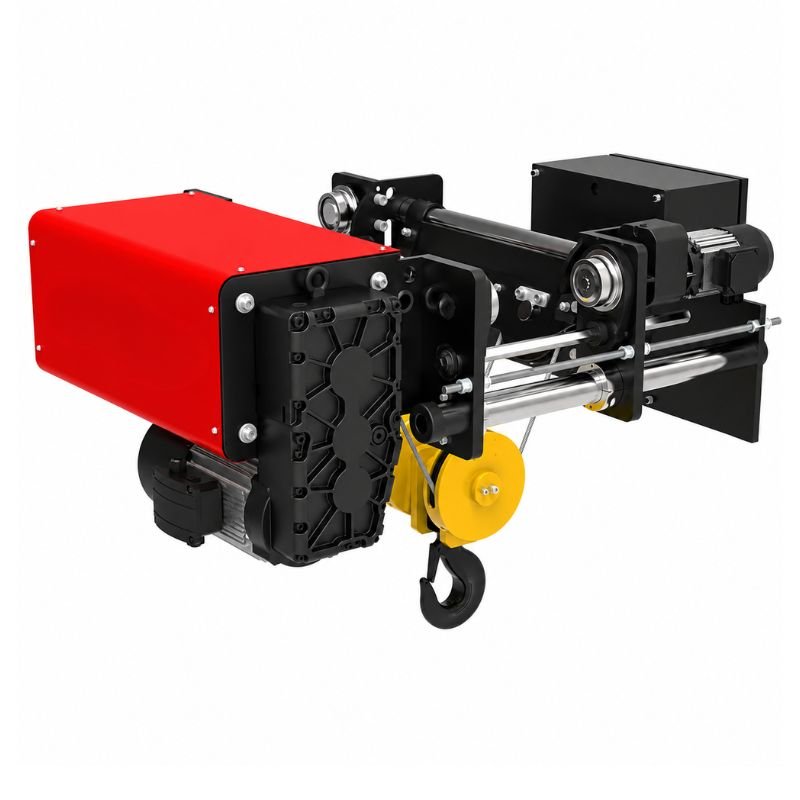
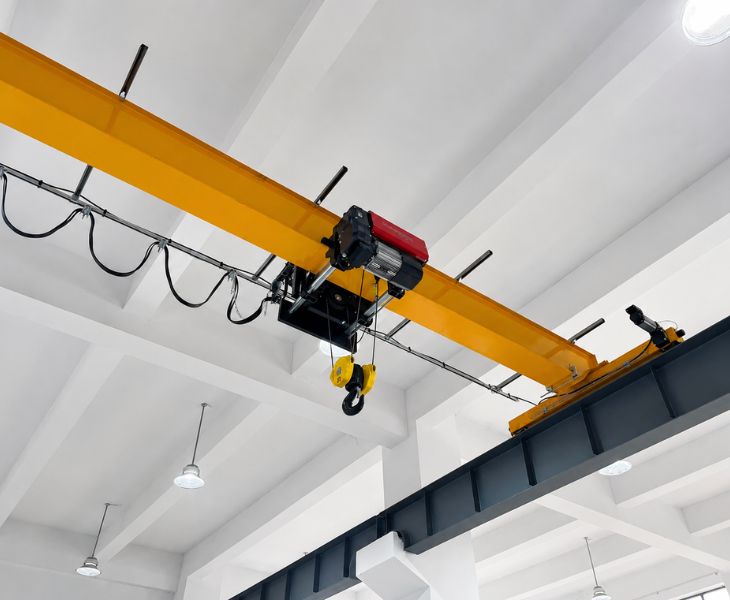
Adopting a biased drum structure, specially developed for maximizing height in buildings with limited top space and low height.
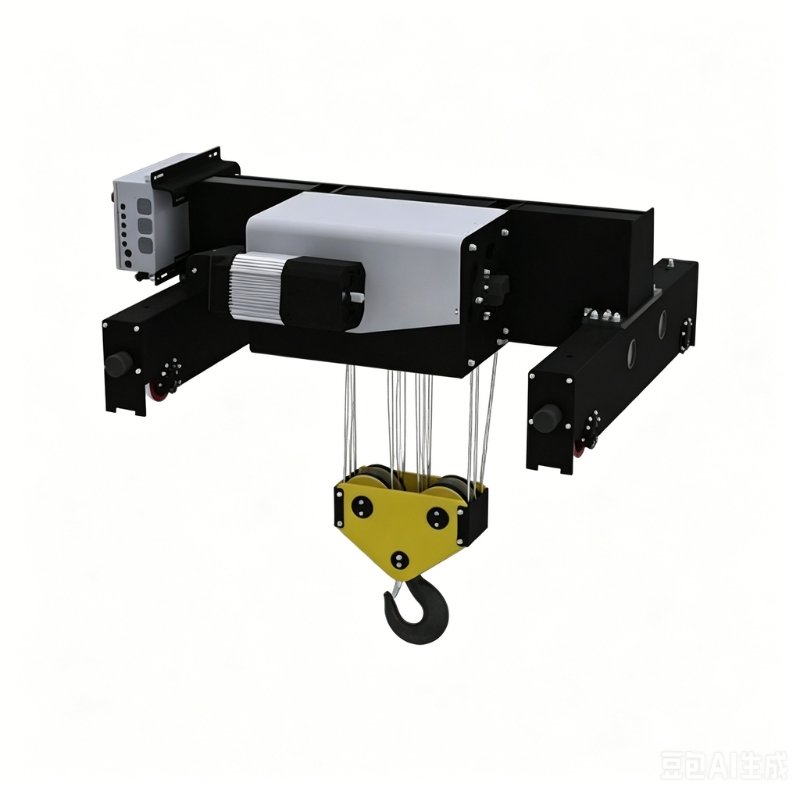
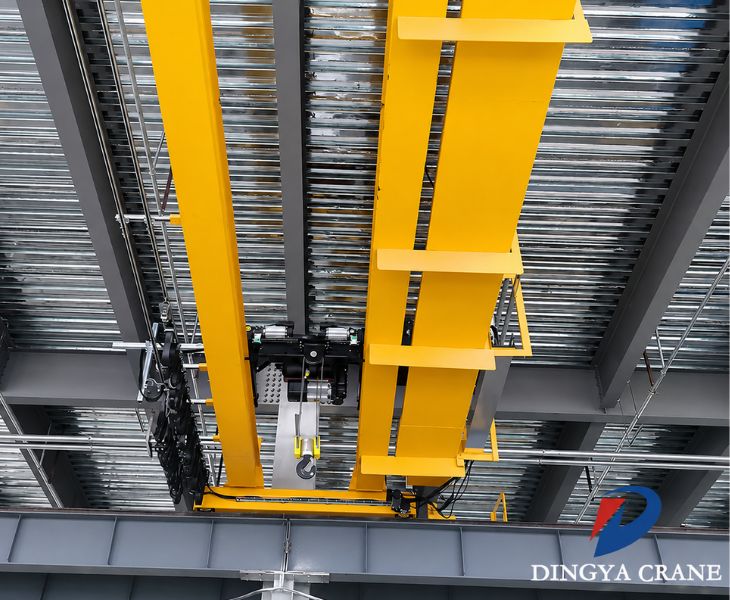
The heavy-duty trolley unit is equipped with a four-wheel drive system to make sure smooth handling of large tonnage loads on double beam tracks.
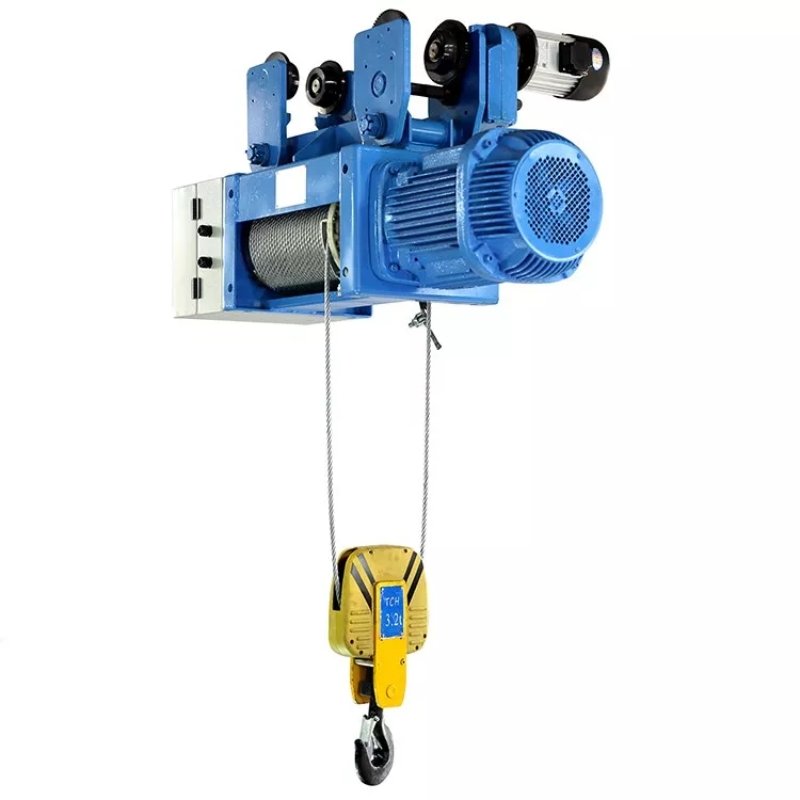
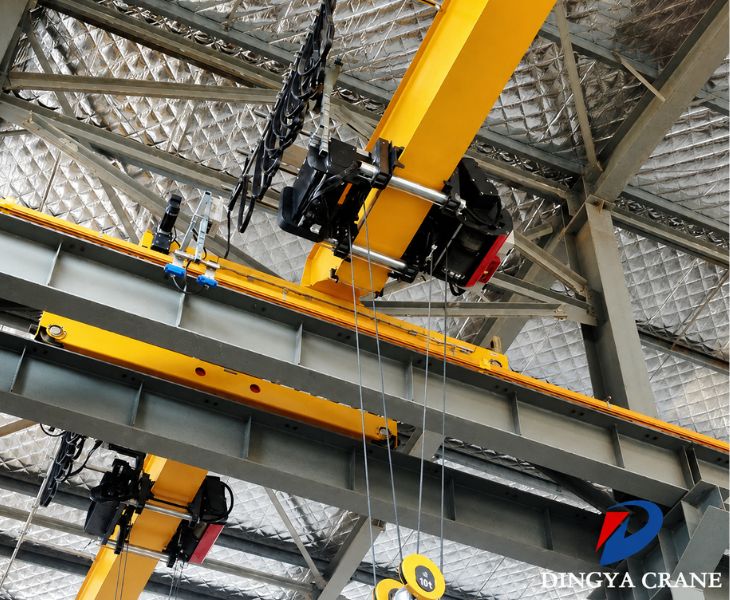
Adopting high-strength link chains and integrated monorail trolleys to achieve smooth movement along a single beam runway track.
Multi-Stage Travel Limit Protection
To prevent equipment collision caused by human operation deviation, our overhead crane hoist is equipped with a multi-stage sensing limit configuration. When approaching the limit position, the system triggers deceleration and a warning to reduce inertial impact. When the hook approaches the safety boundary, the independent power-off circuit will directly cut off the power output. This avoids toppling and abnormal entanglement of steel wire ropes, improving operational safety and stability under high-frequency conditions.
Dynamic Load Monitoring
Our overhead crane hoist is equipped with a dynamic load monitoring system. It can capture the instantaneous force changes and load status during the lifting operation in real time. Combined with variable frequency intelligent control, it enables smooth starting and uniform running throughout the process. This can suppress load swing and meet the precise positioning requirements during the installation of precision industrial components. It also reduces torque loss in the transmission reduction structure and extends its service life.
High-Strength Forged Hook
Our overhead crane hoist hook is made of high-quality alloy steel that has undergone heat treatment. It can withstand the impact loads and fatigue stress caused by heavy loads and frequent lifting operations for a long time. The hook is equipped with a rotating load-bearing structure, allowing for flexible and multi-angle steering. Combined with a reinforced elastic anti-detachment locking buckle, it can securely lock the lifting device even under complex working conditions and load shaking, avoiding the risk of lifting detachment.
Applications of the Overhead Crane Hoist
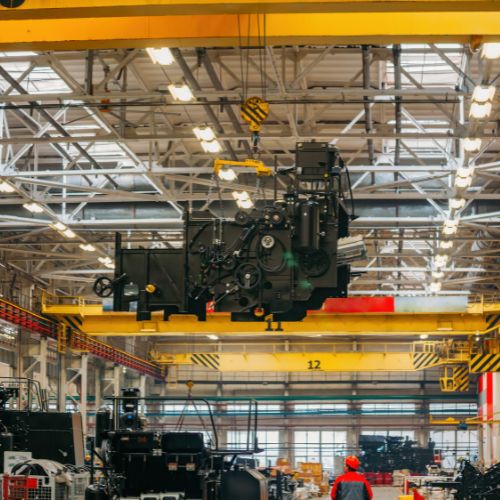
In the automotive assembly line, the overhead crane hoist can accurately hoist the engine and gearbox to the vehicle chassis. With variable frequency micro speed technology, it can make sure that sensitive electronic components and car paint are not damaged during the docking process.
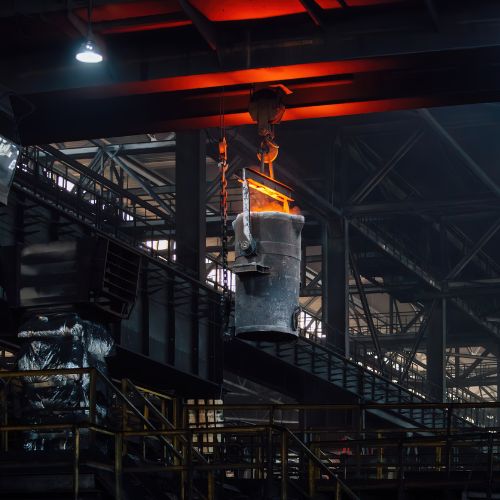
The overhead crane hoist designed for extreme working conditions is widely used in the transportation of liquid metal in casting workshops. Equipping it with special insulation coatings and H-class insulated motors it makes sure the safety of molten steel during lifting.
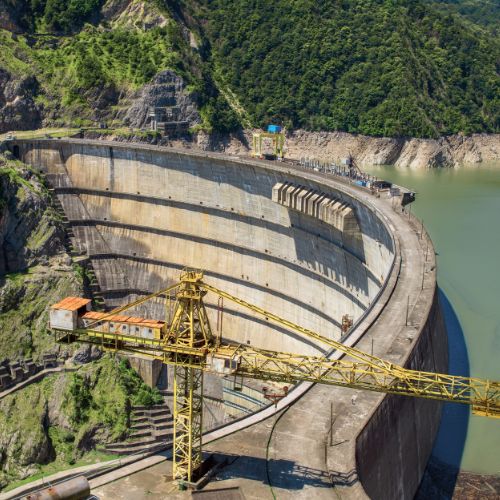
During the maintenance period of the hydropower station, the overhead crane hoist is used to lift giant rotors and blades. Its excellent smooth start stop performance can avoid vibration during lifting, prevent expensive precision generator sets from collision damage and keep safety.
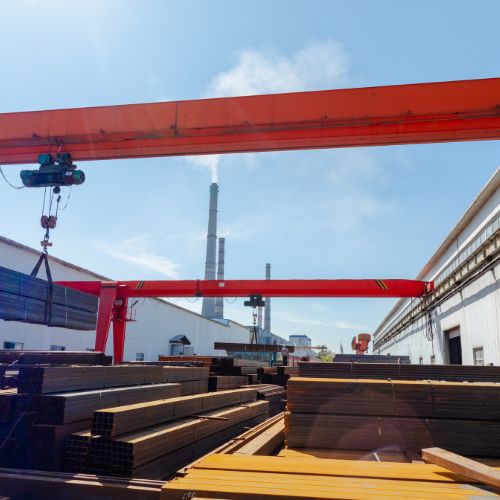
The high-throughput overhead crane hoist has improved the circulation efficiency of modern intelligent warehousing. By integrating automated sensing devices, the equipment can achieve high-speed lifting and precise displacement of goods. Maximizing storage density while reducing manual handling.
During long-term operation, the wear of the wire rope, changes in brake clearance, and drum offset can all affect the lifting stability of the overhead crane hoist. In daily maintenance, you need to check the hook opening size, the broken wires of the steel wire rope, the braking response, and whether the limit device is functioning properly.
For high-frequency operating conditions, you also need to regularly inspect the lubrication status of the gearbox and the temperature rise of the motor to avoid abnormal wear of the transmission system caused by long-term load operation.
When choosing the duty class of the overhead crane hoist, you need to focus on the daily operation frequency of the equipment, the average load, and the continuous working time.
For example, in assembly lines, steel structure processing, or workshops with frequent lifting operations, the equipment is constantly in a state of repeated start and stop. You need to select a higher duty class overhead crane hoist to meet the requirements of continuous operation.
If the duty class is not chosen properly, even if the tonnage meets the requirements, it is easy to encounter problems such as accelerated wear of overhead crane hoist brakes, increased motor temperature rise, and decreased transmission system life.
The abnormal wear of the steel wire rope in the overhead crane hoist is usually caused by uneven rope arrangement on the drum, uneven load on the hook, or wear of the pulley. When there is a side pulling during the lifting process, the steel wire rope is prone to local compression and twisting, which in turn affects its service life.
Moreover, insufficient lubrication or the presence of particles in the dusty environment can accelerate the fatigue wear on the surface of the steel wire rope. Therefore, you need to perform regular maintenance according to the working conditions.
No. The lifting speed of the overhead crane hoist needs to be matched with the actual working conditions. For operations such as steel coil transportation and mold replacement that require rapid handling, a higher speed can enhance the handling efficiency.
However, in the process of installing precision equipment or aligning heavy components, an excessively fast lifting speed can cause the load to sway, increasing positioning errors and inertial impacts.
Low headroom overhead crane hoist reduces the top space occupation by adjusting the layout of the drum, motor and trolley, thereby achieving a greater effective lifting height.
Compared to the standard structure, it is usually used for the renovation of old factories or in environments with limited floor height. It can increase the actual lifting range without changing the building structure.
The standard structure overhead crane hoist usually has a more conventional installation method and maintenance space, making it suitable for environments with sufficient floor height.
During the lifting process of the overhead crane hoist, the steel wire rope will continuously wrap around the surface of the drum. If the rope arrangement is uneven, the steel wire rope is prone to cross-entanglement, excessive local stress or abnormal deviation. Such long-term operation will accelerate wear and affect the stability of the drum and pulley system.
Precise rope arrangement can make the lifting action more stable, reducing your maintenance frequency in the future. At the same time, it can extend the service life of the entire lifting mechanism.
Outdoor Overhead Crane Hoist vs Indoor Configuration Differences
Shell and Overall Machine Protection
The outdoor overhead crane hoist is constantly exposed to the open air with rain, dust and large temperature differences. The motor, control box and braking core components all require a higher protection standard.
It adopts a thickened sealed shell, and the body joints, motor end covers and electrical control boxes are all treated for airtight waterproofing. This prevents water vapor and dust from entering. The high-level sealed structure can reduce sudden failures caused by electrical insulation aging and component corrosion.
The indoor overhead crane hoist operates in a closed factory building with a stable environment. It does not require a reinforced airtight design. Only basic dust protection is needed. The material and sealing standards of the shell comply with the normal indoor working conditions. Its cost-effectiveness is more suitable for indoor use needs.
Anticorrosion and Surface Treatment
The outdoor overhead crane hoist is constantly exposed to rain, ultraviolet radiation, and acidic or alkaline air erosion. The entire metal structure of the hoist is made of anti-corrosion materials and is treated with multiple layers of rust prevention spraying and passivation processing.
The lifting hooks, chains, steel wires, and other load-bearing components will also undergo additional anti-corrosion treatment. This can extend the hoist’s lifespan, reduce the additional costs associated with later component replacements, daily maintenance, and unexpected downtime.
The indoor overhead crane hoist operates in a stable environment with minimal air corrosion. The metal components only require ordinary anti-rust painting.
Electrical System
The motor, contactor, limit switch and other electrical components of the outdoor overhead crane hoist are all made of high and low temperature resistant models. The outer layer of the circuit cables is equipped with a UV-resistant sheath, which can prevent the outer skin from hardening and cracking due to ultraviolet rays.
The fluctuation of outdoor temperatures will directly affect the lubrication state, braking force, and flexibility of the steel wire rope. The adaptive electrical weather-resistant design can counteract the performance fluctuations caused by temperature differences.
The electrical components of the indoor overhead crane hoist are configured according to the standard of the constant temperature workshop. It meets the needs of smooth start stop and daily operation of the factory building. It usually does not require additional UV resistant design.
Additional Configuration
The outdoor overhead crane hoist is prone to shaking under the influence of lateral wind force when it is unloaded or lightly loaded. Therefore, it is equipped with wind-resistant auxiliary components, track locking structures and operation stability devices to prevent the equipment from automatically sliding during shutdown.
For outdoor projects with large spans and high installation heights, the wind load conditions will also directly affect the selection of the hoist structure. Early adaptation can save you additional costs for later renovations.
The indoor working space is enclosed and is hardly affected by wind force. The overhead crane hoist only needs to be adapted to the fixed tracks of the factory building, without the need for additional structures for wind protection and rainproofing.