

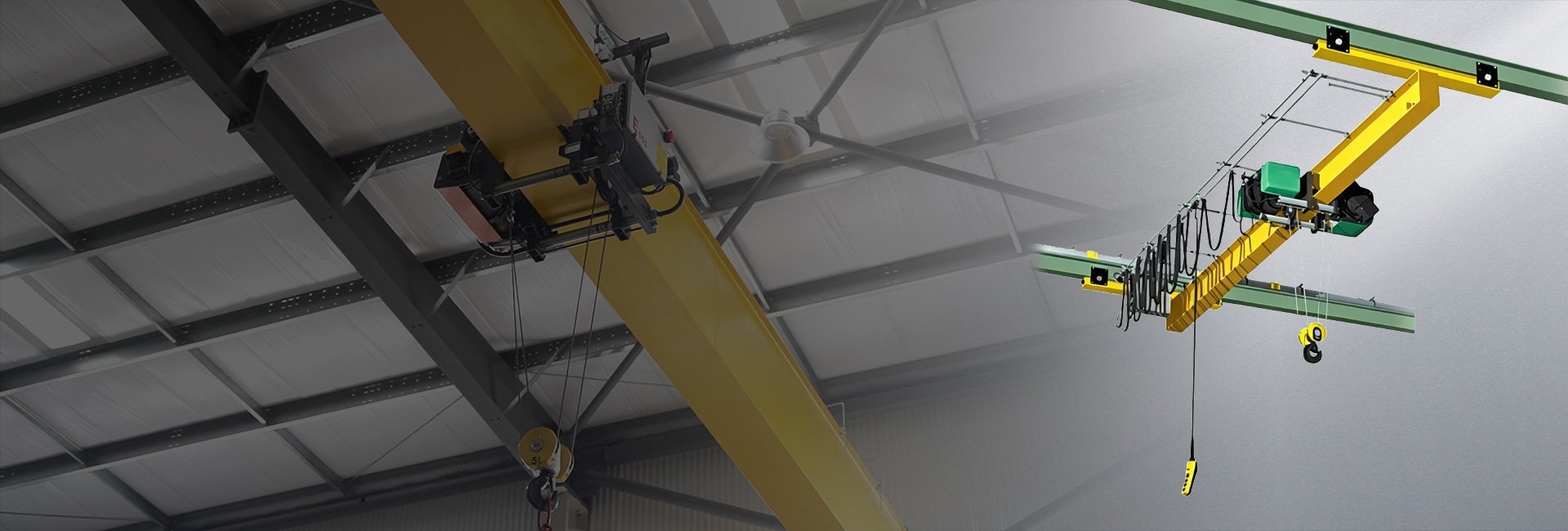
Dingya— Your Reliable 5 Ton Overhead Crane Manufacturer
A 5 ton overhead crane is an industrial lifting device widely used in warehousing and logistics, equipment assembly, and maintenance workshops. The 5 ton load capacity meets most medium-duty equipment and material handling needs. It is suitable for industrial applications that require frequent lifting, improved production efficiency, and reduced manual handling risks.
Dingya has mature engineering experience in manufacturing 5 ton bridge cranes. We offer multiple structural types, including single girder, double girder, European type, etc. We control assembly dimensional tolerances tightly, with span tolerance controlled within ±5 mm. Our 5 ton overhead crane also complies with international standards like CE, FEM, ISO, and DIN. If you are looking for a stable and reliable 5 ton bridge crane solution, feel free to contact Dingya.
Our Products
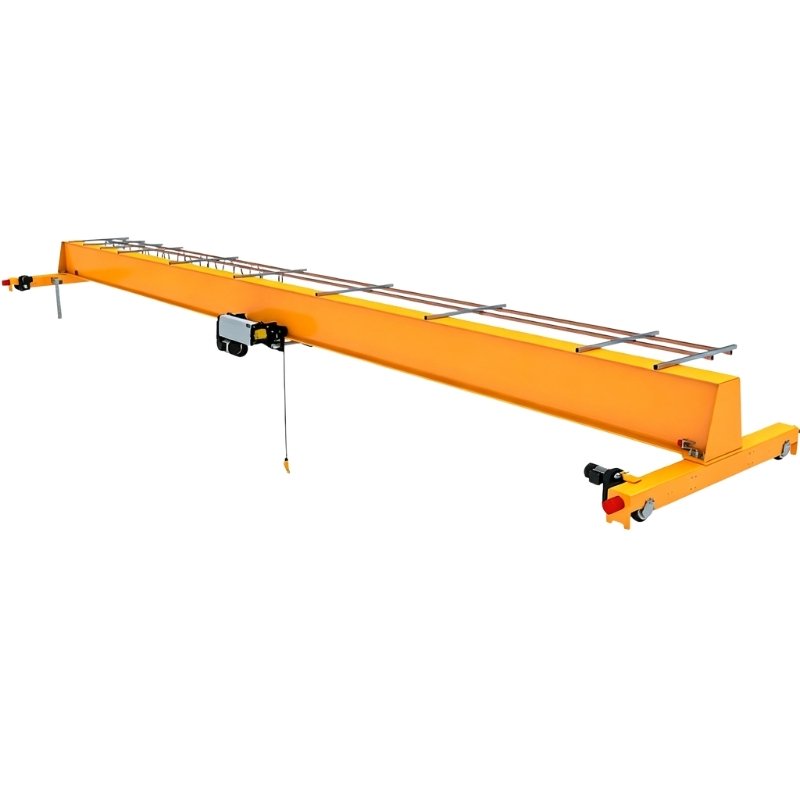
Simple structure. Lighter deadweight. Suitable for standard workshops and low to medium frequency lifting applications.
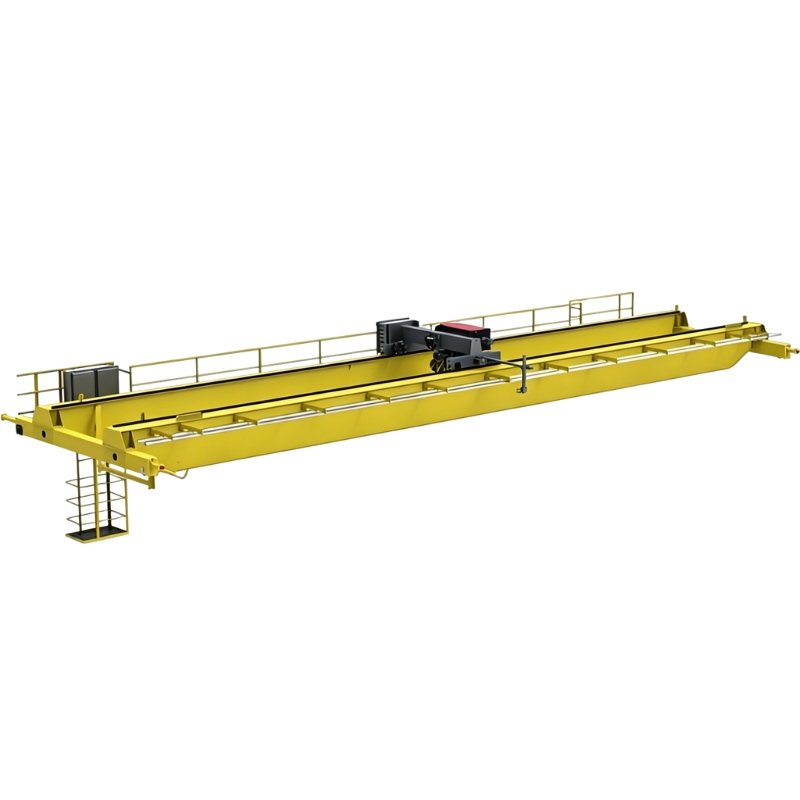
Higher structural stability and working strength. Suitable for high frequency operation and applications that require greater lifting height.
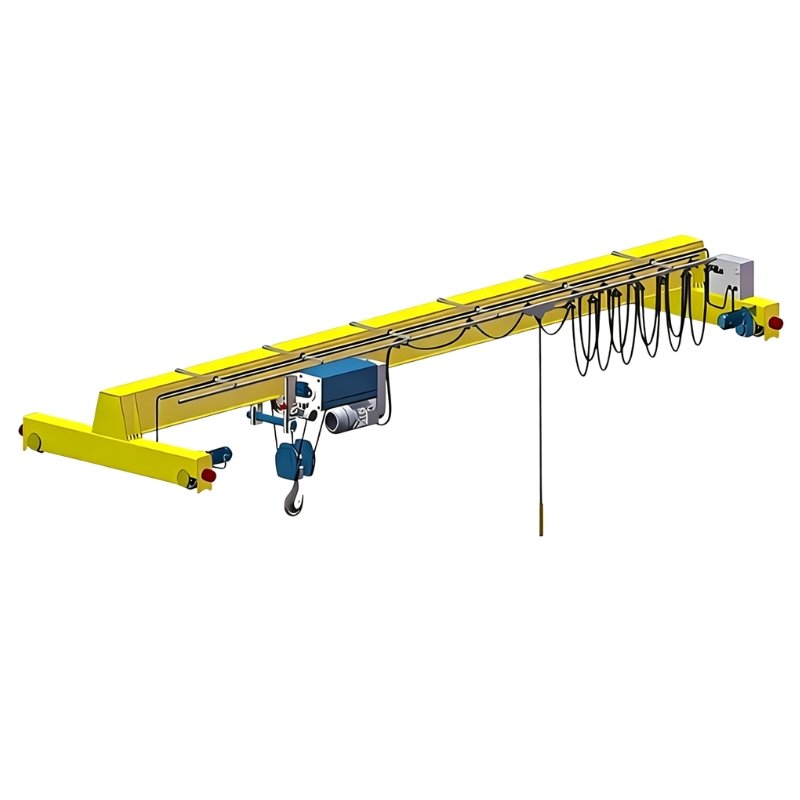
Compact structural design. Lighter deadweight and lower operating energy consumption. Smoother running performance.
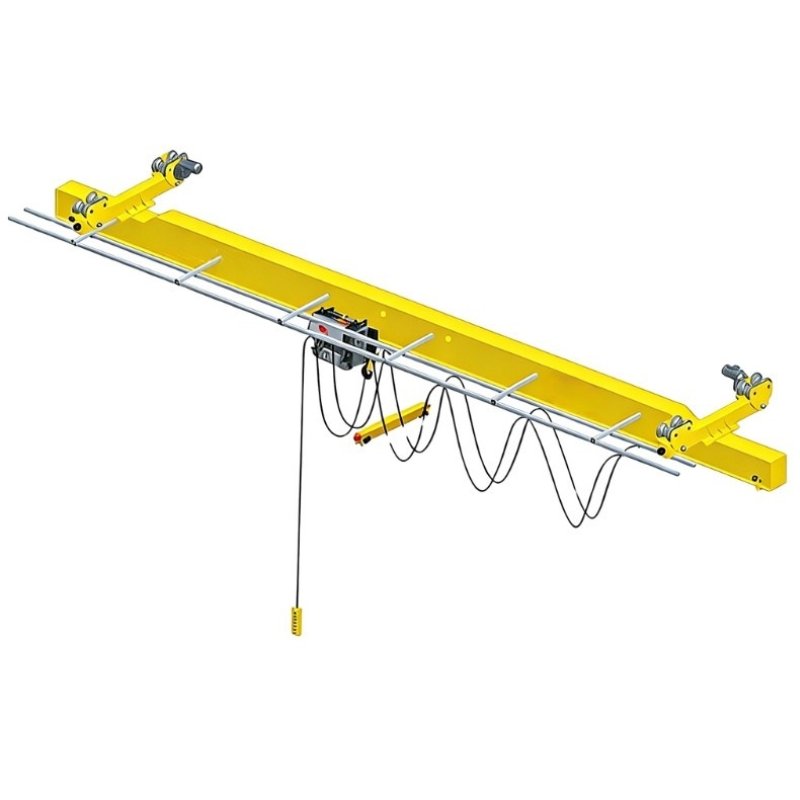
Optimized lifting structure design. Better space utilization. Suitable for projects with limited facility height.
Stable and Reliable Electrical and Control System
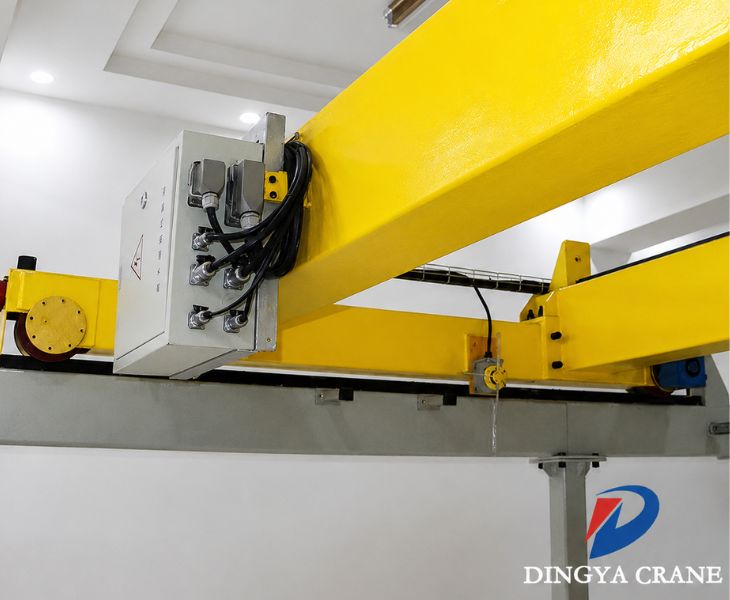
Dingya’s 5 ton bridge crane uses an industrial-grade electrical control system. The standard motor protection rating reaches IP54, with IP55 protection also available. This allows the crane to work well in standard industrial workshops and some dusty environments.
The crane also supports optional VFD control, enabling smoother starts and stops and more precise positioning. An industrial grade wireless remote control system is also available, with an operating range of up to 100 meters.
High Strength Structure with Lightweight Design
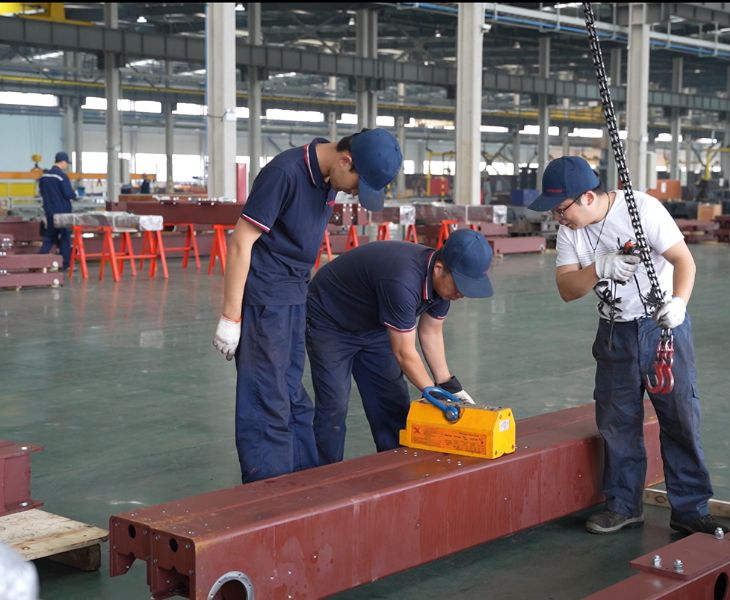
The main girder of our 5 ton overhead crane uses Q355B high strength steel. It also adopts a box girder structural design. This maintains load capacity while effectively reducing the overall deadweight of the crane.
Through optimized structural layout, the overall bending rigidity is further improved. Key load bearing areas are thickened. The submerged arc automatic welding process is also used. This improves weld consistency and structural reliability. The crane maintains good stability even after long term use.
Flexible Power Supply Adaptation
To meet project requirements in different countries and regions, our 5 ton bridge crane supports various industrial power configurations. It can standardly accommodate three phase 380V, 400V, and 415V power supplies.
It can also be customized for different voltage, frequency, and electrical standards based on your export market requirements. Whether for Southeast Asia, the Middle East, Europe, or South America, we can configure the crane according to local factory power conditions.
Applications of Our 5 Ton Overhead Crane
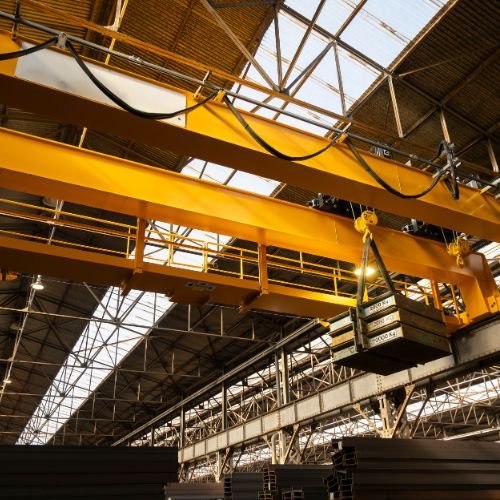
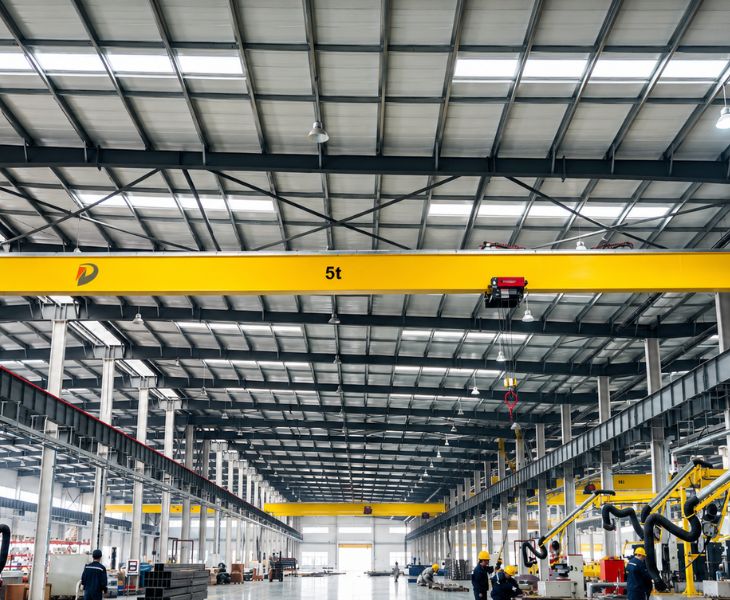
Our 5 ton bridge crane works well for loading and unloading molds, machine tools, and metal parts. It handles frequent starts and stops and gives you precise positioning. This helps improve your machining efficiency.
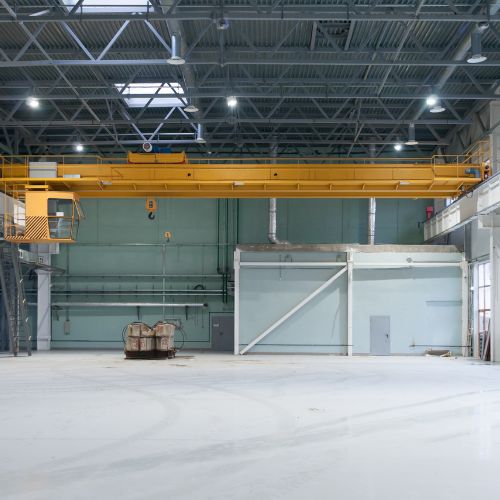
Our 5 ton overhead crane also works well for lifting and moving steel, machinery, and heavy goods. It runs stably and offers flexible operation. It can improve warehouse turnover efficiency.
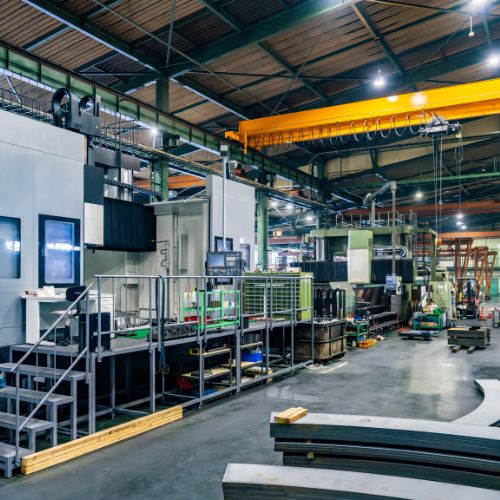
During assembly of engines, transmissions, and large components, our 5 ton overhead crane enables smooth lifting and precise positioning. It reduces the impact of lifting shock on products and equipment during assembly. This can improve overall assembly efficiency.
The common span of a 5 ton bridge crane is generally between 7.5m and 22.5m. This depends specifically on the width of your plant and the track layout. The crane’s lifting height is typically between 6m and 18m. This needs to be determined based on the height of the material being lifted, the equipment layout, and whether there are any obstacles. You better consider your plant dimensions, track spacing, and maximum lifting height before selecting a crane.
The speed of a lift in a 5 tonne overhead crane is usually between 5-8m/minute.
The trolley travel speed is approximately 20 m/min, and the main trolley travel speed is approximately 20–30 m/min. Most can be equipped with VFD control for stepless speed adjustment. This could better reduce mechanical shock and extend crane life.
If your working conditions involve high temperatures or dust, such as in a foundry workshop or a hot processing area, I recommend that you add high temperature resistant motors, heat-resistant cables, protected wiring, and heat shields at key locations. You should also design the electrical control system with sealed dust protection. For environments with heavy dust, you can also select a sealed control cabinet.
The installation of a 5 ton bridge crane normally calls for crane beam and rail foundation. Rails may be installed either in an embedded manner or attached to the existing steel structure. If the facility is new, we would advise you to prepare a rail foundation and load-bearing steel structure during civil work construction.
For facilities that already exist, you have to check the load bearing capacity of the existing steel structure. Generally, we give installation suggestions based on drawings of your facility so as to guarantee safety and save cost.
The price of a 5 ton bridge crane is typically not a fixed number. It depends on factors such as span, lifting height, working class, electrical configuration, and whether customization is required.
Voltage standards, certification requirements, and transportation methods in different countries also affect the total cost. We recommend that you provide your specific working condition parameters, and we can offer a more accurate configuration plan and quotation.
Key Components of a 5 Ton Bridge Crane
Main Girder & End Girder Structure
The structure of the main girder and end girders determines the load-carrying capacity and operating stability of the 5-ton bridge crane. The vast majority of 5-ton cranes have a box girder structure. Compared with other structures, this one has a better resistance to deformation. Besides the tonnage, you should also pay attention to steel quality and welding technology. Take into account such parameters as the presence of high-quality steel and automated welding processes. Such characteristics allow reducing structural fatigue and the possibility of welding cracks after many years of operation.
Lifting Mechanism
The lifting device is the most crucial element of the bridge crane. It directly impacts the effectiveness of your work and operational safety. There are two types of lifting devices for a 5-ton bridge crane – electric hoist and wire rope winch.
The electric hoist is the best choice if you want a compact crane that is perfect for workshops. On the contrary, the wire rope winch is better when you operate at a high working class. Also, pay attention to the quality of wire rope, drum, and hook. Such parts significantly affect the wear rate and reliability of your operations.
Travel Mechanism
The travel mechanism includes the bridge travel system and the trolley travel system. This mechanism determines how smoothly your 5 ton crane moves around your workshop.
The bridge moves the entire crane along the runway. The trolley moves the hoist sideways. You should also pay attention to the wheel material and the drive system. High strength forged wheels with proper hardness treatment can reduce runway wear.
Electrical Control System
The typical electrical system consists of a lifting motor, traveling motors, VFD, and control panels. The application of VFD control is gaining importance day by day. It provides smooth start and stop operations, accurate positioning, and speed control. Moreover, it controls the swing and shock to the load.
You also need good electrical wiring and reliable control components. These parts lower your risk of electrical failure in hot, dusty, or continuous operation environments.
Safety Device Configuration
Safety devices are an important part of keeping your 5 ton crane running reliably over time.
Common safety devices include a hoist limit switch, an overload limiter, an anti collision device, an emergency stop system, and undervoltage protection.
For example, the overload limiter prevents you from lifting more than the rated capacity.
This helps you avoid structural fatigue and safety accidents. The anti collision device works well when multiple cranes operate in the same workshop. It helps reduce the risk of cranes hitting each other.
How to Choose the Right 5 Ton Bridge Crane?
Determine the Span and Lifting Height
Firstly, before purchasing a 5 ton bridge crane, make sure that you establish the span of your building and the required height for the lifts that you will carry out. It is important to note that the “5-ton” capacity of the machine does not determine everything.
The span largely depends on the distance between the two runway rails in your warehouse. As far as the lifting height is concerned, you should take into account the height of the loads that you wish to lift and the heights to which you want to lift the objects.
Choose Single Girder or Double Girder
For 5 ton cranes, single girder and double girder models apply to different purposes. The single girder crane weighs less and is less expensive. The model is suitable for ordinary industrial workshops, and low to medium duty classes.
In terms of higher stability and duty classes, you should pick the double girder model. It is ideal for prolonged, high-frequency operations or applications where greater height is needed. Also, a double girder crane usually gives you better hook clearance.
Select Based on Duty Class and Usage Frequency
When selecting a 5 ton crane, consider not just the tonnage but also its duty class. For instance, if your application needs frequent operation, go for Class A6. On the contrary, Class A3 will be suitable for applications requiring low-frequency usage. Similarly, Class A5 will serve ordinary standard industrial production. In summary, you need to consider daily operation hours and frequency when choosing a crane.
Choose Control Method
A 5 ton bridge crane typically has three control options: pendant control, wireless remote control, and cabin control. Pendant control has a lower cost and works well for small workshops. Wireless remote control gives you more flexibility and better visibility. Cabin control works better for long travel distances or more complex operating environments.