

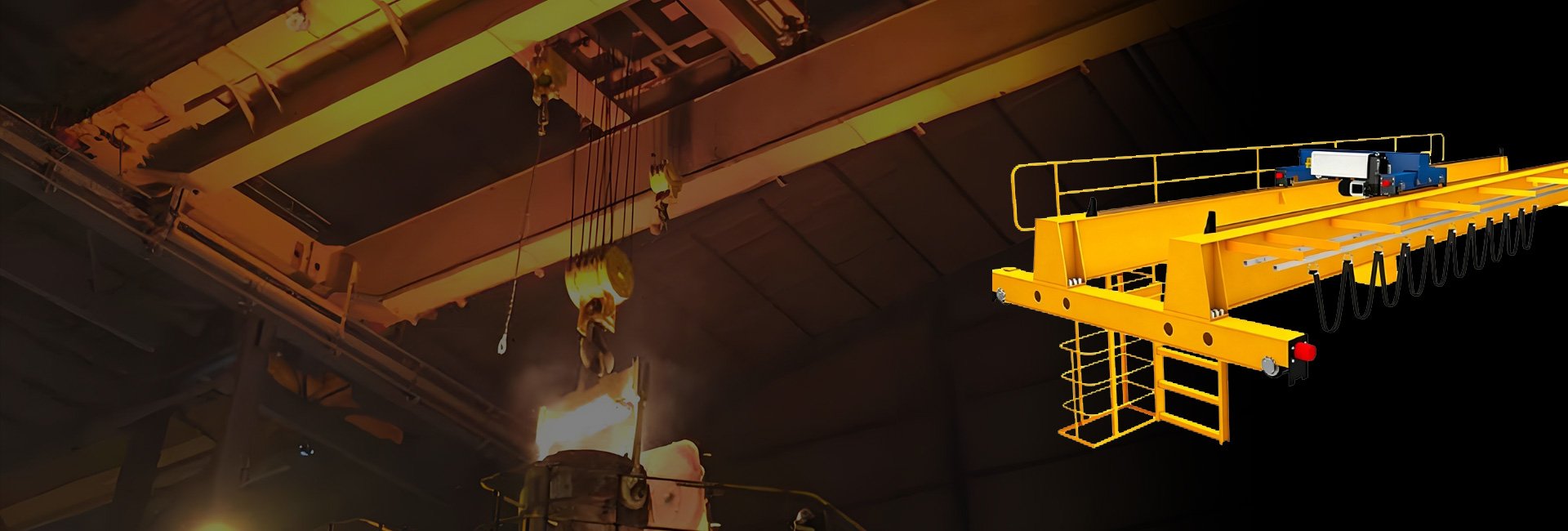
Dingya: A Reliable Chinese 100 Ton Bridge Crane Manufacturer
The 100 ton bridge crane is a heavy lifting equipment installed on elevated runway systems inside industrial workshops. It can be used to lift heavy materials such as large steel coils, cast steel ladles, and generator casings. It solves the problem of moving large-sized heavy objects in limited indoor spaces.
As a professional overhead crane supplier, Dingya equips the 100 ton model with customised span and lifting height according to your needs. Through optimised structural design and intelligent variable frequency speed regulation, it improves lifting safety and operating efficiency while reducing mechanical stress under continuous heavy-duty operation. Contact us to obtain custom heavy lifting solutions.
Our Products
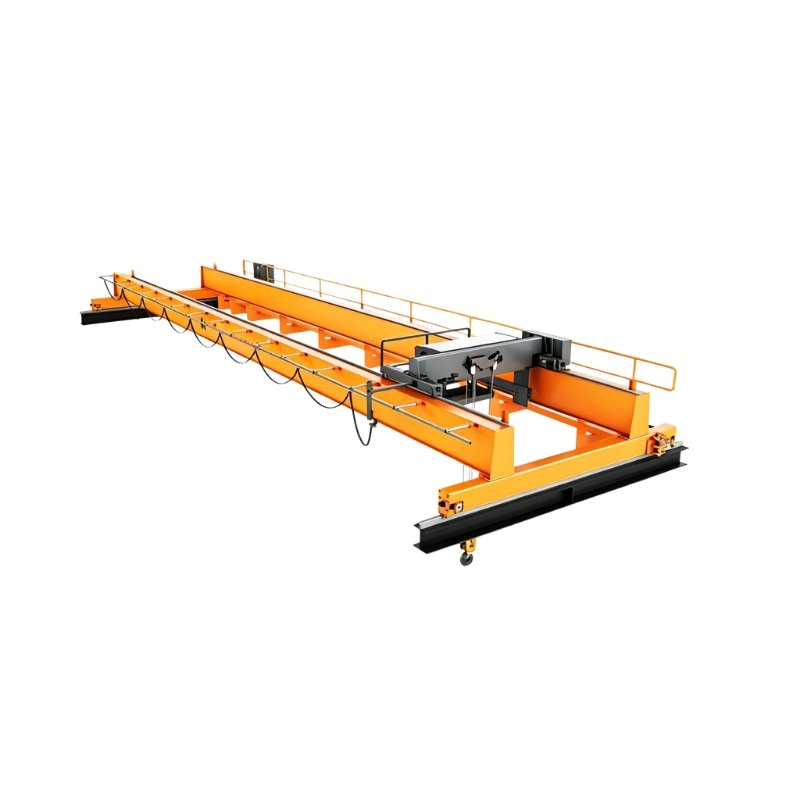
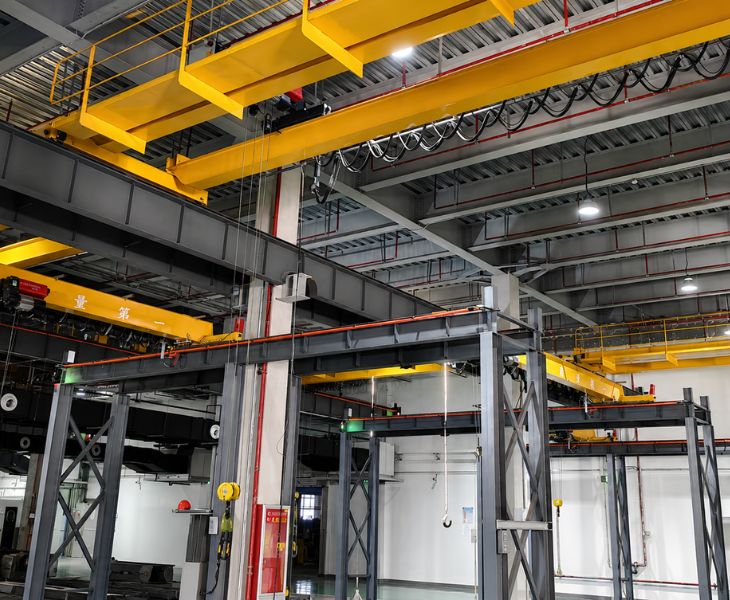
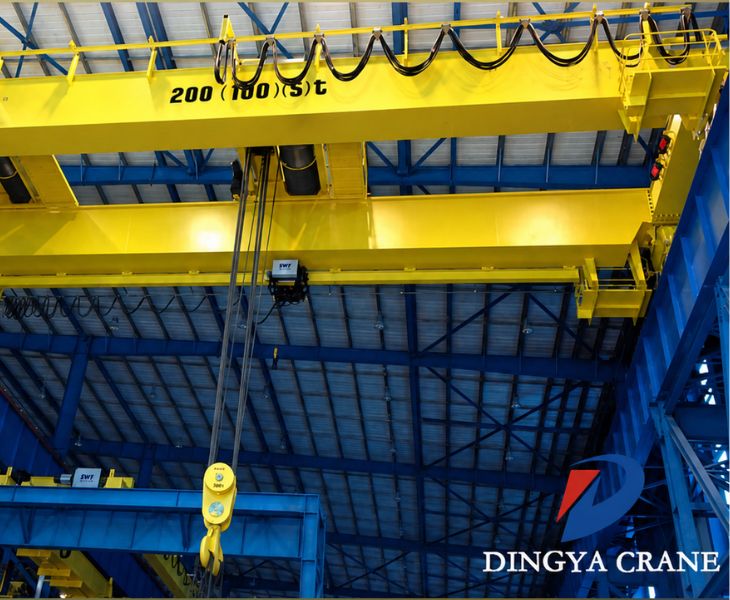
Designed specifically for heavy-duty lifting, the hook height has been increased, making sure stable operation on large spans.
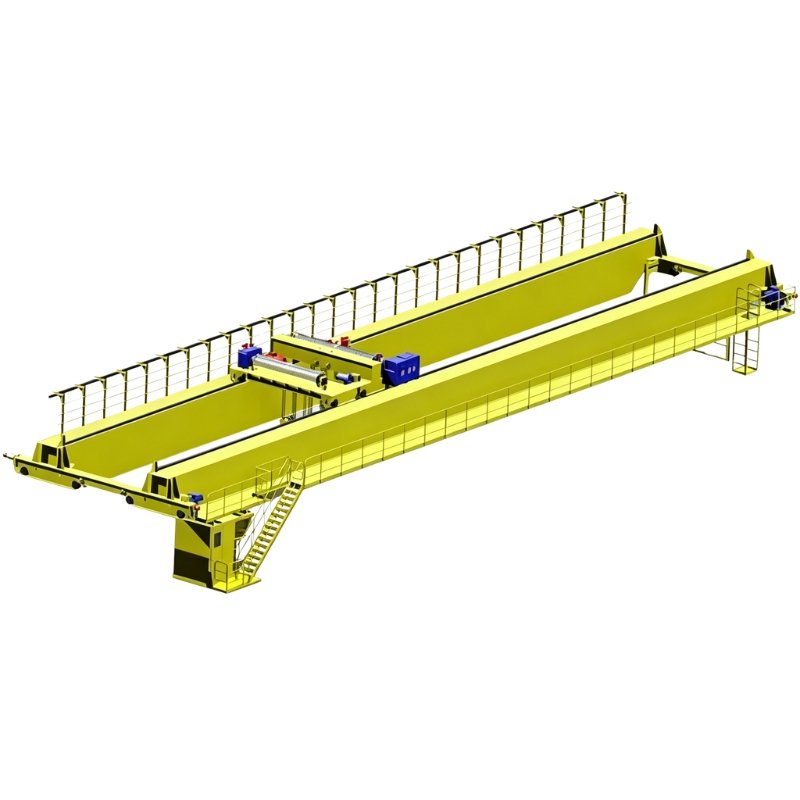
The enclosed girder structure improves rigidity and reduces deformation during continuous heavy load handling.
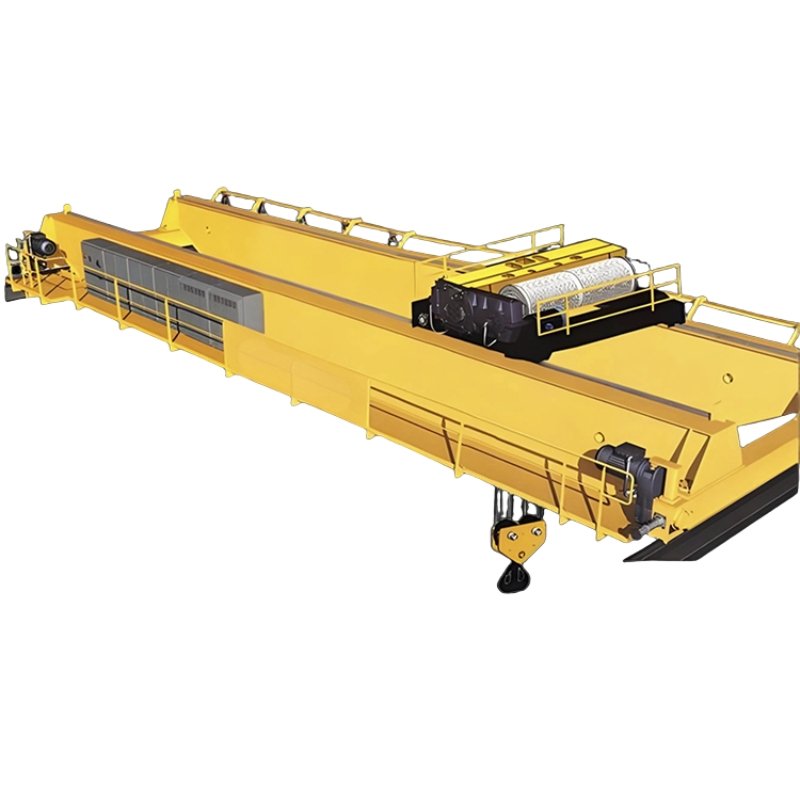
Two independent trolleys are synchronised under the PLC system for safe and smooth lifting of oversized workpieces.
Energy Recovery Drive System
The 100 ton bridge crane can convert the braking energy generated during the lowering and deceleration of the load into reusable electricity. This reduces the unnecessary heat dissipation of the traditional resistive braking system. This design helps to lower power consumption during repetitive lifting cycles and improve thermal management within the electrical control cabinet. It is suitable for applications requiring high lifting heights and continuous heavy material handling operations.
Integrated Maintenance Platform
The main girder side of our 100 ton overhead crane is equipped with a continuous maintenance walkway. This enables you to conduct inspections and maintenance more safely. The side of the trolley running track is also provided with a maintenance platform. Maintenance personnel can complete the daily inspection and maintenance of the motor, reducer, and brake without climbing to the top of the main girder. This helps to reduce the maintenance downtime in large industrial workshops.
Multi-Layer Travel Protection System
Our 100 ton overhead crane uses staged travel limit protection and buffer systems to improve operational safety during long span movement. When the crane approaches runway boundaries, the control system automatically reduces travel motion before initiating emergency shutdown measures. In addition, the optional anti-collision monitoring helps improve operational safety in workshops using multiple overhead cranes on shared runways.
Applications of the 100 Ton Bridge Crane
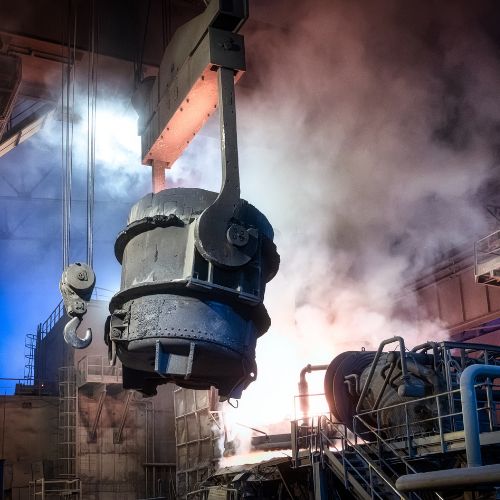
The 100 ton bridge crane is widely used for transporting steel ladles and high-temperature materials between furnaces, casting areas and processing lines. In these locations, the stable movement of the crane is of great importance.
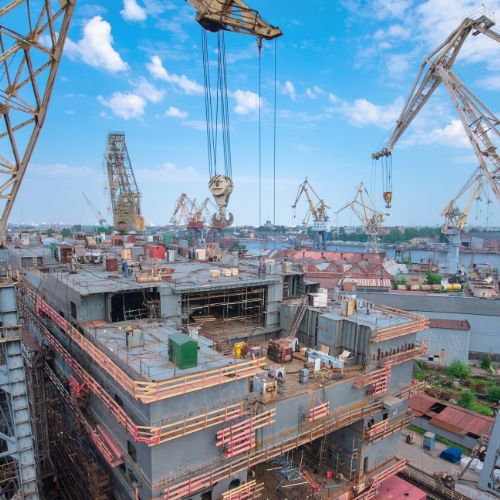
In the shipbuilding workshop, the 100 ton overhead crane can perform positioning and transfer of large steel sections, engine modules and prefabricated structural components during assembly operations.
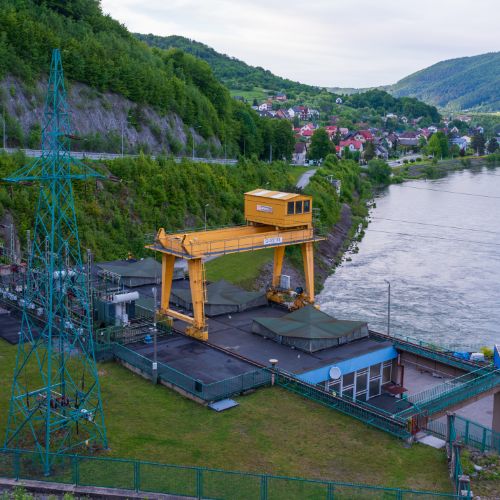
The 100 ton bridge crane installed in the main hall of the hydropower station can safely lift and position the turbine rotor and generator components during major maintenance operations.
The alignment of the runway affects the wheel contact, operational stability and structural stress distribution in large span crane systems. If the rail elevation or gauge deviation exceeds the allowable range, the crane may experience uneven wheel loading during operation, accelerating component wear. Accurate runway installation helps improve travel smoothness and reduces long-term maintenance issues in heavy duty workshops.
Compared with the direct motor starting method, the variable frequency drive system makes the starting, running, and stopping of the 100 ton bridge crane more gradual. This reduces sudden mechanical impacts during acceleration and deceleration, improves stability, and reduces pressure on transmission components. It is suitable for working conditions that require the precise positioning of large industrial equipment.
The material of the wheels determines the load-bearing and wear-resistance capabilities of a 100 ton bridge crane during heavy-load operations. Appropriate materials and heat treatment processes can make the wheels have higher hardness, enabling them to withstand continuous heavy pressure impacts and prevent the wheel body from cracking or deforming. This can reduce friction losses between the wheels and the tracks, extend the lifespan of the moving parts and protect the factory tracks.
The 100 ton bridge crane usually reduces overload and harmonic effects by reasonably matching the capacity of the frequency converter, installing input reactors, and output filters. Adopting independent grounding and shielding circuit design also helps to reduce the impact of electromagnetic interference on sensors and communication systems.
For frequent start-stop or simultaneous operation of multiple mechanisms, you also need to pay attention to the grid capacity and cable layout. Otherwise, it may affect the stability of the control system.
You should choose based on the actual lifting frequency, load ratio and daily operation cycle. For intermittent maintenance or equipment assembly applications, the A6 duty class is usually applicable. For continuous production environments with frequent lifting cycles, you usually need a crane with the A7 or A8 duty class. Choosing the correct crane duty class can help you avoid premature component wear and unnecessary costs.
When multiple 100 ton overhead cranes share the same track or are operating in a cross-operation manner, you need to pay special attention to the running spacing, interlock control, and anti-collision systems. If different equipment enters the overlapping area simultaneously, it is likely to increase the risks of collision and incorrect operation.
For high-frequency collaborative lifting operations, it is recommended that you plan the running zones in advance. You can configure automatic deceleration and anti-collision monitoring systems to enhance the safety of the workshop operation and the work efficiency.
For a 100 ton bridge crane, wireless remote control operation enables you to observe more flexibly during equipment assembly and load positioning. This helps reduce errors in complex lifting processes.
For heavy industrial workshops with high temperatures, dust, or harmful gases, a closed cabin is more suitable for long-term continuous operation. This can reduce the exposure risk for operators.
You can adopt a combined solution of wireless remote control and cab operation to meet the needs of different lifting conditions.
Pre-Camber Technology in 100 Ton Bridge Cranes
For a large-span 100 ton bridge crane, the main beam will gradually experience downward deflection after long-term bearing of its own weight, the weight of the trolley during operation, and heavy lifting. To compensate for this long-term deformation trend, we will pre-set a certain upward camber in the middle of the main beam during manufacturing.
If the pre-camber is insufficient, the main beam is more prone to permanent deflection after long-term operation. This will increase the risk of wheel rail gnawing and structural fatigue. If the pre-camber is too large, it may cause an increase in the running resistance of the trolley, affecting the smoothness of lifting.
Therefore, a large tonnage 100 ton overhead crane requires more accurate pre-camber calculations based on span, working level, and load cycle frequency. Especially in high-frequency lifting conditions such as steel structure manufacturing, water and electricity equipment assembly, and heavy machinery production, pre-camber technology is very important for the long-term stable operation of cranes.
A reasonable camber can help the 100 ton overhead crane distribute the running load more evenly, reducing the local stress concentration of the wheels, tracks, and the supporting structure of the factory building. This can decrease your maintenance frequency and improve the operational consistency of the crane under heavy-load conditions.