

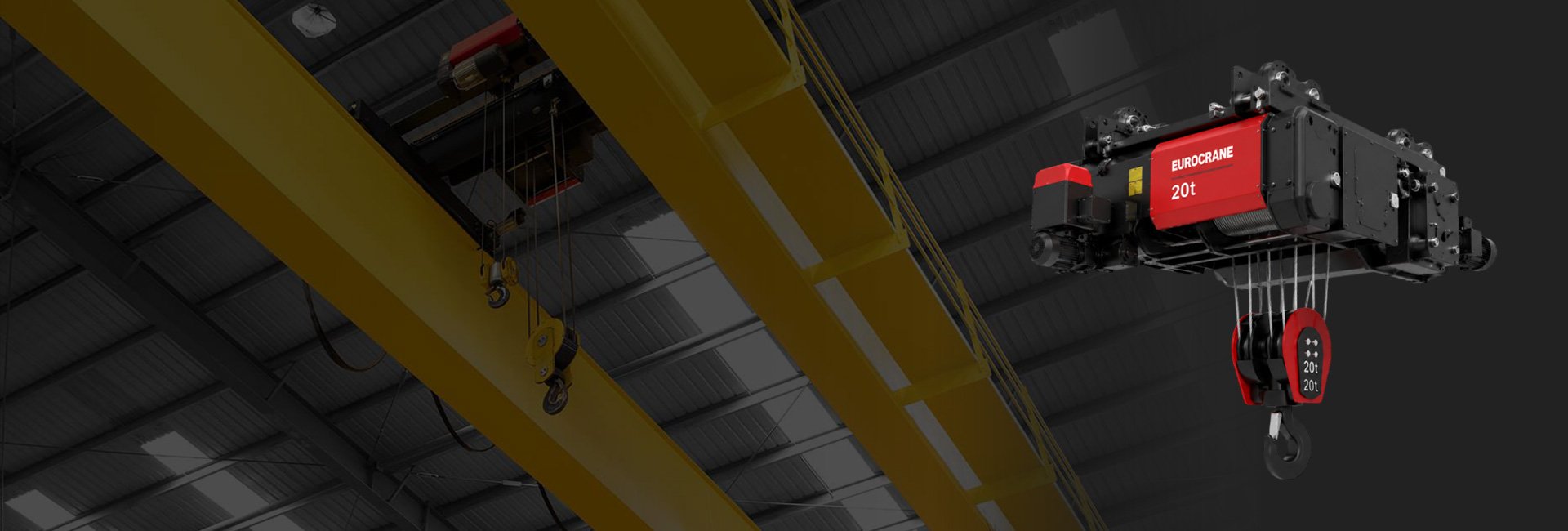
What is a 20-Ton Hoist?
The 20-ton hoist is a specialized component installed on the crane, designed for direct vertical transportation of goods. He can only move up and down. It can help you lift goods with a maximum weight of up to 20 tons.
DINGYA is an experienced supplier of lifting equipment. The various 20-ton hoists we customize have been exported to multiple countries, including Europe and Southeast Asia. DINGYA possesses a mature automated production line and offers prices with excellent value for money. Order now!
Products By Types
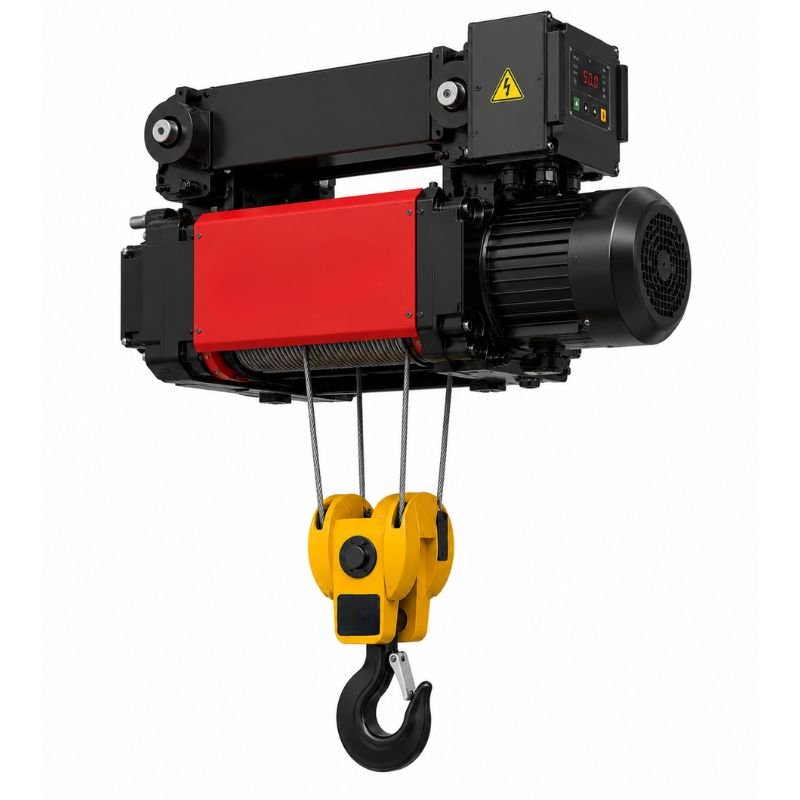
The operation process is more stable. Combined with the anti-shaking technology, you can use it for long-term and high-intensity continuous operation.
Features of the 20-ton Hoist

Compared to manual lifting or using forklifts, the 20-ton hoist can lift up to 20 tons of goods in a single operation, thereby enhancing the efficiency of your workshop.

The 20-ton hoist doesn’t require you to send many workers to operate it. Instead, only one trained operator is needed to operate it. To save your company’s labor costs.

The load chain of a 20-ton hoist is processed through electroplating, and the outer shell is coated with powder coating. Not only resistant to oil and stains but also corrosion-resistant.

You can install the 20-ton hoist on various types of cranes, such as bridge cranes, gantry cranes, etc., according to your project requirements.
High-capacity Lifting
In heavy industries, using a strong 20-ton hoist with high performance really lets companies work with steel, machinery, and huge parts with more speed, better steadiness, and also better safety.
It takes a lot of the manual labor pressure off workers, makes workflow more efficient, and keeps lifting performance dependable even when it has to run continuously, day after day, in heavy-duty conditions.
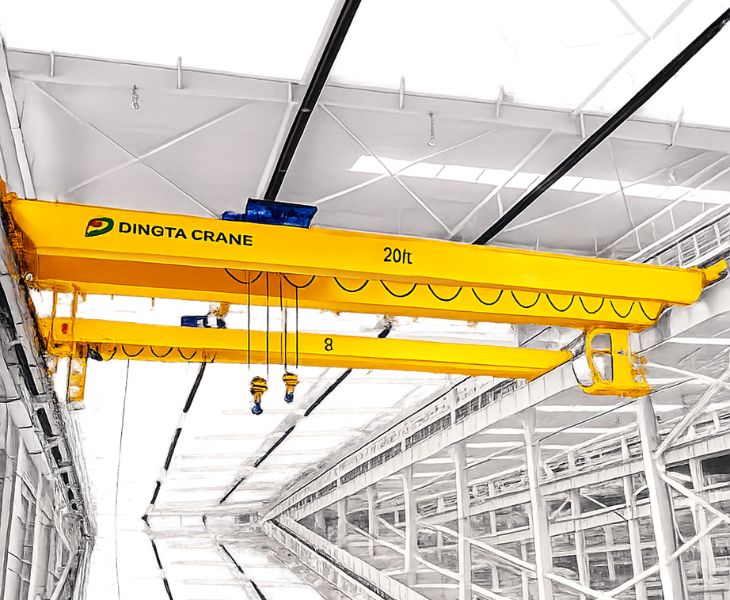
Applications of a 20-ton Hoist
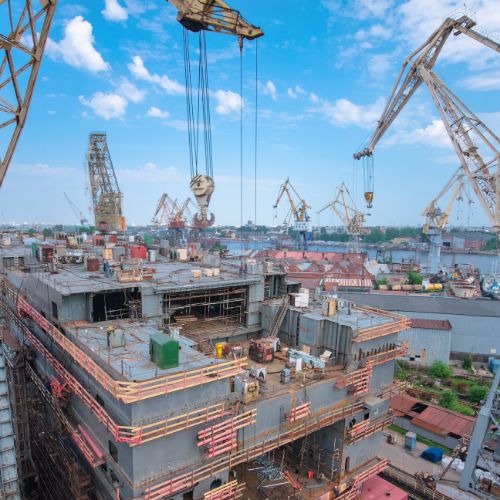
The 20-ton hoist can effortlessly lift heavy components of ships. It can be used for both ship maintenance and assembly.
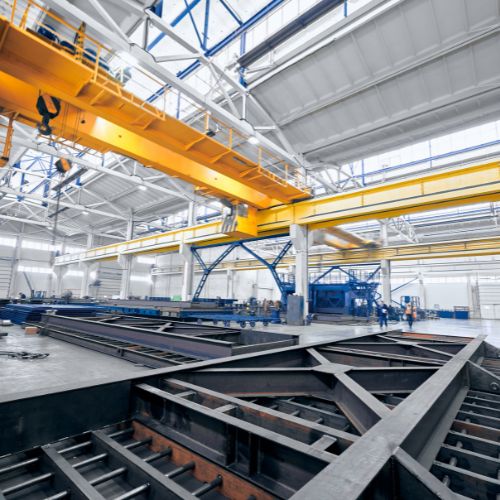
The 20-ton hoist of DINGYA is entirely made of a steel structure and can withstand high temperatures. It is highly suitable for you to handle steel in a steel factory.
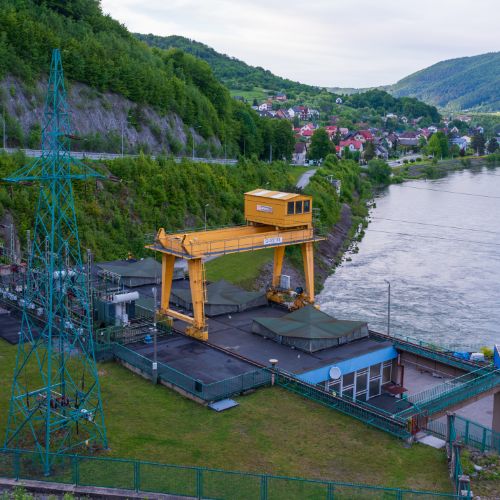
The power plant equipment is expensive and cannot be damaged. The 20-ton hoist of DINGYA, combined with anti-shaking technology, can smoothly transport heavy objects.
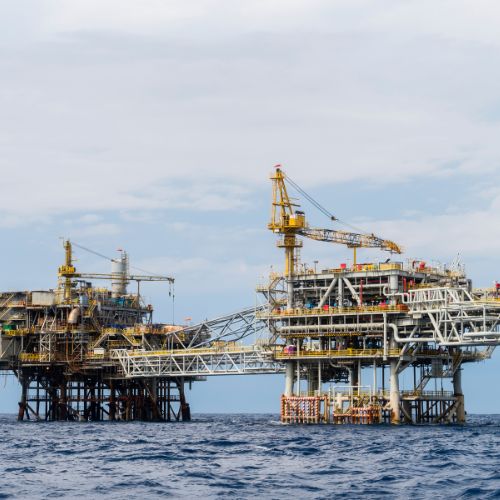
Explosion-proof 20 tons of hoist adopts pneumatic drive, which can completely avoid dangerous electric sparks. For your safe transport of oil and other combustible materials.
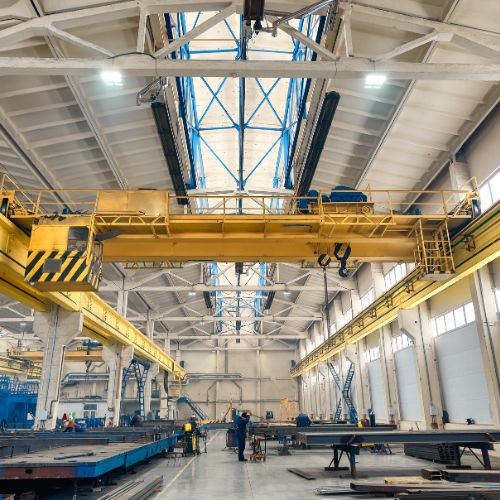
The 20-ton hoist can easily handle heavy equipment, ensuring the smooth operation of the equipment during its running process.
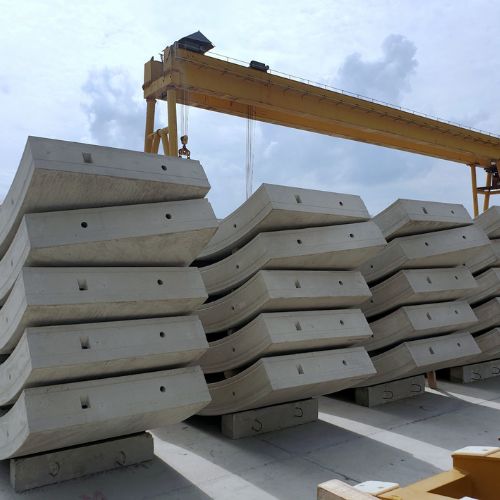
The 20-ton hoist can flexibly adapt to changes in your project and can be installed on various cranes. Handle different transportation scenarios for you.
Electric wire rope hoists are kind of the go-to option. With wire rope hoists, you can pick between the European style or the more traditional style. The European version usually comes with a compact structure and a smaller clearance height, so it works well when the factory floor height is kind of limited.
The traditional style (CD/MD type), on the other hand, tends to be more budget friendly. If your work situation is heavy and you’re running it frequently, then it’s better to go straight for the European style.
In simple terms, like how many hours do you use it per day, how many times do you lift per hour, and also whether each lift is full load or light load. With these three bits of info, I can help you compare against the FEM/ISO standards to figure out the work level.
Usually, for metallurgical and mold workrooms, M6 is a good starting point, but for regular mechanical assembly, warehousing, and logistics, M4 to M5 is enough. If it is a 24-hour continuous operation, then M7 or even M8 should be chosen.
For a Chinese traditional 20-ton hoist in a basic setup, you’re usually looking at roughly 80,000 to 150,000 yuan, give or take.
But if you go for an imported European name brand, for the same tonnage, it can jump to about 300,000 to 600,000 yuan, sometimes even more.
This is only the hoist price itself; it doesn’t include installation, electronic control, or track accessories.
Normally, based on the design lifespan, for European hoists according to the FEM standard, the M5 level is about 3,200 hours of total working time; while the M6 level reaches around 6,300 hours.
Under moderate usage intensity, it is commonly roughly 10 to 15 years. However, if you use it excessively over a long period or maintain it improperly, it may shorten the service life of the hoist.
For a 20-ton hoist, it’s usually outfitted with either 6×36WS or 6×19S style steel wire ropes, and the diameters are commonly somewhere around 26mm to 34mm. The exact rope size kind of comes down to the design ratio.
If that ratio is higher, the rope can be made thinner in diameter, but the overall rope length then needs to be increased a bit more, so it stays functional. For the steel wire rope strength grade, it is typically recommended as 1770MPa or 1960MPa. Also, if it’s for outdoor use or an area that stays humid, galvanizing treatment is needed.
It can be used, but only with special outdoor protection configurations that are actually thought through.
The motor together with the control cabinet should be at a protection level of IP55 or higher; steel wire ropes are recommended to be galvanized; the brake also needs to be shielded so rainwater doesn’t find its way in.
And if you are dealing with a coastal setting or a chemical environment, then you should also factor in an anti-corrosion coating.
In practice, it’s often advised that the net clearance of the workshop should be at least 8 meters or even higher, because it tends to feel more comfortable during use. If your factory floor-to-ceiling height is tight, you may want to use a low net height hoist, which can free up roughly 400~600mm of effective headroom compared with the conventional types.
The lifting speed for a 20-ton crane is normally about 2 to 4 meters per minute or so. It is mainly because it has to keep heavy loads safe.
If your process needs more efficiency, you might go with a dual-speed system or a variable-frequency speed control. In that case, you can get low-speed, accurate positioning, plus high-speed quick lifting, so it sort of balances productivity and safety.