
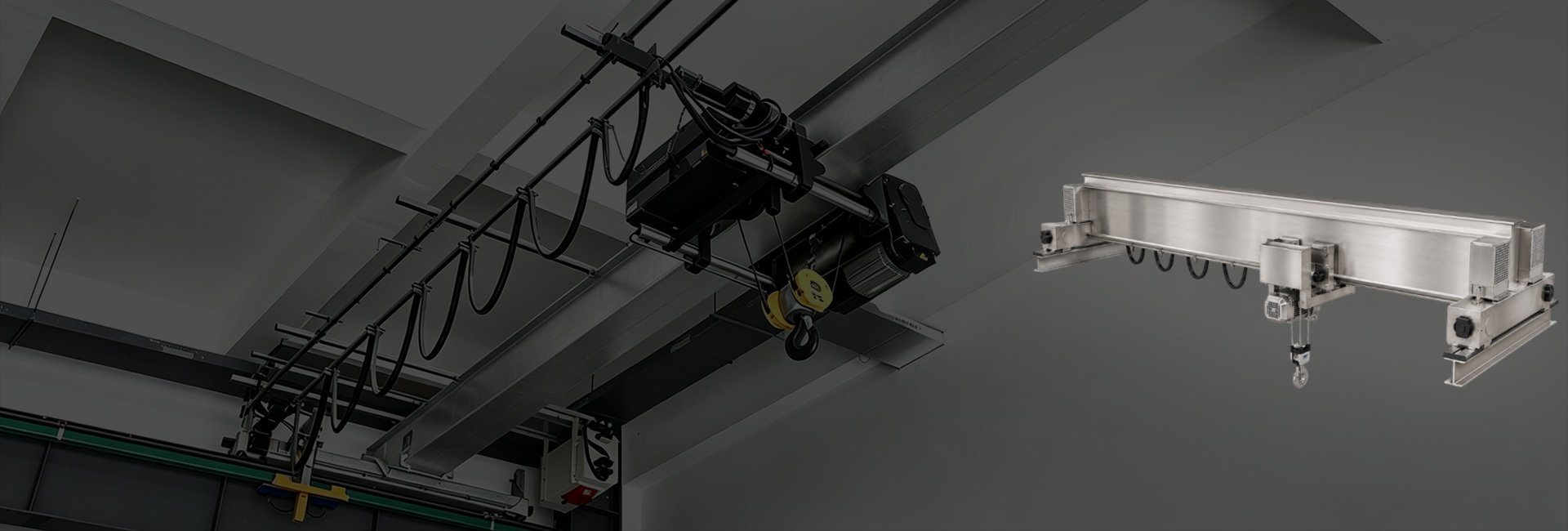
What is a Cleanroom Crane?
The cleanroom crane functions as a lifting device in cleanroom facilities. The operation of standard cranes produces environmental contamination through the emission of metal dust and oil vapor.
Our equipment has been specially treated in terms of material and structure – low dust production, low noise, corrosion resistance, fully meeting the usage requirements of cleanrooms.
DINGYA is a manufacturer of cleanroom cranes with rich experience. Before delivery, we will conduct tests on the online platform to simulate real working conditions. Tell us about the application and requirements of your cleanroom cranes, and we will tailor a dedicated cleanroom crane solution for you.
Products By Types
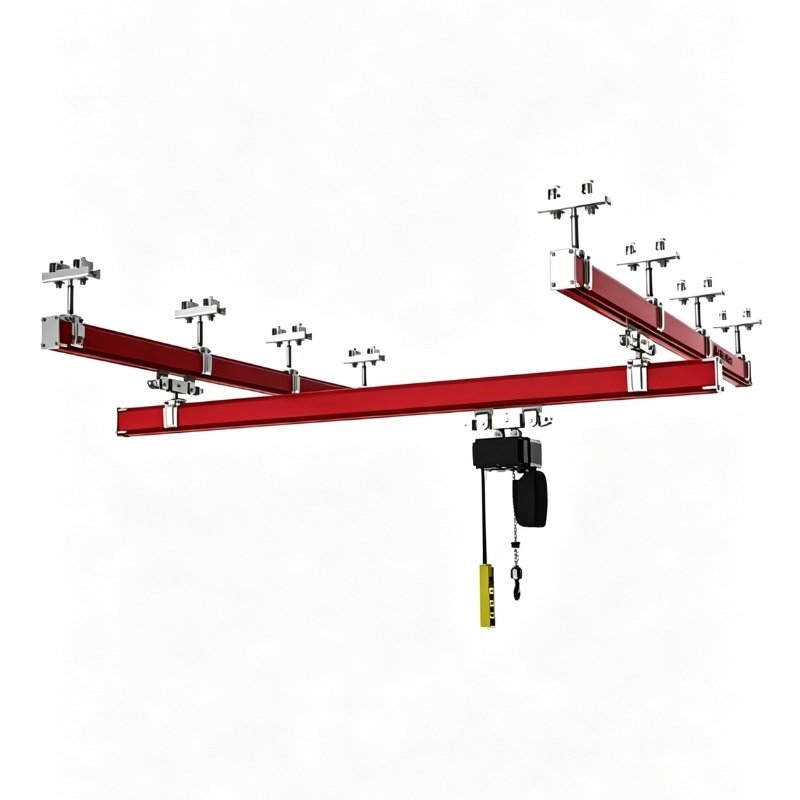
The tracks are installed on the top of the structural columns of the clean room. This enables the coverage operation for the entire working area.
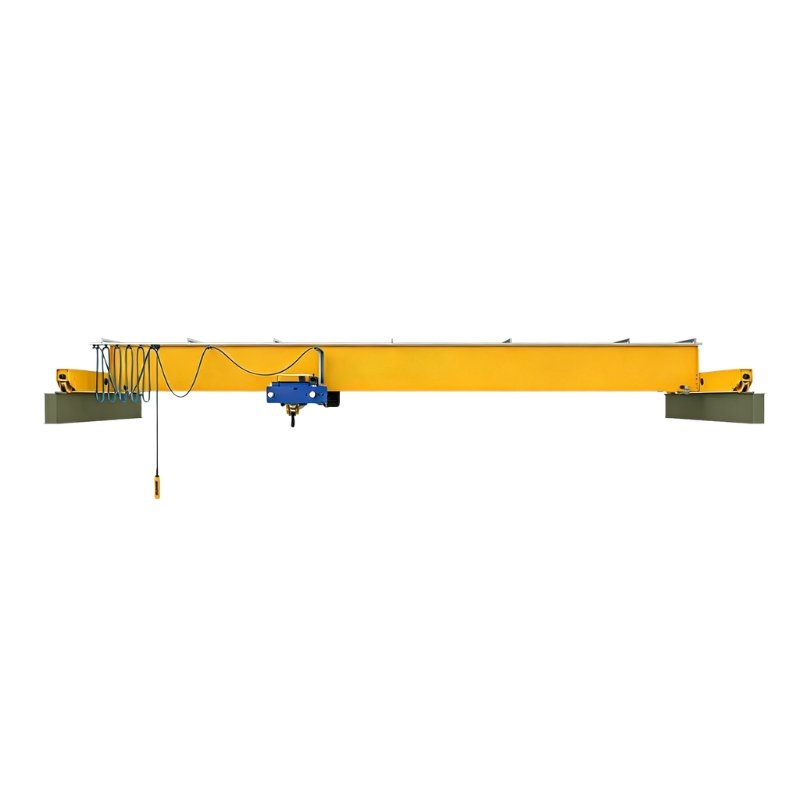
It can only operate along a straight line or a curve. If you are doing a fixed operation, you will find it more cost-effective to choose it.
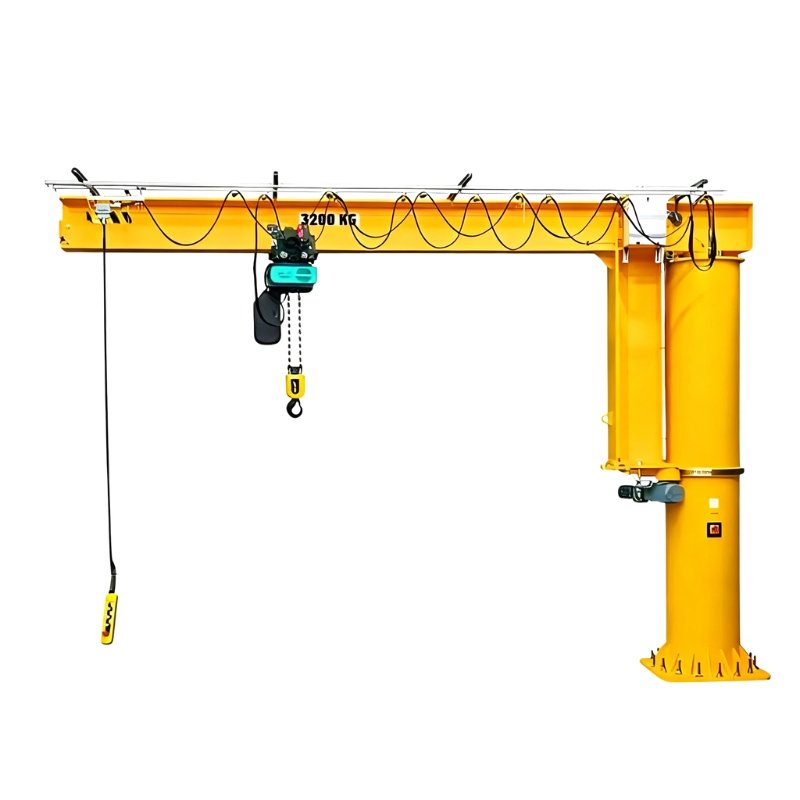
It is equipped with a rotating arm and can only operate within the radius that allows for rotation. Optional local work.
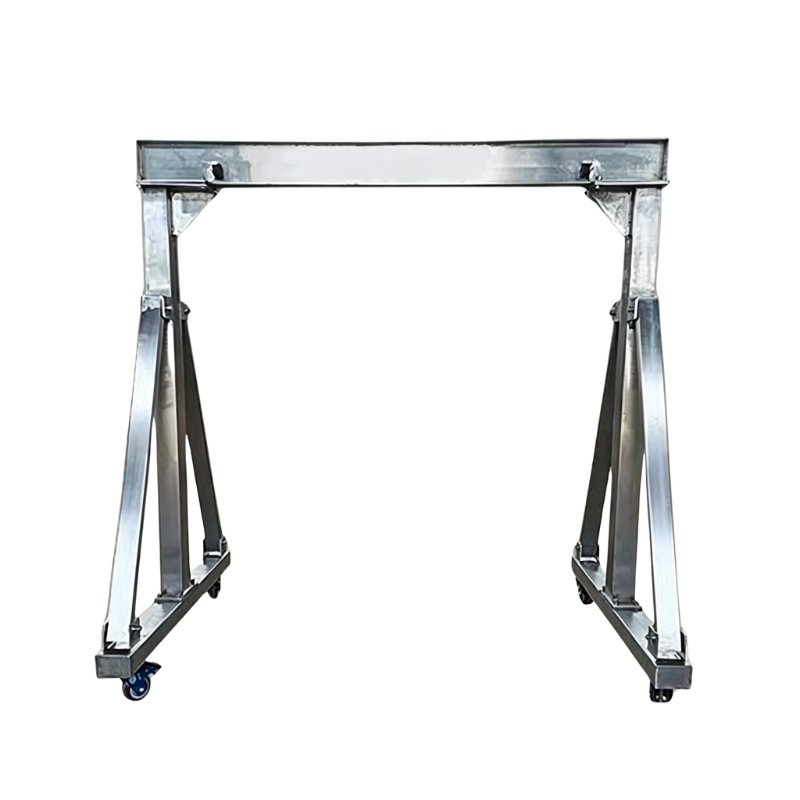
It needs to be installed on a flat surface and is reasonably priced. There is also a mobile type with wheels, which is convenient for you to move items when frequently switching projects.
Features of Cleanroom Crane

The lubrication system utilizes maintenance-free lubricating materials, which will protect your cleanroom from damage caused by grease and particulate matter.

The trolley has been provided with buffer and limit devices for its traveling and lifting systems. This eliminates the danger of cargo decoupling to your workers.

The stainless steel cleanroom lifting equipment can withstand many corrosive environments in factories and has a longer service life.

Our crane equipment can meet the usage requirements of clean rooms of all ISO levels from ISO 1 to ISO 8. We can deliver complete cleanliness test reports.

The servo-controlled cleanroom crane of DINGYA has a positioning accuracy of within ±0.1mm. Very suitable for transporting parts within precision electronics factories.

The frequency converter enables the equipment to smoothly accelerate and decelerate from 0 to the rated speed, without any sudden impact during start-up or shutdown.

Our cranes are much smaller in size, and they can be installed even if your cleanroom space is limited.

The company provides explosion-proof cleanroom cranes for workshops that handle flammable gases and explosive materials.
Zero Contamination Design-Where Precision Meets Cleanliness
The zero-pollution cleanroom cranes of DINGYA mainly rely on the following technologies:
- We chose more stable inert materials to manufacture the crane.
- All the interface areas of the cranes have been seamlessly welded. If you are working in the precision electronics field, such as semiconductors, we have also introduced a cleanroom crane with an enclosed conductor system.
- Use self-lubricating materials to achieve an oil-free cleanroom crane.
Applications of Cleanroom Crane
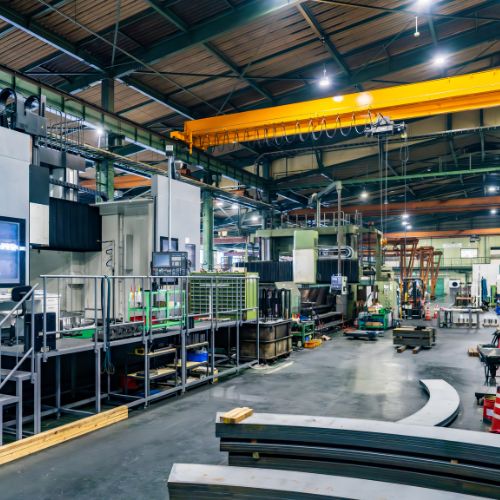
The clean room crane can be used for semiconductor wafer handling. Ensure that your production environment is clean and free from pollution.
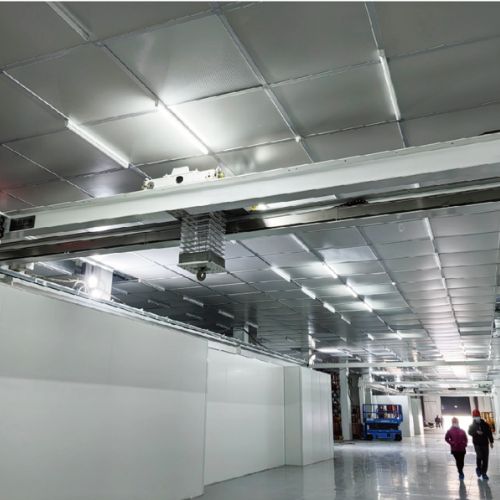
For the handling of high-tech precision electronic components, our cleanroom lifting equipment can ensure stability and cleanliness.
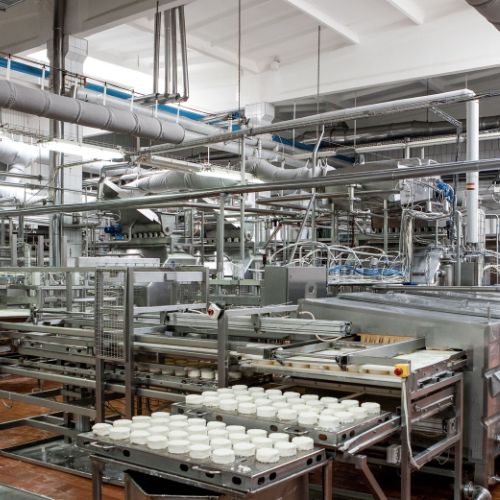
The hygiene requirements for food factories are extremely high. Choosing our cleanroom cranes is not only a guarantee for the safety of your customers, but also earns their trust.
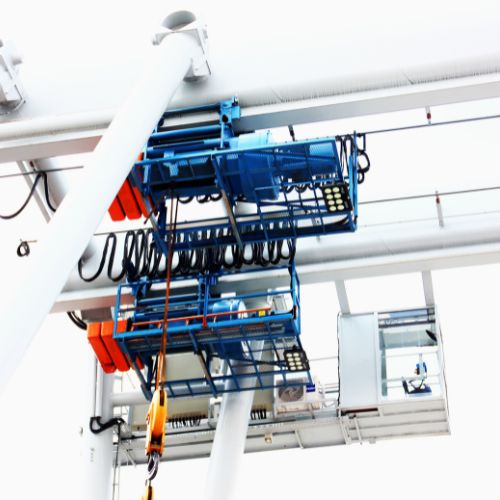
Biological pharmaceuticals require strict hygiene. Once contamination occurs, it often leads to huge economic losses. Selecting zero-pollution cleanroom cranes can avoid this problem.
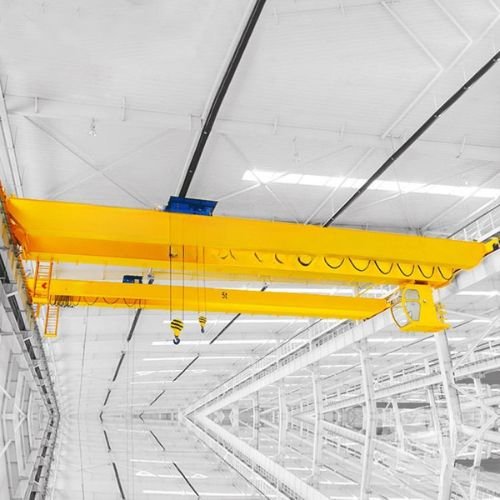
Pollution from lithium power plants is prone to causing explosions. The explosion-proof cleanroom crane of DINGYA can help you solve this problem.
The issue lacks a set price because multiple elements affect the cost estimation which includes tonnage and span and cleanliness level and explosion-proof requirements and control system selection. The estimated cost for a basic type ISO 7-8 level bridge crane stands below 80,000 US dollars.
The price of an ISO 3-4 semiconductor cleanroom crane can exceed $200,000. If you are currently planning to purchase a cleanroom crane, please send me the basic parameters of the site, and I will provide you with an accurate quotation.
Our cleanroom facility operates with a noise-reducing cleanroom crane which achieves smooth start and stop operation through its variable frequency control system. The guide rail system works together with the trolley system to achieve operational noise levels that stay under 65 decibels during regular use.
The environment that requires quiet operation for delicate work will remain undisturbed by its operations.
Cranes that fail to meet standards should not be used in clean room operations because their use will create the following results:
- Product yield: The presence of sub-micron particles which contaminate semiconductor wafers and pharmaceutical batches, causes defects and operational failures.
- Regulatory compliance: Facilities that operate according to FDA and GMP or ISO auditing standards face certification risk.
- Operational downtime: Facilities need to shut down completely because contamination incidents force them to undergo facility disinfection and re-certification processes.
The system needs no oiling under standard usage. The design includes centralized lubrication points which we created for parts requiring easy access to supplementary lubrication.
We provide a complete lubrication maintenance cycle table at the time of factory delivery. The table provides a step-by-step process that your operation and maintenance team can follow.
- Equipped with additional anti-static gears or grounding chains in the lifting equipment range.
- The control system wiring has been installed with lightning protection systems which prevent electromagnetic interference from creating static electricity build-up.
- The bridge structural components have a dependable grounding connection which allows for complete static electricity discharge.
The semiconductor manufacturing process requires strict electrostatic protection standards to be followed when producing precision electronic devices. We can enhance the grounding configuration. The specific plan will be determined based on your on-site situation.
The coverage of our products extends from lightweight small-sized products which weigh 100 kilograms to heavy-duty products which weigh more than 20 tons. The majority of our cleanroom customers require products that fall between 0.5 tons and 5 tons.
Please provide me with the weight and dimensions of your cargo if you have specific tonnage needs. I will assist you in determining the correct setup while you are not required to perform any calculations.
How to Determine the Cleanliness Level of a Cleanroom Crane?
| ISO Class | Application | Crane Requirement Level |
| ISO Class 1 | semiconductor R&D | Ultra-low outgassing, full ESD protection |
| ISO Class 2 | Semiconductor wafer handling | Particle-free design, ESD-safe |
| ISO Class 3 | Hard disk manufacturing | Low-particle, ESD consideration |
| ISO Class 4 | Precision optics | Controlled lubrication, coated surfaces |
| ISO Class 5 | Pharmaceutical aseptic fill | GMP-compliant materials |
| ISO Class 6–8 | General pharma, medical devices | Standard cleanroom specification |
The cleanroom crane must achieve a cleanliness standard that surpasses the room’s requirements by two ISO levels because its operation will create particles that need to be considered.
Cleanroom Cranes and Standard Industrial Cranes: Key Differences
| Standard Industrial Crane | Cleanroom Crane | |
| Particle generation | High | Near-zero |
| Surface treatment | Paint or bare metal | Electropolished, powder-coated |
| Lubrication | Standard grease/oil | Dry film or sealed-for-life |
| ESD protection | None | Full ESD-safe specification |
| Material certification | Standard mill certs | Cleanroom-grade material traceability |
| ISO compliance | Not applicable | ISO 14644-1 rated |
| Lead time | 4–8 weeks | 8–20 weeks |
How to Select the Appropriate Cleanroom Crane?
Before proceeding to supplier contact, you need to verify these parameters:
- The ISO cleanliness level of the target cleanroom (ISO 1-8)
- The maximum weight for a single lift (including equipment, fixtures, and rigging)
- The span of the crane (the distance between the rails)
- The lifting height (the height of the hook when at its maximum)
- Working cycle – the number of elevators operated per shift, the number of working hours per day.
- Electrostatic discharge (ESD) requirements – is the environment sensitive to electrostatic discharge?
- Special environmental factors – chemical substance exposure, extreme temperatures, and humidity.
- Automation requirements – Manual operation, semi-automatic, or fully automatic.
Inform the crane supplier of these parameters, and we will provide you with a matching crane solution.
How to Select the Materials for the Use of Cleanroom Cranes?
Stainless Steel
The first choice of cleanroom crane is 304, while 316 is used in situations with corrosive gases or where frequent rinsing is required. This option costs the most but provides superior protection against corrosion and enables easy maintenance and delivers an extended operational period.
It functions most effectively in the semiconductor and pharmaceutical and food industries because these sectors require complete protection against all contamination.
Coated Steel
The cleanroom crane is made of coated steel material. The process of treating regular steel structures involves applying surface coatings through either spray painting or electrophoretic deposition methods.
The material provides an economical solution that can support substantial weight in environments that do not require complete sanitization but do require protection against ISO 7 and 8-level workshop cleanliness standards in electronics manufacturing facilities.
The coating requires examination because it will experience gradual deterioration over time.
Aluminum Alloy
The structure reaches a weight reduction of approximately 50 percent when compared to its steel equivalent, which benefits customers who need to build factories that meet specific weight limitations. But it also makes the cleanroom crane unsuitable for tasks that require heavy load capacities.
The aluminum material exhibits excellent protection against corrosion while maintaining an orderly visual appearance.