
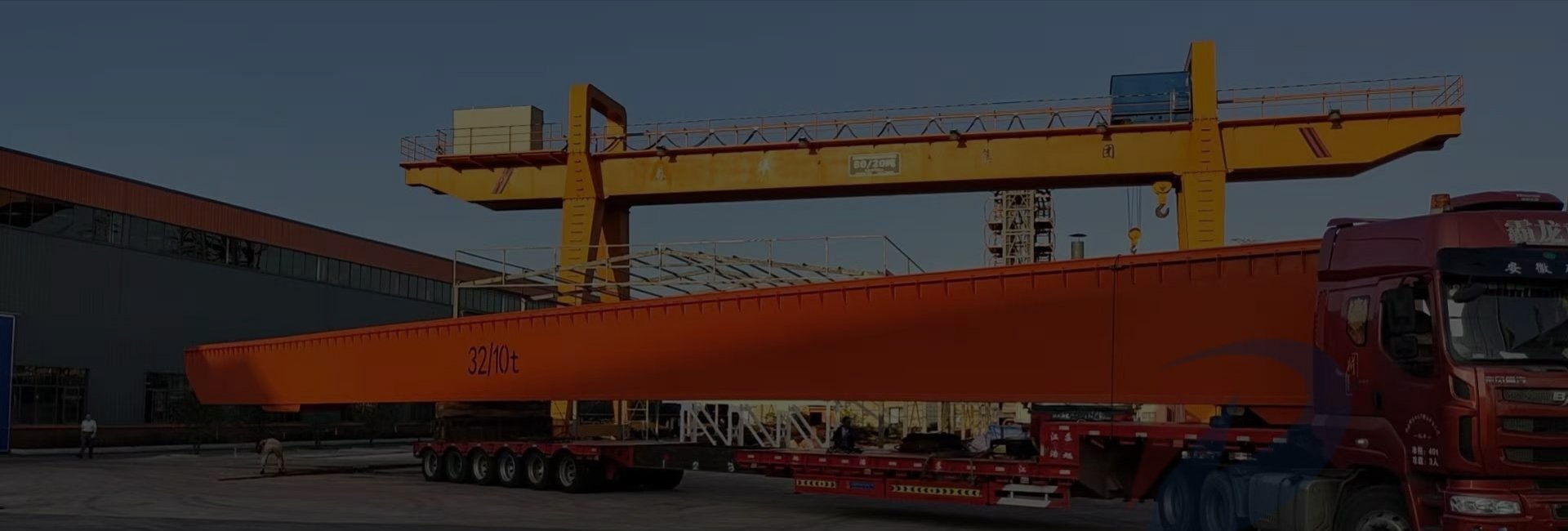
What is a Container Gantry Crane?
The container gantry crane serves as an efficient lifting system that operates specifically for the purpose of loading and unloading containers at port facilities, storage areas, and multimodal transportation terminals. It can function through track operation or gantry support, which allows for exact location control together with fast cargo movement.
Our company has delivered more than 800 container gantry cranes to over 200 ports and logistics facilities across 40 countries, and we have dedicated more than 20 years to our expertise in port lifting equipment. DINGYA, as an experienced supplier of container gantry cranes, can customize container gantry cranes for you at the original factory.
Products By Types
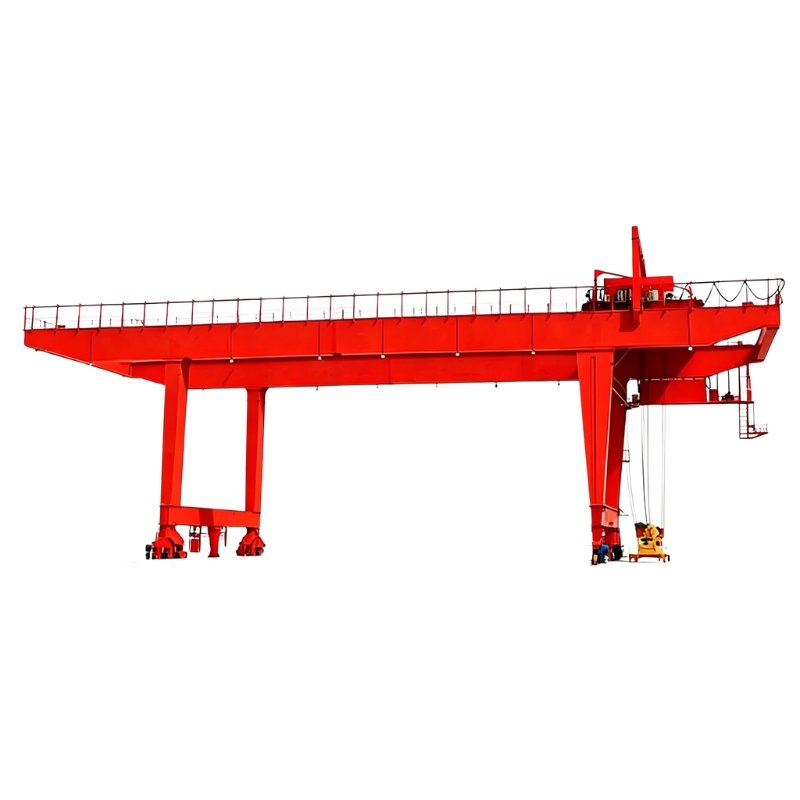
It operates with fixed tracks, which provide accurate location tracking and support full electric operation without emissions, thus reaching maximum operational efficiency.
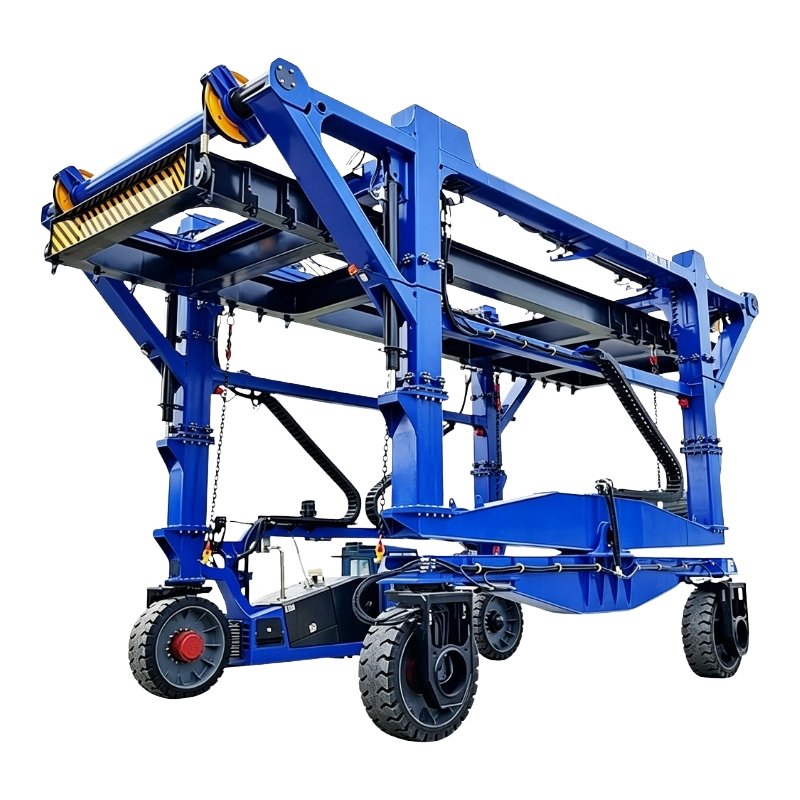
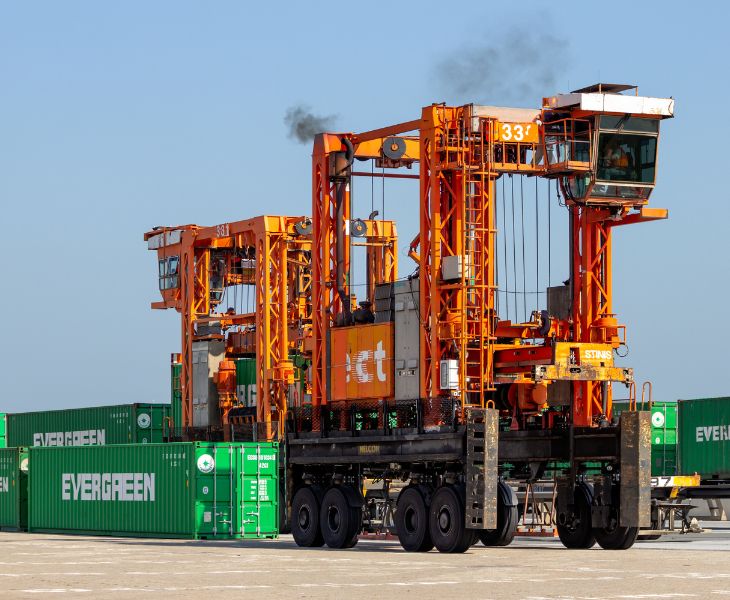
It operates without the need for permanent track systems, which enables its deployment to occur in an adaptable and operationally efficient manner.
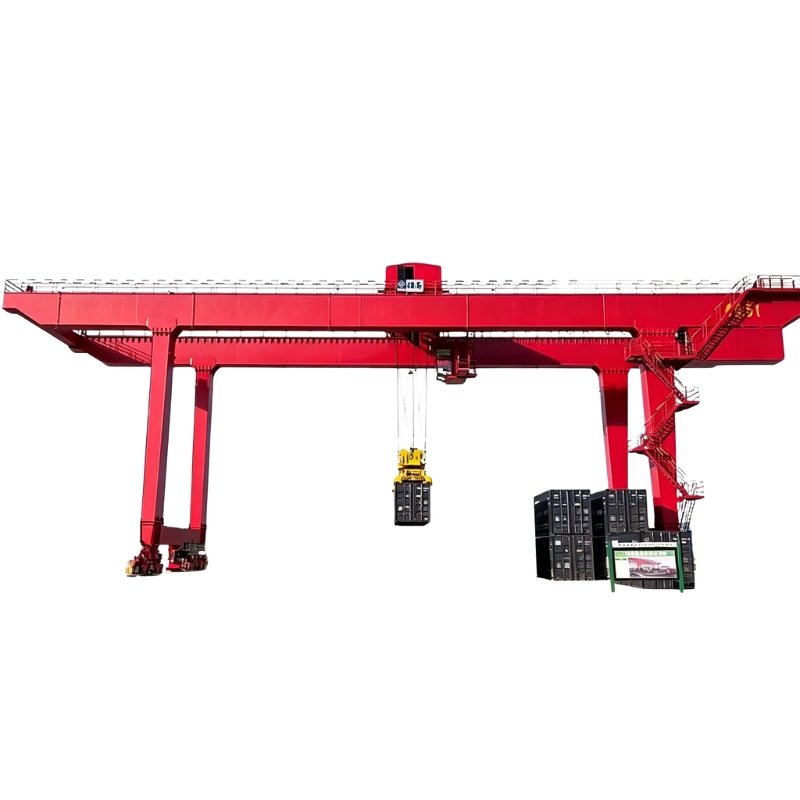
It combines laser-based positioning technology with machine vision capabilities and its autonomous control system to deliver continuous unmanned operation for 24 hours.
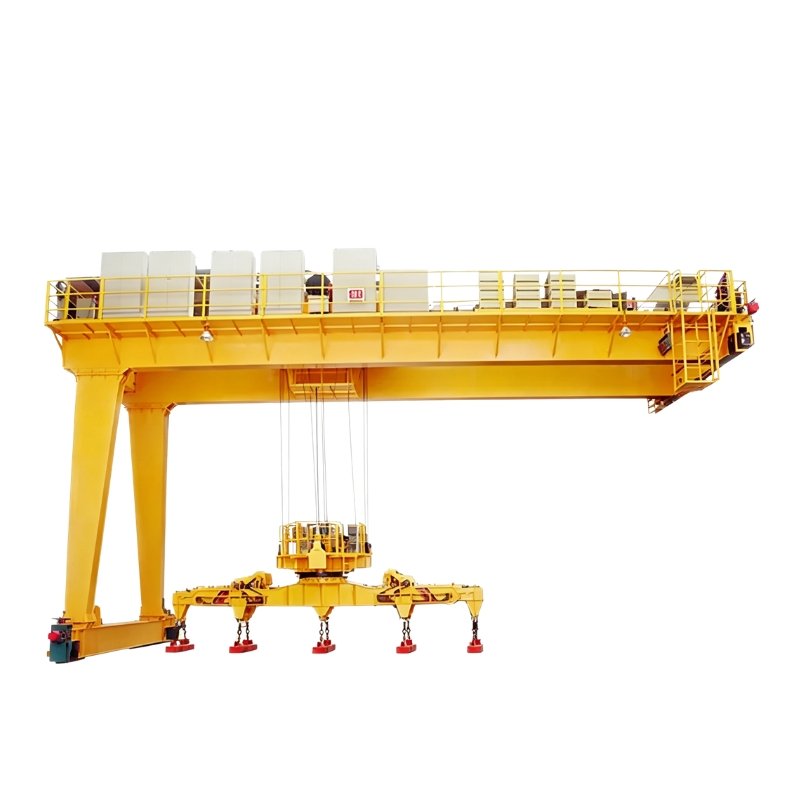
Automated walking positioning, together with artificial intelligence support, which maintains manual supervision, has resulted in better work efficiency.
Features of the Container Gantry Crane

Our cranes operate at an efficient rate, which allows them to handle 25 to 35 standard containers every hour in loading and unloading tasks.

The container crane achieves its fixed track guidance system through a sophisticated PLC motion control system that enables operators to achieve precise positioning within sub-centimeter accuracy.

Our container gantry crane achieves 40% to 50% energy savings through its combination of electric drive systems and regenerative braking technology.

The container crane can support 5 to 6 layers of high-density stacking and cover multiple rows of container areas. It has saved you a large amount of floor space.
High-density Stacking
The main benefit of container gantry cranes comes from their ability to create high-density storage solutions. It achieves maximum storage capacity through yard operations without requiring additional floor space.
And it needs only a narrow driving path, which decreases its non-working space while enhancing its land use efficiency. The gantry crane provides essential benefits in locations where land costs are extremely high, which include ports, inland railway freight yards, and logistics parks.
It requires less space to operate while it enables higher container storage capacity and achieves faster loading and unloading operations.
Applications of the Container Gantry Crane
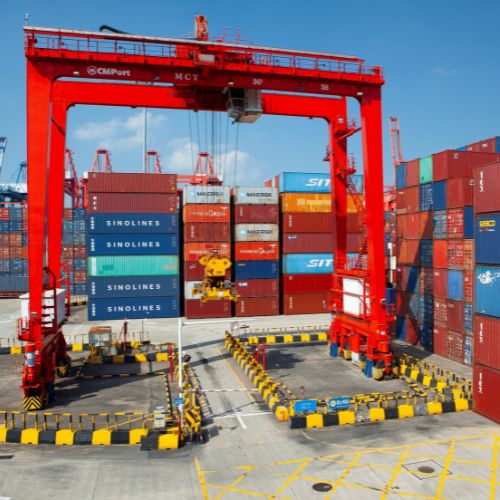
Container gantry cranes occupy less space and can operate efficiently, without delaying the progress of international trade.
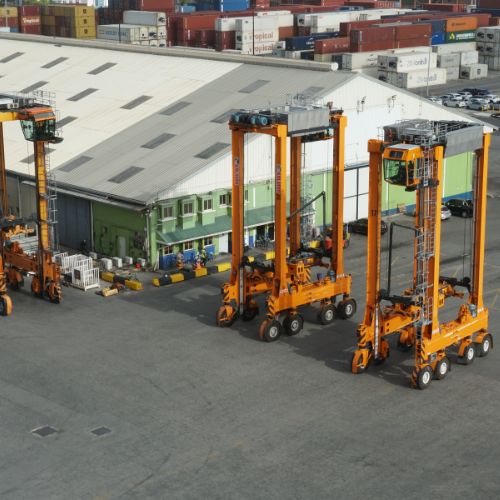
The warehouse needs to receive and ship out a large quantity of products on a daily basis. The container crane can efficiently handle the cargo throughput of the warehouse.
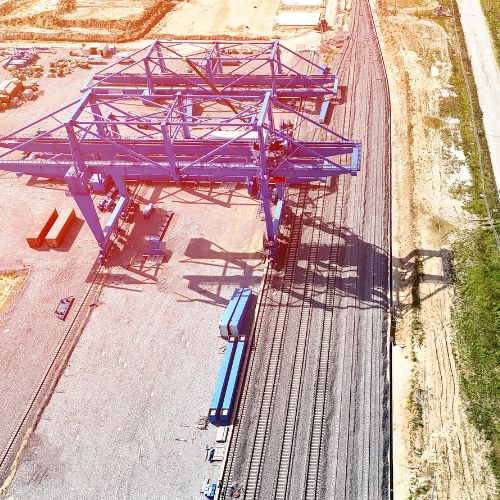
The container gantry crane system provides faster loading and unloading services for train and truck operations, which results in decreased waiting times and reduced traffic problems.
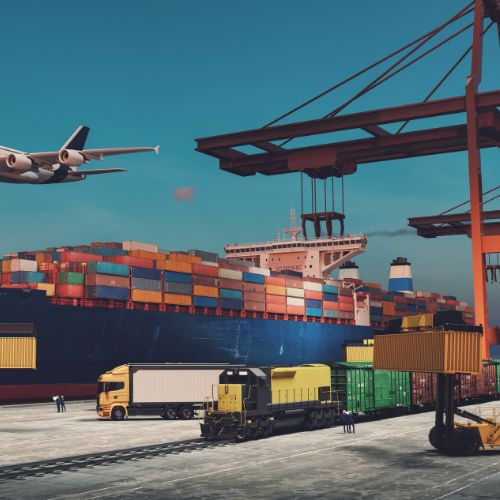
The container gantry crane allows for smooth transitions between ships, railways, and highways, which improves supply chain operations.
Daily maintenance requires staff members to apply lubricant to vital parts of the transmission system and check the wear state of steel wire ropes and braking system performance. Staff members conduct complete electrical circuit inspections, sensor examinations, and control system checks every month.
The company arranges for engineers to perform detailed assessments of structural welds and track wear and essential load-bearing parts every year. And we offer standardized maintenance manuals together with global after-sales support.
The purchase cost of standard tire-type gantry cranes (RTG) is usually between 2 million and 5 million US dollars; for rail-mounted gantry cranes (RMG), the single-machine comprehensive cost, including the investment in rail infrastructure, is approximately 5 million to 15 million US dollars; for fully automated ARMG systems, due to the integration of high-precision control platforms, the overall investment can reach 15 million to 30 million US dollars.
The installation process requires complete execution of its three components, which include foundation construction and track accuracy testing, together with sectional hoisting and high-strength bolt connection work for gantry structures and electrical system testing, which includes factory acceptance testing and on-site testing of the control platform.
Our professional installation engineering team conducts full-line online coordination to ensure that each installation node meets the strict standards
The standard operating weight capacity for gantry cranes that container terminals use ranges from 40 tons to 65 tons. Heavy-duty container gantry cranes can easily handle the lifting operations of fully loaded standard ISO containers.
The carrying capacity of the gantry crane can be customized engineering-wise up to 500 tons or even higher to meet the demands of extreme heavy-load scenarios such as shipbuilding and steel smelting.
The container gantry cranes, which engineers created according to FEM and ISO international standards, achieve a structural service life that lasts between 25 and 30 years. The main mechanical transmission components (which include the lifting mechanism and walking drive) require replacement after approximately 10 to 15 years of operation.
The electrical and control systems can be upgraded synchronously with technological iterations without the need for a complete machine replacement.
The primary international certification standards require three certifications. The European market needs CE certification, which serves as the first requirement. The general design principles for crane safety EN 13001. The North American market requires the ASME B30.2 standard. The electrical equipment standard IEC 60204-32.
The Chinese market requires compliance with the GB/T 3811 crane design specification in addition to other requirements. Our equipment undergoes third-party inspection and certification before leaving the factory. Our company provides complete compliance documentation packages, which we distribute to customers.
The IoT remote monitoring platform enables the system to gather live information about essential parameters, which include the vibration of the lifting mechanism, the motor temperature, the condition of the brake wear, and the structural stress.
The AI algorithms enable the system to forecast upcoming faults between two days and two weeks while generating automatic maintenance notifications, which shift maintenance work from emergency repairs to scheduled preventive maintenance.
The study of actual operating conditions demonstrates that equipment that uses remote monitoring systems experiences 40% to 60% reduction in unplanned downtime, while its overall equipment availability rate shows significant improvement.
How Does a Container Gantry Crane Work?
Long Travel
The entire gantry structure operates on permanent ground tracks to move the crane to its designated container location, which allows the crane to access all areas of the yard.
Cross Travel
The lifting trolley moves across the gantry bridge to achieve direct overhead positioning above the desired container, which works together with the advanced PLC motion control system to achieve sub-centimeter-level lateral positioning accuracy, completely eliminating human errors.
Hoisting
The hoisting system uses its mechanism to operate the wire rope group for raising or lowering the container at its designated speed, which enables smooth container operations. While working together with the anti-wobble control algorithm to maintain movement stability and controllability during heavy load conditions, which keeps safety at maximum throughout every moment.
Spreader Adjustment
The intelligent telescopic lifting trolley automatically adapts to different-sized containers (20-foot, 40-foot, 45-foot, etc.) through its telescoping mechanism. The rotation function ensures precise alignment with the container’s direction.
The one-click locking and one-click release function of the system enables operators to reduce their container handling time while increasing the facility’s overall productivity.
How to Choose a Container Gantry Crane?
Select Device Type
The core operation scenario defines which equipment to use because large container terminals require RMG or ARMG solutions to achieve maximum throughput and maintain operational flexibility, while medium-sized ports need RTG systems to deliver better cost efficiency across multiple operational zones with their basic system design.
Determine the Lifting Capacity
The standard container operation requires equipment that operates between 40 and 65 tons, while heavy industrial needs allow custom equipment development that reaches hundreds of tons.
Matching Operation Speed
The evaluation process requires you to assess throughput targets before you determine the required operation speed settings. It requires precise configuration to prevent throughput bottlenecks that arise from insufficient equipment speed settings and to prevent financial losses that result from excessive equipment speed configurations.
Future Upgrade Reserve Space
The equipment platform that your port needs to acquire during its initial purchasing phase should contain automatic expansion interfaces. The additional penny you spend today on automation development will lead to future savings that will multiply your expenses by ten times.
Confirm the Deployment Environment
We need specific climate information, seismic grade requirements and wind speed load details, and corrosion environment data about the equipment deployment location to create equipment structure designs that comply with local extreme environmental conditions.
Container Gantry Crane vs Overhead Crane: What is the Difference?
Scope of Work
The container gantry crane operates through its total independent portal-shaped support system without needing any architectural support. The bridge crane operates by using pre-embedded track beams, which exist in the factory or warehouse structure, while its operational area stays within the factory building limits.
Applications
The container gantry crane operates in outdoor open-air environments because it has all-weather outdoor capabilities. The bridge crane functions as the main equipment of a steel smelting workshop.
Subject of the Assignment
The container gantry crane uses an intelligent telescopic hoisting system, which has been designed for efficient handling of ISO standard containers through its high-frequency and high-precision loading and unloading functions.
The bridge crane uses hooks and dedicated fixtures to perform general material handling of non-standard heavy industrial materials, which include steel coils, molds, and large mechanical components.
Electrical Energy Consumption
The container gantry cranes establish a mobile power supply through two mechanisms, which include ground guide rail systems and cable reels; their operational energy consumption decreases because they use regenerative braking energy recovery technology. Bridge cranes operate throughout the factory through fixed electrical systems, but the gantry crane system needs advanced power supply systems because of its large-scale moving characteristics.
Installation Conditions
Container gantry cranes require professional engineered track foundations (usually reinforced concrete pile foundations or continuous foundation beams), and project execution depends on civil engineering work as essential for your successful project delivery. Bridge crane installation depends on the existing factory structure.