

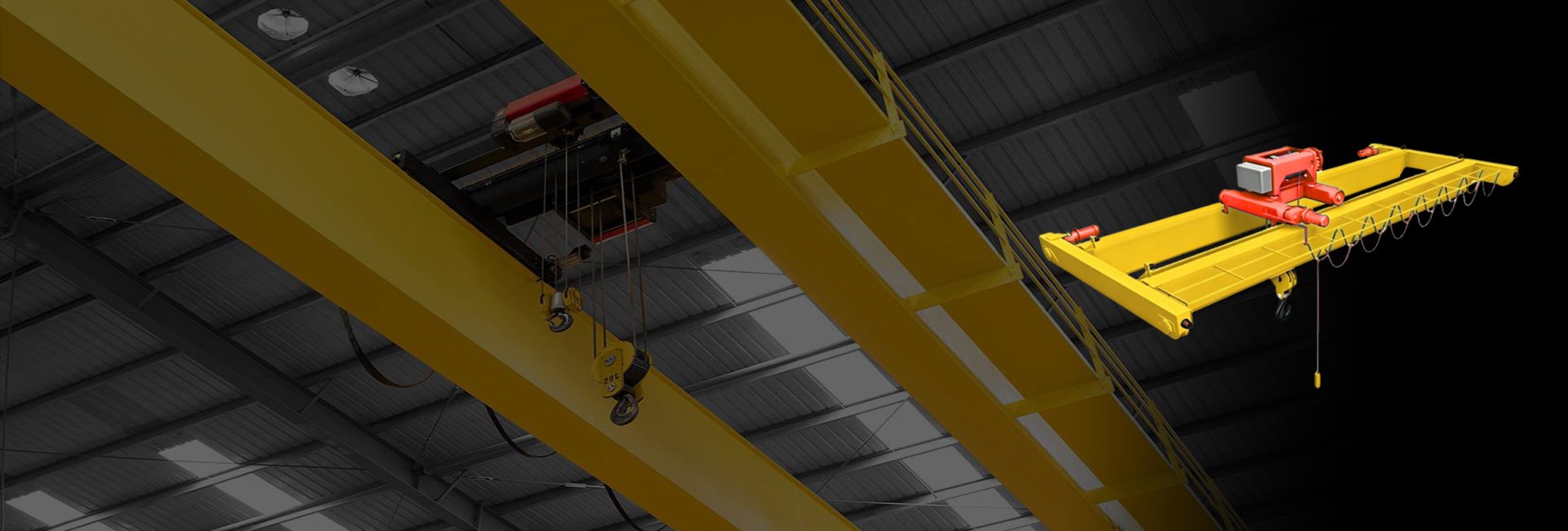
Dingya— Your Reliable Double Girder Hoist Supplier in China
A double girder hoist is a type of heavy duty overhead hoisting equipment with a double main beam structure. It uses a lifting mechanism to raise and lower loads, combined with trolley lateral movement and entire crane travel along the runway. This allows stable handling and precise positioning of heavy loads across the entire workshop.
Dingya’s double girder hoist typically covers heavy duty load capacities ranging from 3 tons to 500 tons. All key components undergo precision machining and strict quality control. The lifting motor comes standard with IP54 protection, with an IP55 option available. We can provide customized configuration solutions based on your specific working conditions. Contact us to get a double girder hoist that fits your project needs.
Our Products
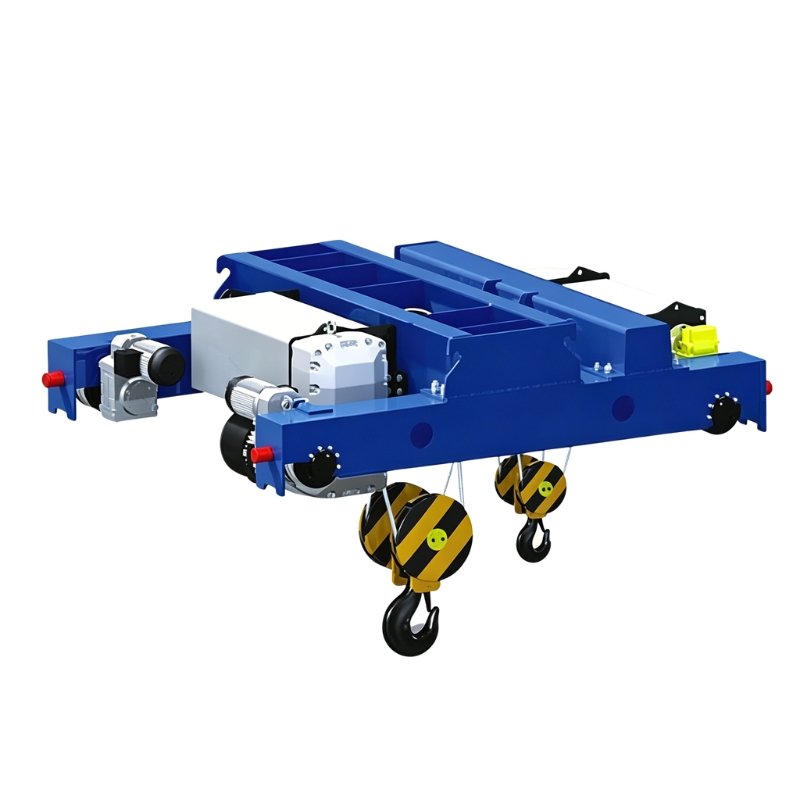
Uses a wire rope electric hoist as the lifting mechanism. Provides smooth operation and strong load capacity.
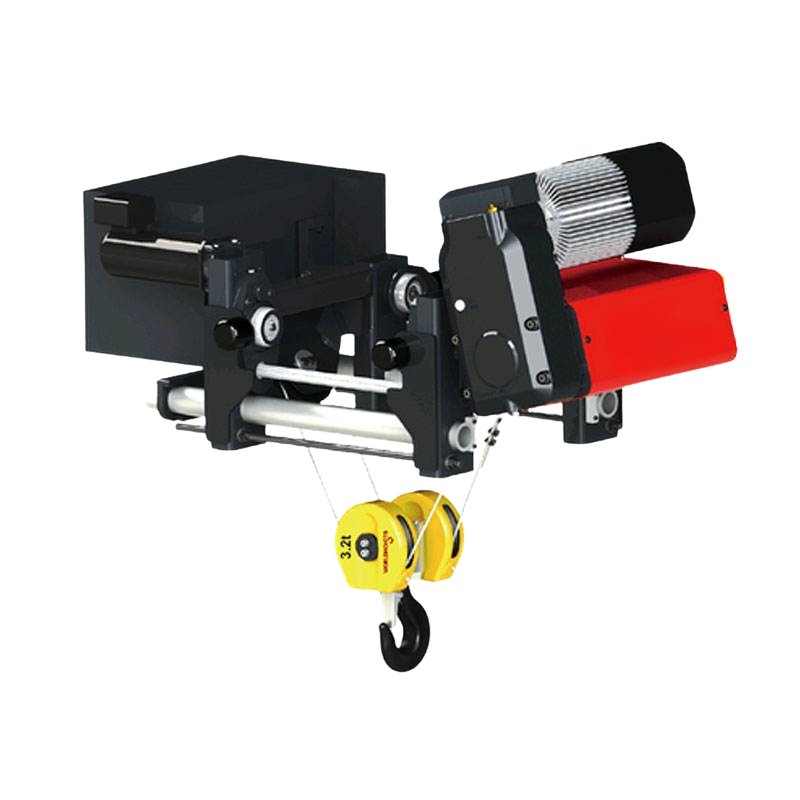
Adopts a standard headroom structural design. Suitable for conventional industrial facilities and normal heavy-load applications.
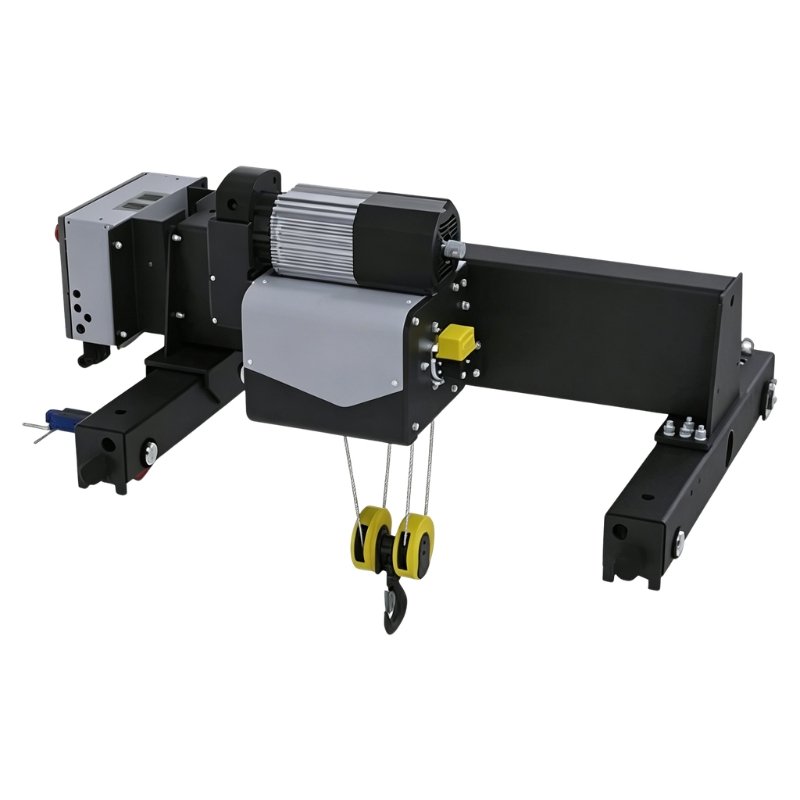
Adopts a low headroom structural design. Provides greater effective lifting space when facility height is limited.
Multiple Safety Protection
Our double girder hoist is equipped with multiple safety protection systems. It comes with a load limiter that automatically activates an alarm and restricts dangerous operations when the load exceeds the rated range.
It also features an upper limit switch to prevent hook over-travel and mechanical damage. Both the wired pendant and the wireless remote control system come standard with an emergency stop button. This allows operators to quickly cut off equipment operation in emergency situations.
High-Strength Components
The key load bearing components of Dingya’s double girder hoist are manufactured using high strength materials.
The hook is made of forged material with a safety factor of 4:1. This improves structural reliability during heavy lifting operations. The wire rope has a tensile strength of ≥1770 N/mm² and a safety factor of ≥5:1. This allows the hoist to adapt to high-frequency and heavy-load working conditions. The drum is made of cast steel or rolled steel plate and undergoes surface quenching treatment to improve wear resistance and service life.
Applications of Our Double Girder Hoist
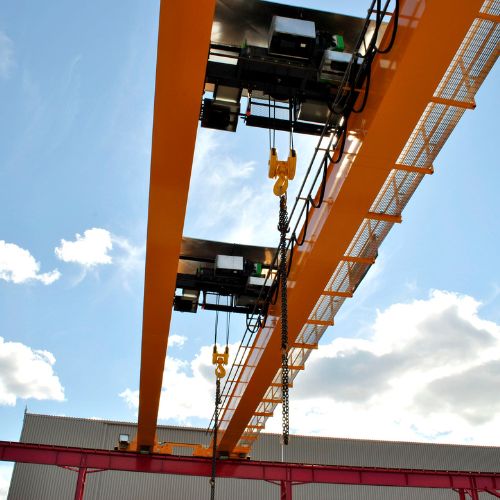
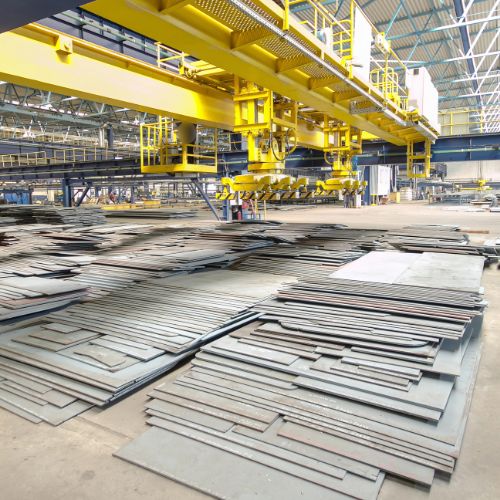
Our double girder hoist is suitable for lifting and transferring large steel beams, steel plates, and heavy steel structural components. The double girder structure provides higher load capacity. It meets the lifting demands of heavy loads and continuous operation in steel structure production.
Double girder hoists are widely used for lifting and assembling machine tool bases, heavy equipment, and large industrial modules. Their stable operation and generous lifting height help you position and assemble large workpieces. This reduces the strain of manual handling.
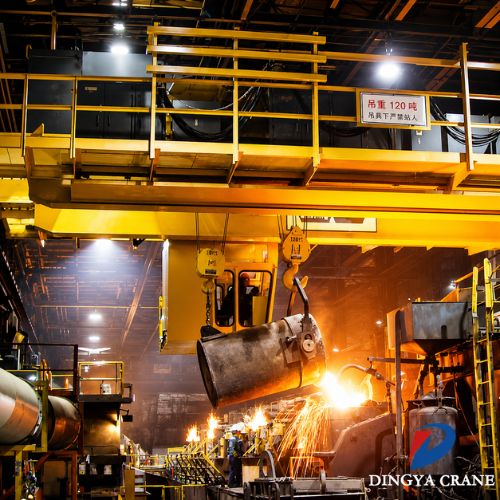
In the metallurgy and metal processing industry, double girder hoists are often used for handling steel coils, castings, and heavy metal materials. The equipment can adapt to high frequency, heavy load working conditions. It is well suited for heavy industrial production needs.
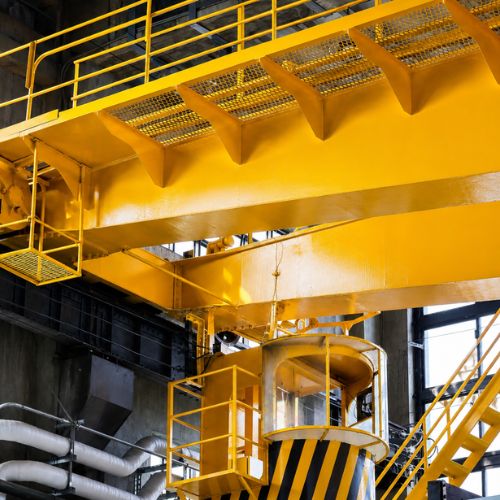
Dingya’s double girder hoist can also be used for the installation and maintenance of power generation equipment, transformers, and large machinery components. Its high strength structure and stable lifting capacity help you complete large equipment lifting and on-site maintenance tasks more safely and efficiently.
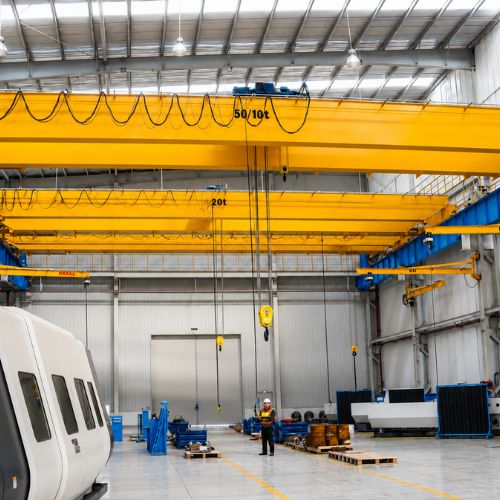
Double girder hoists are also suitable for disassembling and assembling large molds, inspecting and repairing heavy equipment, and replacing large components. Stable lifting and travel control improve work efficiency, reduce equipment downtime, and enhance maintenance safety.
The biggest difference between the two is their main beam structure. Single girder hoist uses a single main beam design. It is more suitable for light to medium tonnage and normal duty cycle applications.
The double girder hoist uses a double main beam structure. Its overall load capacity and stability are higher. If your application requires continuous heavy load operation, extra long spans, or handling large workpieces, a double girder hoist will generally provide better stability and lower maintenance pressure in the long run.
The key to selecting the duty class is the frequency of use. If you operate regular production shifts with periodic lifting, Class A5 is sufficient. If you have high frequency continuous operation or a heavy industrial environment, Class A6 or even A7 is more suitable.
Many customers tend to focus only on lifting capacity. However, the duty class directly affects the life of the motor, gearbox, brake system, and steel structure.
The standard span for a double girder hoist typically ranges from 10.5 meters to 31.5 meters. However, you can customize the span based on your facility dimensions. A larger span is not always better. You need to determine the span based on your building column spacing, runway layout, and lifting area. If you provide your facility drawings and equipment layout early, we can usually offer better recommendations.
Yes, it can. Our double girder hoist supports both wireless remote control and variable frequency drive (VFD) control systems. Wireless remote control gives you greater operational flexibility and allows your operators to stay away from hazardous lifting areas. This is especially useful in complex work environments.
VFD control is mainly used to achieve smooth starts, precise positioning, and reduced load swing. This is very valuable for large equipment assembly and precision lifting. Although a VFD system adds some cost to your purchase, it is worth it over the long term.
The main hook is used for daily heavy lifting and serves as the core lifting mechanism of the equipment. The auxiliary hook is typically used for auxiliary lifting, turning workpieces, positioning equipment, or handling light components. The coordination of the main hook and auxiliary hook significantly improves lifting flexibility.
For example, when you need to turn a large workpiece, both hooks together could achieve more stable lifting without needing additional auxiliary equipment.
Common faults of a double girder hoist mainly occur in the electrical system, braking system, wire rope wear, and travel mechanism. For example, motor overheating, abnormal brake gap, gearbox noise, rail gnawing, and limit switch failure are all relatively common issues.
However, many of these faults are not entirely due to equipment quality. They often result from long-term overloading, lack of regular lubrication, or frequent emergency stops during operation.
A reputable double girder hoist typically undergoes static load testing, dynamic load testing, and complete machine operation testing before leaving the factory. Common industry standards include a 125% dynamic load test and a 150% static load test. These tests verify the structural stability of the equipment under overload conditions.
In addition to load testing, manufacturers usually inspect the brake system, limit protection, electrical control, and travel mechanism condition as well. When purchasing, it is recommended that you confirm whether the manufacturer follows a complete testing procedure.
Double Girder Hoist Maintenance Guide
Establish a Daily Inspection Checklist
Many malfunctions of the double girder hoist can actually be detected early through daily inspections during long-term operation. You should focus on inspecting frequently used components such as wire ropes, hooks, limit switches, and brakes. If the equipment is used on a high frequency production line, please complete a basic inspection before each shift.
Lubrication Schedule and Key Areas
When maintaining equipment, lubrication management is often overlooked. However, the lubrication condition directly affects the service life and operational stability of a double girder hoist.
The gearbox, bearings, wire rope, and travel wheels are all key areas that require proper lubrication. You should establish a fixed lubrication schedule based on your equipment usage frequency, rather than waiting until abnormal noise or sticking occurs before taking action.
Electrical System Maintenance
The electrical system of a double girder hoist is subject to long-term vibration, so regular maintenance is very important.
You need to focus on checking the motor insulation condition, the cooling and cleanliness of the VFD, and whether the contacts inside the control cabinet show any signs of oxidation or loosening. It is recommended that you regularly use insulation testing tools to check the motor condition. This helps avoid production line shutdowns caused by electrical failures.
Periodic Load Testing
In addition to daily maintenance, a double girder hoist also requires periodic load testing and safety device calibration. Rated load tests are mainly used to verify the operational stability of the equipment under normal loads. Safety device calibration includes checking critical protection functions such as overload protection, limit switches, and the brake system.
You might think that if the equipment runs normally, testing is not necessary. However, after long-term high-frequency use, some safety systems may experience response delays or accuracy deviations. Therefore, this is very necessary.