

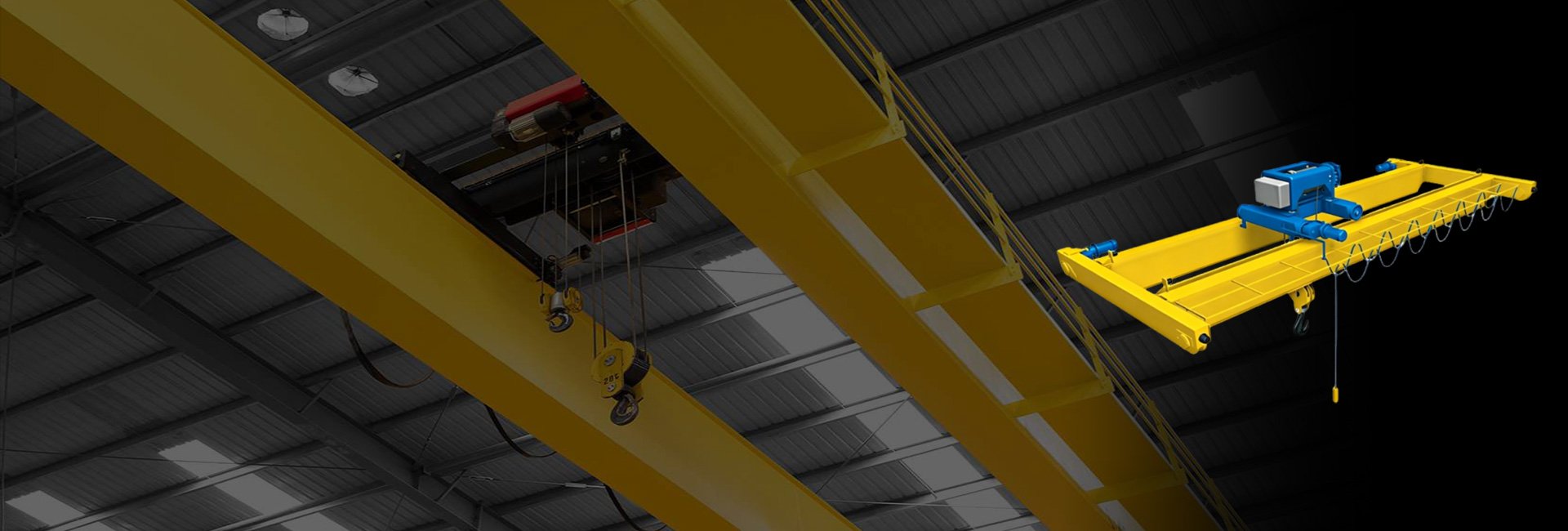
DingYa — Your Reliable Electric Overhead Crane Manufacturer in China
An electric bridge crane is a core equipment used for material handling. The bridge travels along the runway, enabling both horizontal and vertical movement of heavy loads. It effectively solves problems such as low efficiency of manual handling, high risks of heavy-load operations, or poor coordination between production lines. It is particularly suitable for industrial scenarios that require frequent lifting and precise positioning.
DingYa offers electric bridge cranes with lifting capacities ranging from 3 to 500 tons. We also support customization based on your facility structure and working conditions. Our electric bridge crane is equipped with multiple safety protection systems, maintaining stable and reliable performance in both structural design and electrical systems. If you have any requirements, just feel free to contact us for a suitable configuration solution.
Our Products
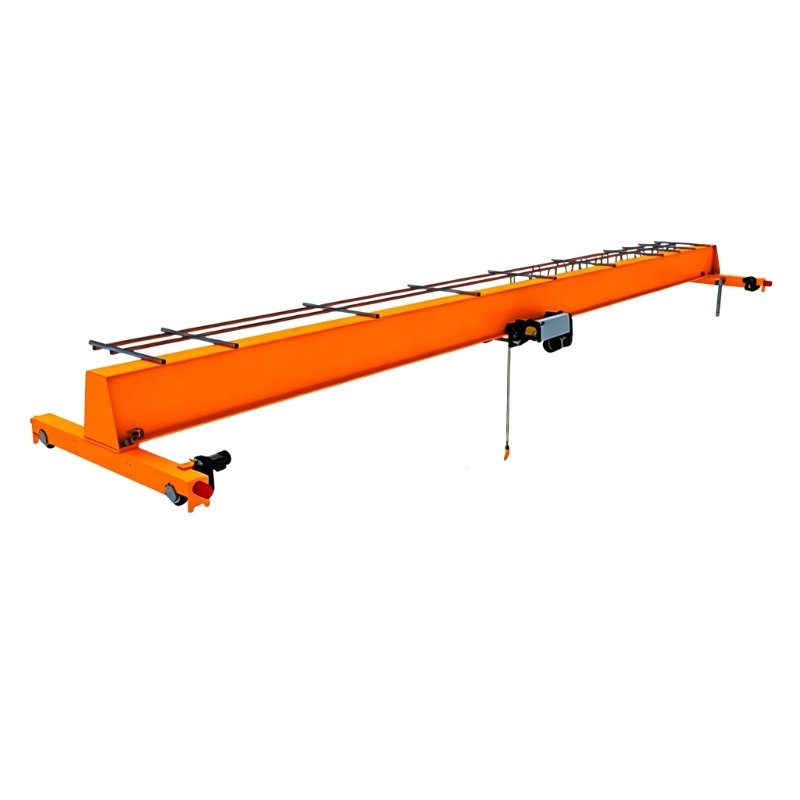
Lightweight structure with better cost control. Suitable for small to medium capacities and regular lifting tasks. Meets daily production and handling needs.
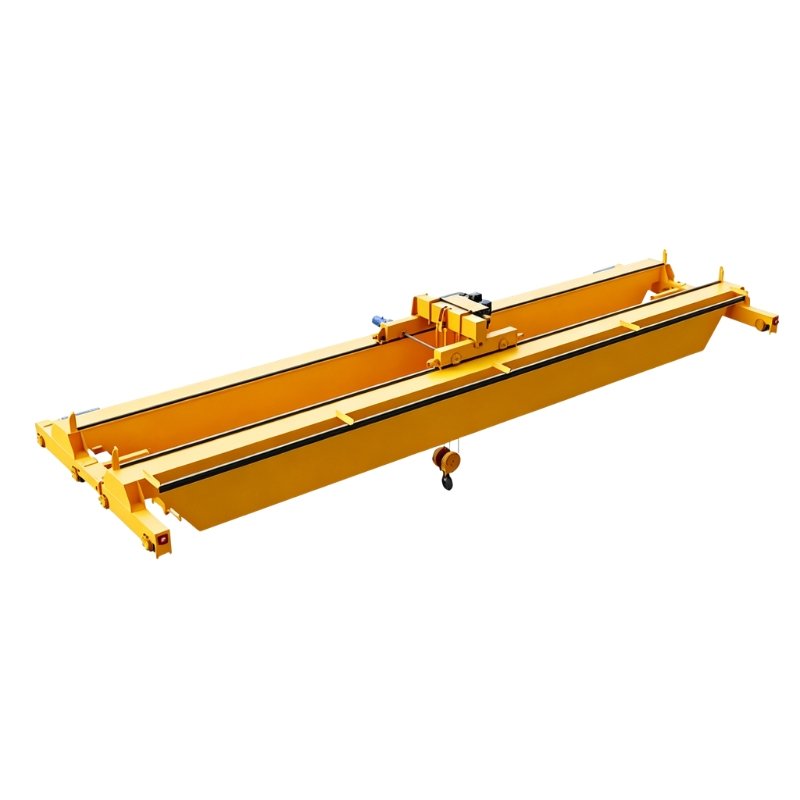
Higher load capacity and more stable operation. Suitable for heavy-load and high-frequency working environments. Fits continuous production demands.
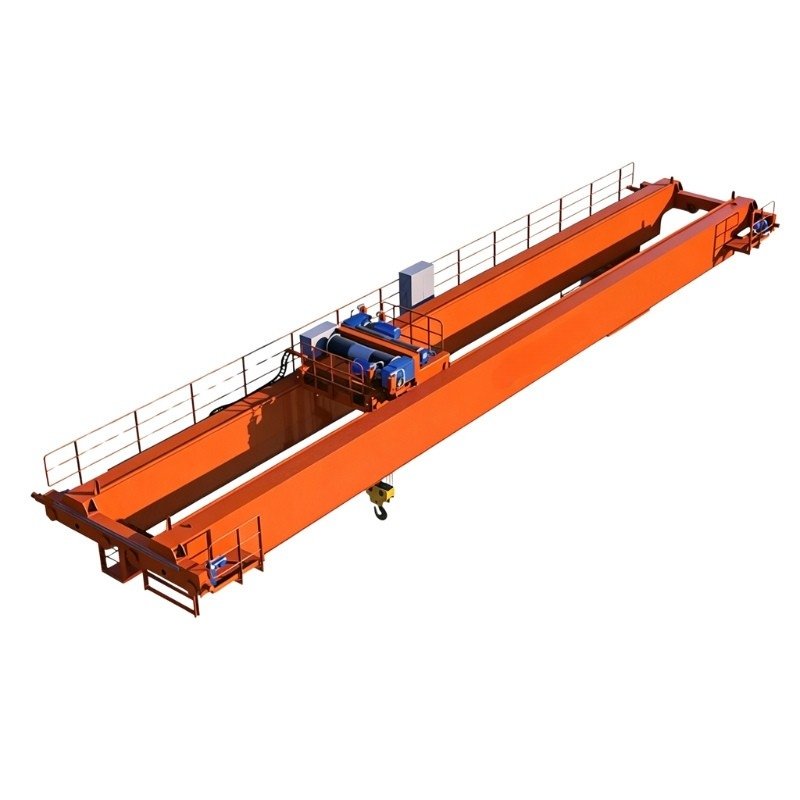
Adopts a compact structural design, lighter in weight and lower in energy consumption. Suitable for modern facilities with high requirements for space utilization and operational efficiency.
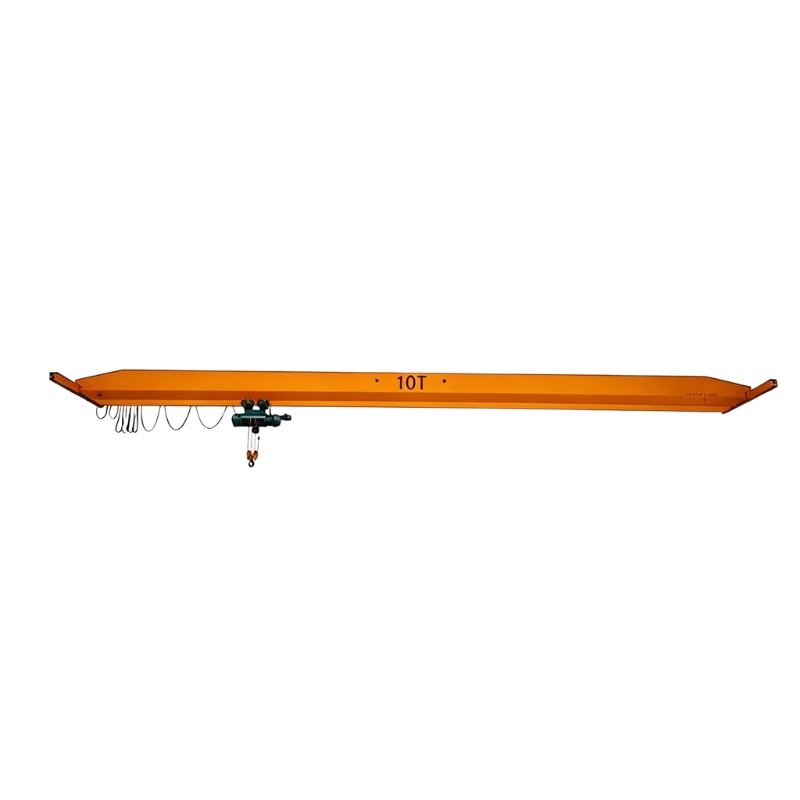
Installed below the roof rail, saving ground space. Suitable for space-limited environments or light-duty material handling.
High-Strength Structure
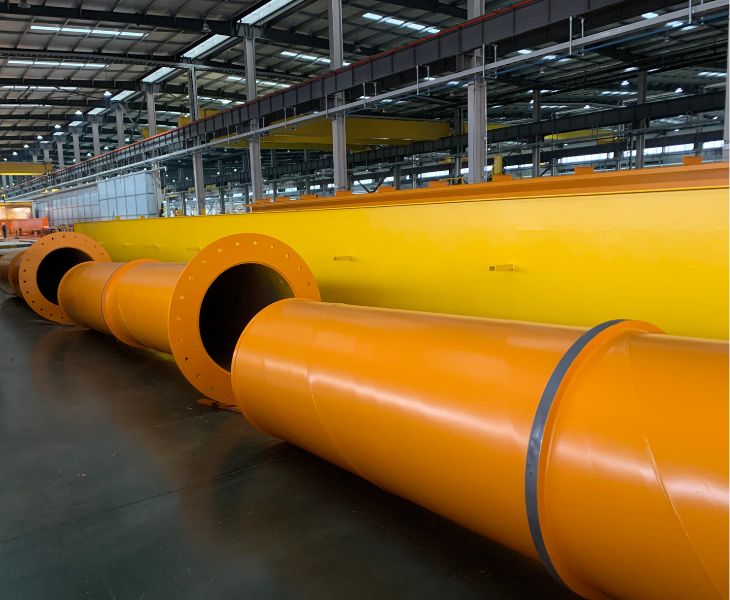
The main beam of DingYa’s electric overhead crane is made of Q235B or Q355B steel, combined with a box girder or I-beam structural design. This optimizes overall load distribution while maintaining strength.
Using automatic submerged arc welding, the weld seams are consistent and stable. Key load-bearing areas of the crane are thickened, ensuring that deformation does not occur easily even after long-term use.
Precision Transmission System
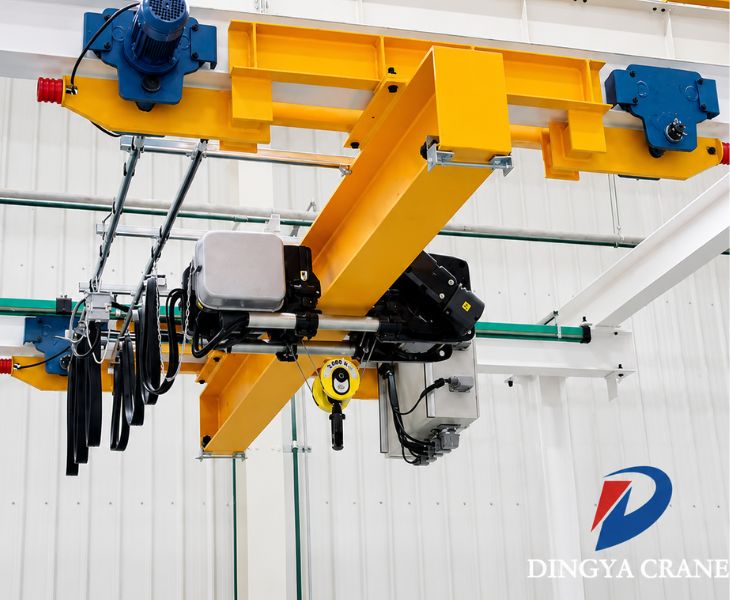
Our electric bridge crane adopts an electric hoist or double-girder trolley structure, combined with variable frequency drive (VFD) control. This enables smooth starts and stops during lifting and travel operations, effectively reducing impact loads. Travel speed can be adjusted based on working conditions (0–20 m/min), ensuring efficiency while improving positioning accuracy.
Applications of Our Electric Bridge Crane
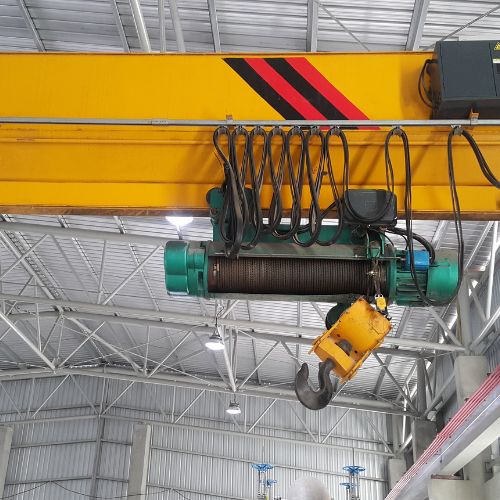
Ideal for equipment lifting and materials handling within manufacturing facilities. Offers effective and steady handling from stationary positions, thus resulting in an improvement in the flow of operations.
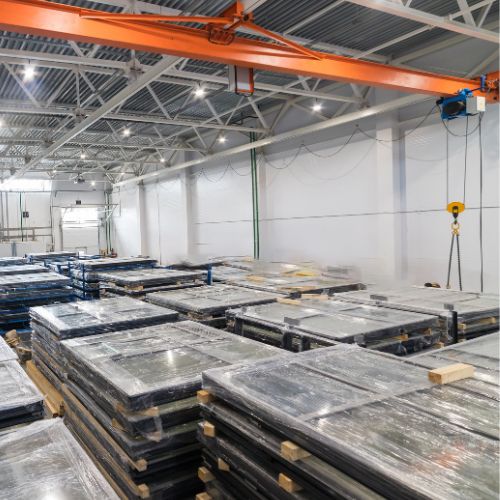
Designed for warehousing and logistics enterprises. Used for loading, unloading, and internal transfer of heavy goods. Compared to manual labor or forklifts, overhead cranes offer greater efficiency and safety for heavy-load handling and continuous operations.
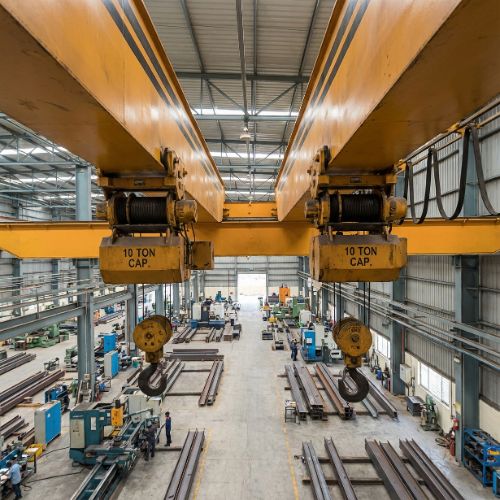
Meant for the handling of heavy steel structures, machines, and their parts. Meets the demands of high-weight and high-frequency usage. It is a core handling equipment in steel structure plants and machinery processing facilities.
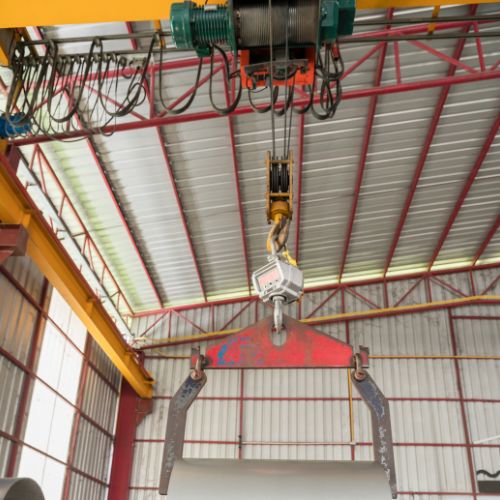
Our overhead bridge crane is extensively utilized in construction, power and petrochemical projects. Ideal equipment for installing and maintaining the heavy machinery equipment.
You have to ensure that three important areas are taken care of every day: structure, electrical circuit, and drive. Regularly inspect the main beam, rail, and connections for any signs of deformation or looseness.
In terms of electrical circuits, make sure that there is no malfunctioning in the control circuit, wires, and limiters. Check the wear and lubrication condition of wire rope, hook, motor, and reducer. In case your crane has a very high operational frequency, consider adopting a regular maintenance schedule.
The working class impacts how often the crane is used, how much load is lifted, and how well the crane will function. A3-A4 is best if your clients use the crane occasionally or lift loads infrequently. Your investment in the crane will be relatively low.
Higher classes of A5 and up will be better if the crane is operated continuously or loads are frequently lifted. The construction of the crane and its main parts will be more durable, but its cost will be relatively higher.
This is not mandatory, but I suggest you consider it in your project. Variable Frequency Drive (VFD) makes the crane run smoothly without sudden starts and stops. This prolongs the life of the crane and improves its performance.
Your clients might be using the crane infrequently or need minimal control over the crane. However, in the long term, using the VFD proves to be more beneficial.
The development trend of electric overhead cranes is moving toward intelligence and energy efficiency. In the future, sensors and control systems will enable real-time monitoring and remote diagnostics.
Lightweight structures and high-efficiency IP55 motors for overhead cranes can further reduce energy consumption. Integration with automated production lines will also become increasingly common. If you are planning a new project, it is recommended to prioritize configurations that allow for future upgrades.
The lifting capacity should be decided according to the maximum material weight to be hoisted. It is necessary to set aside a margin of safety for not always operating at full load. As for the span, it is mainly related to the facility width and rail arrangement.
This should not only rely on the equipment but also take into account the structural situation at the construction site. The principle of using the highest working condition as the basis for tonnage selection and the facility dimension as the basis for span selection should be followed.
The normal lifting capacity of electric bridge cranes is usually between 1 ton and 50 tons, and some projects may even have greater lifting capacity. As for the lifting height, the normal value is between 6 meters and 30 meters, which can be customized according to your facility height.
In ordinary workshops, this range usually covers the majority of demands. However, it is essential to make corresponding choices in line with your working environment.
Power Supply System of Electric Overhead Crane
Conductor Bar System
This is the most common option used in industrial enterprises. In simple terms, a conducting bar is provided beside the rail. Then, power is supplied constantly via a current collector.
There are several merits of this solution, namely stability of supply and ability to be used for long distances. Moreover, its operational costs are rather low. Thus, if your enterprise is characterized by great distance and frequent usage, you should opt for this solution.
Festoon Cable System
It involves supplying power to equipment using trolleys pulling cables. The design is quite simple, and the cost of the initial purchase is quite low. This system is appropriate if you have a small distance of movement and usage frequency. However, if the distance is great and usage is frequent, it means that cables will deteriorate faster.
Cable Reel System
This system provides energy from the automatic winding and unwinding of the cable. The system is widely applied in the open air under conditions where there are not enough options for cabling or complicated surroundings. The system does not interfere easily with other systems but requires a higher standard of equipment. If your conditions do not suit the conductor bar system, this system is the right way.
Contactless Power Supply System
This system provides energy through induction without any contact point. The pros are safety and low wear-and-tear rate. If your production environment is highly demanding, like automated production lines and cleanrooms, this system will be a perfect fit. But the downside is that the cost will be relatively higher than conventional methods.
Battery Powered System
The battery powered system offers the highest flexibility. You do not need fixed power supply lines. This method is suitable for temporary operations or sites where wiring is not possible. However, its limitations are also quite obvious: you need to recharge regularly. If your usage frequency is low or mobility requirements are high, this method is ok.
Power Requirements for Electric Bridge Cranes
Three-Phase AC Power
This is the most commonly used main power source for electric overhead cranes. Almost all medium and large equipment uses three-phase power. Common voltages are 380V / 400V / 415V. It provides stable power output. If your project is in a factory or workshop environment, please first confirm the local power grid standard, then match the corresponding voltage accordingly.
Control Power Supply
The control system generally does not use high voltage directly. Instead, it is converted to low voltage such as 24V or 36V via a transformer for operation. The purpose of this is simple: to improve operational safety. When selecting equipment, your main focus should be on control stability.
VFD Power System
The VFD system primarily makes your equipment operate more smoothly. For example, there will be no significant impact during starting and stopping. It also allows for speed adjustment. If your usage involves frequent starts and stops or requires precise positioning, please configure a VFD.
Single-Phase Power
Single-phase power supply is mainly used in small-scale equipment or auxiliary equipment. Single-phase power usually uses 220V or 240V voltage. Its strength lies in easy wiring, but its power capacity is low. Therefore, it is not suitable for heavy loads or frequent usage. You may consider it if your device is not designed for heavy-duty tasks.
Safety Guidelines for Electric Overhead Crane Operation
Pre-Operation Inspection
Before formal use, you should perform a quick but critical inspection of the bridge crane. Check the wire rope for broken wires or wear, the hook for deformation, and the limit devices for proper function. You should also check the electrical control for responsiveness. At the same time, ensure the travel rail is clear of obstacles and the power supply is stable. This step does not need to be complicated, but it must become a habit. This will help avoid most unexpected problems.
Common Safety Risks
- Overload
Overload is the most common issue. It directly increases the load on the main beam, motor, and transmission system. Long-term overload can easily lead to structural fatigue and result in safety accidents. When selecting equipment, you should leave a margin. During operation, strictly control the rated load.
- Misoperation
Misoperation usually comes from improper operation or lack of experience. Examples include frequent emergency stops and starts, or performing multiple actions simultaneously. Such problems are not obvious in the short term. However, over the long term, they will accelerate equipment wear and even cause failures.
The Role of Safety Protection Devices
- Overload Protection
When the hoisted weight exceeds the set range, the system will automatically limit or stop operation, preventing the equipment from continuing to bear the overload.
- Limit Switches and Sensors
Used to control the lifting height and travel range, preventing issues such as over-hoisting or over-travel, ensuring the equipment operates within safe boundaries.
- Emergency Stop Mechanism
In an emergency situation, it can immediately cut off equipment operation, providing a rapid response to abnormal conditions.
Daily Maintenance and Safety Training
Cranes‘ safety depends not only on configuration but also on usage management. You should regularly inspect key components and perform proper maintenance. Provide standardized training for operators to ensure they are familiar with equipment performance and operating procedures. For high-frequency use, establish a fixed maintenance and training mechanism.