
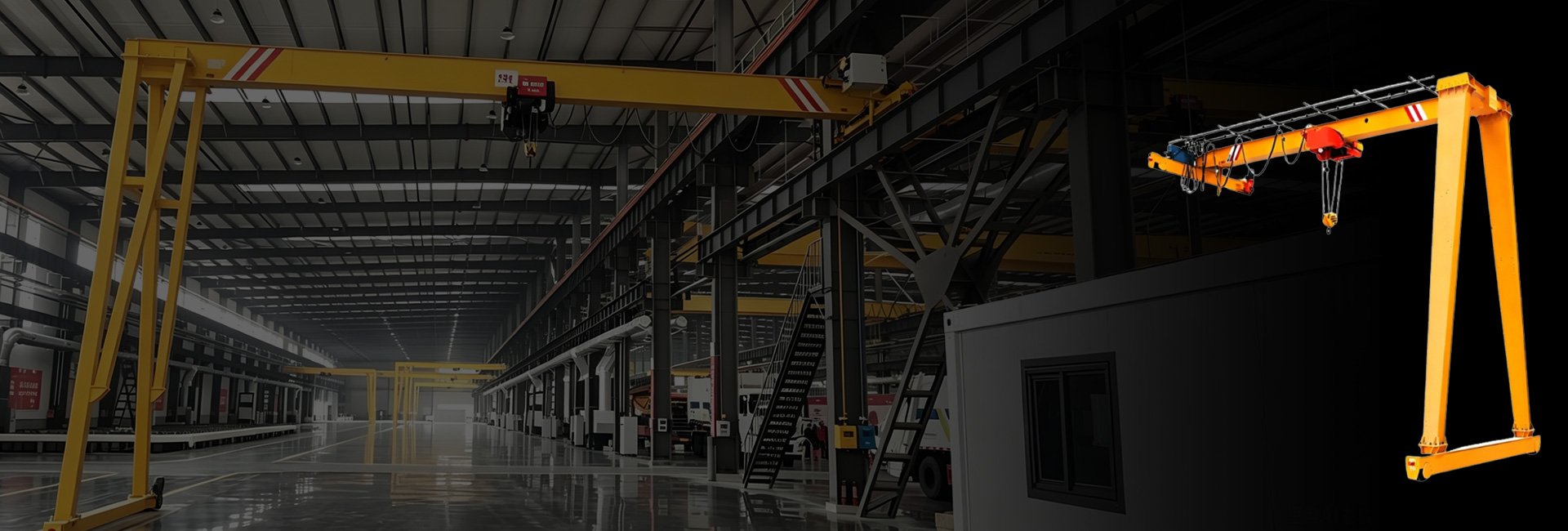
Dingya: Your Trustworthy Semi Gantry Crane Manufacturer in China
The semi gantry crane is a material handling equipment that combines ground tracks and elevated running tracks. One side travels on ground-mounted rails through a supporting leg structure, while the other side relies on the support of the factory beam rail. Compared to the full gantry crane, it is more suitable for workshops, equipment processing areas, and local lifting stations with limited space.
Dingya’s semi gantry crane manufacturing strictly follows international standards. We can provide customized semi gantry cranes according to the span, load and working conditions, helping you create a safe lifting operation environment. Contact us today to get a customized semi gantry crane solution matched to your workshop layout and lifting requirements.
Our Products
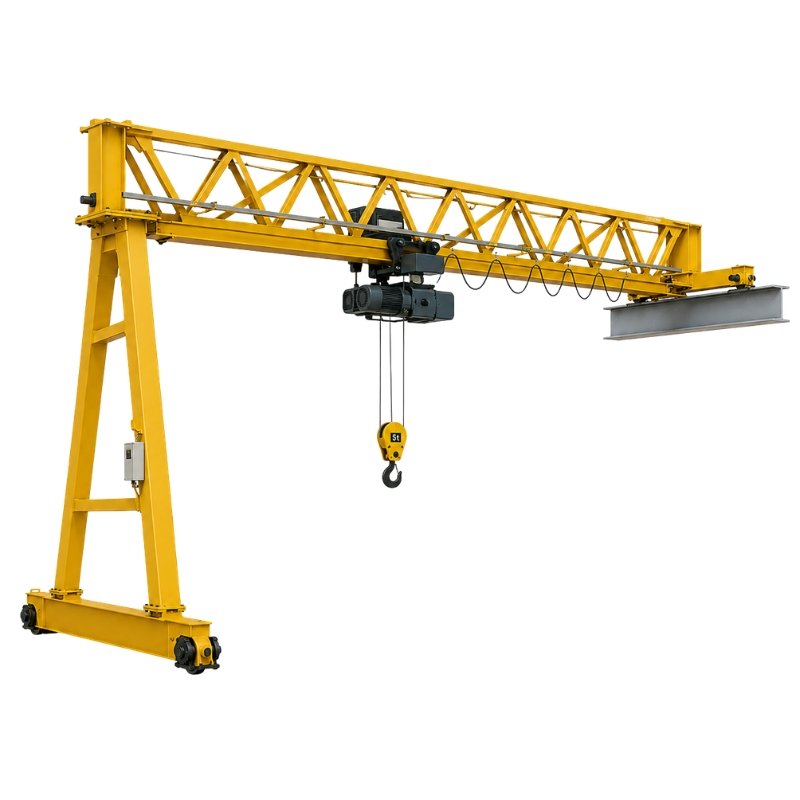
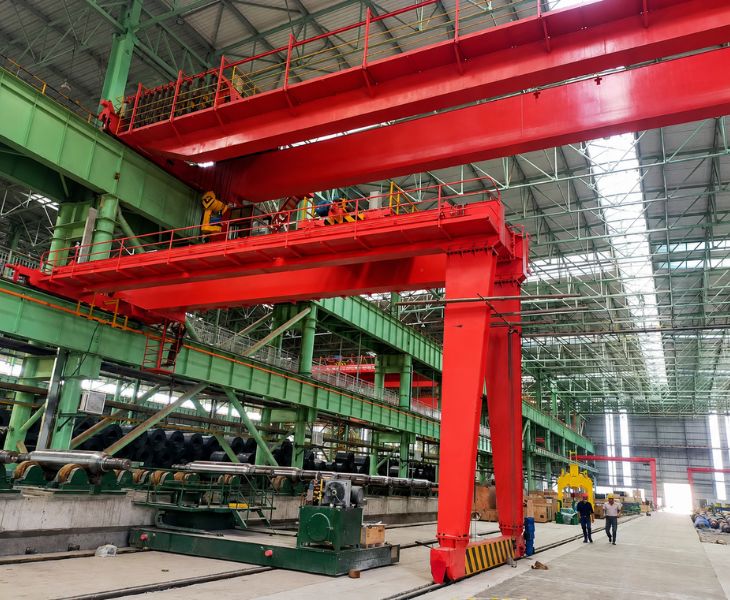
The truss frame composed of welded components, reduces the wind-induced area. It is suitable for areas with strong winds.
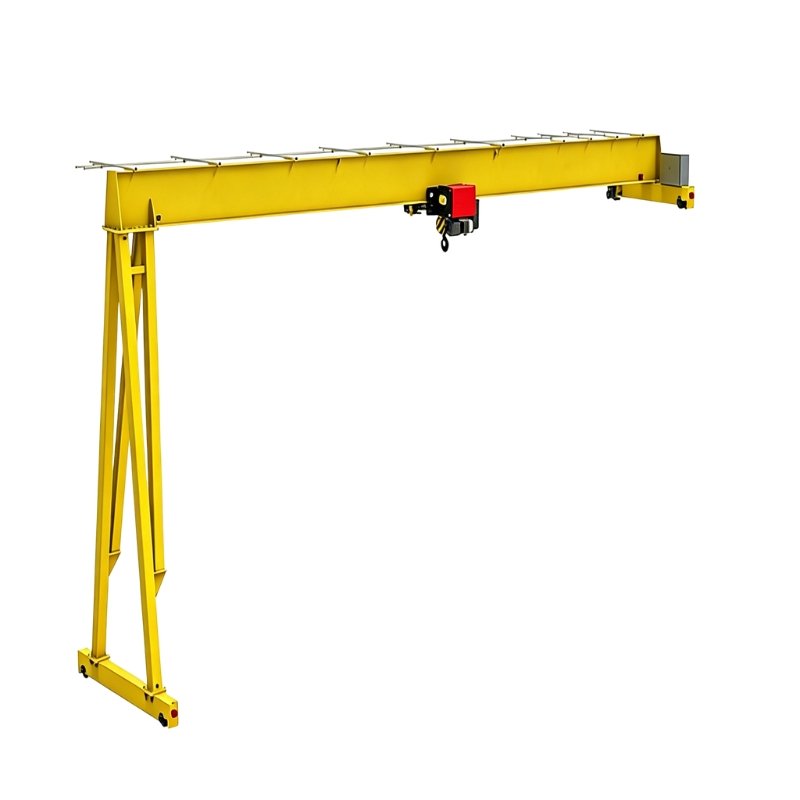
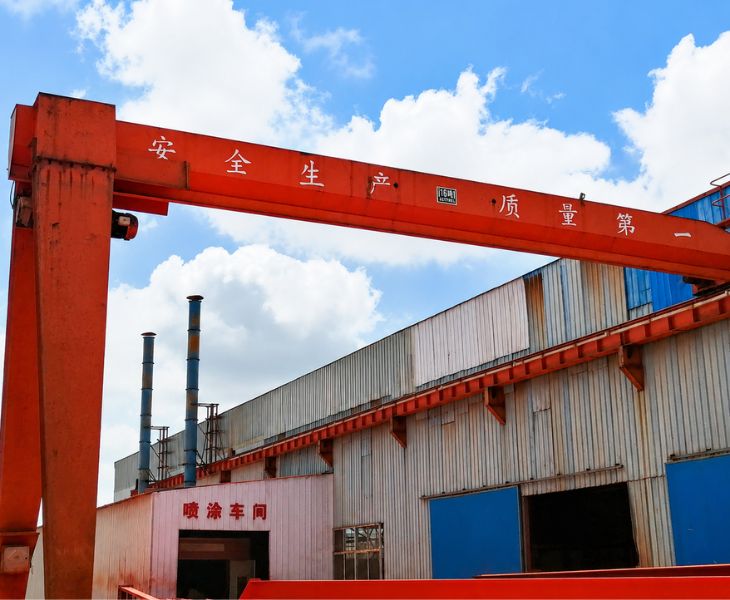
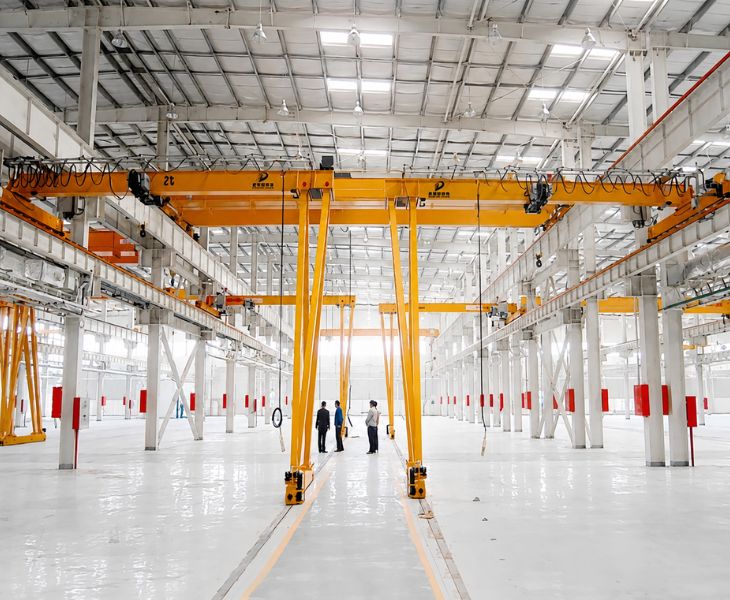
Lightweight and with a simple structure, it is a cost-effective choice for frequent handling of small and medium-sized loads.
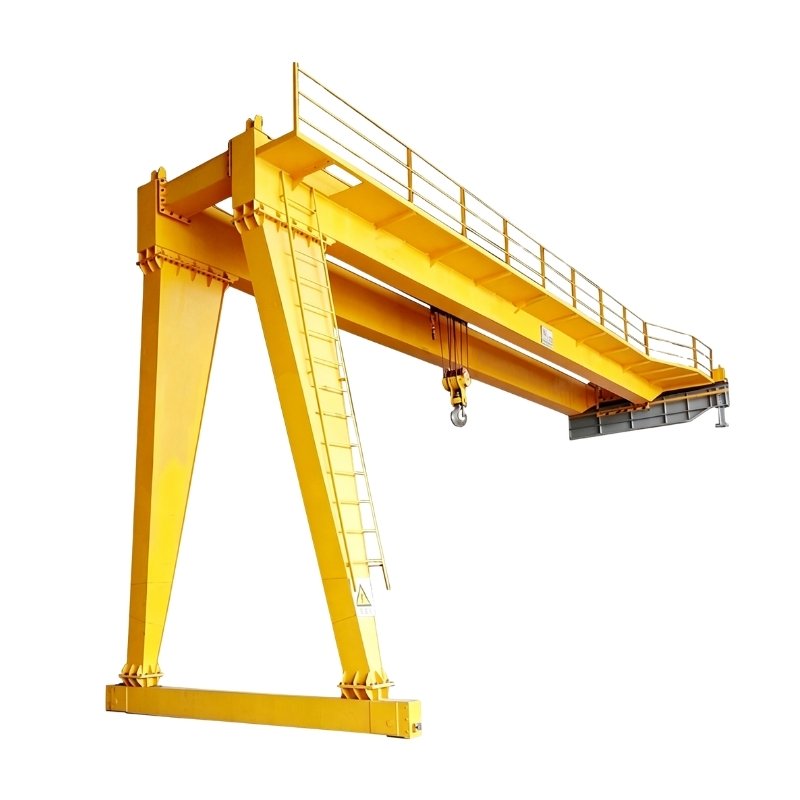
The double main beams offer a higher lifting height and greater stability, capable of handling large-tonnage workpieces and meeting wider span requirements.
The Cantilever Structure Expands Lifting Coverage
Our semi gantry crane’s main beam can be designed with single-sided or double-sided cantilever structures depending on your needs. It allows the lifting mechanism to extend beyond the normal operating boundary of the ground track, directly to the outside of the equipment or the vehicle loading and unloading area. This structure can expand the lifting operation area without the need for additional extension of the track coverage. This makes the transportation between internal and external materials in the workshop more continuous, improving overall loading and unloading efficiency.
Flexible Connection Structure Reduces Stress
The different heights of the support points on both sides of the semi gantry can cause asymmetric load distribution. Our semi gantry crane adopts a flexible articulated structure at the connection between the elevated beam and the support legs. It can absorb the lateral impact force generated during the starting and braking processes, and disperse the composite stress to the elevated corbel and ground tracks. This structure can reduce the risk of metal fatigue under long-term high-frequency operation and improve the overall operational stability of the machine.
Embedded Rail Structure Improves Workshop Traffic Efficiency
The semi gantry crane can be installed using an embedded rail method. By embedding the rail structure, the rail surface is kept level with the workshop floor. This can reduce the interference of traditional raised rails on the passage of forklifts, pallet trucks and ground logistics equipment. At the same time, it reduces the risk of tripping when personnel pass through the rail area. This improves the smoothness of internal logistics and ground traffic safety in the workshop while maintaining the stable lifting operation.
Applications of the Semi Gantry Crane
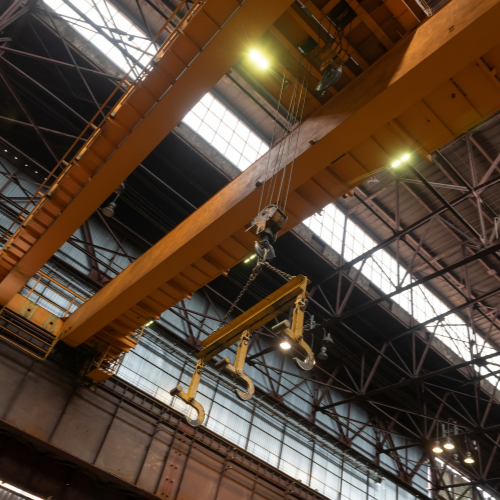
The semi gantry crane can be used for the transportation and positioning hoisting of steel beams, steel plates and welded components. It can cover the processing, assembly, and welding areas, improving the efficiency of connections among different processes.
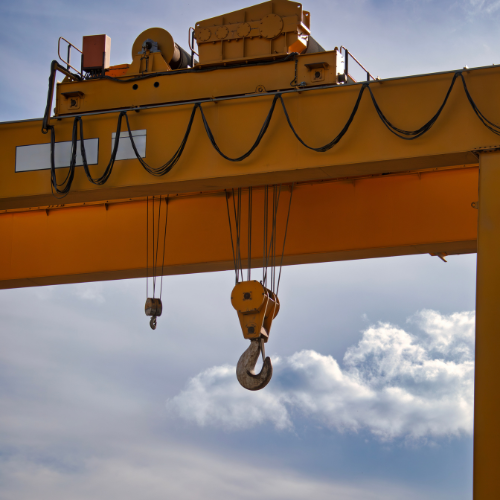
The semi gantry crane can be used for large-scale cargo handling and high-altitude transfer operations in the storage area. It is suitable for transporting long-sized or heavy goods and can enhance the warehouse cargo circulation efficiency.
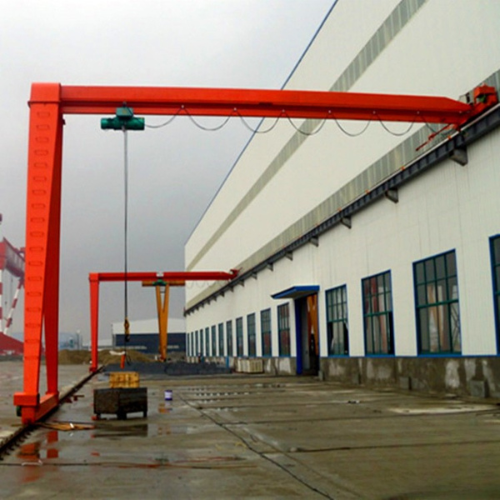
The semi gantry crane can be used for the disassembly and lifting of engines, reducers, and large mechanical components. It can cover maintenance workstations and areas to be repaired, facilitating component replacement, equipment flipping, and installation positioning.
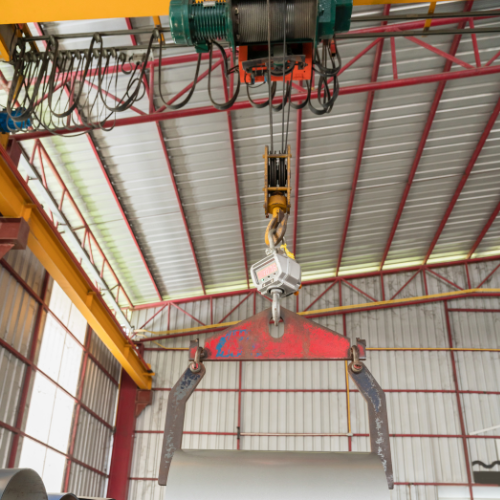
In mechanical manufacturing workshops, semi gantry cranes are commonly used for lifting and transporting machine tool components, equipment bases, and large mechanical assemblies. It can cooperate with the production line to complete operations such as workpiece loading and assembly.
Send Your Inquiry Now
Since the load of the semi gantry crane is directly transferred to the ground through one of the side legs, the installation area of the ground track must be reinforced. The concrete foundation usually needs to reach a strength grade of C30 or above, and specific steel mesh frames should be embedded according to the lifting weight.
In addition, you need to strictly control the level tolerance of the ground. If the ground settlement is uneven, it will cause a running shear force between the landing side leg and the elevated side track, affecting the stability of the crane.
Some semi gantry cranes are equipped with variable frequency drive systems to control the lifting, trolley and crane running speeds. Compared with the traditional fixed-speed operation, variable frequency control enables the crane to operate more smoothly during startup and braking, reducing load oscillation and instantaneous impacts.
For tasks such as mold lifting, equipment assembly or precise part handling, the variable frequency drive can improve lifting accuracy and reduce the long-term load on components.
Because the side of the semi gantry crane relies on the ground track while the other side relies on the elevated track, the force-bearing conditions on both sides are not consistent. You need to determine the wheel diameter and material hardness based on the maximum wheel pressure to prevent metal fatigue under high pressure.
The cross-sectional shapes of the ground track and elevated track determine the geometric structure of the wheel tread and the depth of the wheel flange. The working frequency and the working environment also affect the sealing level of the wheel bearings and the wear resistance level of the wheel surface.
The semi gantry crane belongs to a non-steady L-shaped frame. Its force is concentrated at the intersection point of the legs and the main beam. When the lifting load moves to one end of the legs, this part will be subjected to a combined action of a large bending moment and shear force.
To cope with this complex stress distribution, we adopt large-sized thickened connection plates and high-strength bolts, and combine them with multiple triangular reinforcing ribs for structural stiffening. This can enhance the rotational stiffness of the node and prevent instability and shaking during frequent acceleration and deceleration operations.
The asymmetric layout of a semi gantry crane requires a highly compatible power supply system. Usually, the elevated track end is powered by safety sliding contact lines. The ground end, due to a complex environment and frequent passage of people and vehicles, often adopts cable drums or high-strength conveyor systems.
This combined power supply system requires special attention to voltage drop compensation. When the span is large, it is necessary to make sure the current synchronization of the high and low end electronic control systems to prevent inconsistent output torque of the motors on both sides due to voltage fluctuations.
The side of the semi gantry crane is suspended on the elevated track attached to the factory column and moves along it, while the other side runs on the ground track. Therefore, the main beam is located at the side span of the factory. The bridge crane runs on the upper part of the main span of the workshop through the crane beams on both sides of the factory.
You only need to reasonably plan the clearance height between the two elevated tracks. Both can operate independently within the same workshop without interfering with each other, forming a layered lifting operation system.
You need to thoroughly inspect the insulation of the electrical circuits, the sensitivity of the braking components, the rust condition of the steel wire ropes and the smoothness of the pulley rotation. You also need to test whether there are any jams during the full operation of the crane and the trolley. Verify the sensitivity of the limit protection devices. After completing the no-load trial run without any abnormalities, you can then gradually carry out load operations.
Track-Mounted vs the Trackless Semi Gantry Crane
What is the Track-Mounted Semi Gantry Crane?
The track-mounted semi gantry crane operates by cooperating with both ground tracks and elevated tracks. The movement path of the crane is fixed, and the direction of its movement is restricted by the track system. It is typically used for long-term fixed operation areas, such as production workshops, steel structure processing areas, or high-frequency material transfer stations.
Due to the fixed operation path of the equipment, the track-mounted semi gantry crane can better control the distribution of wheel pressure and the running direction. It is easier to maintain stable operation in large-span, heavy-load or continuous lifting environments. At the same time, the track system can reduce the lateral deviation of the crane during operation, making it more suitable for working conditions that require frequent repeated positioning.
What is the Trackless Semi Gantry Crane?
The trackless semi gantry cranes usually operate with rubber tires or mobile chassis structures and do not rely on fixed track systems. Compared to track-mounted semi gantry cranes, they can freely move between different areas. They are more suitable for temporary workstations, rental projects, or production layouts with frequent changes.
For factories where the tracks cannot be pre-installed, the ground is not suitable for installing rails, or where multiple areas need to share lifting equipment, the trackless semi gantry crane can reduce your upfront investment in foundation construction. Additionally, if there are future requirements for equipment adjustment or workstation changes in your workshop, the trackless semi gantry crane usually has a higher adaptability to the site.
Prioritize the Working Conditions of Track-Mounted Semi Gantry Cranes
Fixed area long-term operations: such as production lines at factory edges, fixed cargo areas in warehouses, open-air raw material storage yards, etc. The operation path is stable and does not require frequent adjustments.
Large-tonnage high-precision requirements: such as heavy machinery assembly, mold processing, etc.
Outdoor harsh environments: such as ports, mines, etc. They need to have strong wind resistance capabilities and stable operation performance. Track-mounted semi gantry cranes can better adapt to complex climatic conditions.
Batch efficient operations: such as goods turnover in logistics centers, raw material hoisting in steel mills, etc. They need to operate continuously for a long time, with high operational efficiency and low energy consumption.
Prioritize the Working Conditions of Trackless Semi Gantry Cranes
Temporary or mobile operations: such as construction sites, emergency rescue sites, multi-area rotation operations, etc. The equipment needs to be quickly moved or adjusted in position.
Site layout is variable: such as e-commerce warehouses, flexible production lines, etc. The operation areas need to be frequently adjusted according to business needs and cannot follow a fixed track.
Space-constrained or irregular sites: such as corners of factories, narrow passages, areas with obstacles on one side. Trackless semi gantry cranes can flexibly plan their running paths.
Budget limited or short-term use: such as temporary capacity expansion for small enterprises, leasing projects, etc. The initial investment is low and they can be put into use quickly.