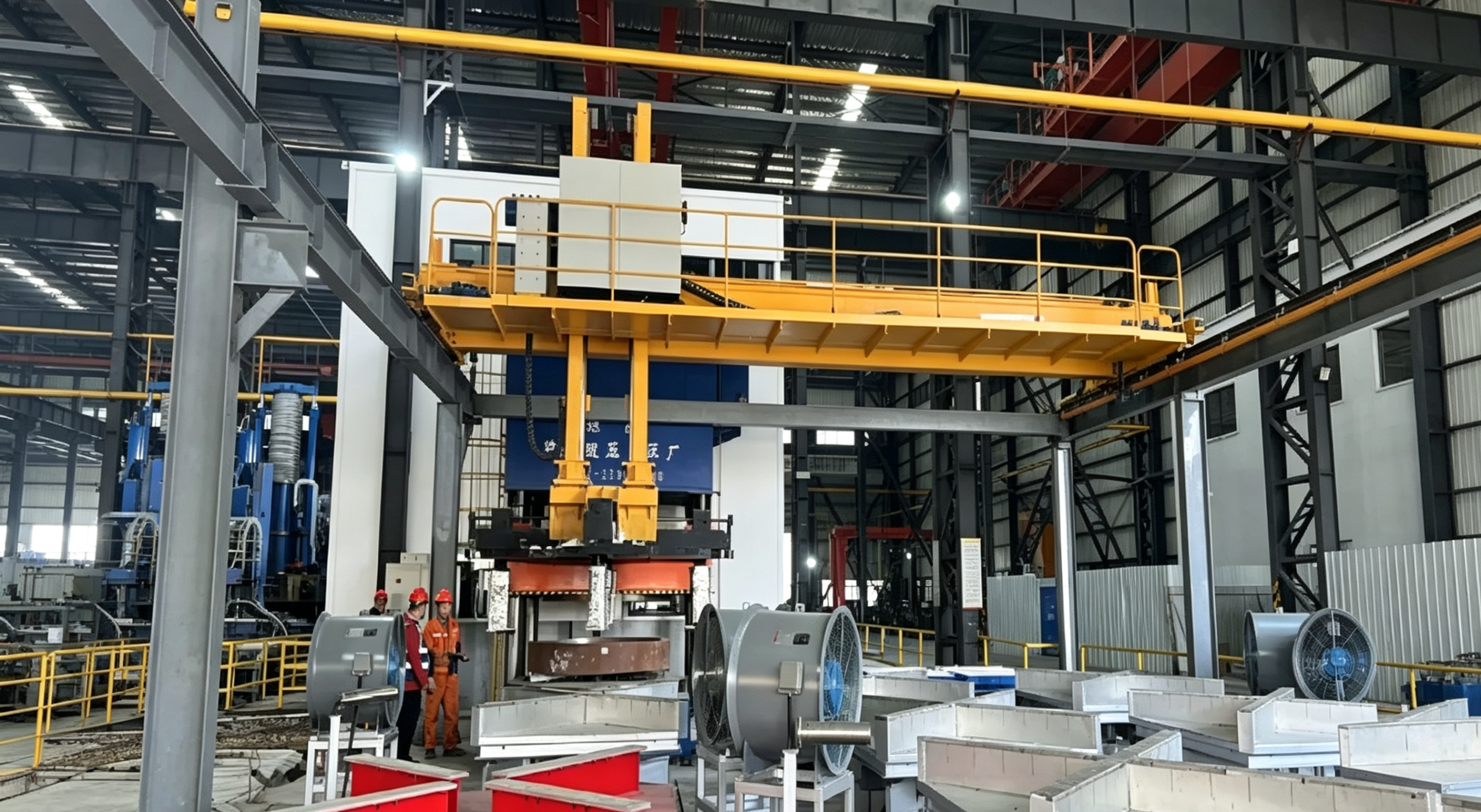
Have you repaired your bridge crane due to issues such as continuous swaying of the main beam or abnormal wear of the trolley? Many causes of failure are not caused by improper use or poor-quality parts. It’s very likely that they can’t distinguish between I-beams and H-beams. This article will teach you the key differences between I-beams and H-beams.
What Is an I-beam?
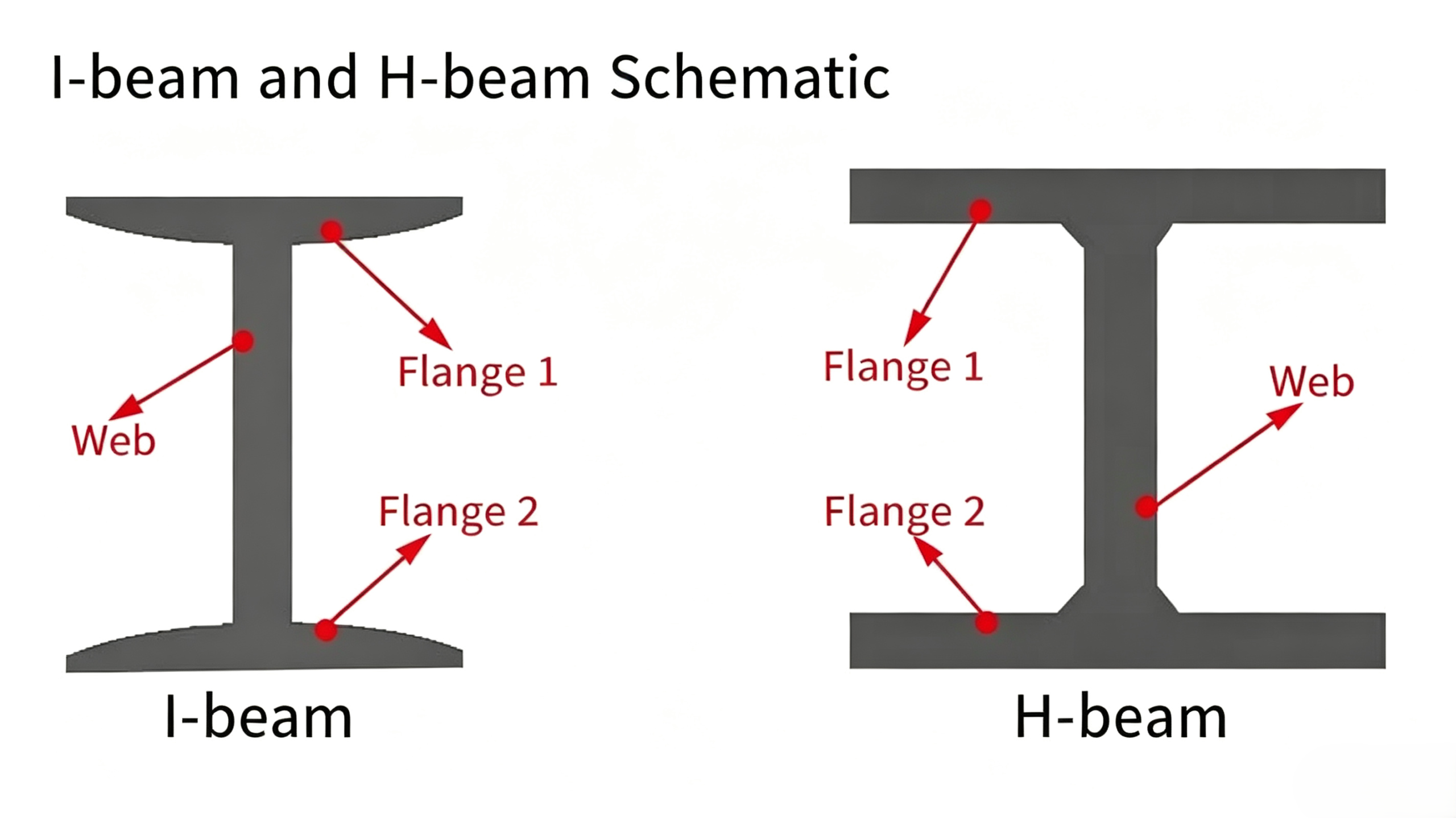
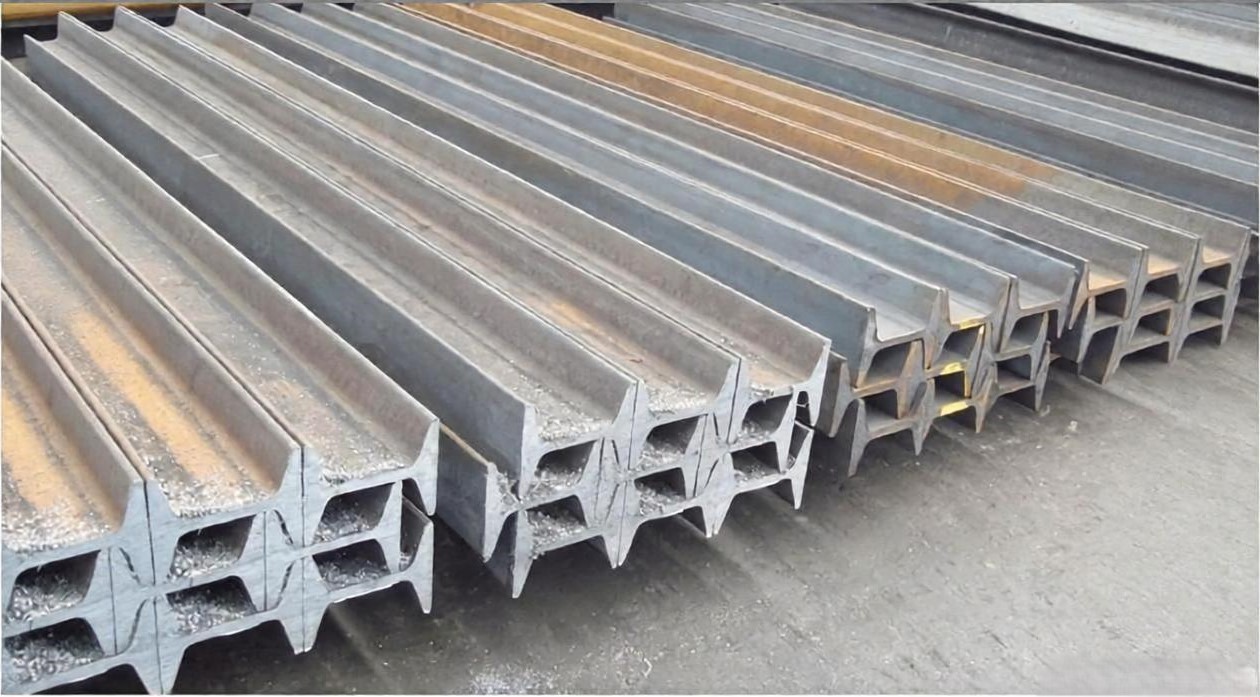
I-beam is a type of steel cross-section. Its shape closely resembles the letter I. It consists of two flanges and a central web. It can be used as the main beam of a traditional bridge crane.
Or it could be a track, railing, or support. You can notice the electric hoist on a bridge crane moving left and right along the main beam. The track on which the hoist runs is the I-beam track.
What Is an H-Beam?
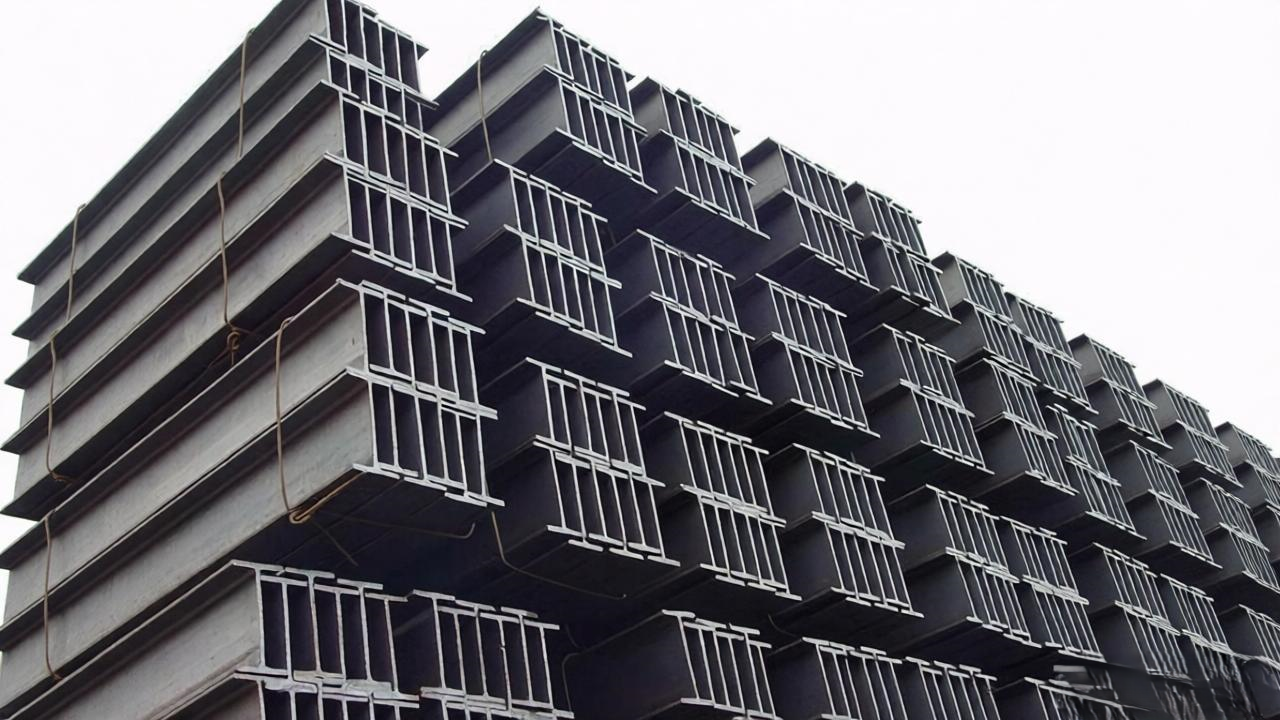
H-Beam is another type of steel section. It’s also a profile. The cross-sectional shape resembles the letter H. H-beams are also composed of upper and lower flanges, plus a central web.
If you are using a European-style bridge crane, whether it’s a single-beam or double-beam bridge crane, the profile used is an H-section. This profile is well-suited for new European-style intelligent bridge cranes.
I-beam vs H-Beam for Overhead Cranes
Both are made of steel. The material can be carbon steel. However, their shapes are different. Therefore, they cannot be welded together. Both can be used as main beams or support beams for bridge cranes. You can also cut, drill holes, and weld them.
They can be used together. There are three possible scenarios:
If you need to renovate your old house but want to save costs, you can keep the large I-beam track and only replace the main beam and hoist track with H-beams. Both perform their respective duties and do not interfere with each other.
The final configuration involves H-beams acting on the runway support beam. They bear the total weight of the bridge crane. I-beams serve as the trolley rails. They are welded to the H-beam factory building beams.
Top Differences Between I-beam And H-beam
Appearance differences
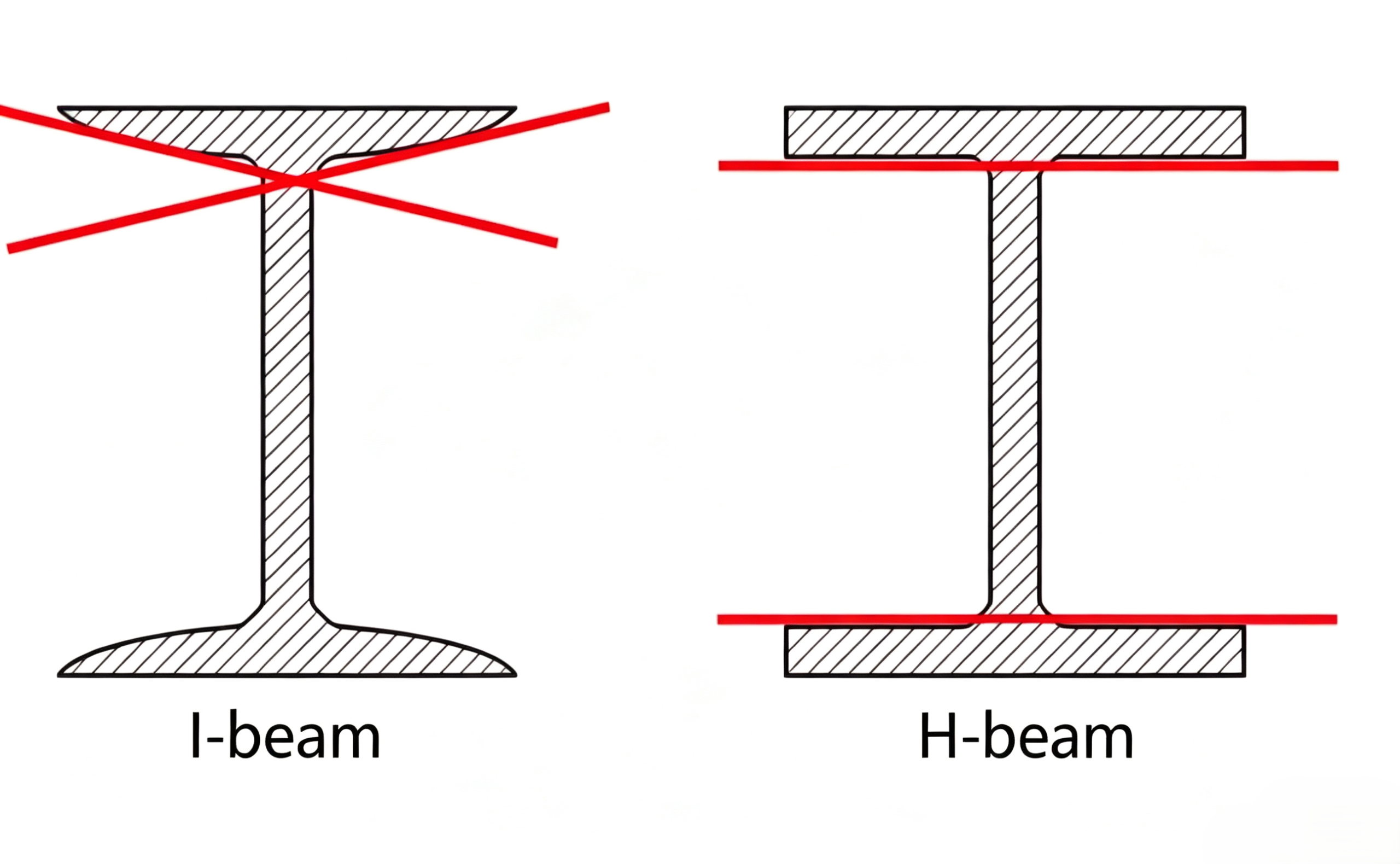
Aside from the fact that the cross-sections are either H-shaped or I-shaped, the upper and lower flanges of an H-beam have no inclination. The upper and lower surfaces are parallel.
For example, H500*300*8*12mm. 500mm is the total height of the H-beam, including the web height.300mm is the width of the H-beam. Also known as the width of the top and bottom flanges.8mm is the thickness of the web.12mm is the thickness of the top and bottom flanges.
Although I-beams have a web, the upper and lower flanges are not parallel. The inner surface is sloped, and the flanges are thinner at the edges and thicker in the middle. For example, an I-beam might be 400×200×8×13mm.400mm represents the total height of the I-beam, including the web height.200mm represents the width of the upper and lower flanges.8mm represents the web thickness.12mm represents the thickness of the upper and lower flanges.
Stability differences
The stability differences between I-Beam and H-Beam are categorized into vertical stability, lateral stability, torsional resistance, and lateral buckling risk. See the table below.
| Type | I-beam | H-section |
| Vertical stability | Good | Excellent |
| Lateral stability | Poor, needs bracing | Very good |
| Torsion resistance | Weak | Strong |
| Risk of lateral buckling | High | Low |
Differences in load-bearing capacity
You might think that load-bearing capacity is related to height. Actually, the load-bearing capacity of steel needs to be considered from several aspects. The table of load-bearing dimensions is as follows:
| Load‑bearing Dimension | I‑beam | H‑beam |
| Vertical downward bending strength | Fair, close to H‑beam at the same section height | Good |
| Lateral horizontal bending resistance | Weak, prone to swaying | Strong, greatly superior to I‑beam |
| Off‑center load working condition | Reduced safety margin, not recommended | Stable performance |
| To achieve equal comprehensive load‑bearing capacity | Heavier component dead weight | Lighter self‑weight, high material utilization rate |
| Trolley‑wheel local pressure (European‑style hoist) | Poor contact condition, fast‑wearing wheels | Full‑surface contact, even local stress distribution |
Cost differences
| Cost type | I-beam | H-section |
| Steel procurement | Lower price/ton | Slightly higher price/ton |
| installation cost | Tapered flange, higher labor hours | Flat flange, standard accessories, easy fabrication |
| Spare-part & accessory cost | The trolley and connecting parts are mostly non-standard. Spare parts are expensive. | Standard parts. Spare parts are inexpensive and readily available. |
| Transportation cost | It is heavier for the same performance. Shipping costs are higher. | Lightweight. Lower transportation costs. |
| Retrofit & upgrade cost | Replacing a European-style hoist requires replacing the entire beam. The modification cost is high. | Flexible modification, low cost |
| Operation & maintenance spare parts cost | Older models wear out quickly. Spare parts are expensive. | Matching European-style hoist. Long lifespan of wear parts. |
Different application scenarios
| Application scenarios | I-Beam | H-Section |
| Traditional crane main beam | √ | High cost |
| European overhead crane main beam | × | √ |
| European-style hoist trolley running track | × | √ |
| Factory crane beam | √ | √ |
| Corner load-bearing main beam | Larger spans require larger cross-sections | √ |
| Factory steel structure column | × | √ |
| Building beam | √ | √ |
| Floor slab support beam | √ | √ |
| Old-style simply supported small bridge | √ | √ |
| Modern large-span bridge structure | Insufficient torsional and lateral stability | √ |
| Heavy-duty industrial frame | √ | √ |
| LX suspended crane trolley suspension track | × | √ |
Knowing When To Choose
Select the I-Beam if:
- The only time heavy loads are lifted is during operation. Side swaying or tilting is usually not a problem. In this case, lateral force is almost nonexistent. An I-beam can be selected.
- When your factory uses a traditional bridge-type single-girder crane, the accompanying trolley needs to be an I-beam with an inclined angle.
- You will never install a European-style overhead crane or a European-style hoist, nor will you upgrade your equipment.
- When your budget is limited, and you can accept the swaying caused by the torque difference of the I-beam.
Select the H-Beam if:
- When you have a higher budget or want to upgrade and renovate your factory, you can go to H-Beam.
- When you place great importance on stability and need to lift heavy precision instruments or have a sensitive start-stop process.
- When your factory space is limited and not suitable for reinforcement,
- You can choose a lighter main beam to reduce stress on the steel structure.
- When you need to accept them according to European EN standards.
- If there are no specialty spare parts stores or suppliers nearby or in your local area, and you can only use standard parts.
FAQ
I-Beam vs H-Beam: Which Is Stronger?
It’s not accurate to simply say which is stronger or which profile performs better. It depends on your specific design. Under vertical loads, both have similar capabilities. Under lateral forces, torsion, and eccentric loading conditions, H-beams are significantly stronger. To achieve the same overall load-bearing capacity, I-beams require larger and heavier dimensions.
How to calculate the weight of I-beams or H-beams?
Once you’ve measured the cross-sectional area, you can perform the calculation. The formula is: Weight per meter (kg/m) = Cross-sectional area (mm²) × 7.85 ÷ 1000.
However, the actual measurement results for I-beams are prone to deviation. Because the wing edge is angled. But I-beams and H-beams are standardized, mass-produced steel products. The dimensions for each model are already calculated according to the standard.
It’s recommended that you obtain such a table from the factory and compare it yourself.
Can I-beams be used for gantry cranes?
I-beams can be used, but with many limitations. They are suitable for small-tonnage lifting operations with heavy loads at both ends. I-beams cannot be used as outriggers for gantry cranes. The outriggers need to be wind-resistant and sway-resistant. Because I-beams have poor torsional resistance, they are prone to swaying and deformation.
If I-beams are used as main beams, their size and specifications need to be one size larger than those of H-beams. This increases costs. It also increases the need for later maintenance. Therefore, it is recommended to use H-beams.
What grades of steel are typically used for I-beams and H-beams?
These two types of steel are the most commonly used: Q235B and Q355B.If you are using Q235B, it is an inexpensive, common carbon steel and is easy to weld and suitable for indoor, light-duty cranes.
If you are using Q355B, it is a carbon steel with higher strength and better impact resistance.
Many bridge and portal frame main beams choose it. Can be used in heavy-duty, outdoor, and frequent operation conditions.
Do I-Beams and H-Beams Require Corrosion Protection?
Both of them require corrosion protection. If you are using I-Beams and H-Beams in an indoor factory, then you can apply a primer to the steel surface.
If you are using it outdoors, the steel can easily corrode and become thinner and thinner.
At this point, the strength of the main beam will decrease. You can apply three coats of paint to the steel surface. Make sure the paint film is thick enough. This will prevent rusting.
Choose The Right Girder With DingYa Crane
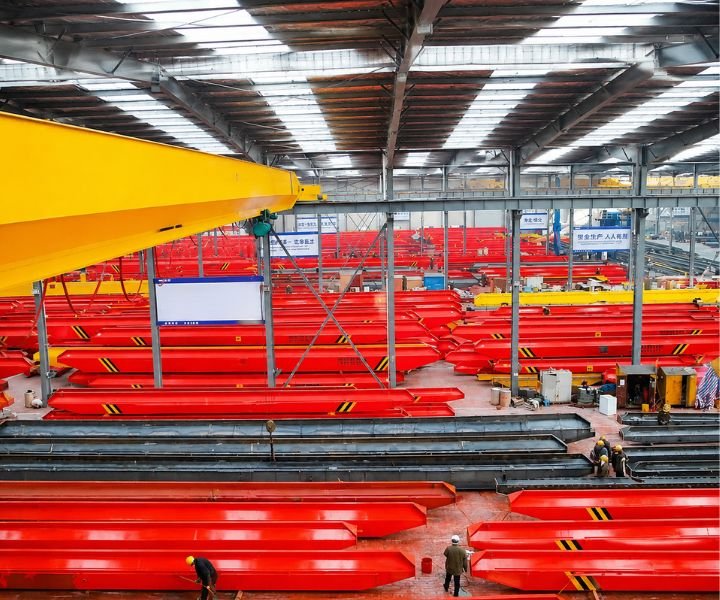
Dingya Cranes helps you select the most suitable main beam solution for bridge and gantry cranes. Whether it’s using hot-rolled I-beams for foundation load projects or H-beams for heavy-duty, European-style hoisting applications, we provide high-quality cranes that meet EN standards. Optimized design reduces weight and wheel pressure. Savings on your factory costs. We provide one-on-one professional engineering support and a reliable after-sales guarantee for your lifting projects.