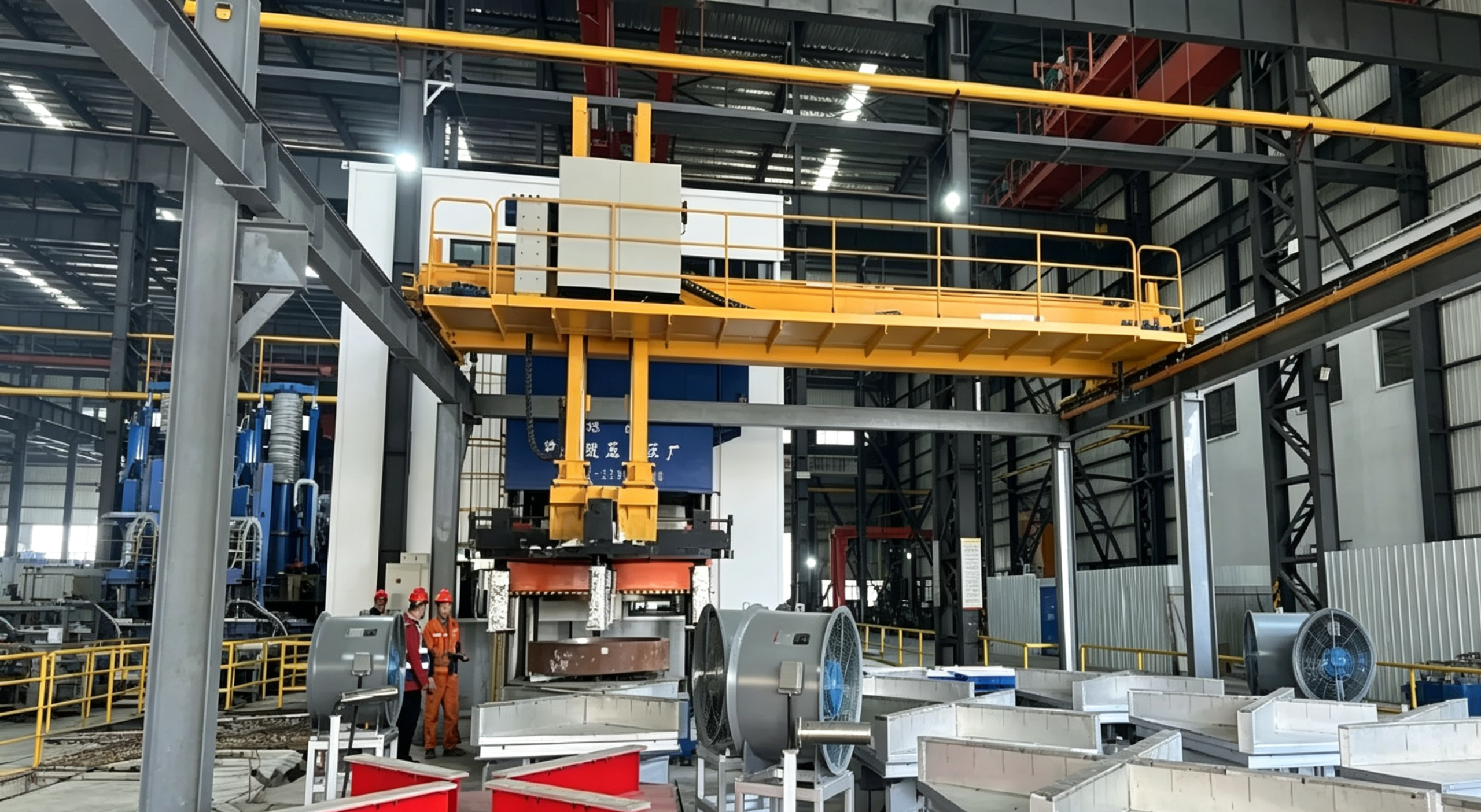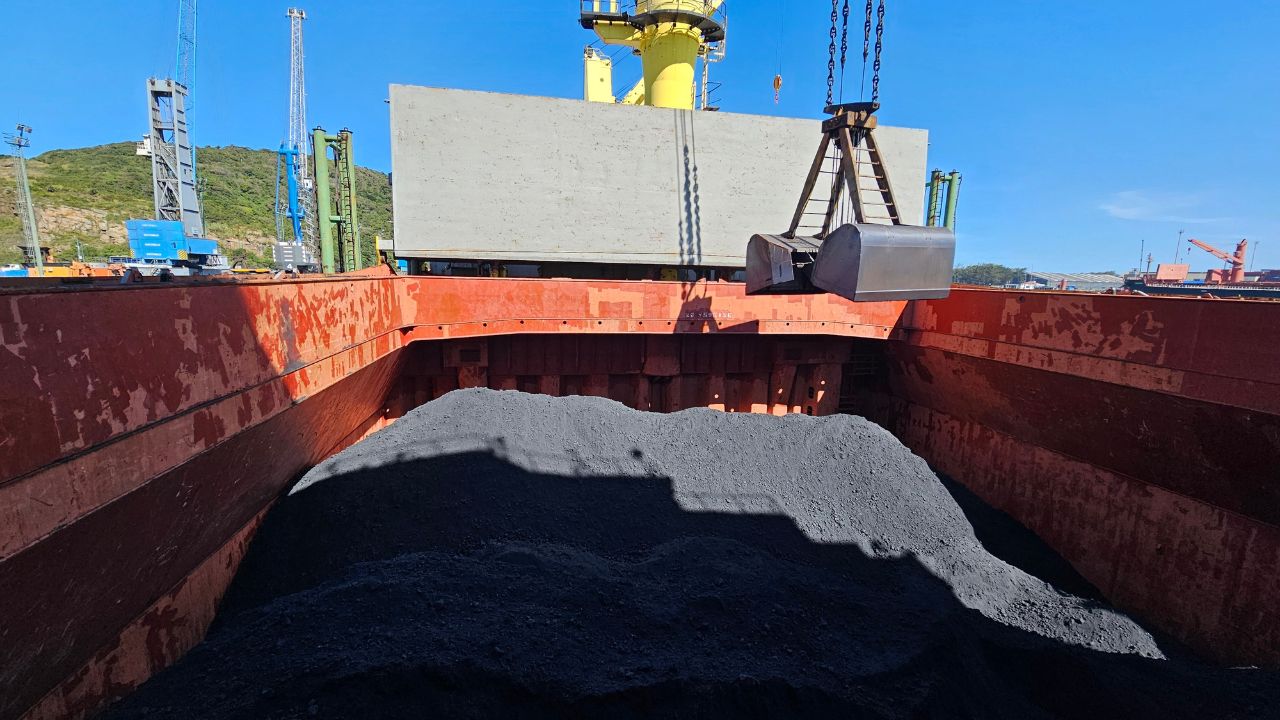
Single-girder bridge cranes can be categorized based on their operating configuration into top-running and under-running types. In terms of structural design, they can be classified as European-style or low-headroom models. For specialized operating environments, there are also versions designed for cleanrooms, as well as explosion-proof cranes. These categories can be combined; for instance, a top-running crane can also feature an explosion-proof configuration. You are not limited to choosing just one category. This article will outline the characteristics of each type and provide guidance on how to select the most suitable single-girder bridge crane for your needs.
What Is a Single-Girder Bridge Crane?
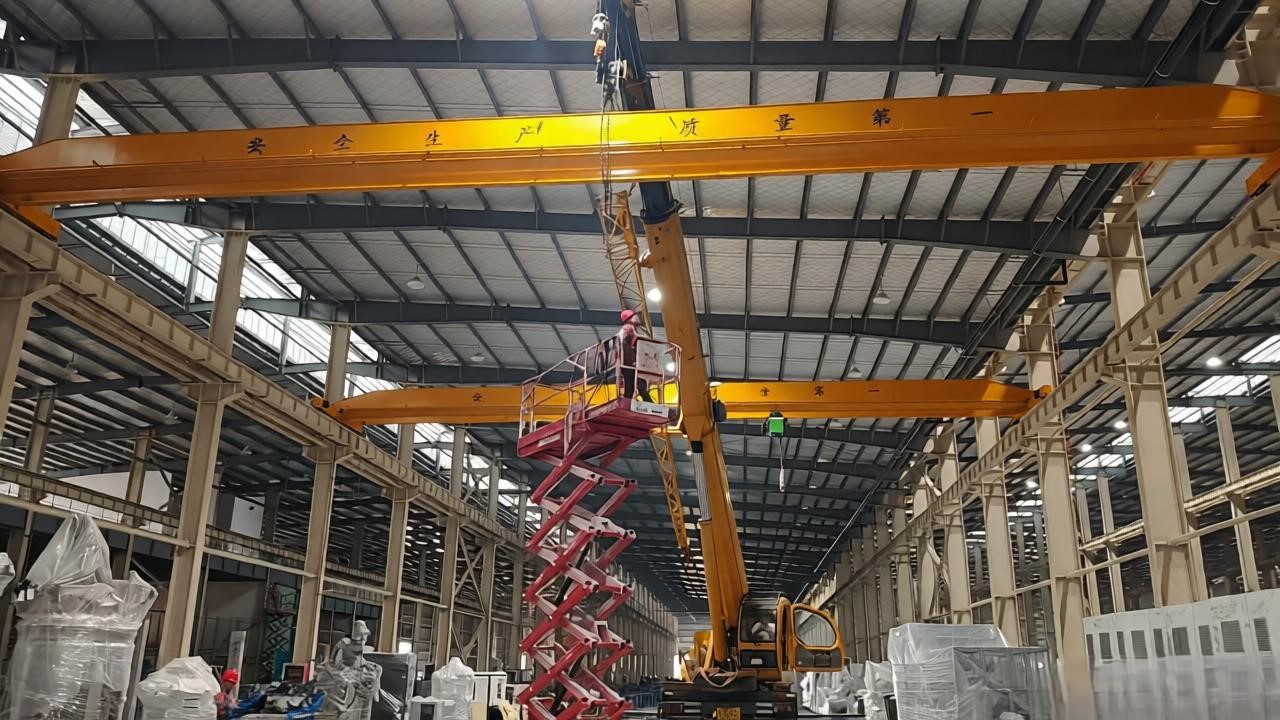
If you look up inside your factory building, you might see a lifting system consisting of a single load-bearing main girder, an electric hoist, and other components—this is known as a single-girder overhead crane.
The electric hoist is suspended beneath the main girder and is used to lift loads vertically.
A trolley carries the hoist, allowing it to move laterally along the main girder. End carriages, equipped with wheels, are attached to both ends of the main girder. These allow the crane to travel back and forth along rails installed on either side of the factory building.
Integrated with an electrical control system, a single-girder overhead crane enables the efficient, large-scale handling, loading, and unloading of materials within a factory.
Compared to double-girder overhead cranes, these units are more affordable. They are also lighter in weight, making them well-suited for lifting small to medium-sized items in factories and warehouses.
However, determining whether this type of crane is the right fit for your specific facility requires a comprehensive assessment based on factors such as load capacity (tonnage), span, frequency of use, and lifting height.
Types of Single-Girder Bridge Cranes
Based on the Operating Mode of the Bridge Structure
Top-Running Single-Girder Bridge Crane
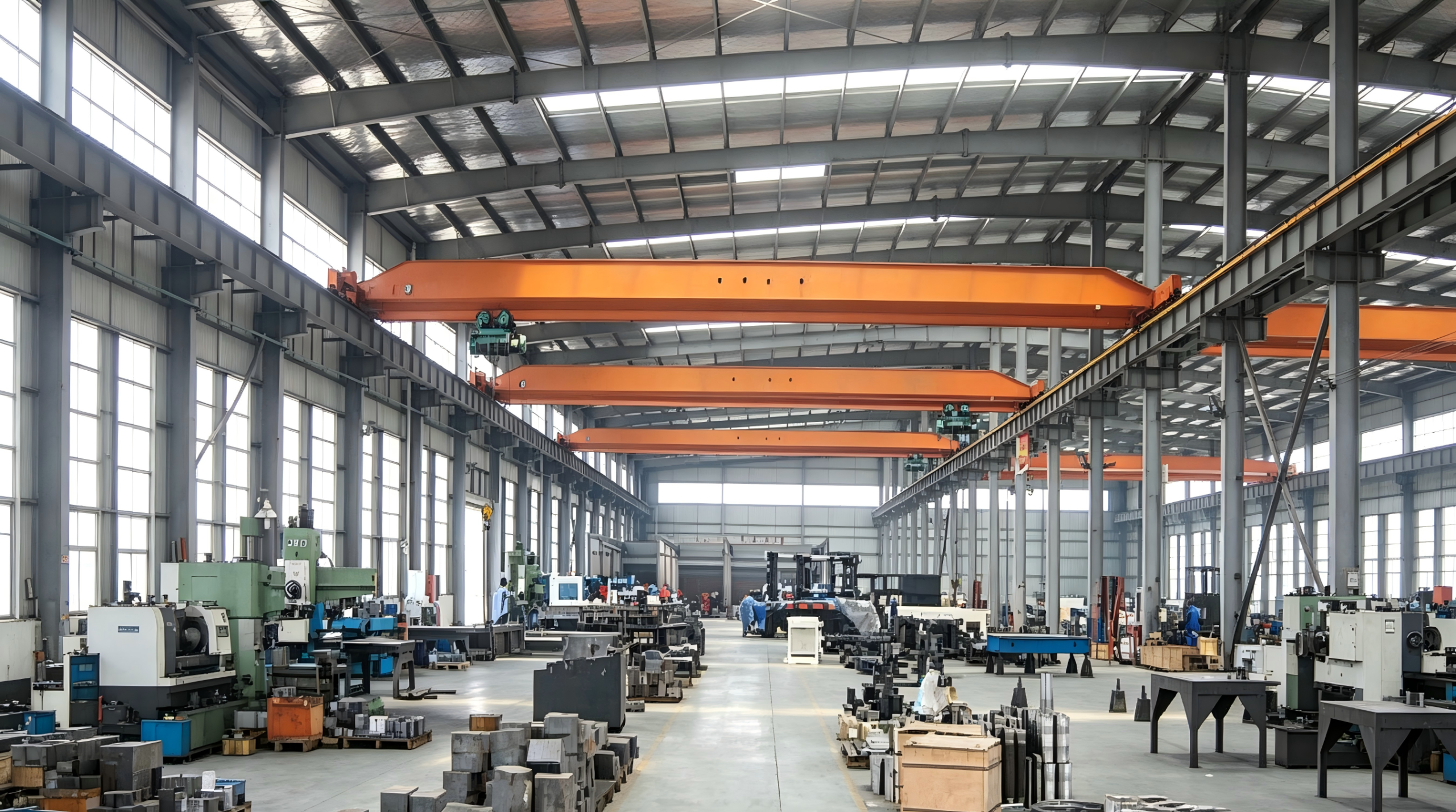
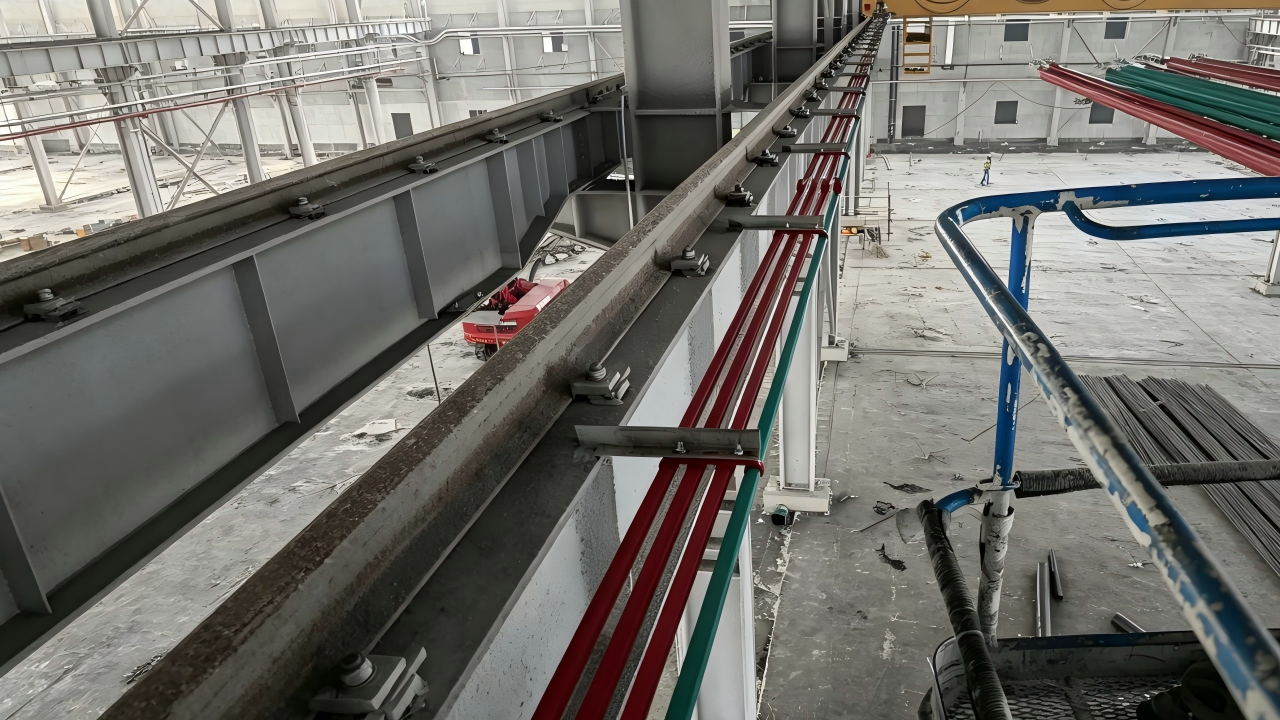
On both sides of the factory building, there are runways specifically designed to support the main girders. In a top-running configuration, the main girder spans horizontally between the two runway beams and rests on the runway via wheeled end carriages.
The runway beams can be supported by the existing building structure or by an independent support system. The right arrangement depends on your factory layout, the condition of the existing structure, and the loads the crane will place on it.
For a new workshop, you can consider the crane runway and its supporting structure during the initial building design. This allows the building and crane requirements to be considered together.
If you plan to install a crane in an existing workshop, do not assume that the existing steel beams can support it simply because they look strong enough. You need to have the building structure checked before installation.
Ask your structural engineer or crane supplier to review the building drawings and relevant loading information, including wheel loads, horizontal forces, and allowable deflection. If the existing structure cannot meet the requirements, you may need to reinforce it or use an independent support system.
Before selecting a top-running crane, provide your supplier with the available factory drawings and runway information. This will help you determine whether your building is suitable for the installation.
Underhung Single-Girder EOT Crane
In an underhung single-girder bridge crane, the end-carriage wheels travel along the lower flanges of the runway beams. In other words, the crane bridge runs beneath the runway rather than on top of it. This is the main difference between underhung and top-running systems.
The runway beams may be supported by the building structure or by another properly designed support system. Whether you can use the existing roof structure depends on its design and load-bearing capacity, not simply on whether your factory is made of steel or concrete.
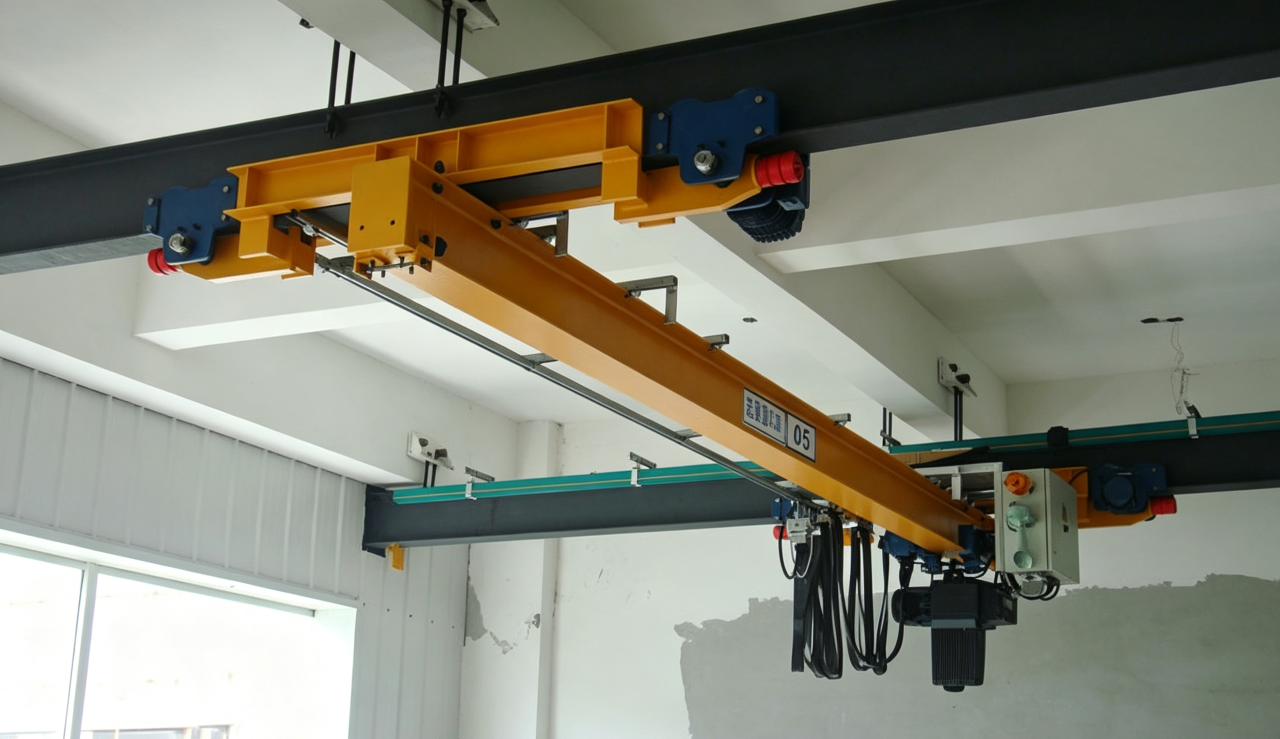
One advantage of an underhung crane is that it may reduce the need for support columns on the factory floor. This gives you more flexibility when arranging production lines, forklifts, and storage areas.
However, the crane’s weight, lifted load, and dynamic forces are transferred through the runway to its supporting structure. Before installation, you need a structural engineer to check the complete load path, wheel loads, horizontal forces, and allowable deflection.
Do not attach the runway beams directly to your roof structure without professional verification. Ask your supplier and structural engineer to review your factory drawings before deciding whether an underhung crane is suitable.
The distance between the hook and the surrounding walls or columns depends on the crane’s actual configuration. You should not assume that every underhung crane can lift loads closer to the walls than a top-running crane.
Before purchasing, ask your supplier to confirm the side hook approach and end hook approach on the crane’s general arrangement (GA) drawing. These dimensions help you determine the hook’s approach limits in relation to the runway and the surrounding building structures. Check both measurements against your factory layout to make sure the crane can cover the working areas you need.
If you are considering an underhung crane, provide your supplier with the factory structural drawings, including details of the proposed runway and supporting structure. A structural engineer must verify whether the complete supporting system can safely carry the crane loads and meet the allowable deflection requirements.
Once the supporting structure has been verified, you can confirm the required lifting capacity, span, lifting height, and daily operating frequency to determine whether an underhung crane is suitable for your project.
European-Style Single-Girder Bridge Crane
European-style single-girder bridge crane is a market term commonly used to describe a crane design that emphasizes compact dimensions and modular construction. However, the term does not refer to one fixed configuration or guarantee that every crane has the same technical features.
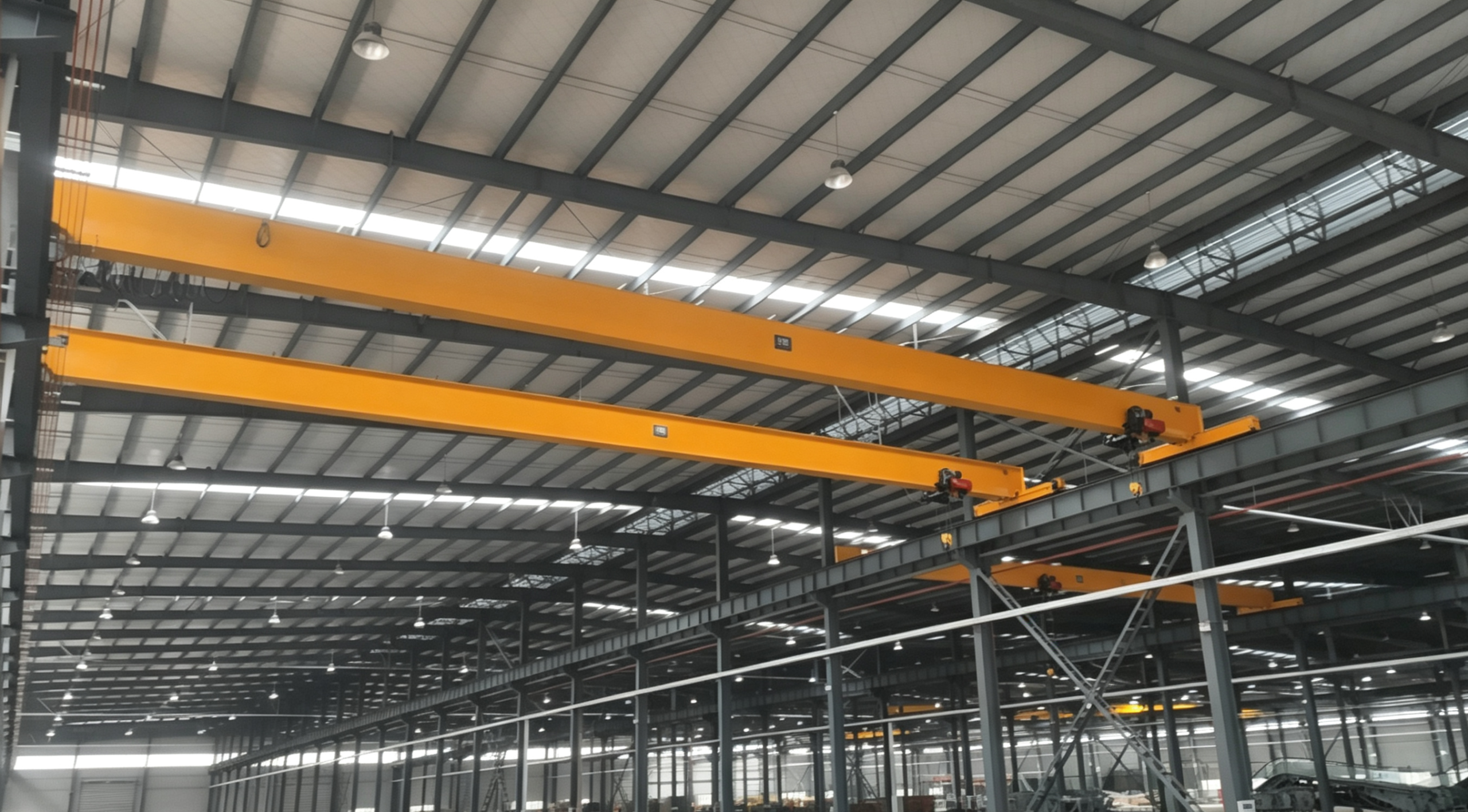
Depending on the manufacturer and model, you may be able to select options such as a low-headroom hoist, variable frequency drives (VFDs), or other control functions.
Before choosing this type of crane, check the actual technical specifications rather than relying on the European-style label alone. Ask your supplier to confirm the hoist design, lifting and travel speeds, duty class, motor configuration, and available control options.
If your workshop has limited space or your production process requires smoother speed adjustment, a European-style crane may be worth considering. However, you should compare its actual configuration and price with other suitable single-girder crane options before making your decision.
Low-Headroom Single-Girder Overhead Crane
When selecting a low-headroom crane, you need to check two different dimensions: the uppermost hook position and the hook travel (lifting height).
The uppermost hook position tells you how high the hook can reach when fully raised. Hook travel refers to the vertical distance between the hook’s lowest and highest positions. These are not the same measurement.
To select the right hoist configuration, provide your supplier with the runway elevation, the required uppermost hook position, the height of the loads or equipment you need to lift, and any overhead obstructions such as roof beams, pipes, or cable trays.
Your supplier should then check the overall crane dimensions against your factory cross-section drawing. This is the most reliable way to confirm whether the proposed crane can provide the lifting clearance you need.
A standard hoist with a bulky design can consume a significant amount of vertical space.
Low-headroom hoists feature a modified structural design, allowing for more vertical space to be dedicated to lifting the load. Therefore, when making a purchase, do not simply look at the total height of the factory building; you must specifically verify the uppermost hook position and required hook travel.
For example, suppose you need to lift a mold and place it on top of a machine tool. Your standard hoist may take up too much vertical space, preventing the hook from reaching the required position.
In this situation, a low-headroom hoist may provide a better solution by reducing the space occupied by the hoisting mechanism.

However, you should not assume that every low-headroom hoist will give you the same lifting height. You need to compare the uppermost hook position shown on the technical drawings with the actual clearance required for your mold, lifting attachments, and handling operations.
Different low-headroom hoists are also designed for different crane configurations. Make sure the selected hoist is compatible with your top-running or underhung crane system.
Some ultra-low-headroom models may have performance limitations when used for heavy loads, long spans, or high-frequency operations. Do not prioritize vertical space savings at the expense of load capacity or equipment durability.
Implementing a low-headroom solution can be particularly complex in renovation projects for existing factory buildings, where obstacles such as air ducts, water pipes, cable trays, or lighting fixtures are often present beneath the roof. In such cases, you should provide the manufacturer with a cross-sectional drawing of the factory building, clearly marking all obstructions, so they can offer the appropriate recommendations.
According to Special Working Conditions
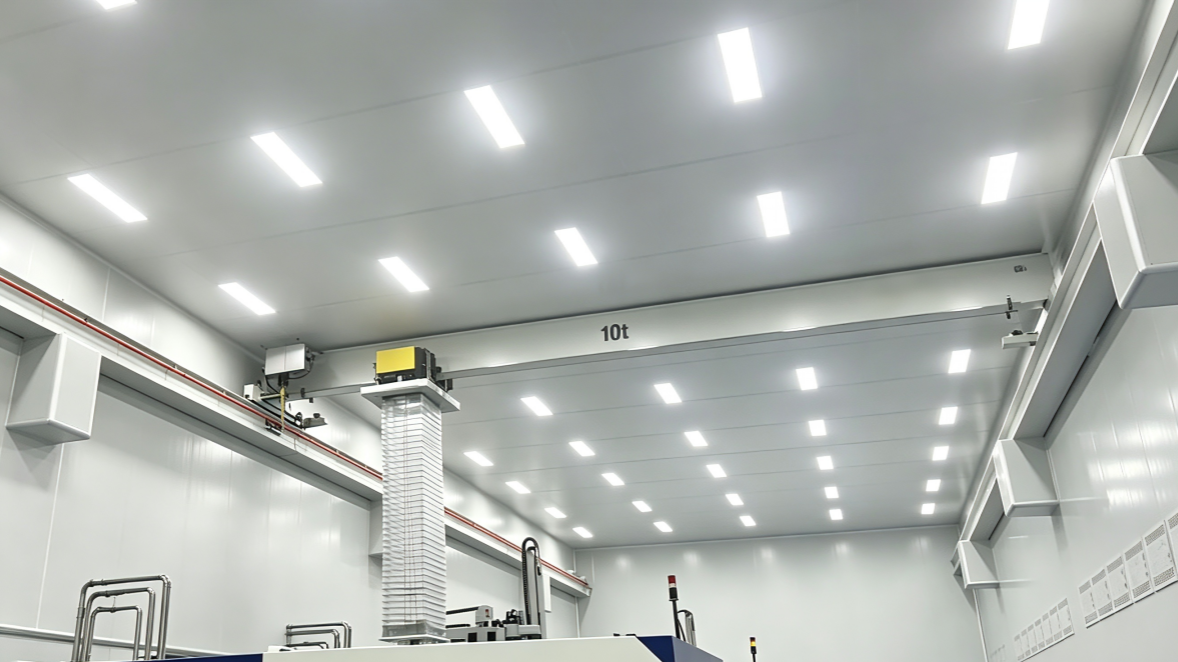
Cleanroom Single-Girder Bridge Crane
Cleanroom single-girder bridge cranes are designed for lifting operations in environments where airborne particles and other forms of contamination must be controlled.
If your factory produces semiconductors, precision electronic components, or medical devices, ordinary crane configurations may not meet your contamination control requirements. You may need to consider factors such as material selection, surface treatment, lubrication, sealing, and maintenance methods.
Before selecting a cleanroom crane, you should first identify the required cleanroom classification and the contamination control standards applicable to your facility.
Ask your supplier how the proposed crane controls particle generation, lubricant leakage, and contamination during operation and maintenance. You should also request relevant technical specifications and test records, if available.
Keep in mind that an ISO cleanroom classification for your facility does not automatically mean that the crane itself has been certified to the same classification. You need to verify the equipment’s actual performance and supporting documentation against your project requirements.
Explosion-Proof Single-Girder Bridge Crane
Explosion-protected single-girder bridge cranes are designed for lifting operations in areas where flammable gases, vapors, or combustible dust may create an explosion hazard.
However, not every workshop handling chemicals or combustible materials automatically requires an explosion-protected crane. The actual requirement depends on the hazardous area classification and the specific conditions of your facility.
Before choosing this type of crane, you need to identify the hazardous area, the type of flammable substance present, and the applicable safety regulations in your country.
Based on this information, your supplier can determine the appropriate crane design, electrical protection, motors, hoisting mechanisms, braking systems, and other relevant components.
The purpose of explosion-protected equipment is to reduce the risk of ignition under specified operating conditions. It does not eliminate all possible ignition risks.
If your facility requires an explosion-protected crane, the first step is to confirm the hazardous area classification. You should identify whether the risk comes from flammable gases, vapors, or combustible dust, and determine the applicable zone classification and temperature requirements.
Different hazardous areas require different levels and types of protection. For example, the requirements for an area containing combustible dust may differ from those for an area containing flammable gas.
When requesting a quotation, provide your supplier with the hazardous area classification, the substances involved, and the applicable standards in your project location.
You should also ask for the relevant certificates and technical documents covering the crane and its applicable components. Check their protection ratings, operating conditions, installation requirements, and certification scope.
Do not assume that a crane is suitable for your facility simply because some of its electrical components carry explosion-protection markings. The complete equipment configuration and installation must meet the requirements of the specific hazardous area.
Comparison of Different Types of Single-Girder Bridge Cranes
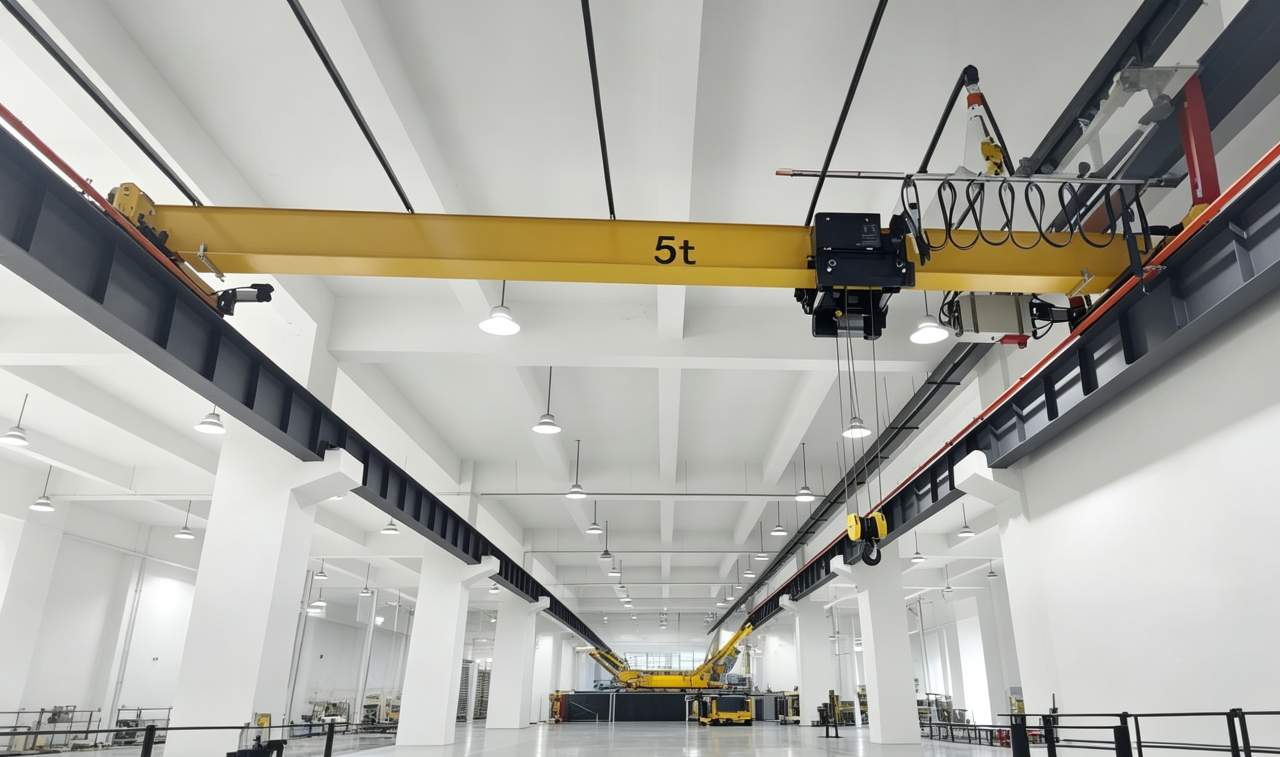
When comparing single-girder bridge cranes, you should first decide between a top-running and an underhung system. These are the two main bridge travel arrangements.
You can then consider whether your project requires additional features, such as low-headroom construction, European-style design, or special protection for cleanroom or hazardous environments. The final configuration depends on your factory layout, lifting requirements, supporting structure, and operating conditions.
| Classification | Main Features | What You Need to Check |
| Top-running Single-Girder Bridge Crane | The end-carriage wheels travel on top of the runway rails or beams. | Check the runway support arrangement, wheel loads, building structure, and available installation height. |
| Underhung Single-Girder Bridge Crane | The end-carriage wheels travel along the lower flanges of the runway beams. | Check the supporting structure, load path, wheel loads, allowable deflection, and available floor space. |
| Design or Requirement | Main Purpose | When You May Need It | Can It Be Combined with the Main Types? |
| Low-headroom Design | Reduces the vertical space occupied by the hoist and crane arrangement. | Your workshop has limited overhead clearance or requires a higher uppermost hook position. | Yes. It may be available for top-running or underhung systems, depending on the model. |
| European-style Design | Describes a compact, modular crane design. | You want a compact configuration or specific performance and control options. | Yes. It can be combined with different bridge travel arrangements, depending on the product. |
| Explosion-protected Design | Reduces ignition risks in classified hazardous areas. | Your facility handles flammable gases, vapors, or combustible dust. | Yes. The protection requirements must be incorporated into the selected crane configuration. |
| Cleanroom Design | Helps control particles, lubricant leakage, and other contamination sources. | Your facility has specific cleanliness and contamination control requirements. | Yes. The design must be matched to the required cleanroom conditions and crane configuration. |
How to Choose the Right Single-Girder Bridge Crane for Your Factory
1. Understand the Factory Conditions and Hoisting Requirements
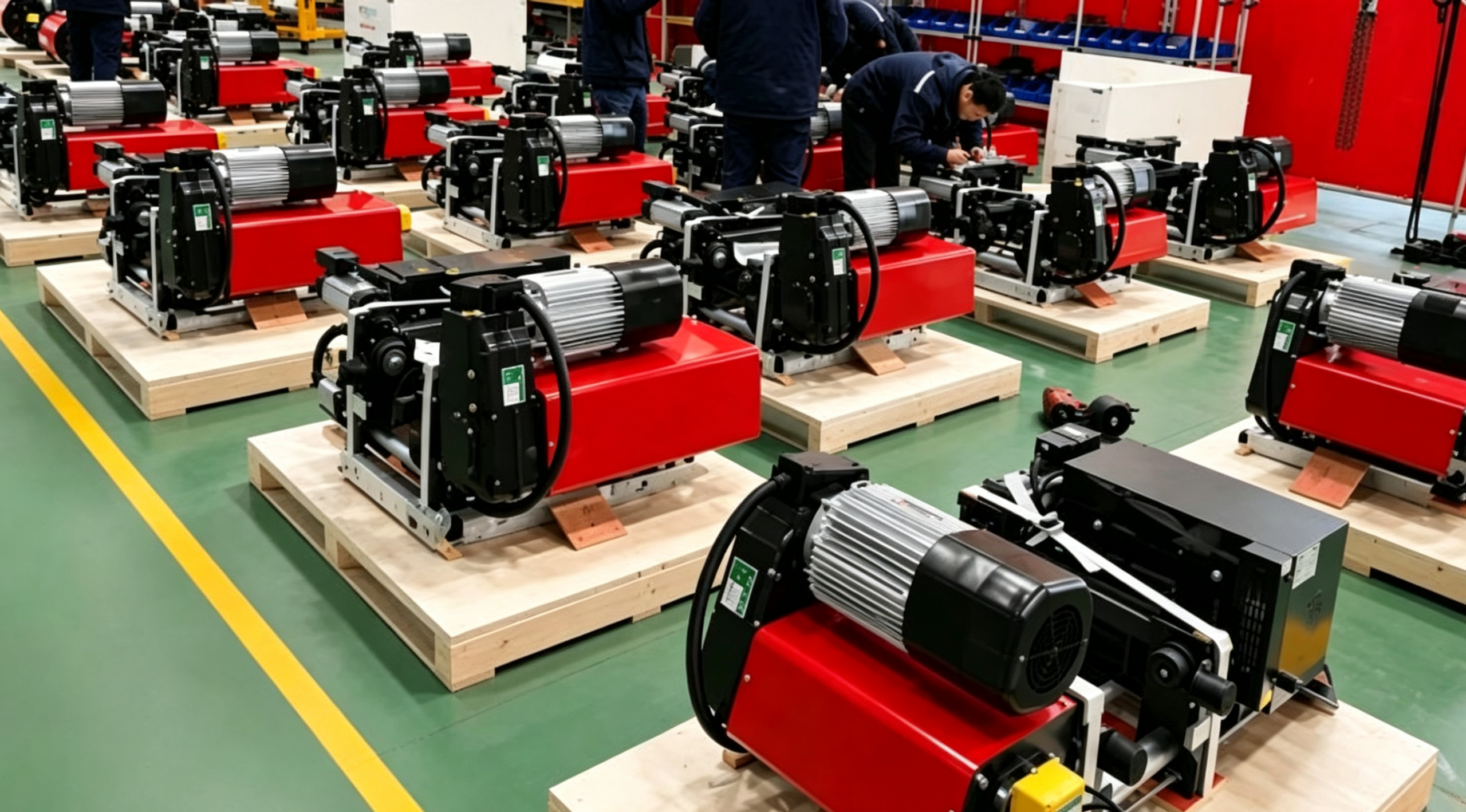
Have you ever fallen into this trap? You see a single-girder crane with the right design and features, so you go ahead and select a specific model, only to discover later that it doesn’t fit in your facility or that the roof structure can’t support the load. In the end, you’re left with two bad options: pay extra to modify your facility, or replace the equipment, both of which lead to costly project delays. Therefore, you need to understand the factory conditions and hoisting requirements. Only then should you narrow down your options to find the right single-girder crane. If you have factory photos or other relevant information, you can provide them to the supplier. It makes communication easier in the early stages.
2. Select the Appropriate Lifting Height
Before selecting a crane, you need to distinguish between the uppermost hook position and hook travel. These are two different measurements and should not be used interchangeably.
The uppermost hook position refers to the highest position the hook can reach, measured from the floor or another agreed reference level. Hook travel (also called lift) is the maximum vertical distance the hook can move between its lowest and highest positions.
To help your supplier select the right crane, you should provide both measurements. You should also consider the height of the loads or equipment you need to lift, the lifting attachments, and the required operating clearance.
Your supplier should check these requirements against your factory cross-section drawing and the crane’s general arrangement drawing. This helps confirm the runway elevation, hoist dimensions, overhead clearance, and actual hook positions.
Do not use the total factory building height as a substitute for either measurement. Both the required uppermost hook position and hook travel must be confirmed before you finalize the crane configuration.
3. Determine Crane Parameters and Usage Intensity
You may know the tonnage of the loads handled in your facility, but perhaps not the frequency of these lifting operations. Whether you lift loads only occasionally or quite frequently, the required equipment configuration, service life, and price will differ significantly.

Therefore, you need to determine the rated lifting capacity, span, lifting height, and duty class (working class). Providing this information to your supplier will help them select the most suitable single-girder overhead crane for your needs. There are various control options available for single-girder overhead cranes; the best choice depends on how the equipment will be used on-site.
4. Select Based on Control Method and Operational Requirements
Different working conditions require different crane control methods. You should choose the control system based on your factory layout, operating distance, and lifting tasks.
For example, if the operator works close to the crane and can safely follow the lifting operation, a wired push-button controller may be sufficient. If the operator needs to move around the workshop or maintain a safer distance from the load, a wireless remote control may be more convenient.
You should also consider whether your crane needs variable frequency control (VFD).
With a suitable VFD configuration, you can adjust the motor speed and achieve smoother acceleration and deceleration during starting and stopping. This can help reduce sudden movements and make load handling easier.
If your production process requires accurate positioning, you should discuss the control system and positioning requirements with your supplier. A VFD alone does not guarantee precise positioning. The actual performance also depends on the mechanical transmission, load conditions, control system, and equipment configuration.
For frequent lifting operations, production line transfers, or mold handling, you may benefit from additional speed control options. Ask your supplier to confirm which functions are included in the standard configuration and which require additional investment.
5. Accurately Compare Price Quotes and Calculate Costs
When comparing top-running and underhung crane quotations, you should not focus only on the equipment price. Make sure both quotations use the same technical specifications and clearly define the scope of supply. Pay particular attention to the runway beams, rails, supporting structures, installation, and commissioning.
For example, one supplier may include the runway system in the quotation, while another may only quote the crane itself. These differences can significantly affect your total project cost. Only compare prices after you have confirmed that the technical requirements and supply scope are consistent.
FAQ
How can you reduce single girder overhead crane downtime after installation?
You can reduce downtime by setting up a regular inspection and maintenance plan. You should check the crane according to the manufacturer’s instructions and keep records of inspections and repairs. You should also make sure your maintenance team knows how to identify unusual noise, vibration, or other signs of a problem.
What training do your operators need before using a single-girder bridge crane?
Your operators should understand the crane’s controls, safety devices, and operating limits before using it. They should also know how to inspect the crane before operation and how to respond to an emergency. You should arrange training based on the crane model, your workplace rules, and the applicable local requirements
Can you combine a low-headroom design with an underhung single beam eot crane?
It may be possible, depending on the crane and hoist configuration. You should confirm the required hook position, hook travel, runway layout, and available space with the supplier. The final arrangement needs to be checked on the crane drawing.
Does a cleanroom single beam crane automatically meet your cleanroom class?
No. Your cleanroom class describes air cleanliness requirements, but it does not automatically prove that a crane meets them. You should ask for the crane’s relevant design information and test evidence, including the conditions under which any particle test was carried out.
What should you provide when asking for a single-girder eot crane quotation?
You should provide the rated capacity, span, lifting height or required uppermost hook position, duty class, building and runway drawings, control needs, and any special working conditions. These details help the supplier assess the crane type and prepare a quotation that matches your project.
Dingya Lifting | Single-Girder Bridge Crane Solutions
Choosing the right single-girder bridge crane starts with understanding your factory conditions and lifting requirements.
At Dingya Lifting, we manufacture bridge cranes and can discuss suitable configurations based on your project requirements.
If you are planning a new crane installation or replacing existing equipment, you can send us the following information:
- Rated lifting capacity
- Crane span and required lifting height
- Working class and operating frequency
- Factory drawings, including runway and supporting structure details
- Required uppermost hook position
- Special environmental requirements, such as high temperatures, dust, or hazardous areas
Our team can use this information to review your initial equipment configuration and discuss a suitable solution with you.
Please note that an initial equipment review does not replace structural engineering calculations, regulatory compliance assessments, or on-site acceptance inspections.
Final Thoughts
You should choose a single-girder bridge crane based on how it travels, your building support, the hook position you need, and your working conditions. Confirm the technical details before you compare prices or place an order.