Is your factory struggling to choose between top-running overhead cranes or underhung overhead cranes? The two types of equipment look similar. However, their tonnage, installation requirements, and factory conditions are different. If the wrong option is selected, it will either not be able to be installed or will not meet the usage requirements. This guide will help you choose the crane that best suits your workshop.
What Is A Top-Running Overhead Crane?
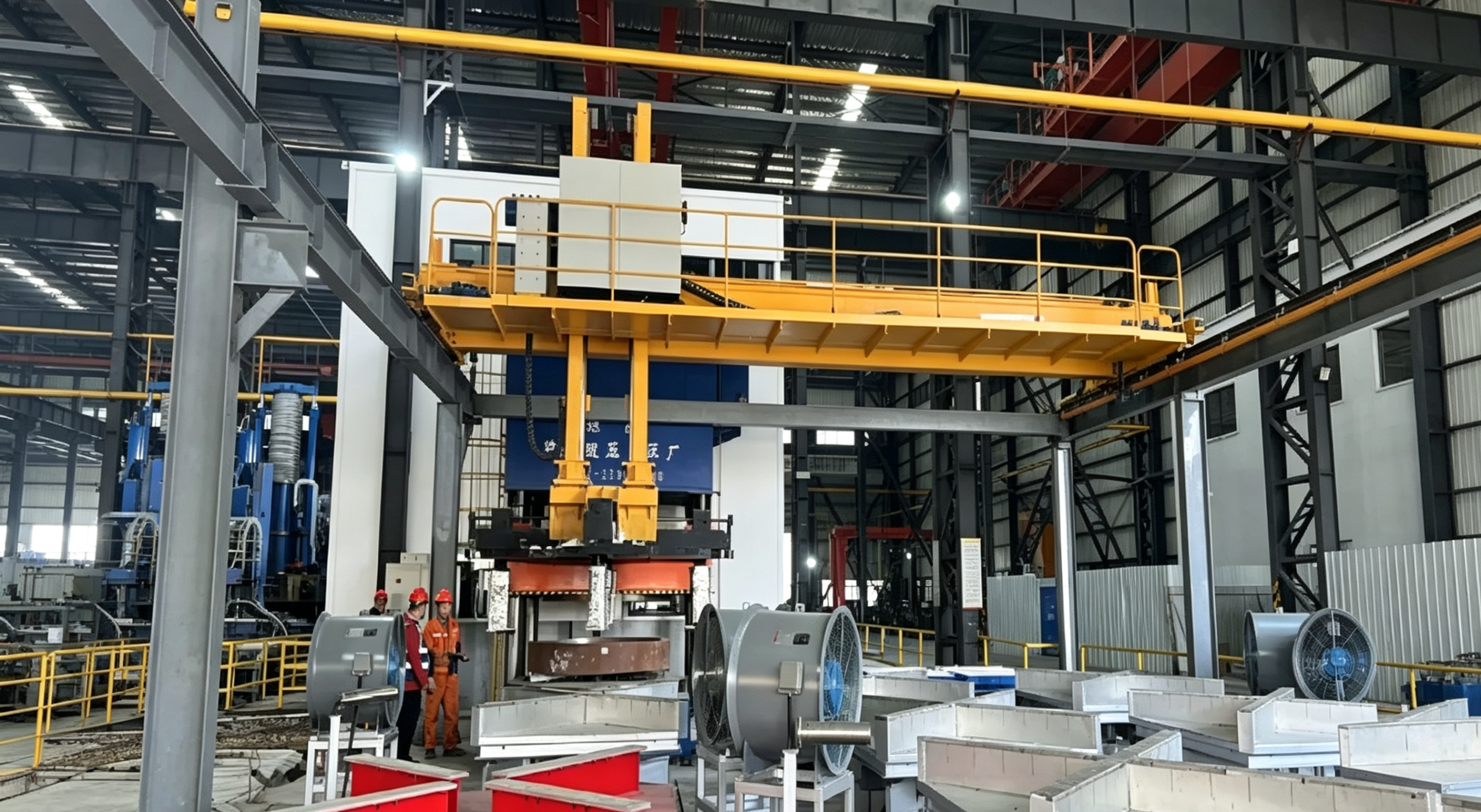
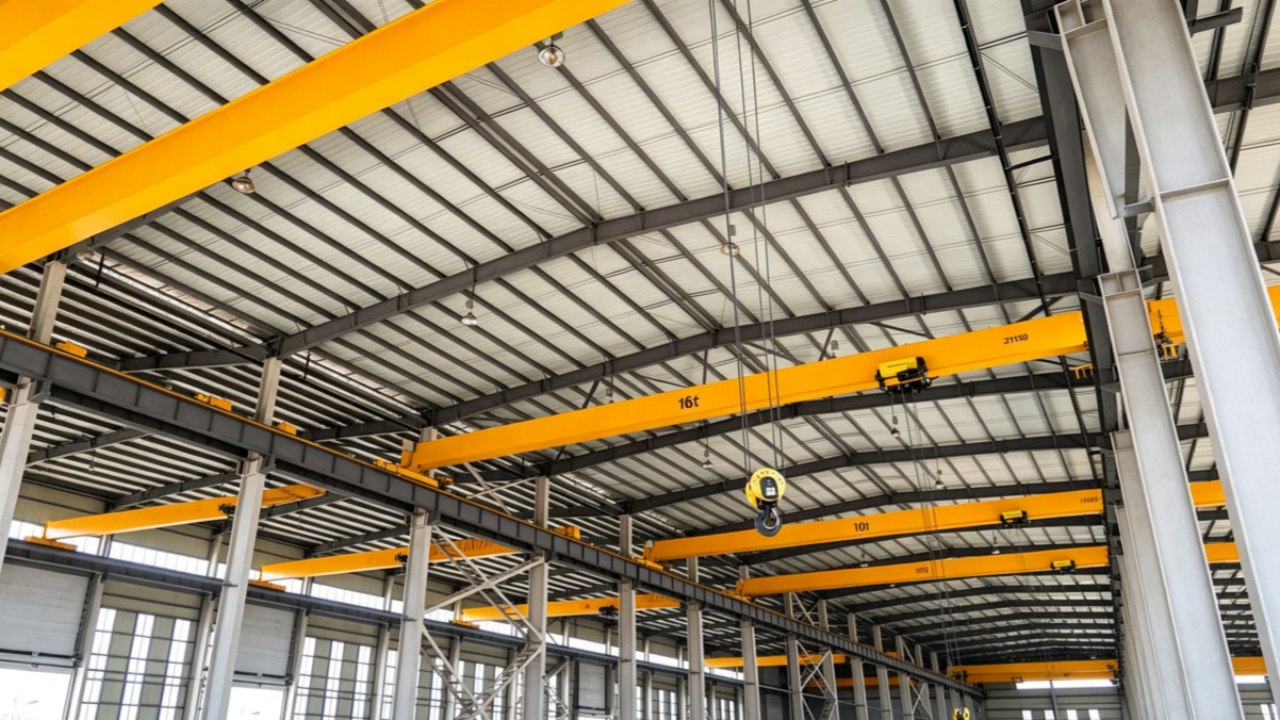
Top-Running eot cranes are a type of bridge crane. If you are in a factory or workshop and frequently need to move various heavy workpieces, you can choose it. It can move freely within a large area of the factory, steadily lifting heavy objects, flexibly completing the relocation, loading, unloading, and placement of goods, helping you efficiently complete heavy object transfer operations within the workshop.
What Is An Underhung Overhead Crane?
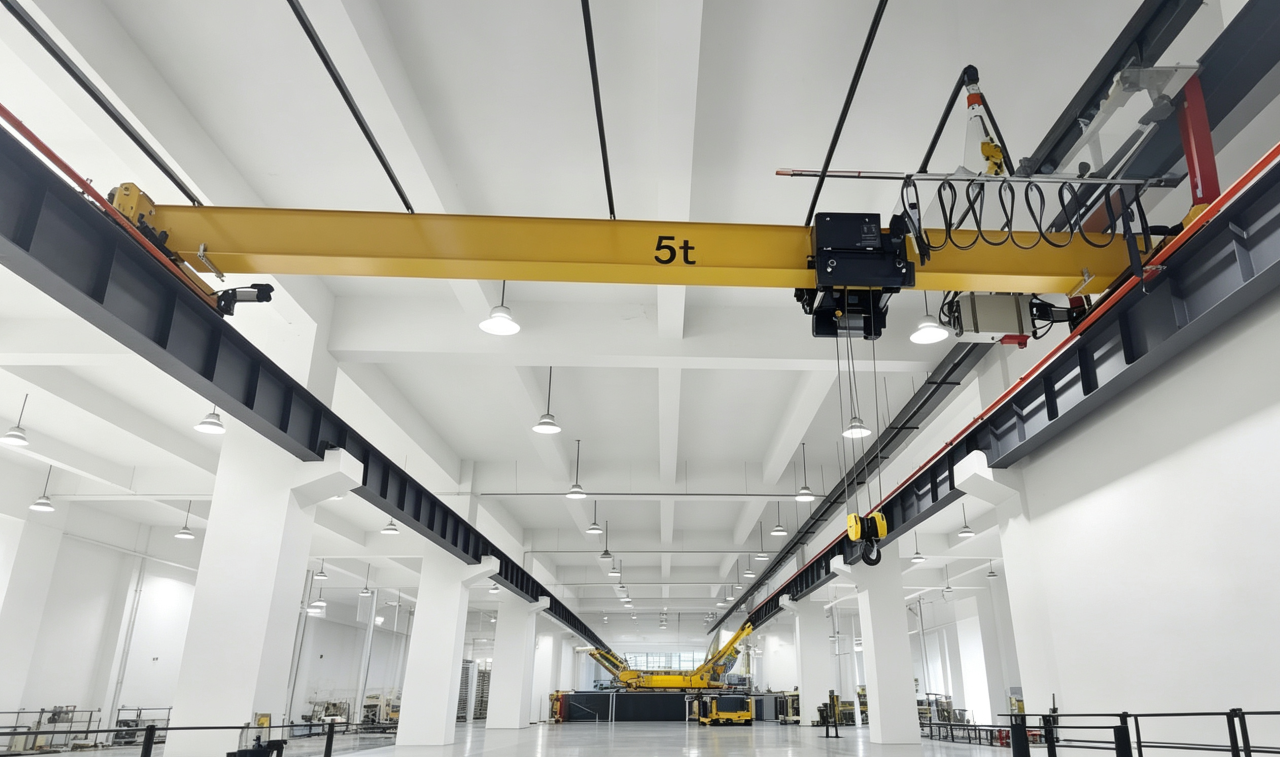
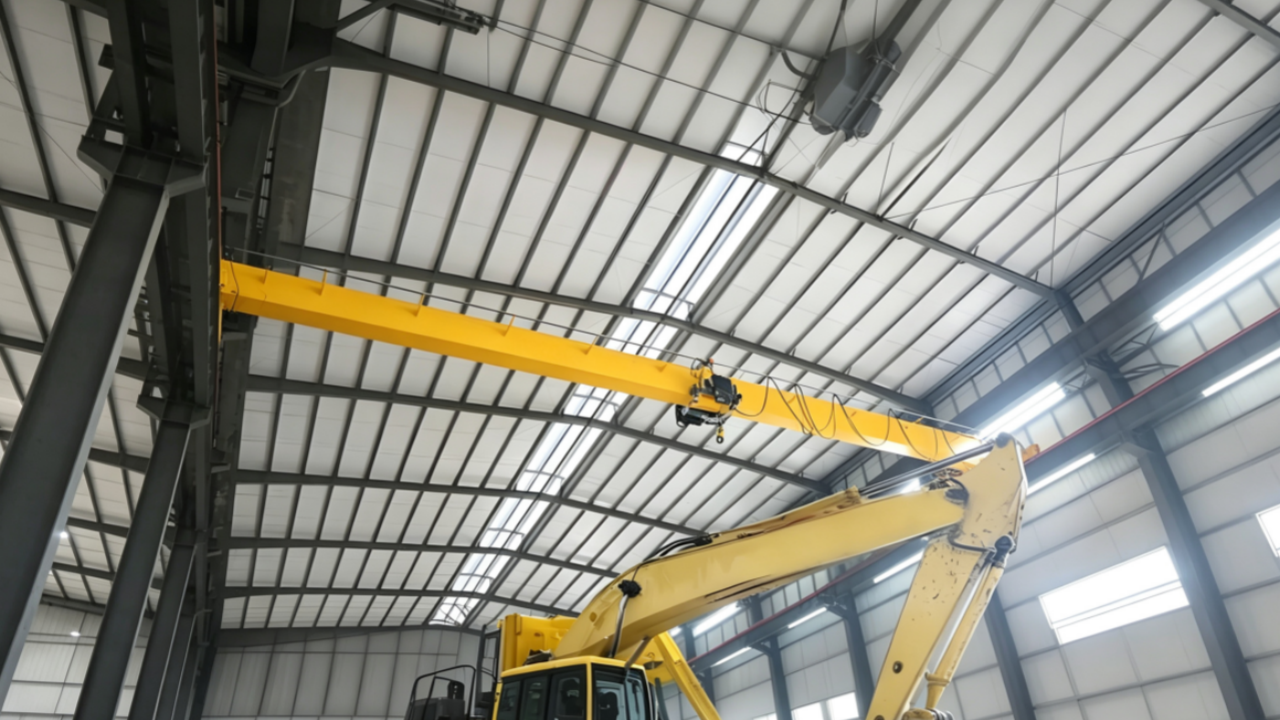
A suspended crane can be used for moving objects within your factory building. It is entirely dependent on the building structure and relatively lightweight. The load-bearing capacity has been reduced. It does not require columns to support the weight of the main beam. Without the obstruction of columns, the working range is significantly increased. Generally, underhung eot crane use a single-beam structure. However, double-beam cranes are rarely used.
Key Differences Between Underhung Eot Crane And Top-Running Eot Cranes
Structure
Top-running eot cranes structure
The top-running overhead crane installs the entire main beam onto the end beam. The end beam travel wheels move back and forth along the rail beams. You may pair this top-running overhead crane with an electric hoist to handle lifting operations. This enables the lifting motion. In terms of load-bearing capacity, the roof steel structure cannot support the load alone.
Additional columns are required inside the factory building. The load carried by the crane is transferred downwards to the rail beams and factory building columns. You can choose between single‑girder and double‑girder configurations. Double-beam overhead cranes can meet your needs for large tonnage, large spans, and higher lifting heights.
Underhung eot crane structure
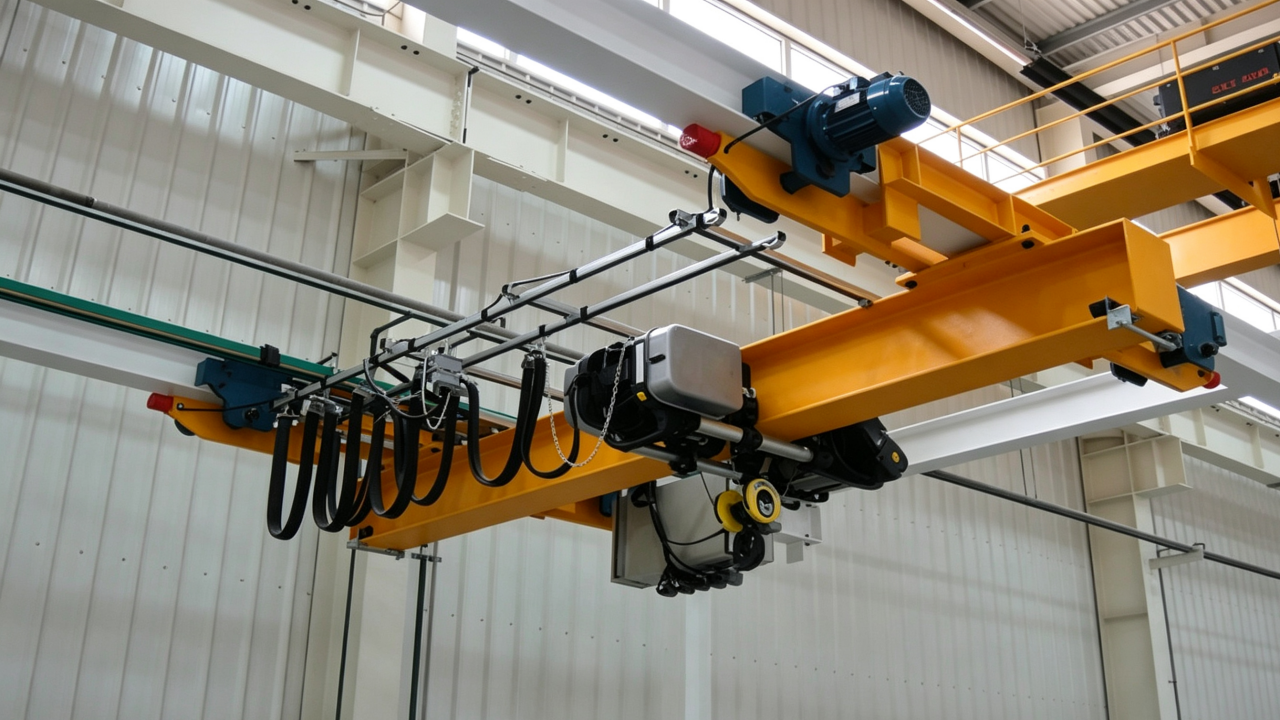
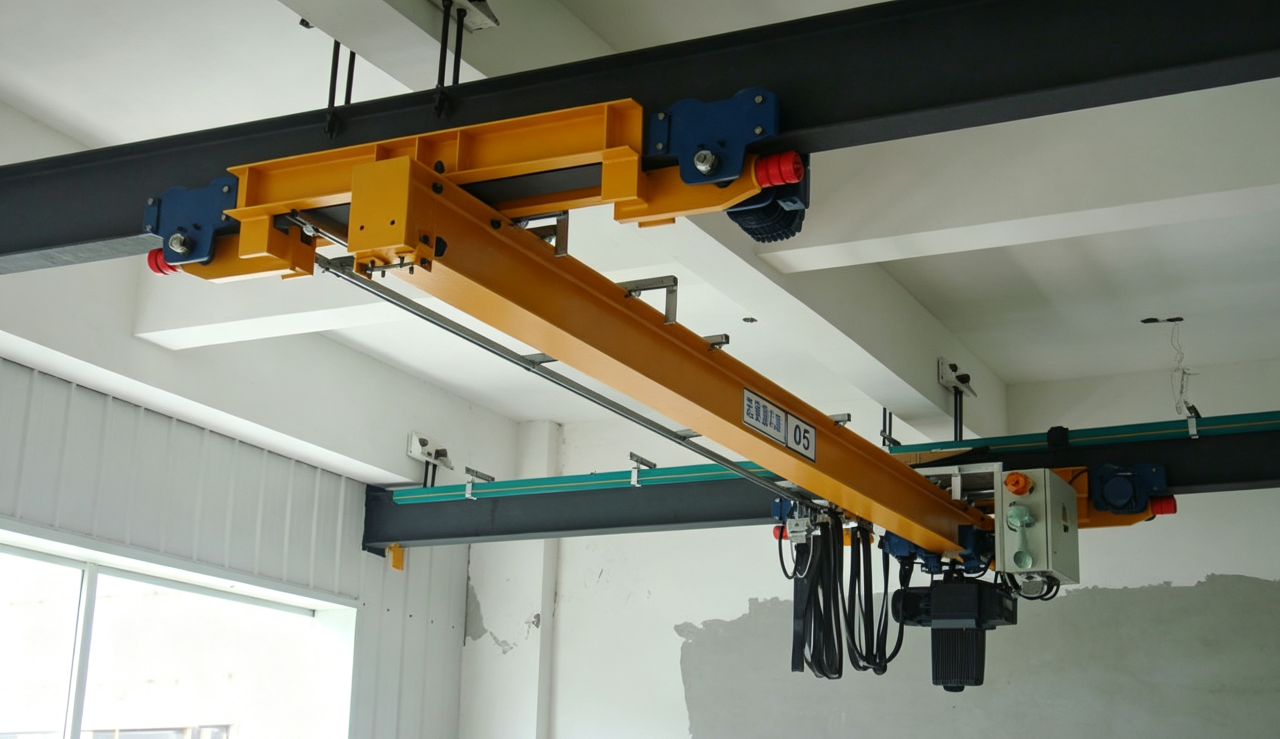
The running wheels on the end beam of the underhung bridge crane operate in a suspended manner. All core working components, including the main beam and electric hoist, are installed within the space beneath the track beam, completely suspended below it. The main beam slides along the track at the bottom of the track beam. This structural design offers you considerable installation convenience.
Because the track beam can be directly fixed to the steel structure frame of the factory roof, your roof steel beams need sufficient structural strength for this setup. If you have an older factory building, renovation is not recommended.In practical industrial applications, single-beam suspended cranes are almost always the only option.
Capacity
Top-running overhead crane can typically lift over 100 tons. Single-girder cranes can lift to 20 tons. Double-girder cranes range from 20 tons to several hundred tons.
Underhung overhead cranes typically lift 1-10 tons. They can also be used to lift 15-25 tons.However, large-tonnage loads impose very high demands on your factory’s steel structure.
You will need to increase and reinforce your factory roof. Therefore, they are only suitable for light-load lifting.
Lifting height
For a top-running overhead crane, the trolley and hoist are all stacked on top of the main beam. This will occupy a portion of your factory’s height. Therefore, we will waste some factory space during the design phase. The effective height is reduced.
For an underhung overhead crane, the main beam of the trolley is located above. The trolley is suspended at the bottom of the beam. The area above the main beam is almost unoccupied by equipment. The effective lifting height is greater. The hook can be placed as close as possible to the roof steel beams of your factory. Under the same factory floor height, the effective lifting height of an underhung overhead crane is greater than that of an upward-moving crane. An underhung overhead crane provides an extra 0.6 to 1.3 meters of lifting space.
Therefore, if your factory is not tall, and you want the hook to be lifted as high as possible, and the goods to be close to the roof, for loads ≤ 10 tons, first consider an underhung overhead crane. If your factory building is very tall and you have a large lifting capacity, and you don’t mind losing a little bit of lifting height, choose an top running eot crane.
Installation method
Top-running eot cranes installation
The installation of the top-running bridge crane begins with completing the steel structure of the factory building. All columns and brackets are in place. Next, you need to hoist the track beam. Two tracks, one on each side. These are then welded and secured to the columns and brackets on both sides.
You need to adjust the horizontal level. Then lift the entire crane’s main beam and trolley together. It is then placed on the two track beams. The wheels are positioned directly on the tracks. Finally, install the limit switches, wire the cables, connect the power, and perform debugging.
Underhung eot crane installation
Underhung bridge cranes typically require suspending booms from the roof. The booms suspend the rails. The rails then suspend the main beam. This process is repeated layer by layer. Therefore, you can hoist it in sections. You will need to verify the roof steel beams.Mark the location of each suspension point. The stress at each suspension point must be calculated.
Important details to note: When welding downwards under the main roof beam. Two running track beams are suspended from above by booms below the roof. The small wheels hook onto the lower edge of the track. Adjust the level and correct the track parallelism. Finally, you can connect the power for testing. The installation process involves a lot of work at height.
Workers work under the roof steel beams. The maintenance process will be a bit more difficult. Here is a comparison table for you:
| Comparison Item | Top running | Underhung |
| Fixing Method | Shelving type, pressed on the column corbel | Suspended type, all hanging from the suspension points of the roof steel beam |
| Basic Carrier | Relying on the factory building column corbel | Relying on roof steel beams + suspension rod lifting lugs |
| Track installation | The track beam is placed on the corbel | Track beam suspended below the roof using suspension rods |
| Main unit positioning | The whole machine is hoisted and lowered, with wheels landing on the top surface of the track | Main hoist suspended at the bottom flange of the track |
| Lifting point | Almost no suspension rods are used | Each suspension point must be verified |
| High-altitude maintenance access | The top surface of the track beam allows personnel to walk for inspection | No overhead walkway, making maintenance more difficult |
| Prerequisites for installation in old factory building | The original corbel load-bearing capacity is qualified | Must verify the roof steel structure, often requiring reinforcement of steel beams |
| Hoisting requirements | A large crane is required to lower the entire machine from above into position | Can be assembled in sections, suitable for cramped indoor sites |
Knowing When To Choose
Select the top running bridge crane if:
Lifting capacity greater than 10 tons, even requiring heavy-duty cranes of hundreds of tons.
- Your factory building columns have load-bearing brackets,and can accommodate track beams.
- Requires multiple shifts and continuous heavy-load operations, with demanding working conditions.
- Your factory has ample clearance. You are willing to lose some of the hook lifting height.
- You do not want the entire load of the crane to be borne by the roof steel beams.
- There are plans to expand production in the future.
- You would like personnel to conduct inspections and maintenance along the trackside.
- You’re willing to invest in pillars and foundations in exchange for long-term safety.
Select the underhung bridge crane if:
- Rated lifting capacity is typically 10 tons or less.
- The factory has limited ceiling height, so the hook needs to achieve the largest possible effective lifting height.
- The steel beams of the factory roof have sufficient structural strength, but the columns do not have pre-installed corbels.
- The hooks need to be placed closer to the side walls of the factory building to expand the operating coverage area.
- It is a light to medium work schedule, not requiring long hours of full-load work.
- You don’t want to modify the factory’s columns and foundation.
- To make full use of the limited vertical space in the factory
- You can accept that the roof steel structure must undergo stress calculations.
FAQ
Which of the same tonnage under‑running bridge crane and top‑running overhead cranes takes longer to install?
For the same tonnage, the under‑running bridge crane takes longer to install. You need to assemble extra lower travelling components with more working procedures. For the top‑running type, you just lift the complete unit onto the track with simple steps. The underhung model has more parts, requiring heavy alignment and adjustment work, leading to a longer overall installation cycle.
What is the span range of an underhung eot crane?
For a standard underhung eot crane, your typical span ranges from 3 m to 22.5 m.
As capacity increases, your maximum allowable span gets smaller.
Spans beyond 22.5 m are rare, because they put extremely high load requirements on your building roof steel structure.
Are the electric hoists used in underhung oh crane and top‑running oh cranes the same?
The working principle of the electric hoist for underhung and top‑running cranes is the same, but you cannot use them interchangeably. For underhung ceiling cranes, you adopt suspension‑type hoists for installation upside down.
For top‑running ceiling cranes, hoists sit on top of the main girder. Their interfaces and pulley structures are different. Therefore, these hardware components are not directly interchangeable.
What is the effective height of a top‑running ceiling crane when my factory building has a height of 10m?
You need to subtract the crane beam height and trolley height from the total building height. For a standard single-girder eot crane, the actual effective lifting height is typically between 6.5 and 7.5 meters. As the crane tonnage increases, the actual effective lifting height decreases.
What type of undehung travelling cranes is suitable for a water plant?
For water plants, you should select undehung travelling cranes, because the plant buildings generally have low ceilings. The environment is humid and moisture-prone; therefore, you need to upgrade to features that are moisture-proof, corrosion-proof, and IP-rated. Most of the cranes are small to medium tonnage, used for equipment maintenance; an LX single-beam crane is sufficient.
DingYa Lifting Bridge Cranes, Adaptable To The Needs Of Multiple Industries
DingYa Lifting specializes in crane manufacturing and offers customized solutions for both overhead and lateral bridge cranes. Our products operate smoothly and safely, are suitable for various working conditions, and we provide a one-stop service for selection, installation, and commissioning, helping you build an efficient and reliable workshop hoisting system.