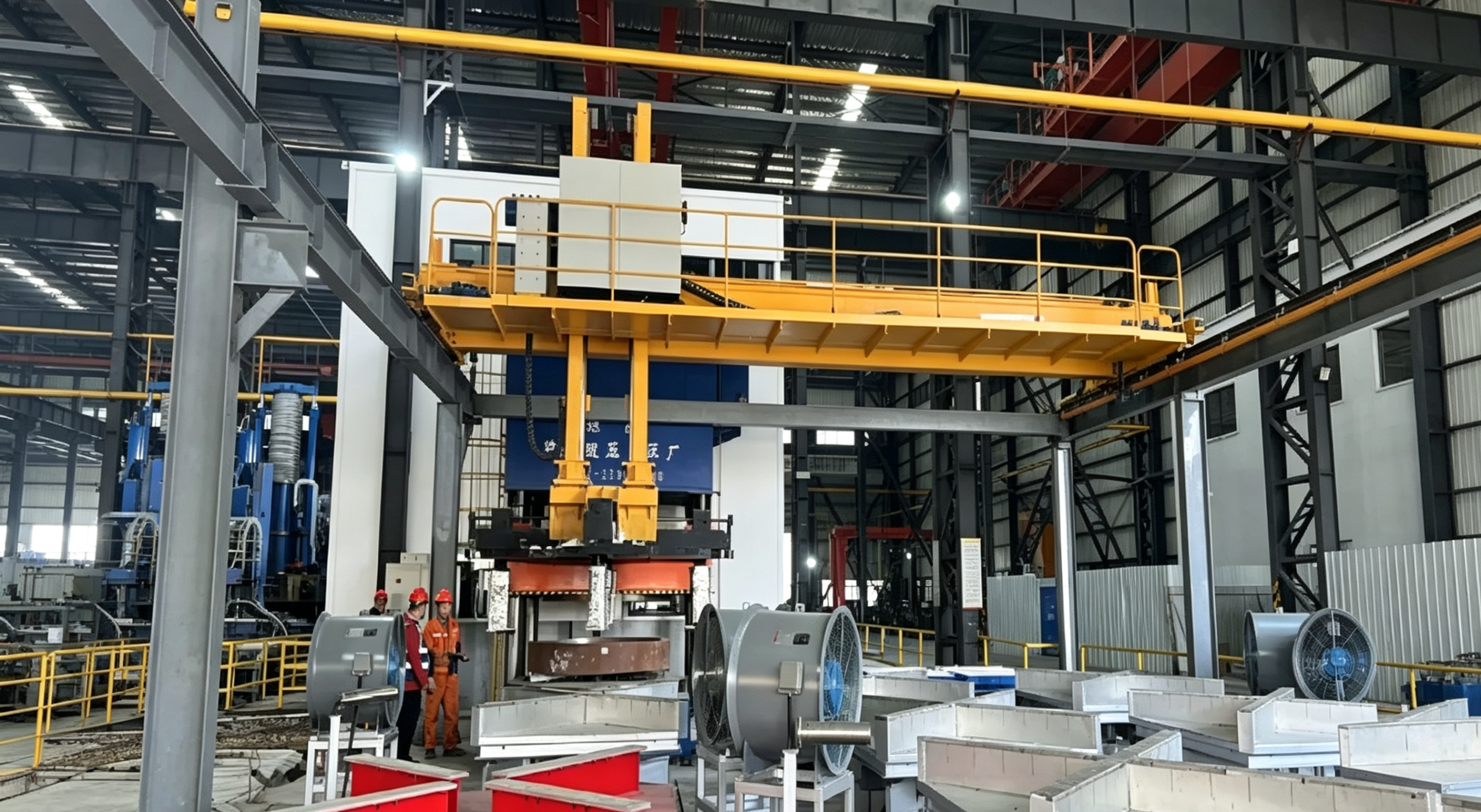
When you’re selecting a bridge crane, do you primarily focus on load capacity or span? However, if you don’t pay attention to the factory’s infrastructure and power conditions,Even though you buy it, power incompatibility will frequently cause power outages and short circuits. This article will guide you in understanding the voltage, conductors, control, and disconnection of bridge cranes. It helps you determine electrical requirements.
Bridge Crane Voltage
Common voltage
Bridge cranes are available in various common voltage levels. Southeast Asia, Africa, and China generally use 380 V, 50 Hz, 3-phase. South America and North America typically use 220/480V 60Hz 3phase. Large-tonnage cranes in Europe often use 400V or 415V industrial voltage. Small, light-duty equipment can use 220V.
Voltage, Phase, and Frequency must be matched. Most bridge cranes use three-phase AC power. Ensure stable motor output. Voltage deviations should not be too large. Incorrect frequency will cause abnormal motor speed. You need to verify these three parameters when purchasing. Prevent equipment malfunctions.
How to select voltage
You should select the voltage correctly in the following ways.
- Prioritize matching with existing power distribution conditions within the plant area. Use existing power supply whenever possible. Reduce the investment in additional transformers and control project costs.
- Determine based on crane tonnage and working level. High voltage is preferred for large-tonnage, high-frequency operating machines. Reduce line energy loss.
- Calculate power line distance. For long-distance operations, voltage drop must be considered. Avoid abnormal equipment output due to insufficient voltage.
- Confirm that all components, including motors, electrical controls, and electric hoists, support the selected voltage. Avoid hardware incompatibility failures.
Bridge Crane Conductor System
What is the conductor system?
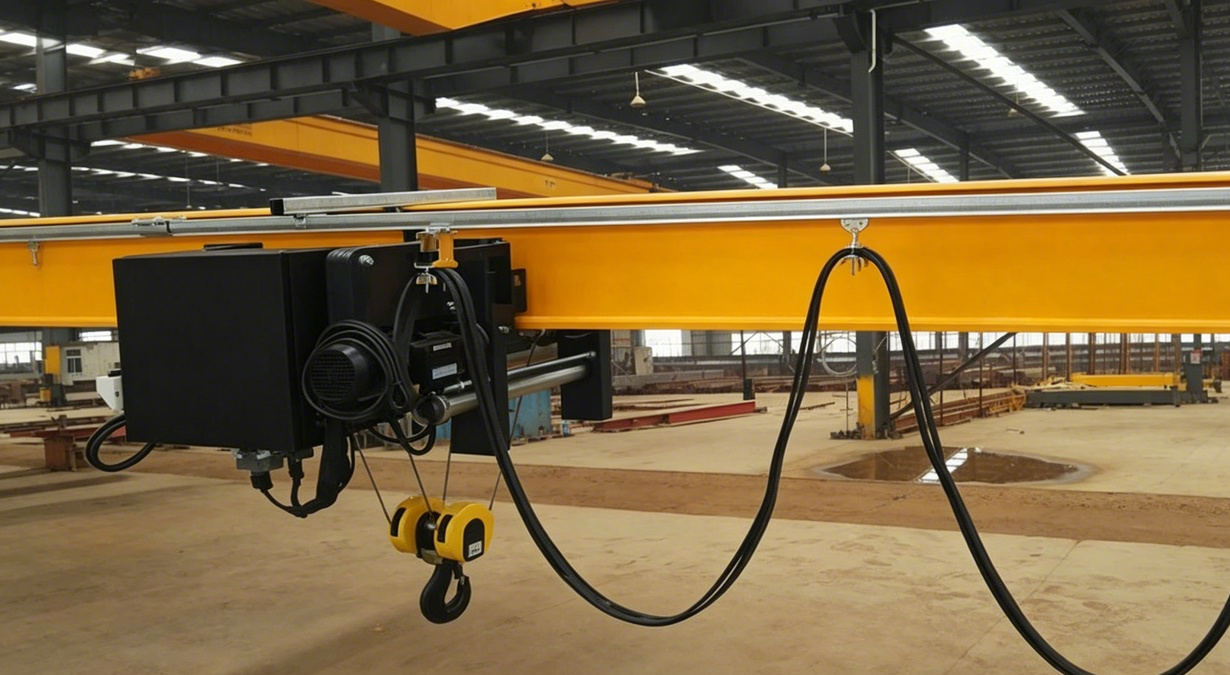
The conductor system is the power supply component that transmits power and control signals to the bridge crane. It is arranged along the crane’s running track. Continuously supplies electrical energy to the moving trolley, hoisting mechanism, and other components.
You will need to operate the crane frequently and move it back and forth. While it can withstand vibration and dust, once it ages and wears out, it can easily cause safety hazards such as power outages and sparks.
Types of overhead bridge crane conductors
- Bare conductor rails: Low cost, mostly used in ordinary factory environments.
- Insulated and enclosed conductor rails: Higher safety, dustproof, and shockproof, the most widely used.
- Cable drag chains: Suitable for short-stroke scenarios.
- Reel cables: Power supply relies on cable winding and unwinding, suitable for special working conditions. The appropriate type should be selected based on the site environment and stroke length.
How to select the conductor system
- You can determine the conductor’s cross-sectional width based on the total rated current of the crane. Larger tonnage equipment requires even greater current. Thicker conductors are needed.
- Calculate the total track length. Control the line voltage. Avoid insufficient power supply at remote locations affecting your equipment operation.
- Consider ambient temperature, dust levels, and continuous operation levels. Determine the type of conductor system. Allow for a safety margin. Prevent overheating and burnout.
- You should check the mechanical wear resistance. Ensure the conductor can withstand the wear and tear caused by the long-term reciprocating movement of the crane.
Top running bridge crane Control System
Handheld button control
Handheld button control is the most basic method of operating overhead cranes. It connects to the main electrical control system via a suspended cable. You need to assign an operator to operate the equipment nearby. It is inexpensive and easy to maintain.
However, its range of motion is limited by cable length. It is prone to cable pulling and wear. Suitable for small- to medium-tonnage traveling crane, slow-paced operations, and limited space in factory settings.
Radio remote control
Wireless remote controls rely on radio signals for long-distance operation. You can assign operators to observe the lifting operation from a safe area. Avoid hazardous areas. Flexible installation, freeing you from cable constraints.Avoid signal disruption caused by other equipment in the same factory area. Widely used in medium- to large-tonnage applications with frequent material handling.
Cabin control
Cab control is mostly used in large-tonnage, high-working-level bridge cranes. You can sit in a dedicated operator’s cab. All actions are completed by manipulating the handle. The cab offers a wide and comfortable field of vision, suitable for long-term continuous operation.
The cost of a complete driver’s cab is even higher. It requires a certain level of professional competence from the operators. They are commonly used in steel mills and large processing plants.
Control method comparison
| Control Type | Advantages | Disadvantages |
| Pendant Control | Low equipment cost and simple daily maintenance. | Limited operating range; the connecting cable is prone to wear and damage. |
| Radio Remote Control | Flexible operation and improved operator safety with no cable restrictions. | Easily affected by on-site electromagnetic signal interference. |
| Cabin Control | Wide operating vision, suitable for long-term and high-intensity working conditions. | High procurement cost and requires professional full-time operators. |

Ceiling Bridge Crane Main Disconnect
What is a traveling crane disconnect?
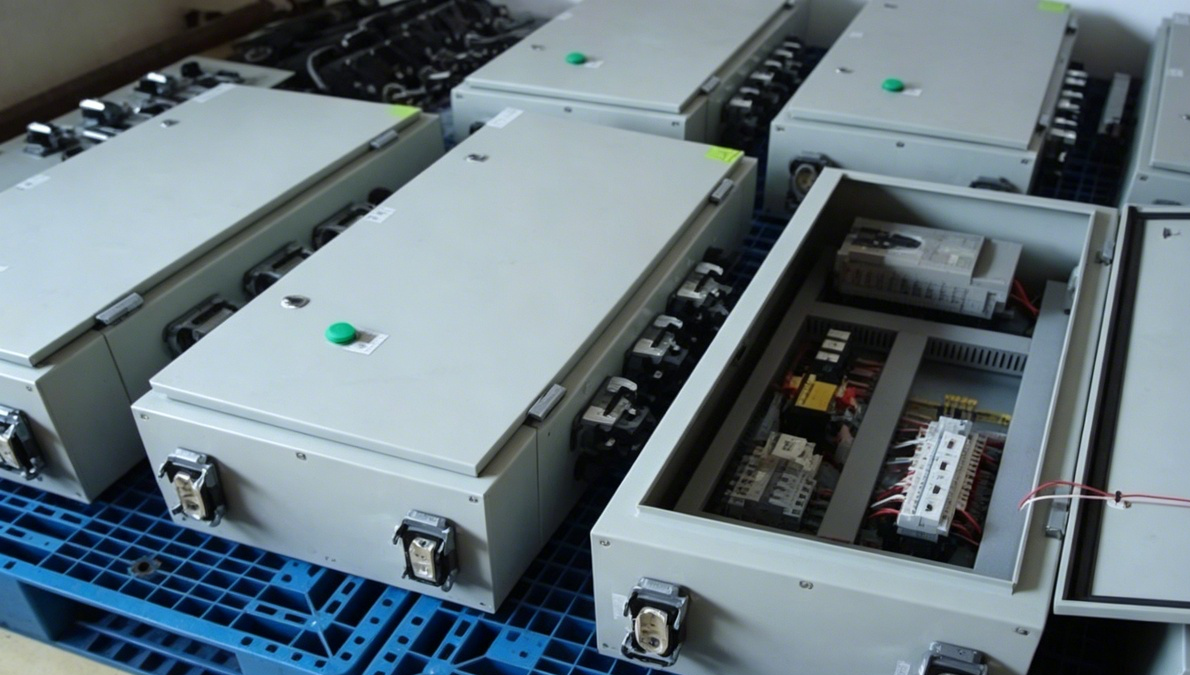
The crane’s main disconnect switch is an important electrical safety component. You must ensure it meets the rated current and protection level requirements for the corresponding tonnage equipment.
The function of a disconnect switch is to cut off the main power supply to the crane. This allows you to perform inspections, maintenance, and troubleshooting. And consequently, it protects the safety of maintenance personnel.
Disconnect location
The main disconnect switch should be installed in a location easily accessible to operators and maintenance personnel. You can prioritize placing it near the O/H crane body or rails.It can also be installed at a power distribution point in the factory.
It should be located away from the movement range of the load being lifted. Avoid damage from collisions with the lifted objects. You need to ensure dust protection in the installation environment. It is prohibited to install it in hard-to-reach, high, or concealed locations.
Complete Guide To Electrical Requirements Step By Step
- Inspect your working environments, including indoor or outdoor layout, ambient temperature, dust concentration, and humidity. Harsh environments require upgraded wear-resistant, dust-proof, and high-temperature-resistant electrical components.
- Confirm the rated voltage, phases, and frequency of the on-site power grid. Ensure your electrical design is compatible. Avoid mismatches in operating parameters.
- You should evaluate power supply load capacity and cable laying distance, effectively control operating voltage drop, and guarantee continuous and stable power supply during full-load workshop crane operation.
- Based on your operating habits, work efficiency, and on-site safety management requirements, choose the appropriate operating method from handle control, wireless remote control, and cab control.
- You should install qualified main disconnect switches for power isolation and maintenance. Equip complete grounding systems, overload protection, and short-circuit protection to fully comply with industrial safety standards.
FAQ
Does a traveling need its own electrical circuit?
Yes, a traveling crane typically needs its own dedicated electrical circuit. You cannot share this circuit with other regular machines or lighting loads. It supplies stable power and fits the crane’s large starting current. Also, get proper isolation for the main disconnect and overload protection. This setup lowers fire risk and avoids tripping issues during lifting work.
Can a top-running crane run on a generator?
Yes, a bridge crane can run on a generator. You must pick a generator with enough rated power for the crane’s peak starting current. Check that its voltage, phase, and frequency match the crane’s requirements. You also need stable output and proper protection. Avoid undersized units, or the crane may fail to start or trip often.
When does a free-standing bridge crane need transformers?
Yes, you need a transformer for your workshop crane when the site supply voltage does not match the crane’s rated voltage. You also use one to step down power for control circuits or lighting. Make sure the transformer handles the crane’s large starting current. It stabilizes voltage and protects electrical parts from power fluctuation damage.
What happens if the eot crane loses power during operation?
If your overhead travelling crane loses power mid-operation, all driving and lifting motions stop right away.The mechanical brake engages automatically to hold the load steady in place.
You cannot move the hoist or bridge until power is restored.Do not attempt to release brakes manually unless you follow safe, approved procedures.Check for hazards before resuming any lifting work.
What happens if the overhead crane is overloaded electrically?
If your bridge crane is overloaded electrically, its protective devices will trigger first.The circuit breaker or overload relay cuts power to stop the crane. Overheating may damage cables, motors, and control components. Severe cases can cause short circuits or even fire risks. You must inspect all electric parts and fix the issue before restarting.
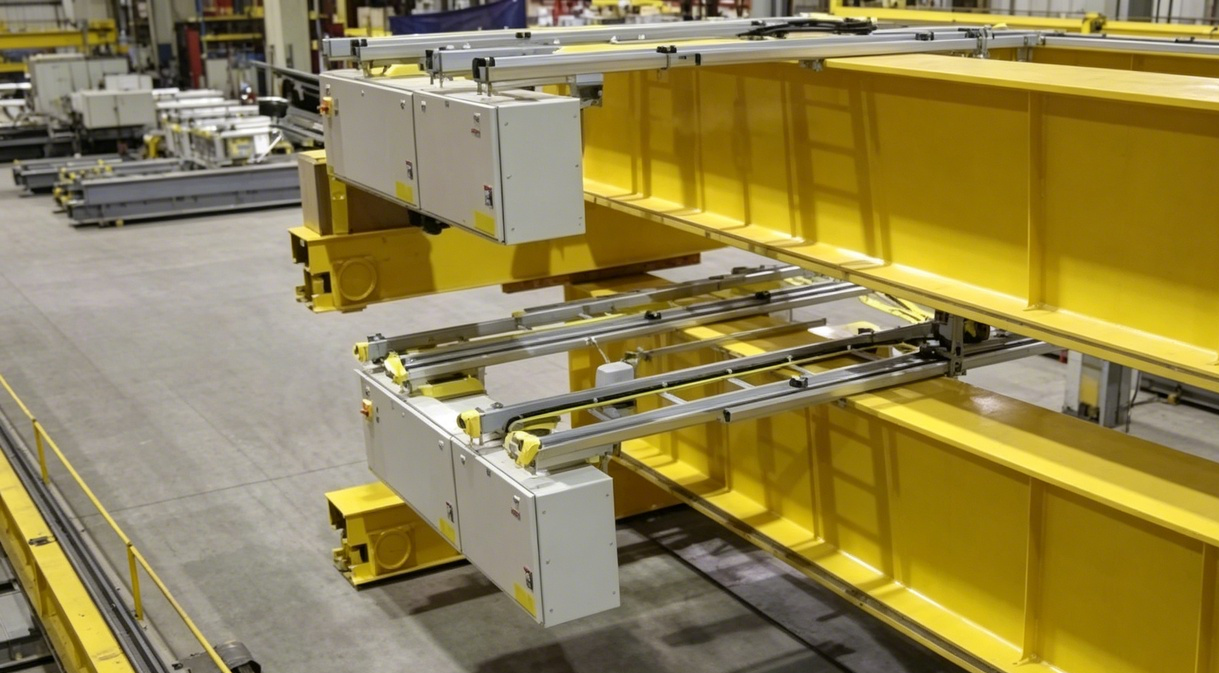
DingYa: Custom Bridge Cranes Meeting Full Electrical Safety Requirements
Dingya is your reliable bridge crane manufacturer. Our overhead cranes follow strict electrical standards for voltage, conductors, controls, and disconnects. We offer custom solutions, stable electric systems, and full after-sales support to keep your lifting work safe and efficient.