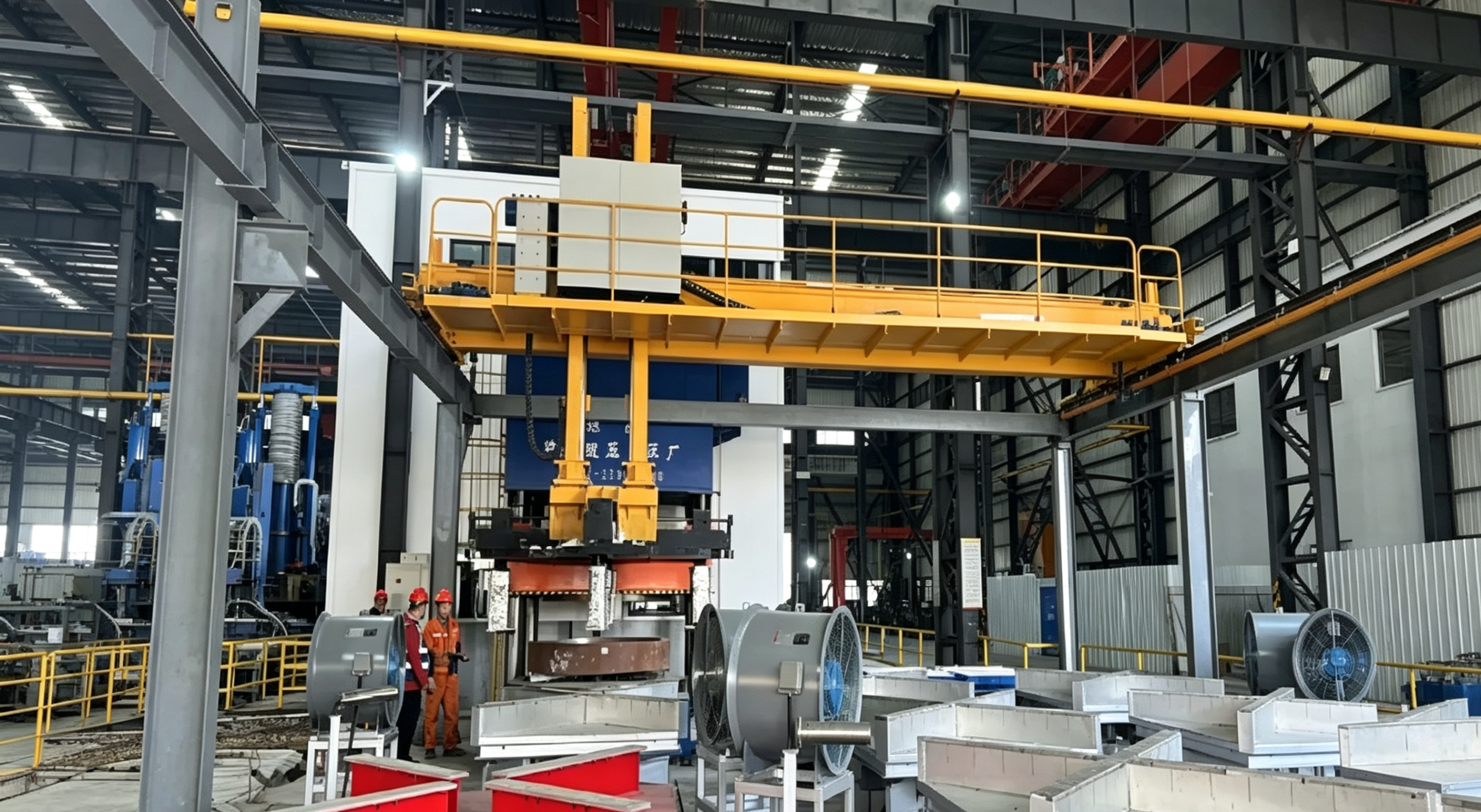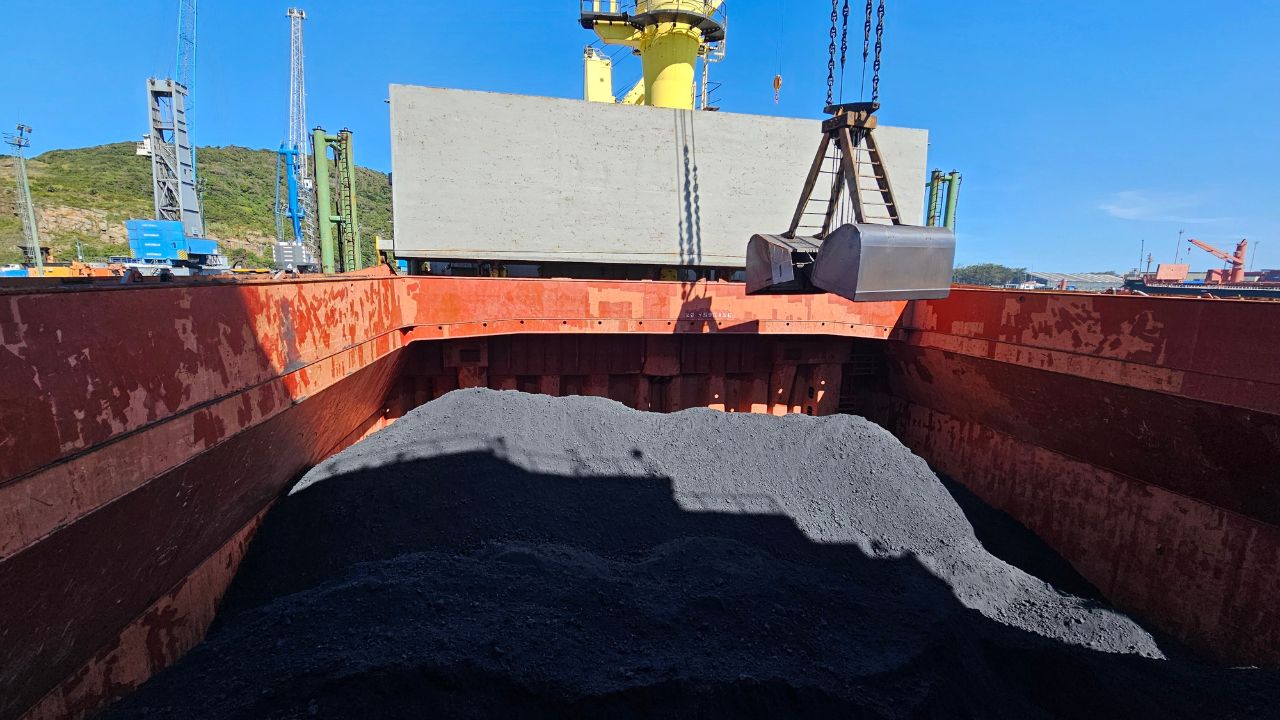
A portable gantry crane is a lightweight, mobile lifting device that you can easily move, disassemble, and reassemble. It typically consists of a horizontal I-beam, two vertical support legs, and wheels or casters for mobility. With a compact design and simple assembly, it provides you with a flexible lifting solution for light- to medium-duty applications across various work sites.
How Does a Portable Gantry Crane Work?
A portable gantry crane typically consists of a support frame, main girder, hoist, and casters. The frame provides stability, while the girder supports the load and the hoist lifts materials. With casters, you can easily move the crane within your work area.
You can quickly assemble and position the crane above your lifting site without pouring a foundation or making permanent installations. This makes it a flexible solution for temporary lifting in workshops, warehouses, and equipment maintenance areas.
Where Are Portable Mobile Gantry Cranes Used?
Portable gantry cranes can be used in:
- Manufacturing workshops
- Machining shops
- Maintenance facilities
- Warehouses
- Equipment installation
- Construction sites
and other locations.
In these settings, portable gantry cranes can easily lift and transport small mechanical parts. To improve efficiency and reduce manual labor, many models are equipped with portable gantry cranes featuring electric hoists, making them suitable for tasks such as material handling, equipment maintenance, and assembly line lifting.
Advantages of Portable Gantry Cranes
Portable gantry cranes offer excellent mobility, straightforward installation, and flexible positioning capabilities, enabling them to meet the demands of a wide range of lifting operations. You can move and reposition these portable gantry cranes as required, without the need for permanent installation or major structural alterations to the building.
Portable gantry cranes make them an ideal solution for workshops, warehouses, equipment maintenance, and temporary lifting operations—particularly where flexibility and cost-effectiveness are paramount. You can easily move the crane between work areas, adapt it to different lifting tasks, and deploy it without permanent installation or major modifications to your facility.
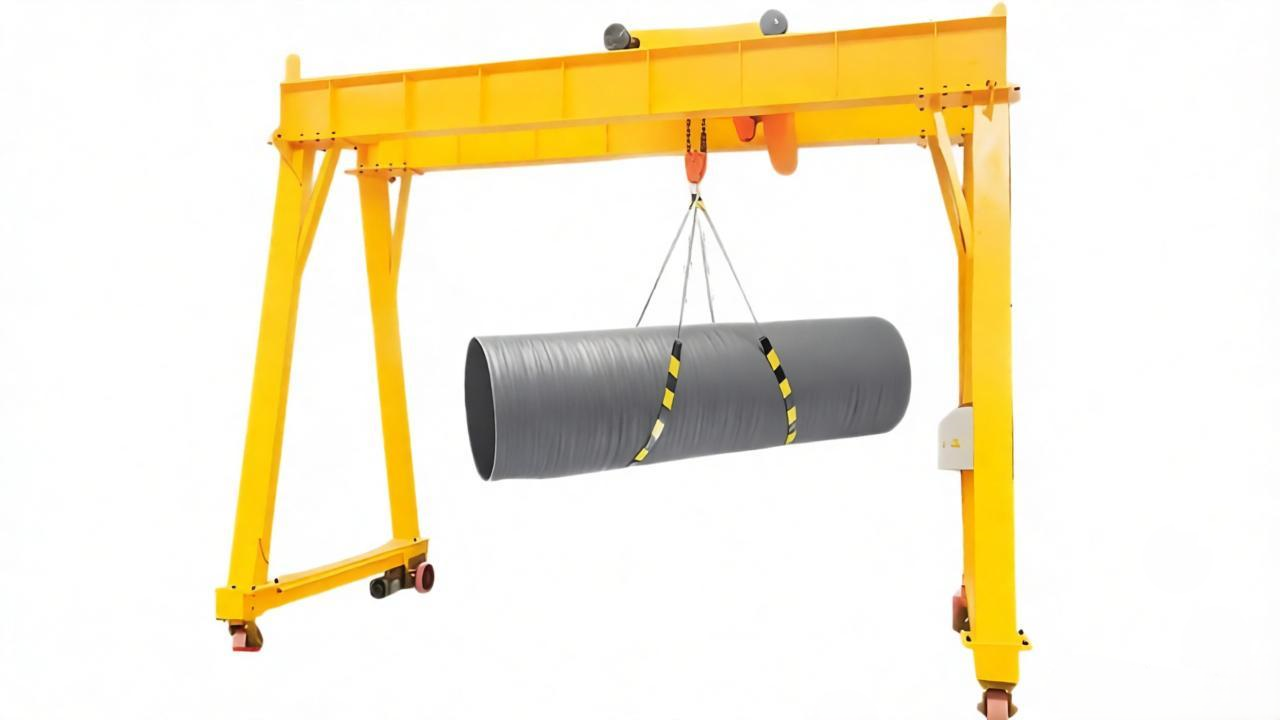
Portable Gantry Crane vs. Rail-Mounted Gantry Crane vs. Single Girder Overhead Crane
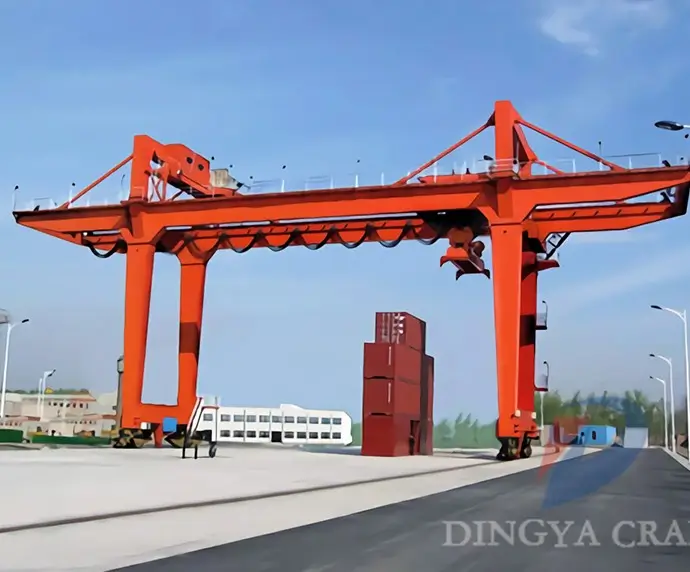
Portable gantry cranes provide greater flexibility than both rail-mounted gantry cranes and single-girder overhead cranes. You can quickly move a portable gantry crane to different lifting locations without permanent installation, making it ideal for temporary or changing lifting tasks. In contrast, rail-mounted gantry cranes are designed for fixed travel paths and routine lifting within a designated area.
When choosing between these three crane types, you should consider your lifting frequency, load capacity, working area, mobility requirements, and building structure. A portable gantry crane is ideal when you need flexible, occasional lifting, while a rail-mounted gantry crane or single-girder overhead crane is better suited for fixed, frequent lifting operations.
Here are the differences between the two, which can help you better decide which type of gantry crane to choose:
| Comparison Items | Portable Gantry Crane | Rail-Mounted Gantry Cranes | Single Girder Overhead Crane |
| Key Features | Emphasizes portability, flexibility, and repositionability | Emphasizes stability, high lifting capacity, and long-term use | Typically installed on a runway/rail system at the top of a factory building |
| Mobility | Typically moved using casters or wheels; some models can be disassembled for transport. | Typically runs along fixed tracks or floor tracks | Requires permanent runway systems and structural support within the building. |
| Installation Methods | Typically does not require a permanent foundation; can be quickly assembled and disassembled | Typically requires tracks, a foundation, or a designated operating area | Typically requires tracks, a foundation, or a designated operating area |
| Applications | Workshops, maintenance, equipment installation, warehouses, temporary lifting operations | Ports, steel mills, shipyards, storage yards, large-scale production facilities | Ports, steel mills, shipyards, storage yards, large-scale production facilities |
| Lifting Capacity | Typically light to medium duty, but this depends on the specific design | Higher lifting capacities are usually achievable | Higher lifting capacities are usually achievable |
| Span | Generally shorter, with greater emphasis on flexibility | Can be designed for longer spans | Can be designed for longer spans |
| Flexibility | High | Low | Low |
| Fixed Installation Requirements | Low | High | High |
| Good for frequently changing work locations | Ideal for. You can relocate the crane to different designated work areas when needed. | Not suitable for. It is better suited to applications where lifting locations | Not suitable for. It is better suited to applications where lifting locations |
How to Choose the Right Portable Gantry Crane for You?
Application Scenarios
Portable gantry cranes can be used in a variety of settings, such as factories, warehouses, equipment maintenance workshops, and flat outdoor areas. It is important to identify the working environment in which you intend to use the crane.
If you have a limited budget or there are no power outlets in your work area, you can opt for a manual, portable gantry crane.
If you use it frequently on a daily basis or need more precise lifting operations, you may want to choose an electric portable gantry crane.
Right Capacity, Lifting Height and Span
You should choose a gantry crane with a light lifting capacity, a smaller span, and a lower height. Because portable gantry cranes are characterized by their light weight and ease of movement, you should not select lifting capacities that are too heavy, spans that are too wide, or heights that are too high compared to standard gantry cranes. Doing so would make the portable gantry crane difficult to move and create operational hazards.
Portability and Mobility
Before purchasing a gantry crane, you need to determine:
Mode of Transportation and Location
A portable gantry crane is particularly useful when your lifting locations change frequently.
| Mobile requirements | Recommended choices |
| Occasional relocation between nearby work areas | Choose a crane with heavy-duty swivel casters and locking brakes. |
| Frequent relocation within a workshop | Prioritize easy-rolling casters, suitable wheel diameter, and a lightweight or modular frame. |
| Regular movement over a defined path | Consider guided wheels or a rail-mounted solution rather than a free-moving portable crane. |
Swivel casters or fixed casters
| Mobile requirements | Recommended choices |
| Move in different directions | Choose swivel casters |
| Travel along a predetermined straight path | Choose fixed-direction wheels |
For most applications involving portable gantry cranes, swivel casters offer greater manoeuvrability. Furthermore, they can be fitted with castor locks to ensure the crane remains stable during lifting operations.
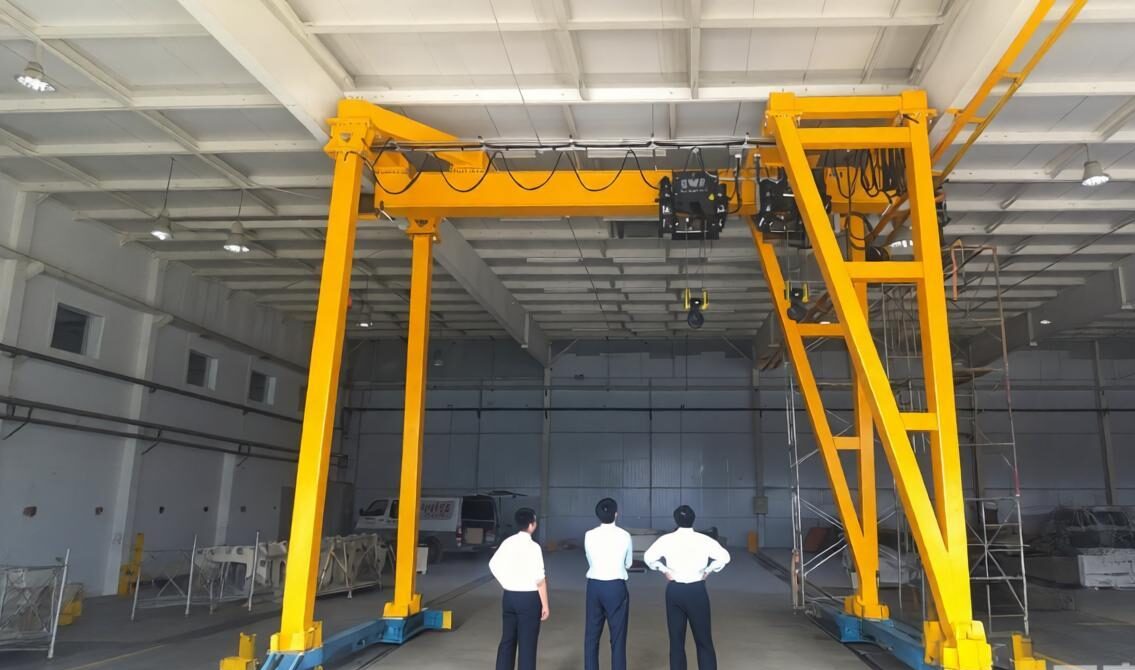
Do casters need to have a locking mechanism?
If the crane is designed to remain stationary while lifting. The caster system should be capable of preventing unwanted movement during operation.
Structural height
| Assignment Requirements | Recommended choices |
| Lifting height and workspace are consistent | Choose a fixed-height gantry crane |
| Need to work at different hook heights, pass through different doorways, or use the crane for multiple applications. | Choose an adjustable-height gantry crane |
Quick assembly and disassembly
| Assignment Requirements | Recommended choices |
| Transport the crane between different sites, | A knock-down or modular design that can be assembled and disassembled efficiently |
| Remain in one workshop for most of its service life, | A more permanently assembled configuration may be more practical. |
Moved between different work areas
If you frequently move the crane between maintenance stations, production areas, or different lifting points, prioritize: Swivel casters + locking system + suitable wheel rating + compact dimensions + easy relocation.
If the crane will normally stay in one position and only needs occasional repositioning, you may not need the most mobile configuration.
Custom Portable Gantry Crane Solutions
Not all gantry crane applications can be addressed with a standard mobile gantry crane. Different customers may have varying requirements regarding lifting capacity, span, lifting height, mobility configuration, hoisting mechanisms, and operating environments. We provide customized mobile gantry crane solutions based on your actual lifting needs and on-site conditions.
What can be customized?
- Lifting Height
- Lifting Capacity
- Span
- Height
- Overall Dimensions
- Adjustable Height
- Hoist Type
- Pulley Configuration
- Caster Configuration
- Structural Material Configuration
- Power Supply
- Surface/Working Conditions
FAQ
Can a portable gantry crane be moved while carrying a load?
This depends on the crane’s design and its rated operating conditions; not every mobile gantry crane is designed or rated to travel while carrying a load. If you require this capability, please specify this need at the time of purchase.
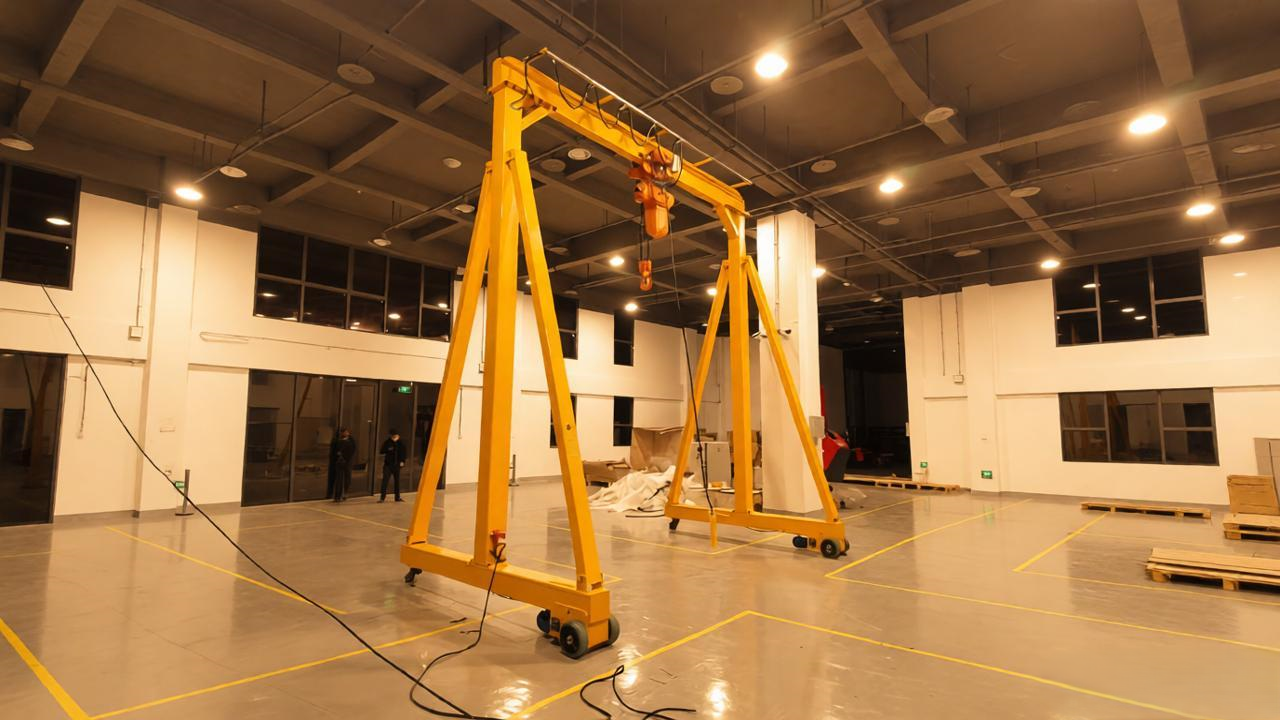
Can portable mobile gantry cranes be used outdoors?
Yes, when using a portable gantry crane outdoors, the primary considerations include the specific operating environment, working conditions, and the crane’s design—such as surface conditions, weather exposure, wind requirements, caster configuration, and corrosion protection.
What types of hoists can be used with a portable gantry crane?
There are many types of hoists that can be mounted on portable gantry cranes, such as electric hoists, electric chain hoists, and manual chain hoists. You can choose an electric hoist for frequent lifting, an electric chain hoist for precise and efficient handling, or a manual chain hoist for occasional lifting where power is unavailable.
How much does a portable mobile gantry crane cost?
The specific price is primarily determined by the span, lifting height, lifting capacity, structural material, and hoist configuration you require. Generally, the greater the lifting height, span, and lifting capacity, the higher the price will be.
How much does a portable mobile gantry crane cost?
The price of a portable mobile gantry crane typically ranges from several thousand to tens of thousands of US dollars. To obtain an accurate quotation, you should provide details of the required lifting capacity, span, lifting height, hoist type, mobility configuration, and any customisation requirements.
Solutions for Portable Gantry Cranes | Dingya Crane
Dingya Crane is a supplier you can trust. From high-tech equipment like intelligent overhead cranes to lightweight and simple equipment like portable gantry cranes, we provide services for all major crane and hoist brands and have our own team of inspectors and technicians. We have extensive export experience and all the necessary certifications. Are you looking to purchase portable gantry cranes for your factory? Contact Dingya now!