When planning to install an overhead crane in your factory, you will often discover various types. If you are unclear about the differences between different types of cranes, you may end up choosing an unsuitable crane or one that exceeds your budget. This article introduces the different types of overhead cranes and their application.
6 Types Of Overhead Cranes
Single-girder bridge crane
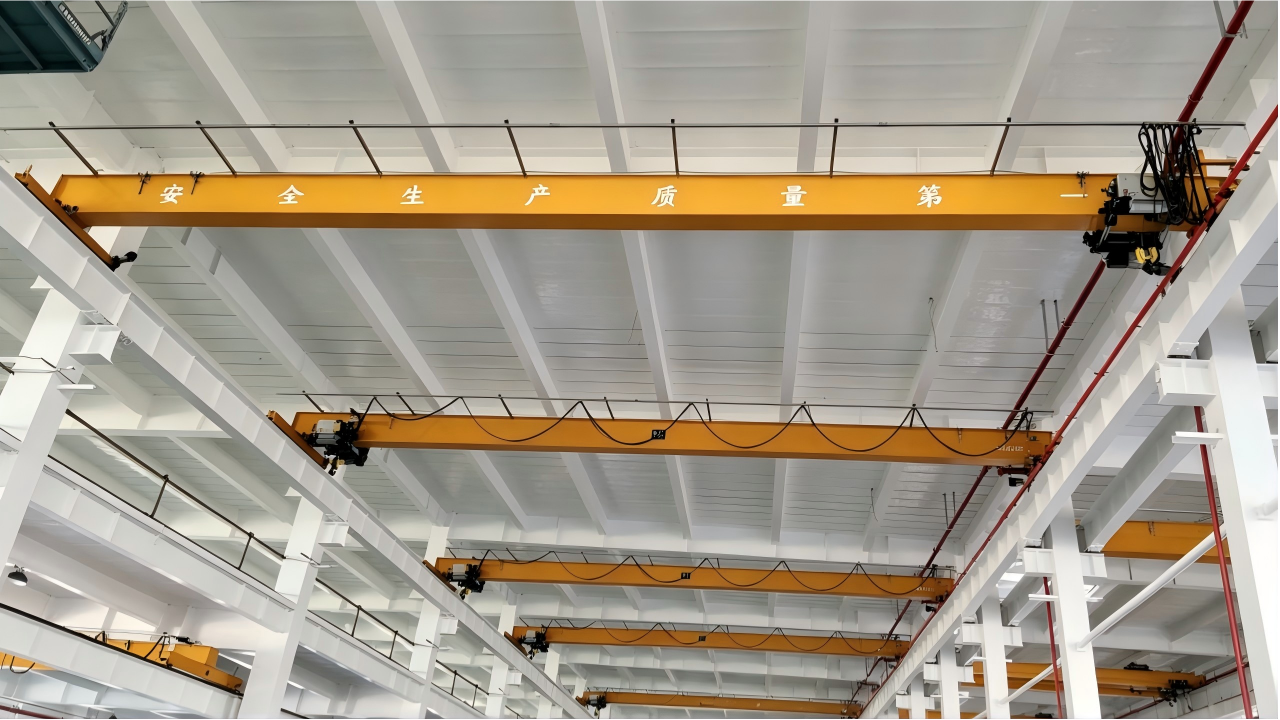
You can recognize this type of crane at a glance. Only a single main girder.The two ends of the bridge rest on rails located above the factory building’s columns. The hoist is suspended beneath the main girder.
You can get single-girder bridge cranes with equipment capacities ranging from 0.5 to 20 tons. They fit perfectly in your medium-span factory buildings, thanks to their simple and lightweight overall structure. You will find them extremely easy to transport and install, making them a cost-effective choice for all your light-duty lifting operations.
However, you need to know that single-girder bridge cranes come with certain limitations. They offer limited lifting height and do not include a variable frequency drive (VFD) as standard equipment. They feature a low-headroom design and result in poor overall factory space utilization. If you equip your crane with low-quality motors, you will only get a service life of 1 to 2 years.
Double-girder bridge crane
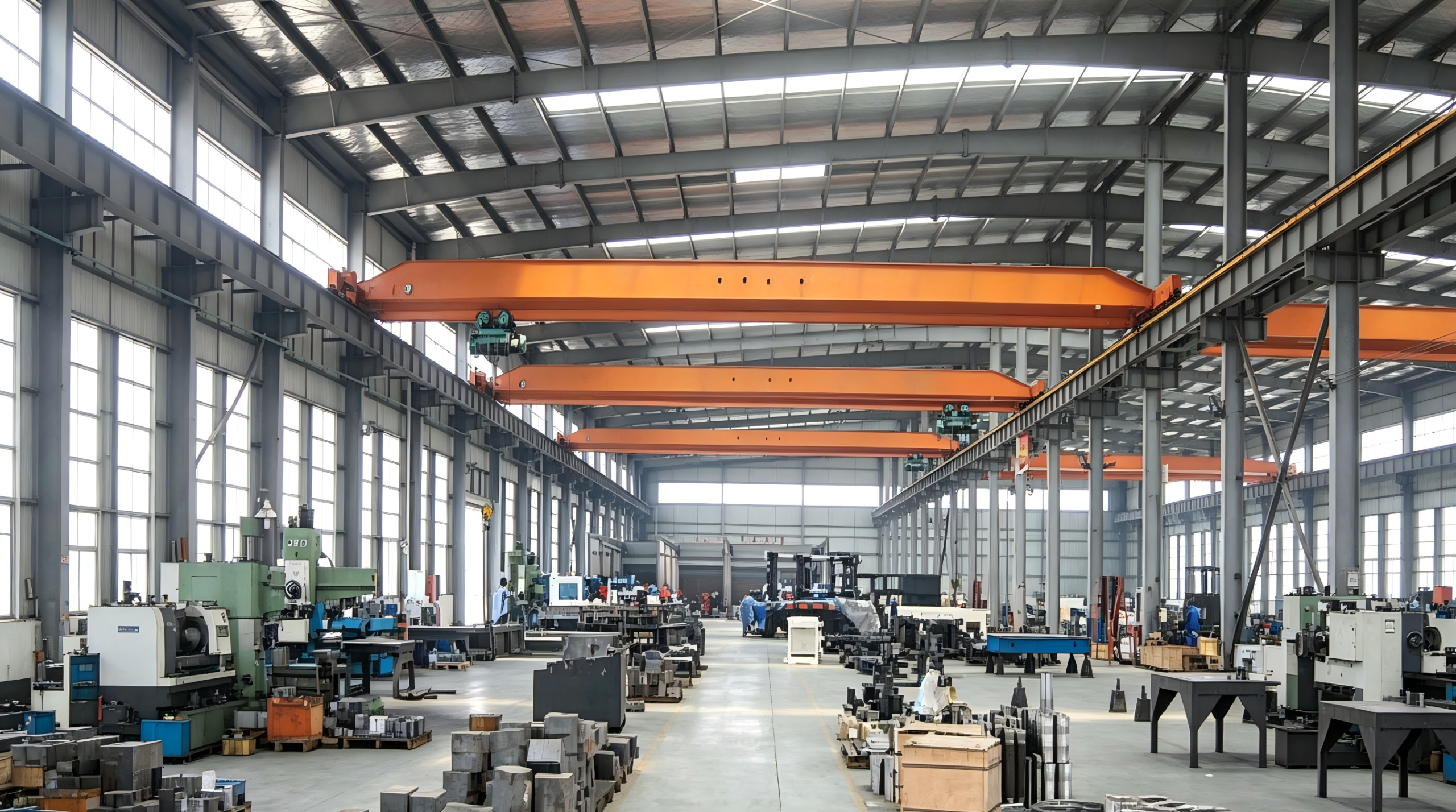
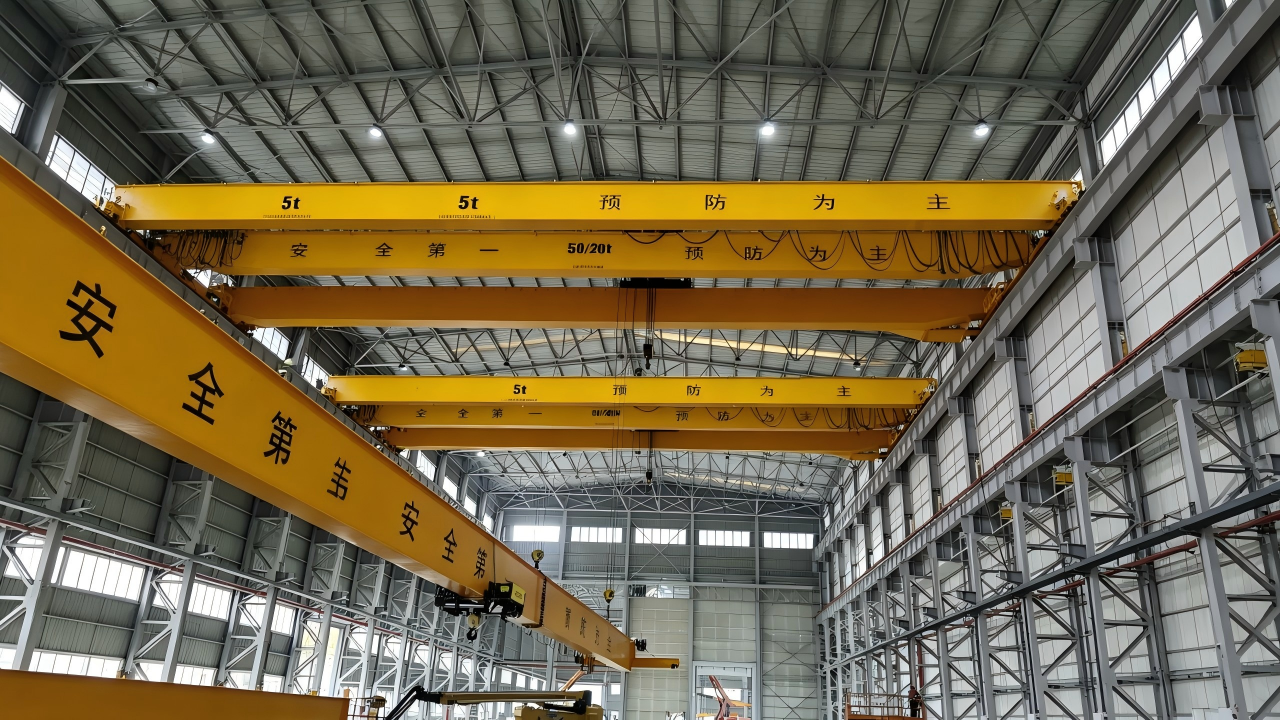
If your factory needs heavy-duty and non-stop lifting work, a double-girder bridge crane is the perfect fit for you. It uses two load-bearing main girders, with the trolley directly installed on top of the beams, so you get much stronger structural rigidity.
You can use this crane for load ranges from 5 tons up to several hundred tons, and it supports your 24-hour continuous production tasks. You can also customize it with different accessories, including an operator cabin and a grab bucket to match your working needs.
You should note that this crane requires a wide factory span. You must steady your factory columns before installation. If your building structure lacks sufficient bearing capacity, you might damage the factory’s framework. This will lead to expensive maintenance fees and project schedule delays for your lifting project.
European overhead crane
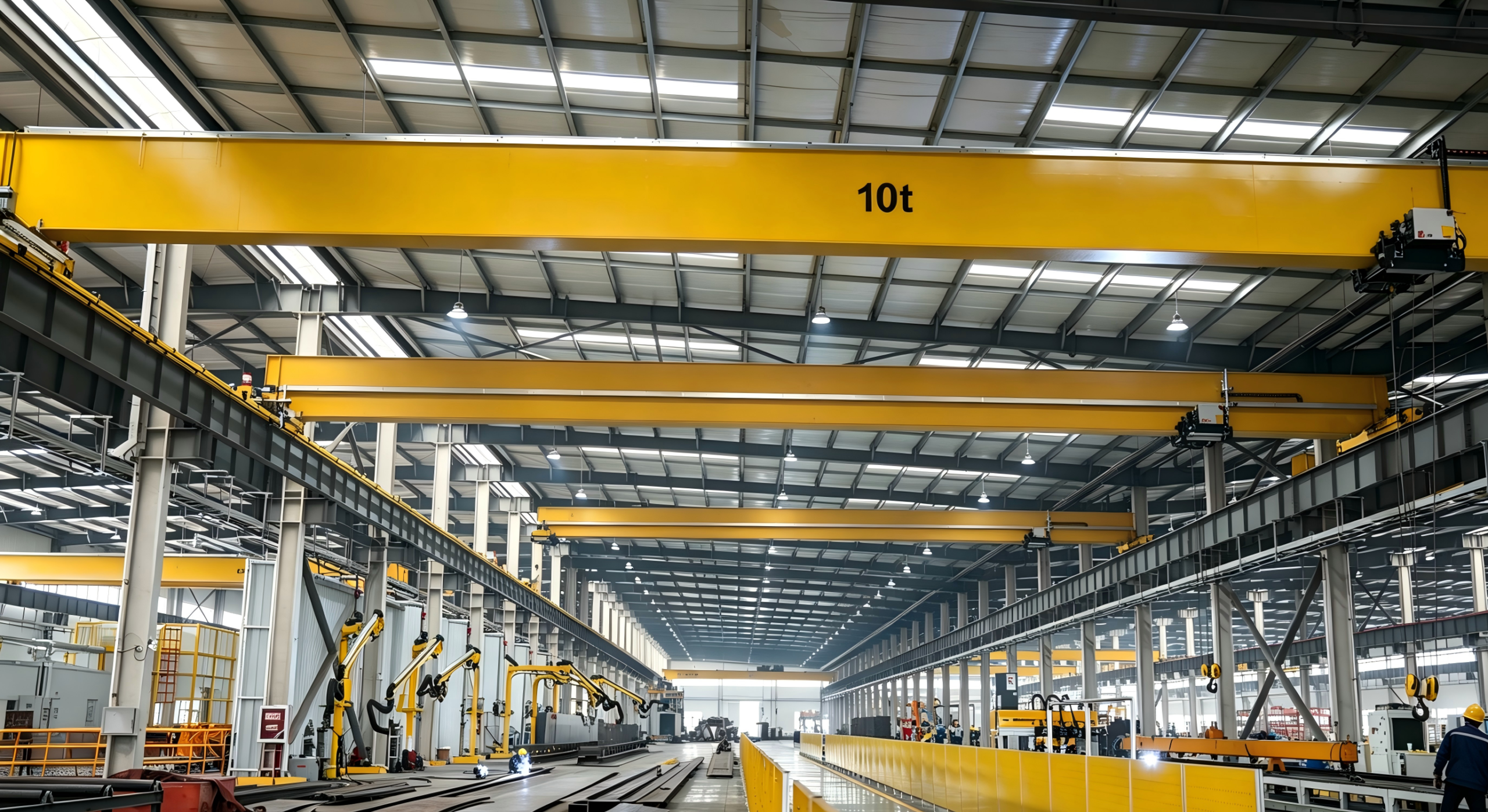
If you have high-standard crane requirements for your factory, a European-style bridge crane is your best option. It is not limited by your factory ceiling height and adopts a lightweight design, fully complies with FEM and DIN industrial standards. Fitted with a three-in-one variable frequency drive hoist, this compact crane features a lighter self-weight, reduces the bearing pressure on your runway rails, and saves more space in your workshop. It runs smoothly with low noise and effective anti-sway performance. Reduce energy consumption by 30%, compared with traditional bridge cranes.
You can get complete intelligent safety protection devices with this crane, and it comes in both European single-girder and double-girder versions to fit your different needs. If you are looking for high-end lifting equipment that is lightweight, space-saving, and stable in operation, this is your optimal solution.
Install it in both new and old factories, and it is especially perfect if you want to upgrade your existing old workshop facilities. Its price is 20% to 40% higher than that of a traditional bridge crane. This will place some short-term budgetary pressure on you.
Underhung Bridge Crane
Choose a suspended underhung bridge crane if your factory does not have load-bearing columns, or if existing support columns block your working space. This crane needs no column support at all. Because the entire device is suspended directly below the track. The hoist hook can travel close to the side walls of the factory building. This will maximize your available workspace.
With typical load capacities ranging from 1 to 10 tons, this crane is an excellent fit if you are renovating old or low-ceiling workshops. You also need to understand its clear limitations. It is not suitable for heavy-duty, high-tonnage, or wide-span lifting scenarios. The standard maximum capacity is 10 tons, with a maximum span of 20 meters. In addition, you will face inconvenient daily maintenance and inspections, and this crane type comes. The safety factor is relatively low.
Monorail Overhead Crane
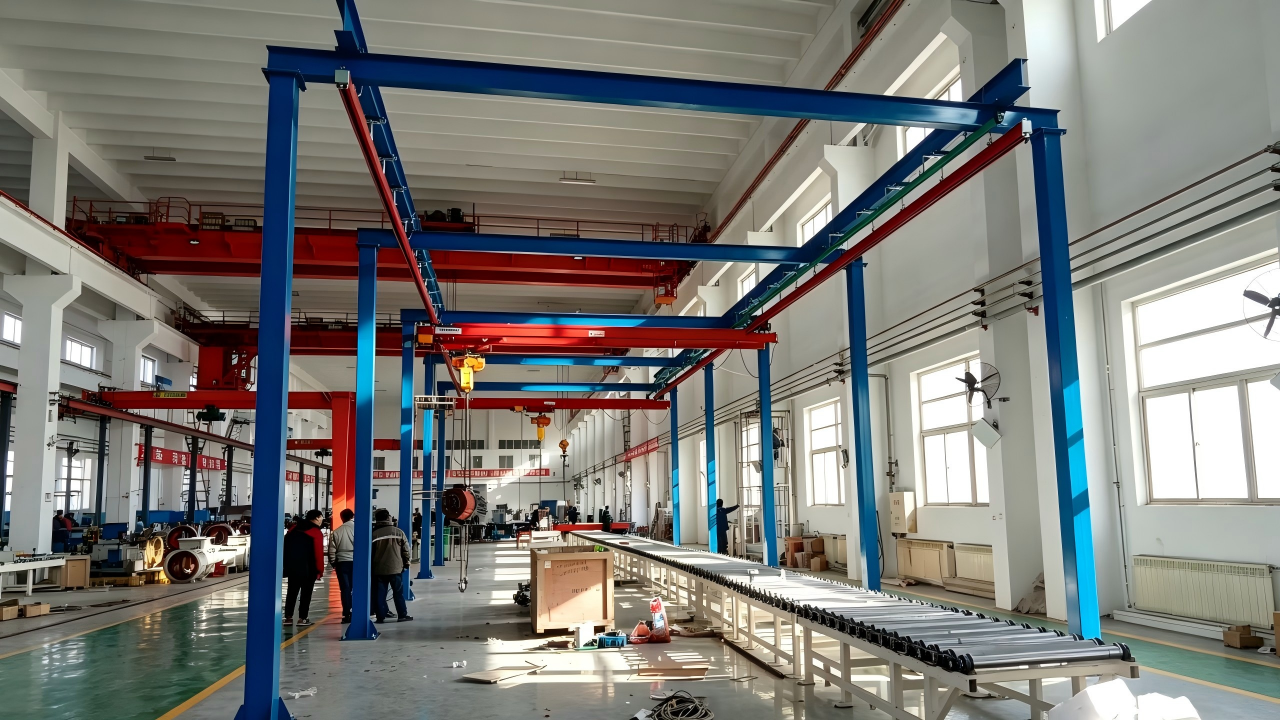
If you only need to lift and move materials back and forth along a fixed straight track in your workshop, the monorail overhead crane is the most basic and practical lifting solution for you. It uses a roof-mounted I-beam as its running track, allowing your electric hoist to travel smoothly along the beam.
Thanks to its ultra-simple structure, you get the lowest installation costs compared with other overhead crane types. You need to be aware of its disadvantages. Its key components wear out quickly during daily operation, and the fixed track is easy to deform over time. Most importantly, its moving coverage is limited, so it cannot cover the full working area of your entire factory.
Special Cranes
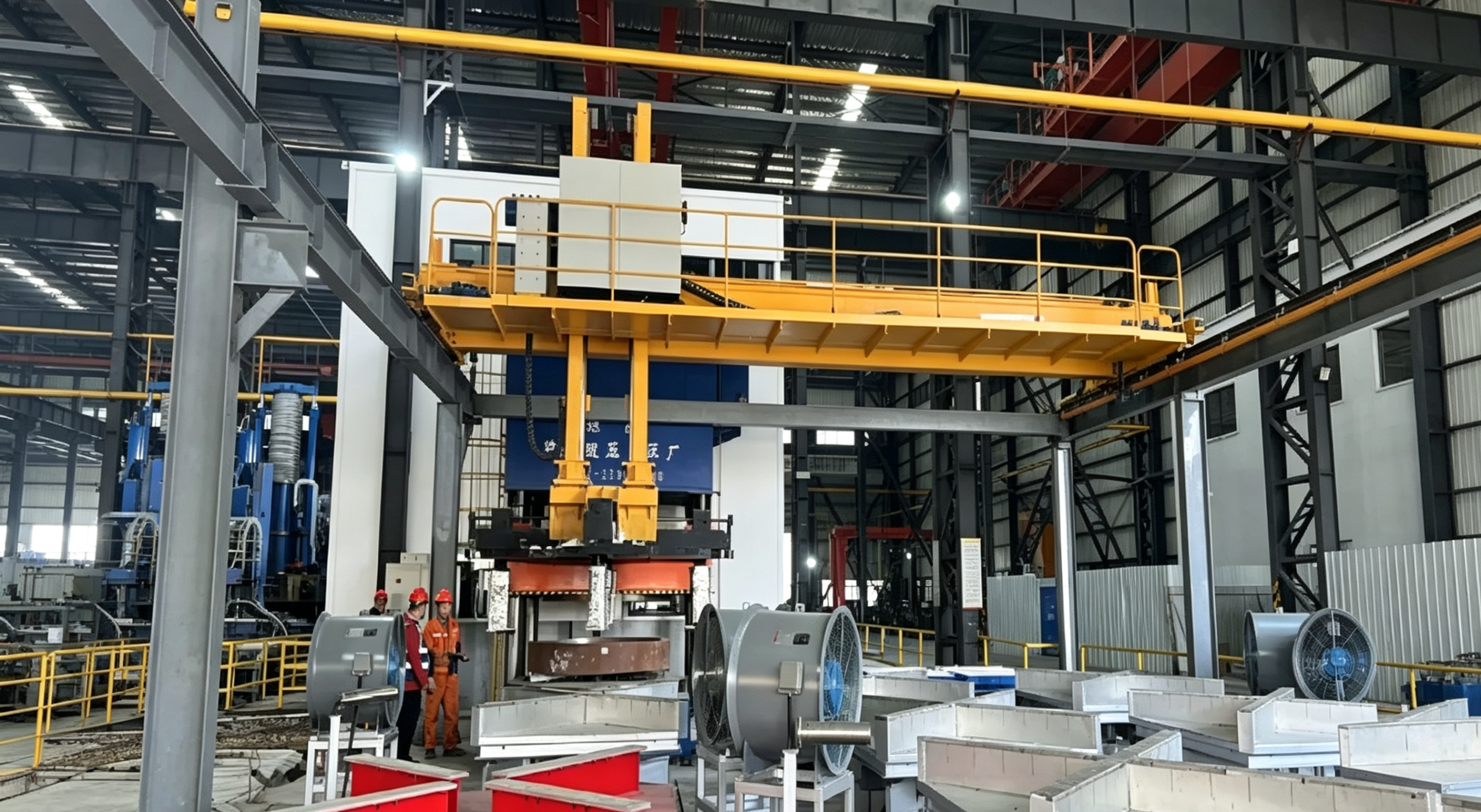
- Foundry Crane: If you work with metallurgy and smelting operations, you can use this heavy-duty specialized overhead crane. It is designed specifically for environments subject to extreme temperatures and frequent, high-load cycling, as well as the rigorous operating conditions unique to your smelting environment.
- Ladle Crane: For your high-temperature casting workflows, you can rely on this high-safety overhead crane. It is purpose-built to help you safely lift, transport, and pour ladles, hold molten metal during your hot casting processes.
- Electromagnetic Crane: A specialized overhead crane equipped with an electromagnetic chuck, capable of directly lifting and transporting ferromagnetic steel materials without the need for conventional hooks or slings.
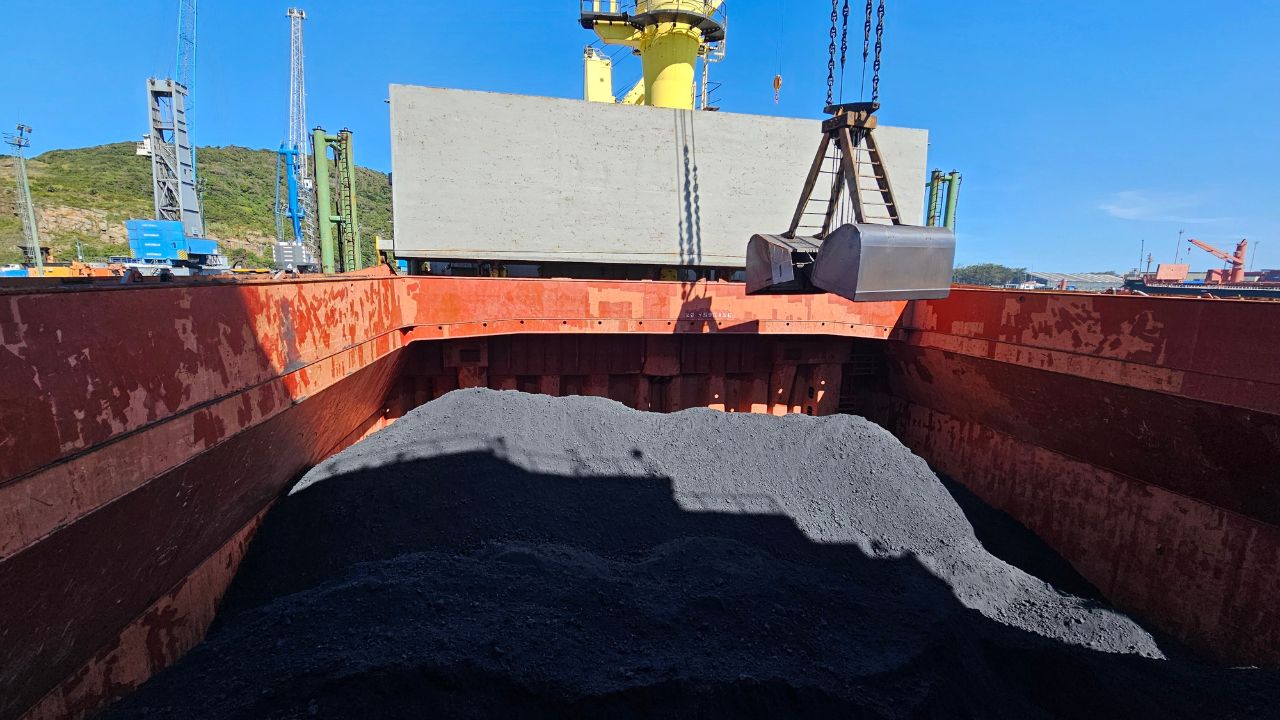
- Grab Crane: If you handle bulk materials at your worksite, this overhead crane is perfect for you. Equipped with a professional grab bucket, it enables you to automatically grab, lift, and transfer all kinds of bulk materials efficiently.
- Explosion-proof Crane: You can use this reliable specialized overhead crane for your risky work scenarios. It adopts a fully sealed, spark-free design and certified explosion-proof electrical systems. This enables you to perform safe lifting operations in flammable and explosive hazardous areas.
Overhead Crane Types Comparison: Capacity, Advantages and Applications
| Crane Type | Rated Load Capacity Range | Core Advantages | Suitable Factory Conditions |
| Single Girder Bridge Crane | 0.5 ton – 20 tons | Simple structure, light deadweight, easy installation & transportation, low cost and minimal maintenance | Medium-span factories, ordinary industrial factories with load-bearing columns |
| Double Girder Bridge Crane | 5 tons – several hundred tons | High load capacity, rigid structure, 24-hour continuous duty, compatible with various special attachments | High load capacity, rigid structure, 24-hour continuous duty, compatible with various special attachments |
| European Style Bridge Crane | 1 ton – 80 tons (common specifications) | Light deadweight, low rail load & headroom, low-noise anti-sway travel, 30% energy saving, full intelligent safety devices | No limit on factory headroom, compatible with new and old industrial factories, especially suitable for old factory upgrading and renovation |
| Underhung Bridge Crane | 1 ton – 10 tons | Column-free design avoids space obstruction; hook runs close to walls, ideal for low old factory retrofits | Factories without load-bearing columns, low old industrial factories, scenarios where operation space is blocked by columns |
| Monorail Overhead Crane | 0.5 ton – 10 tons | Extremely simple structure, lowest procurement and installation cost, easy to install | Factories with roof I-beams, simple operation scenarios that only require fixed-point straight-line lifting |
| Foundry Crane | 10 tons – several hundred tons | High structural strength, tolerates high temperatures, frequent heavy loads, and harsh metallurgical environments | Heavy industrial factories with high temperature protection, special factories for metallurgy and smelting |
| Ladle Crane | 10 tons – 200 tons | High safety, can safely lift, transport, and tilt molten metal ladles, anti-leakage structural design | Metallurgical casting workshops, special factories with high-temperature molten metal operations |
| Magnetic Crane | 1 ton – 50 tons | High lifting efficiency, no need for binding slings, can directly lift steel materials, suitable for batch steel handling | Steel processing workshops, warehouses, scrap steel recycling plants, industrial factories with stable power supply |
| Grab Crane | 5 tons – 30 tons | Auto grabs bulk materials, high efficiency for all loose materials | Sand and gravel yards, coal warehouses, port terminals, bulk material processing plants |
| Explosion Proof Crane | 1 ton – 50 tons | Can work safely in flammable and explosive hazardous environments, no spark risk, complies with explosion-proof safety standards | Industrial factories with flammable and explosive hazardous media, special factories for chemical, oil refining, and dust explosion protection |
FAQ
Should you choose a standard or custom overhead bridge crane solution?
If your lifting capacity, span, working height, and workshop conditions match common specifications, you can pick a standard bridge crane.
You need a fully customized solution when you have irregular factory layouts, ultra-wide spans, special lifting attachments, high-temperature/corrosive workshops, non-standard lifting heights, or strict safety & automation demands. Custom cranes fit your on-site limitations precisely to avoid installation failures and safety risks.
What factors affect the total cost of a bridge crane?
Decide your overhead crane total cost: load capacity, span, duty class, custom design, harsh environment protection, intelligent accessories, regional certifications, delivery, installation, and brand component quality all push up overall cost.
What is the installation process for a bridge crane?
First, you need to secure the track. Next, place the main beam on the track. Connect the end frames and install the trolley, lifting device, electrical wiring, and safety devices. Finally, perform no-load and load tests. Adjust the braking system. And submit for acceptance inspection. Complete all procedures before officially putting it into use.
How long can a bridge crane typically be used?
Your standard overhead crane lasts 15–20 years with routine upkeep. European-style compact cranes adopt high-strength materials and precise components, reaching a 20–25-year service life. Severe working conditions and overloading will greatly reduce the service life of both types.
What are the operational standards for bridge cranes?
Follow these rules when operating your overhead crane: never overload, inspect brakes and limit devices before use, avoid sudden starts/stops, keep loads clear of personnel, and conduct regular maintenance to eliminate hidden dangers.
DingYa Reliable Crane Products & One-Stop Service
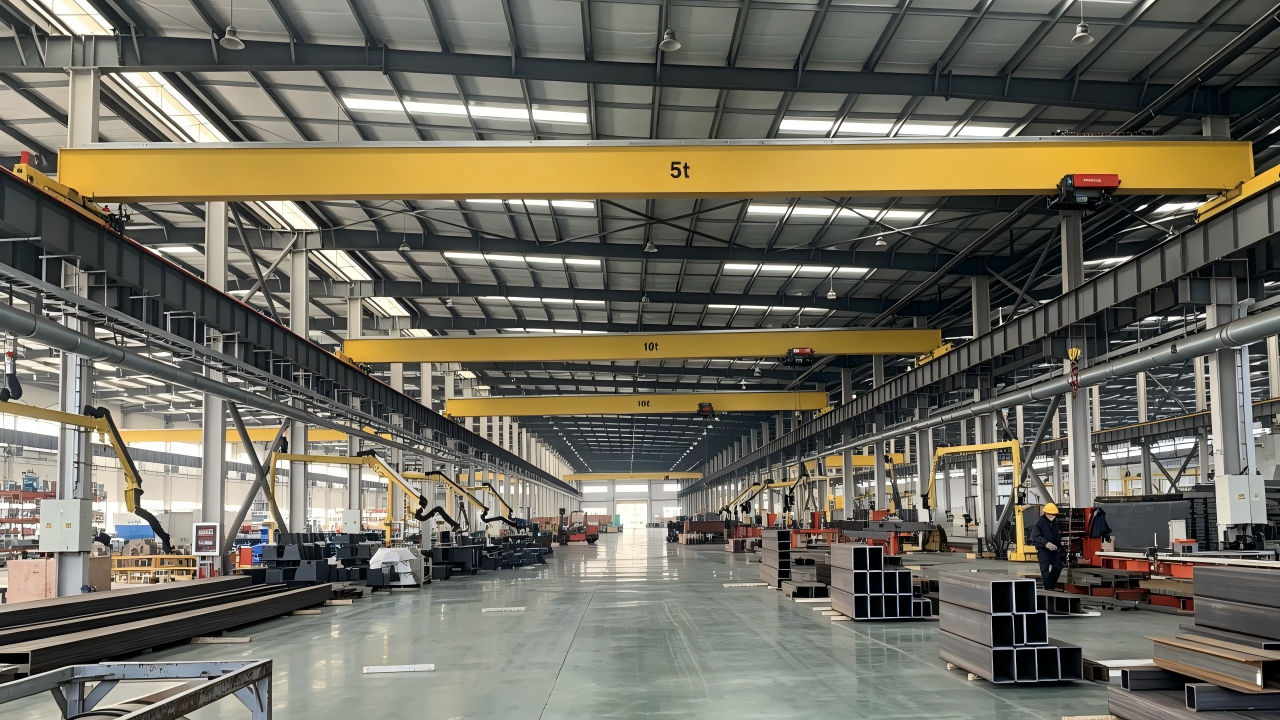
As a professional crane manufacturer, DingYa supplies high-efficiency standard and special overhead bridge cranes. We deliver CE-certified & fully customized lifting solutions with stable performance, long service life, professional installation, and reliable global after-sales support for your factory material handling needs.