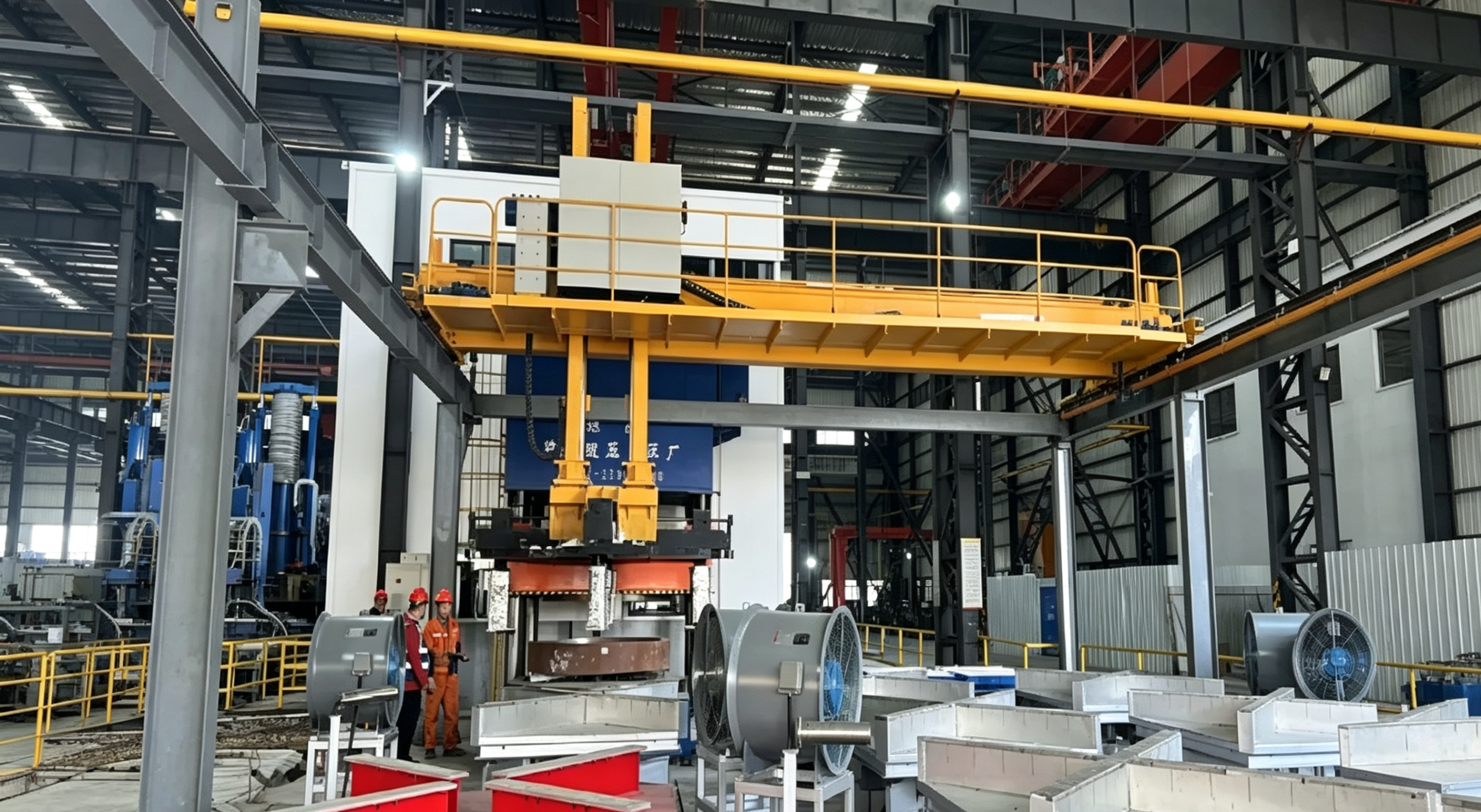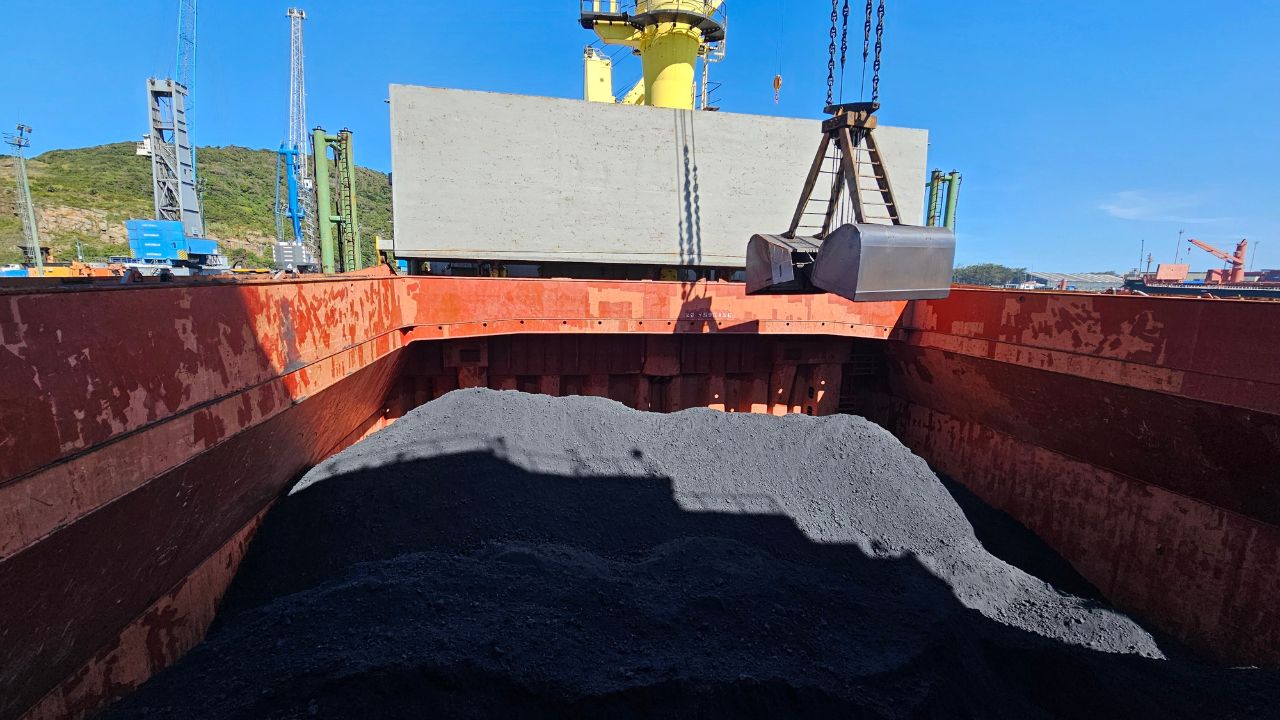
Is your workshop or construction project still struggling to decide between an electric chain hoist and a wire rope electric hoist? If you choose the wrong model, It may not be able to meet actual lifting requirements. This article will provide a comprehensive comparison of the two hoists to help you select the lifting equipment best suited to your workshop’s operating conditions.
What is an electric chain hoist?
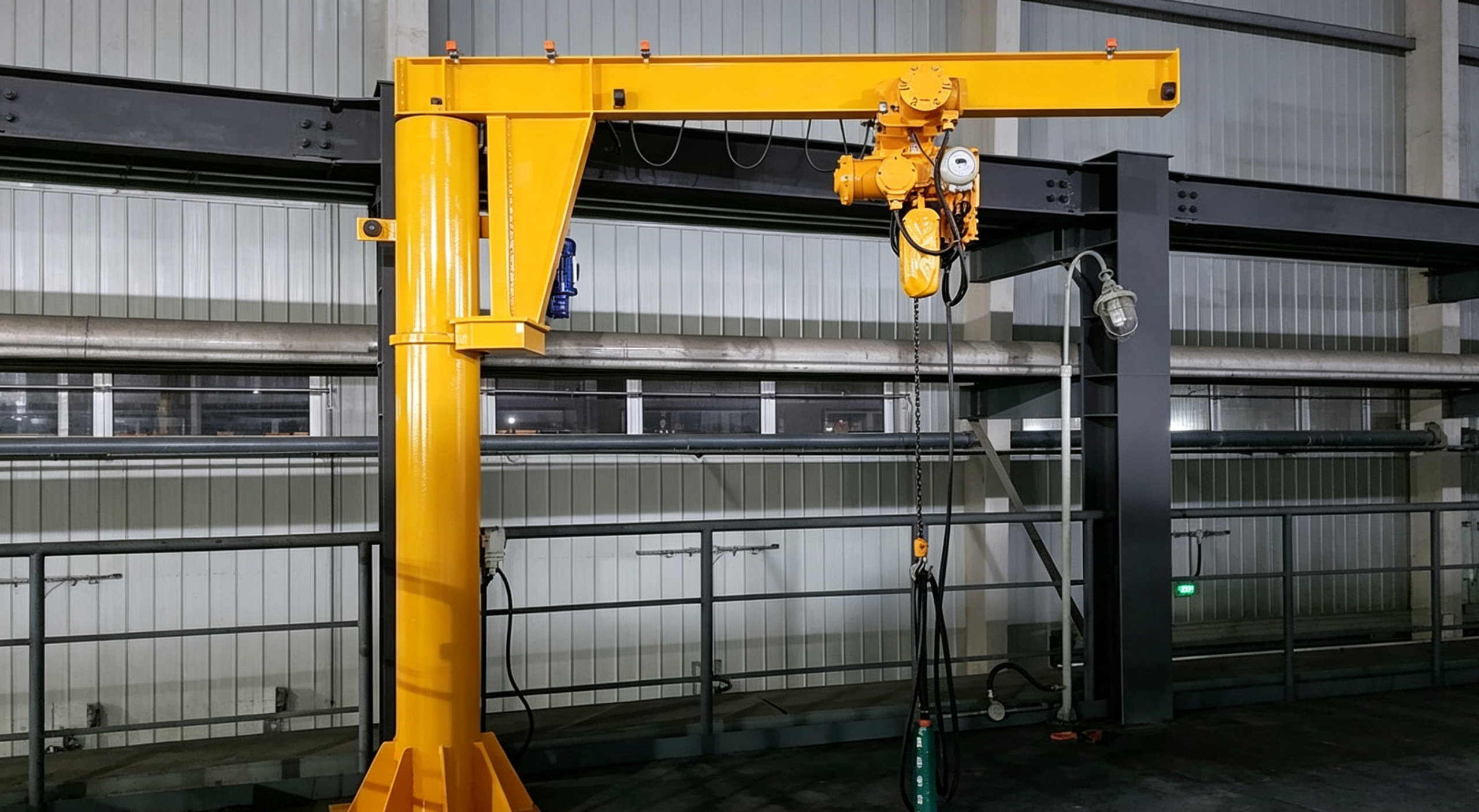
Electric chain hoists are lightweight and compact. You can use them to lift light-duty workpieces in factories, for equipment maintenance, and on assembly lines.The hoist uses a metal load-bearing chain to raise and lower loads. Pair it with a single-girder overhead crane, a jib crane, or a fixed bracket, and you can easily move, load, unload, and stack materials in tight spaces.When you work with light loads, these hoists help you get the job done more efficiently.
What is a wire rope electric hoist?
Wire rope electric hoists are heavy-duty lifting devices commonly used in conjunction with single- and double-girder overhead cranes. They rely on multiple layers of wound wire rope to lift heavy loads, offering high load-bearing capacity and smooth operation. They cover wide areas in large factories and reliably lift heavy workpieces. Built for high tonnage, high lifting heights, and continuous heavy loads, they meet your factory’s long-term material handling needs.
Key Differences: Chain Hoists vs. Wire Rope Hoists
Structural Design
Structure of an Electric Chain Hoist
The entire unit consists of a motor, a gear reducer assembly, a load-bearing circular chain, a hook, and a traveling trolley. The core of the lifting mechanism is a circular metal chain, with multiple layers of chain links interlocking to bear the load. The unit features a compact design and a small housing.
Since the load is concentrated on the chain itself, the requirements for the supporting tracks and the building’s load-bearing capacity are relatively low. The vast majority of models are configured for single-speed or dual-speed light-duty applications, and heavy-duty models with high load capacities are extremely rare.
Structure of a Wire Rope Electric Hoist
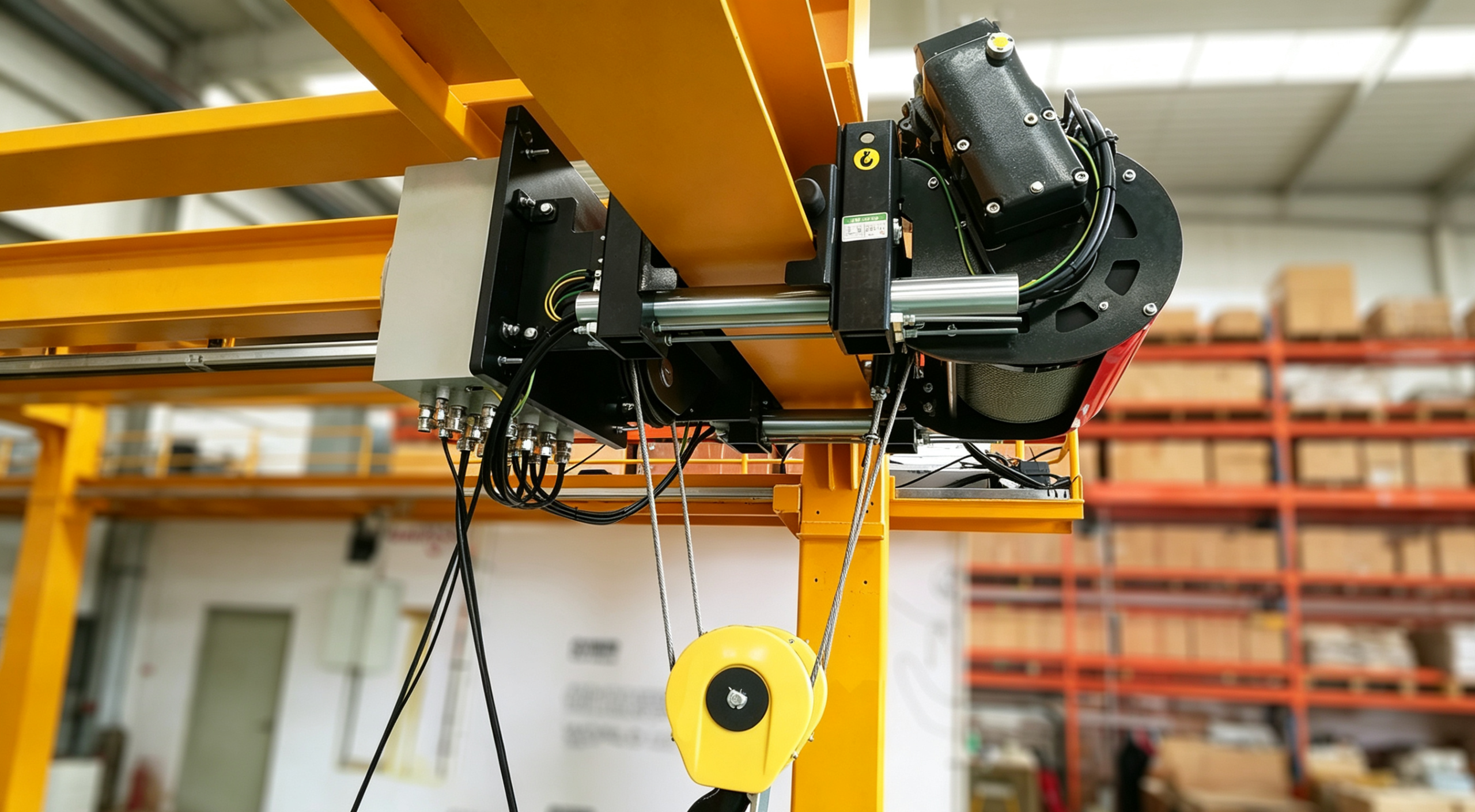
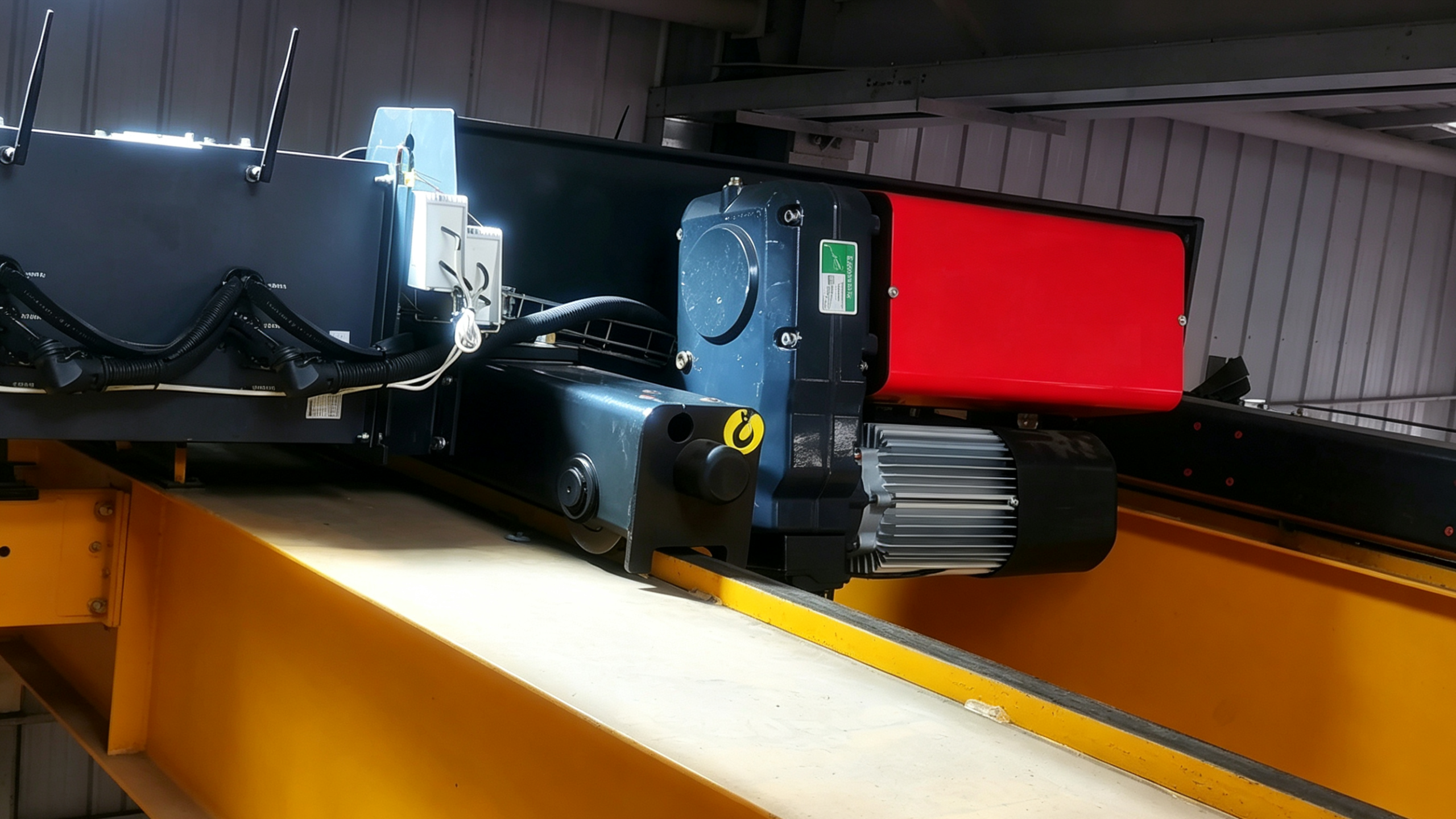
The core load-bearing component is a multi-layer wire rope drum, paired with a rope guide, rope-laying device, and heavy-duty reducer. The drum is arranged transversely, resulting in a longer overall body length; You can equip it with a high-power motor and a variable-frequency speed control system, making it ideal for heavy-duty double-girder overhead crane applications.
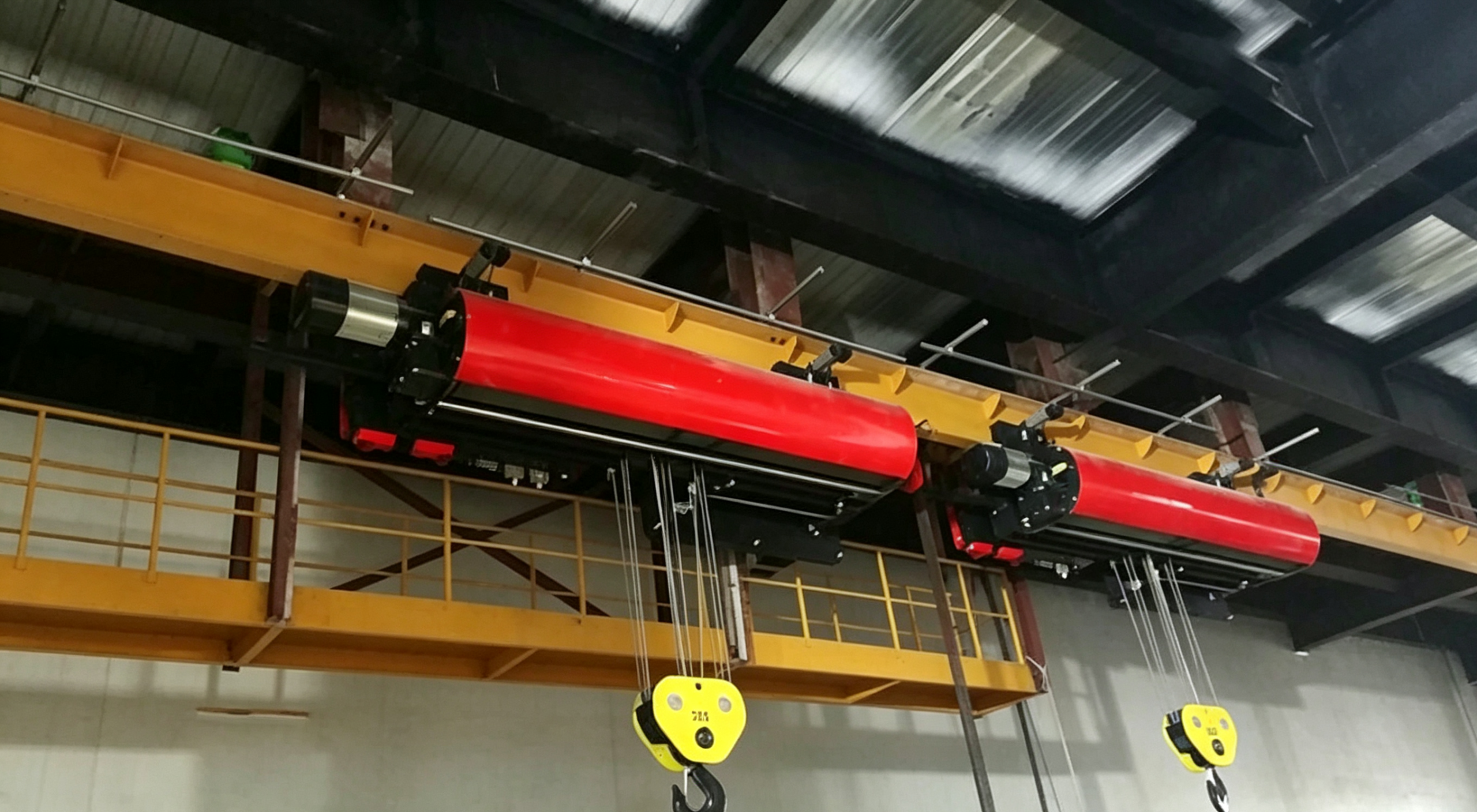
Due to the equipment’s greater overall weight, the operational load is transmitted to the crane’s main girder and the corbels of the factory building’s columns. You must calculate the load-bearing capacity of the building’s civil engineering and steel structure in advance. This system is compatible with both single-girder and double-girder cranes.
Rated Lifting Capacity
Electric chain hoists typically have a load capacity range of 1 metric ton to 10 metric tons; a few custom models can reach 16 metric tons to 20 metric tons. However, high-capacity custom models are significantly more expensive, and their chains wear out faster, making them suitable only for intermittent, light-load applications. Overall, they are classified as light-duty lifting equipment.
Electric wire rope hoists cover a wider load capacity range: small single-girder models range from 1 metric ton to 32 metric tons, while double-girder heavy-duty models can reach 50 metric tons or even 100 metric tons. Designed for continuous, full-load operation across multiple 24-hour shifts, they deliver exceptional load-bearing performance in heavy-duty applications.
Effective Lifting Height
Due to space constraints for chain storage, electric chain hoists typically have standard lifting heights of 3 m, 6 m, and 9 m, with custom extended models generally not exceeding 12 m; the stacked chain occupies space within the hoist body, limiting the effective lifting distance in facilities with the same ceiling height.
Wire rope hoists rely on a drum to wind the wire rope. Standard lifting heights are 6 m, 9 m, 12 m, and 18 m, while custom models can reach 30 m or more; since the drum stores the wire rope horizontally, it occupies less vertical space, allowing for greater effective lifting heights when the factory ceiling height is sufficient.
For the same factory ceiling height, wire rope hoists offer 2 to 5 meters more lifting travel and are the preferred choice for high-ceiling factories and the hoisting of large equipment.
Installation Methods
Key Points for Installing Electric Chain Hoists
Supports two installation methods: fixed bracket mounting and trolley suspension mounting. You can simply hang the equipment beneath an I-beam track and reinforce the suspension points. This way, you don’t need to modify factory columns or add load-bearing corbels.
You can hoist and assemble the equipment in sections, which reduces high-altitude work and makes it ideal for retrofitting older factory buildings. Keep in mind, however, that the chains are exposed — in humid or dusty environments they can rust or jam, so you’ll need to lubricate and maintain them regularly.
Key Points for Installing Wire Rope Electric Hoists
Often used with bridge cranes, this system requires you to weld and reinforce the factory columns, load-bearing corbels, and track beams in advance, with the columns bearing the overall load. Because the unit is large, you’ll need an external crane to lift and position it during installation. You’ll also face complex calibration work for levelness and track parallelism, which means a longer installation cycle.
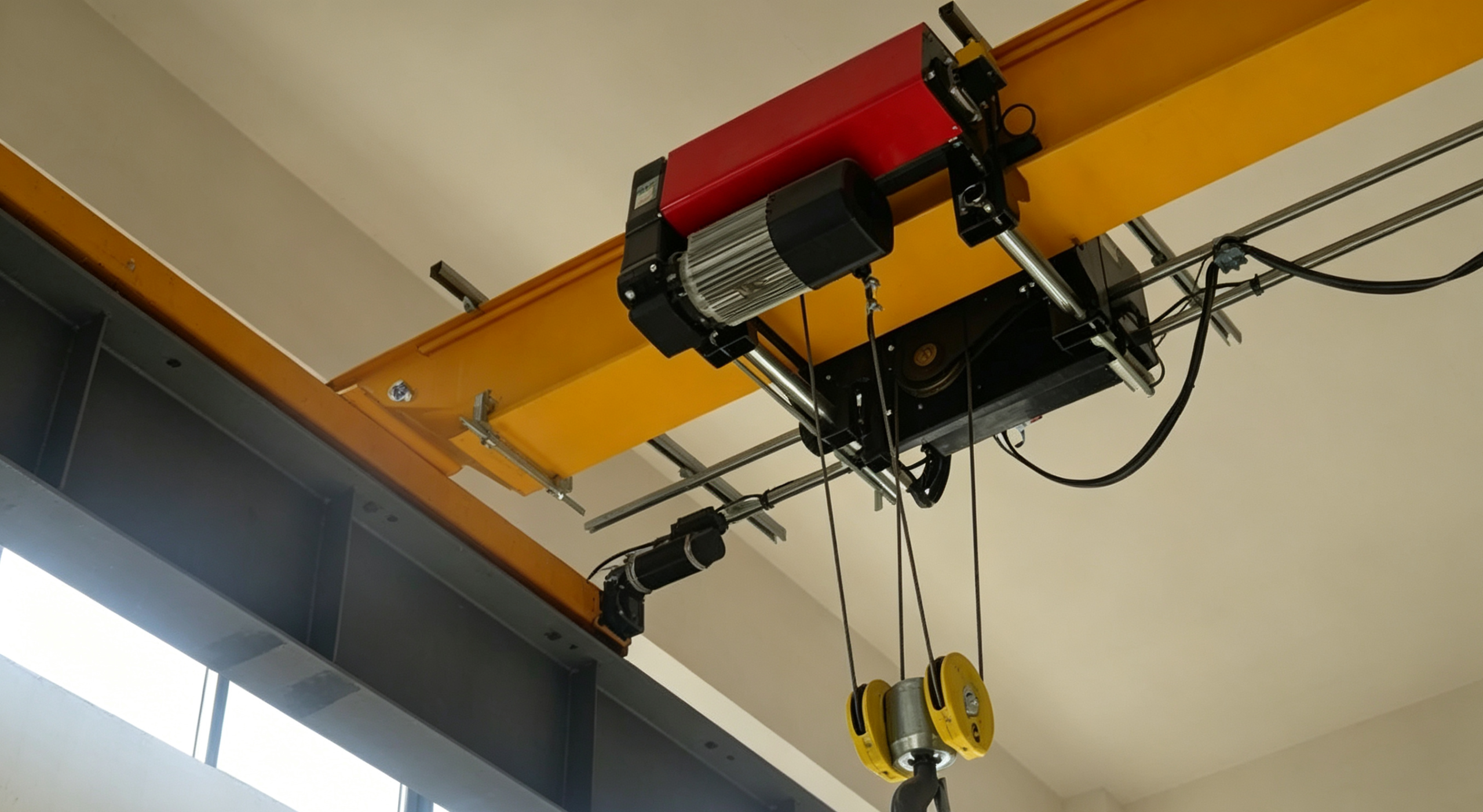
The equipment features a sealed drum design that protects the wire rope from dust and moisture, so you get greater durability in harsh operating conditions. When retrofitting older factory buildings, you’ll need to recalculate the load-bearing capacity of the columns, and in most cases, you’ll also need to reinforce the steel structure.
| Comparison Items | Electric Chain Hoist | Wire Rope Electric Hoist |
| Load-bearing structure | Metal Ring Chains | Multi-layered Stranded Steel Wire Rope |
| Structural Elements of a Factory Building | Roof Steel Beams / Simple Suspended Brackets | Factory Building Columns + Load-Bearing Corbels for Tracks |
| Dimensions | Compact and space-saving | The body is long and narrow, taking up a lot of space widthwise. |
| Maximum Lifting Height | Standard ≤ 12 m | Customizable to over 30 meters |
| Maximum Standard Tonnage | 1–32 metric tons | 1–100 metric tons, full coverage |
| Installation Requirements | No columns or corbels required; easy to retrofit in old factory buildings | Must be equipped with corbels for load-bearing columns |
| Challenges of High-Altitude Maintenance | The chain is exposed, making maintenance easy | The drum is enclosed, making internal maintenance operations complicated. |
| Continuous Operation Capability | Intermittent light loads; not suitable for multi-shift, full-load operation | Supports 24-hour continuous heavy-duty operation |
| Environmental Adaptation | A dry, clean workshop is best; damp conditions can cause rust. | Suitable for dusty, humid, and heavy industrial environments |
Selection Criteria for Different Operating Conditions
When to Use a Wire Rope Electric Hoist
- Rated lifting capacity exceeds 10 metric tons, with a long-term need to lift heavy workpieces;
- The factory has sufficient ceiling height and requires a large lifting height (over 12 meters);
- Operates on a multi-shift system with 24-hour, uninterrupted, full-load continuous operation under severe working conditions;
- Equipped with single- and double-girder overhead cranes for large-scale material handling throughout the facility;
- High levels of dust and moisture in the workshop, as well as harsh production environments such as metallurgy or forging;
- Long-term production expansion plans, with future requirements to increase lifting capacity;
- The factory columns are equipped with standard load-bearing corbels capable of supporting heavy rail loads.
When to Use an Electric Chain Hoist
- Typical lifting capacity of 10 metric tons or less, primarily for intermittent, light-duty lifting operations;
- Limited ceiling height in the factory and densely packed equipment, requiring compact, lightweight lifting equipment;
- No pre-installed load-bearing corbels on the factory columns, making it impossible to modify the building structure;
- Used for equipment maintenance, assembly line support, and fixed lifting with small jib cranes;
- Single-shift, intermittent operation; no need for long-term, continuous lifting at full capacity;
- Avoiding large-scale modifications to the factory’s steel structure to reduce installation and construction costs;
- Maximizing the use of vertical space in confined workstations, basements, and low-ceilinged workshops.
FAQ
For the same load capacity, which has a longer installation cycle: a chain hoist or a wire rope hoist?
For the same load capacity, wire rope electric hoists take longer to install. You’ll need to reinforce the factory’s track beams and column corbels first, then hoist the entire unit into place and adjust its levelness and track parallelism — a process with many steps. More components also means more calibration and commissioning work, so the overall installation time adds up.
In contrast, chain hoists are much faster to set up. You only need to secure the suspension points, and you can assemble and commission the unit in sections.
What is the maximum track span supported by an electric chain hoist?
Standard chain hoists used with I-beam tracks are suitable for spans of 3 to 15 meters; the higher the load capacity, the shorter the maximum allowable span. Chain hoists are rarely used for spans exceeding 15 meters, as the load on the roof steel beams becomes excessive under such conditions; wire-rope overhead cranes are preferred for large-span applications.
Are the motors and components of chain hoists and wire rope hoists interchangeable?
No, their components are not interchangeable. Although the motors, gearboxes, and hoisting assemblies work on similar principles, the structural interfaces and gear ratios are completely different. Chain hoists use vertical gearbox assemblies, while wire rope hoists use horizontal drum gearbox assemblies. The hooks and rope/chain guide components also have mismatched specifications, so they cannot be directly substituted.
Given that the factory building has a ceiling height of 8 meters, what is the actual effective lifting height when using a wire rope hoist?
There will be some reduction. After accounting for the main girder height and the hoist body’s vertical footprint, a standard 10-ton single-girder wire rope hoist only delivers about 5.2 to 6.8 meters of effective lifting height. As load capacity increases, the hoist body takes up more space, so the effective lifting height drops accordingly.
Which type of hoist is best suited for maintenance equipment at a wastewater treatment plant?
Electric chain hoists are the preferred choice for wastewater treatment plant workshops. These spaces have low ceilings and high humidity, and the loads are typically light. Upgraded with moisture-proof, corrosion-resistant features and high-protection IP-rated motors, the hoists handle maintenance of small equipment like pumps and gates — chain hoists up to 5 tons are more than enough.
Dingya Hoists: Customized Solutions for All Industries
Dingya Hoisting specializes in R&D and manufacturing of hoists, offering fully customizable electric chain and wire rope hoists. Our equipment runs smoothly, safely, and durably across machining, wastewater treatment, warehousing, metallurgy, and forging. We deliver one-stop services from selection to installation and commissioning, helping you build efficient, reliable workshop lifting systems.