You’ll find that many factories easily confuse the use of fully automatic cranes with semi-automatic cranes. However, the two have completely different requirements for factory buildings, construction costs, and control logic. Fully automated systems are not necessarily the best choice. They may lead to frequent alarms, unstable operation, and other issues. This article will help you clarify the differences between the two and guide you on how to choose.
What Is a Semi-Automated Crane?
Semi-automatic cranes are a compromise between manual and fully automatic cranes.
Your assistance is required to operate them and observe the site conditions to ensure they meet requirements. For complex materials, manual confirmation is needed after each lifting operation. Semi-automatic cranes offer a wide range of flexible auxiliary functions. These include fault recording, intelligent anti-sway, overload alarm, automatic homing, and point-to-point connection.
What Is a Fully Automated Crane?
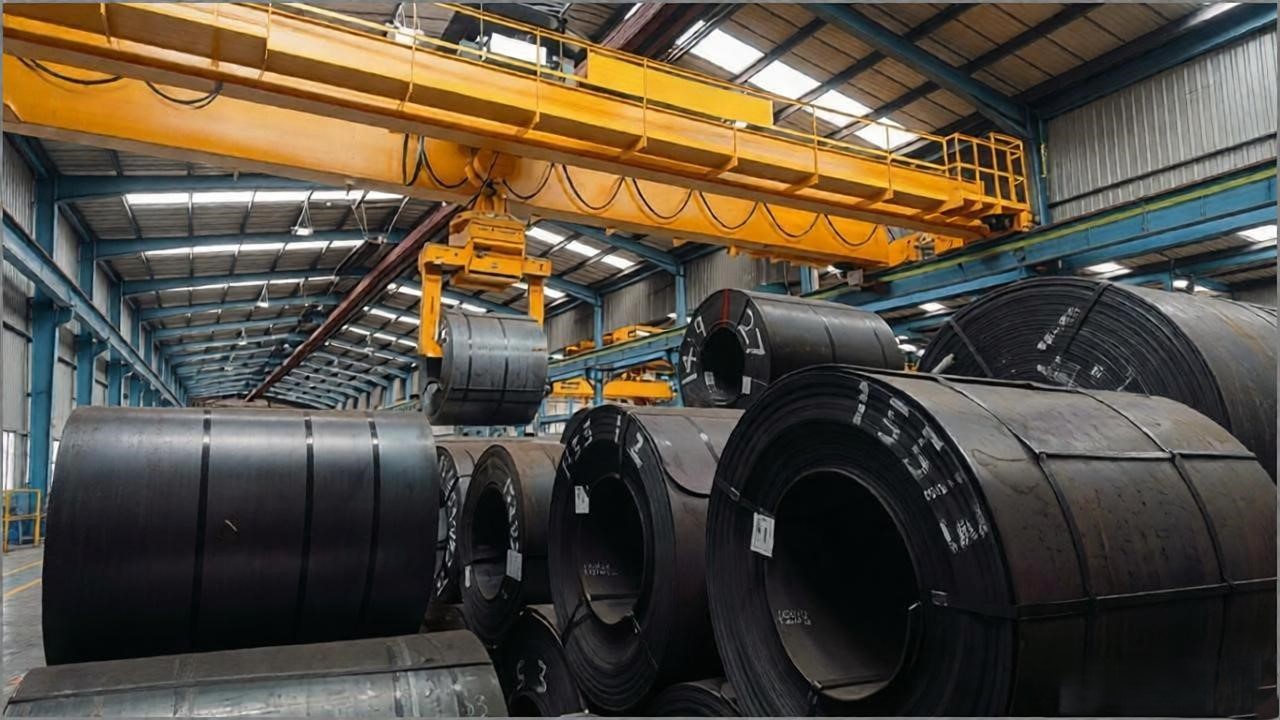
Fully automated cranes can achieve completely unmanned operation. You only need to issue task instructions. It can complete the entire material handling process. For example, point-to-point automatic gripping, material identification, precise placement, and automatic resetting. You don’t need to review the entire process. Each step of the operation requires no manual intervention.
It is ideal for continuous production during day and night shifts. Or for environments with a high risk factor. Using fully automated cranes not only improves efficiency but also enhances safety. It also achieves a closed-loop automation system across the entire supply chain.
Semi-Automated Crane vs Fully Automated Crane: Key Differences
Different hardware configurations
Semi-automatic cranes configurations
The principle of a semi-automatic crane relies on a PLC to receive signals from all sensors.Execute the completion procedure you set up. It is equipped with a frequency converter to control the motor speed of the crane’s trolley, hoisting mechanism, and other components.For example, this is the core component responsible for the smooth start-stop and accurate positioning of a European-style bridge crane.
In addition, there are encoders, laser rangefinders, anti-sway sensors, and position limit modules. These are all components that complete the automatic module. However, it will only automatically move to the points you’ve pre-stored. If the suspension point is moved to a new position, it will have no way to move to the new position. You must switch back to manual mode and manually move it to the new position.
Fully-automatic cranes configurations
In addition to the basic hardware of semi-automatic cranes, fully automatic cranes, add features such as laser scanners, automatic lifting device systems, active collision avoidance lidar, RFID reader/writer modules, and safety systems.
These features endow fully automatic cranes with capabilities including automatic path planning, multi-unit collaboration, high-speed operation, fault self-diagnosis, preventative maintenance alerts, remote control, and real-time monitoring. They scan for surrounding obstacles and actively avoid them. It can also clearly help you identify the actual location of materials on site.
Control Method Differences
Semi-automatic cranes control method
In daily operation, semi-automatic cranes require you to monitor the working environment and transport status at the work site. For example, you need to hook the hook onto the object to be moved. The same applies to unhooking. When the trolley, hoist, and electric hoist are moving, the operator uses a remote control or control panel.
While this is more labor-saving and time-efficient than manual cranes, you need to initiate every lifting operation. It can only perform segmented automatic actions. It cannot complete a full lifting operation from start to finish. If the crane alarms, you need to go to the site to troubleshoot the problem. You need to manually record the results of each maintenance and inspection of the semi-automatic crane.Cannot interface with the factory management system for tasks and data.
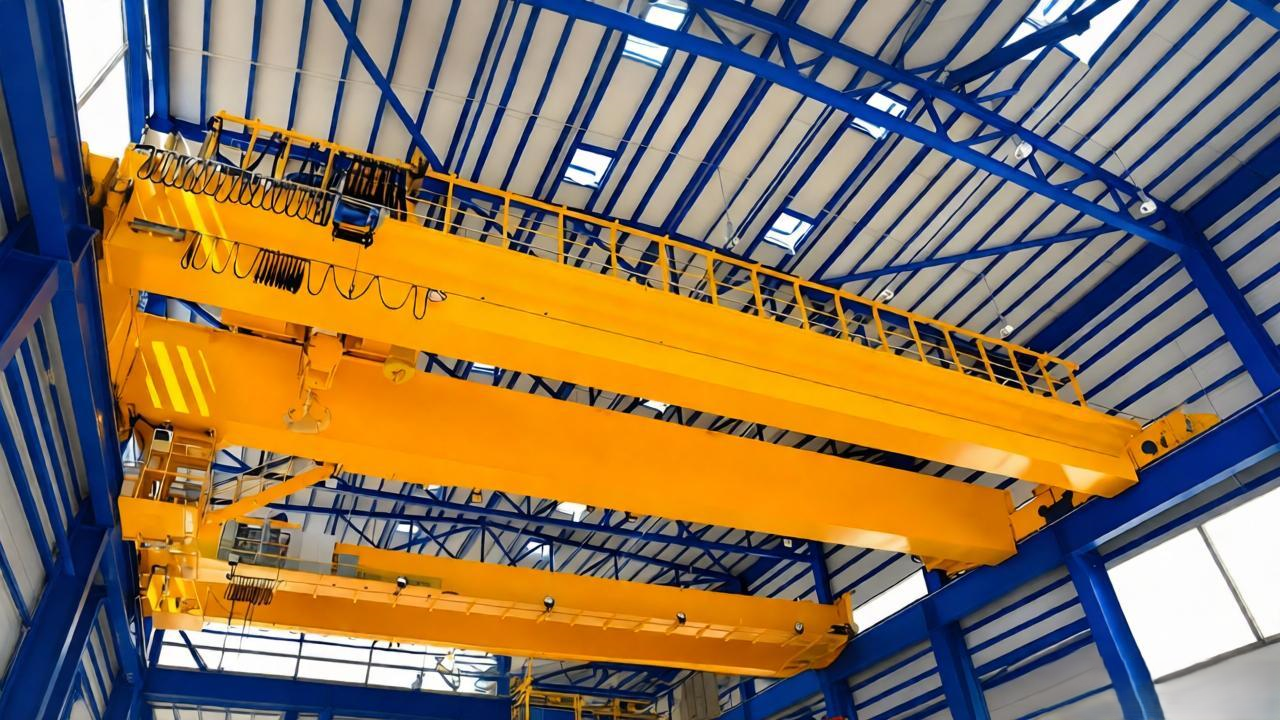
Fully automatic crane control method
Fully automated cranes do not require remote control operation. Basically, the system distributes tasks from the upper management system down to the factory. It relies on PLCs and multiple sensors. The crane can be remotely operated to complete a series of lifting operations. For example, identifying material location, grabbing goods, transferring and moving them, lowering materials, and then returning to the initial standby position—a complete continuous lifting process. Operation commands are sourced from MES/WMS or the central control interface.
The fully automatic crane’s local control panel can switch between manual and semi-automatic modes. If an alarm or malfunction occurs, the troubleshooting results are automatically uploaded to the management system. You can view the fault location online. Simultaneously switch to manual or semi-automatic mode. This allows for quick repairs.For routine, repetitive lifting tasks, fully automatic mode is generally used.
Application scenarios differences
Semi-automatic cranes are better suited for complex and variable working environments.
If your workshop needs to lift various types of goods, or doesn’t have fixed placement or lifting locations, in addition to regular lifting work, you also need to perform non-repetitive and non-standard tasks. In these situations, the advantages of semi-automatic cranes become very apparent.
For example, they are well-suited for upgrading old factories, small to medium-sized warehouses, and small processing workshops. They also don’t require significant modifications to the factory layout or tracks. Upgrading the electrical control system and adding other auxiliary functions is all that’s needed.
Fully automated cranes are suitable for workshops with high-volume, repetitive, and standardized processes. The goods must be uniformly shaped and standardized. Materials must be neatly stacked, and precise positioning is required. Continuous production or operation is required throughout the day. Fully automated cranes can fully leverage their advantages. If your factory is a non-ferrous metal smelter, a coking plant material storage area, a foundry, a waste incineration power plant, or a cement plant, in factories with high temperatures, high dust levels, and hazardous conditions, fully automated cranes are ideal.
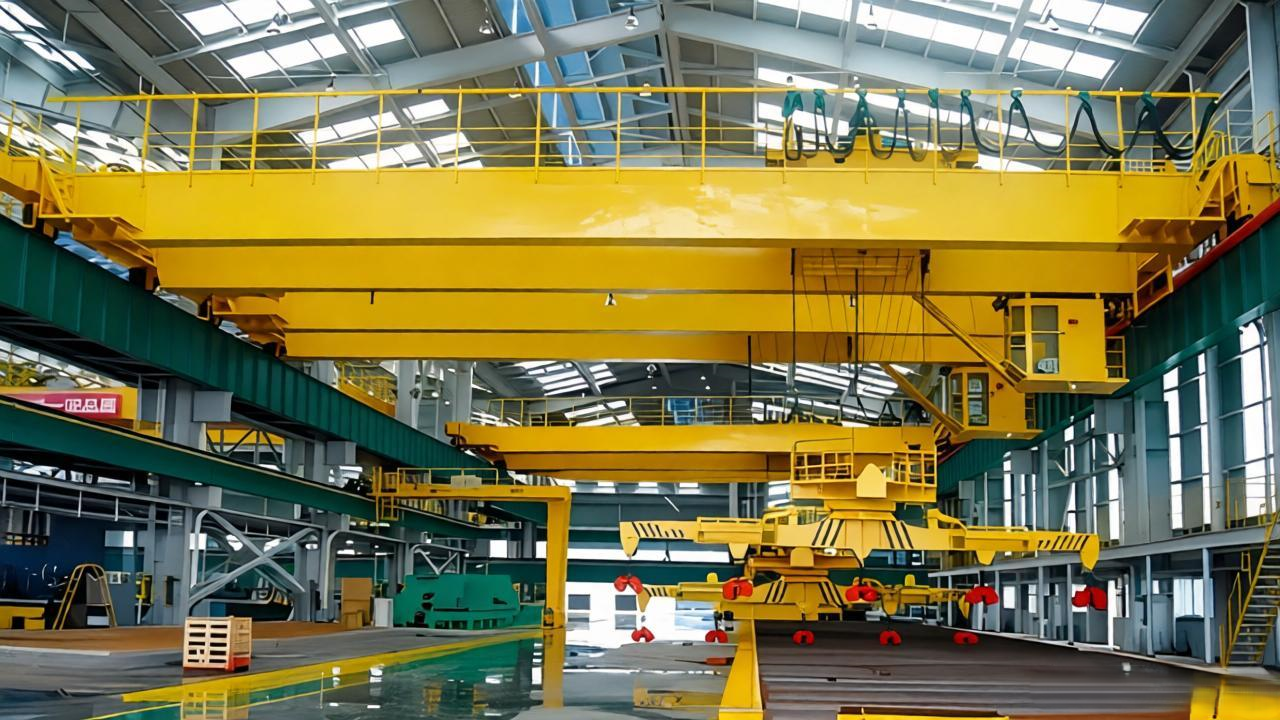
Features differences
| Item | Semi‑Automatic Crane | Fully‑Automatic Crane |
| Operational stability | The operator determines the work efficiency. | High consistency for repeated tasks, stable cycle time |
| Flexibility | Strong, good for non‑standard and randomly‑placed loads | Weak; manual mode required beyond standard conditions |
| Fault tolerance | High fault tolerance, low installation‑precision requirement | More stringent requirements for on-site conditions and signals.Low fault tolerance rate. |
| Continuous operation | Limited by operator fatigue, cannot run non‑stop | Supports long‑term round‑the‑clock operation |
Cost differences
| Item | Semi‑Automatic Crane | Fully‑Automatic Crane |
| Installation cost | Lower purchase price, short commissioning time, low site‑modification cost | Program debugging costs are high. High infrastructure requirements. |
| Old‑site Retrofit Cost
| Cost‑effective, mainly upgrade electric control | Very expensive, mostly recommend new‑unit replacement |
| Daily Maintenance Cost
| Ordinary mechanical‑part maintenance, medium expense | Mechanical maintenance + sensor calibration & software update, higher expense |
| Long‑term Labor Cost
| High, need full‑time certified on‑site operators
| Low, fewer on‑site operators; only background‑monitoring staff needed |
Knowing when to Choose:
Choose a semi-automatic crane if
- When the location of materials in your workshop frequently changes.
- When only some lifting operations are repeated in your workshop, and the process is not completely standardized.
- When you want to upgrade your cranes but don’t want to renovate the factory.
- When your budget is too low, or you don’t want to bear the cost of system software.
- When you want to retain operators but need to improve production efficiency.
- When you need to handle both standard and non-standard bulk materials simultaneously, or frequently handle non-standard workpieces.
Choose a fully automatic crane if
- When you need to perform highly repetitive, continuous work around the clock.
- When your work conditions have a fixed workflow.
- When the factory environment is hazardous, toxic, hot, or radioactive, it is unsuitable for human workers.
- When you want to achieve full-process digitalization but do not want two-way data integration.
- When you want to reduce manpower, minimize human error, etc.
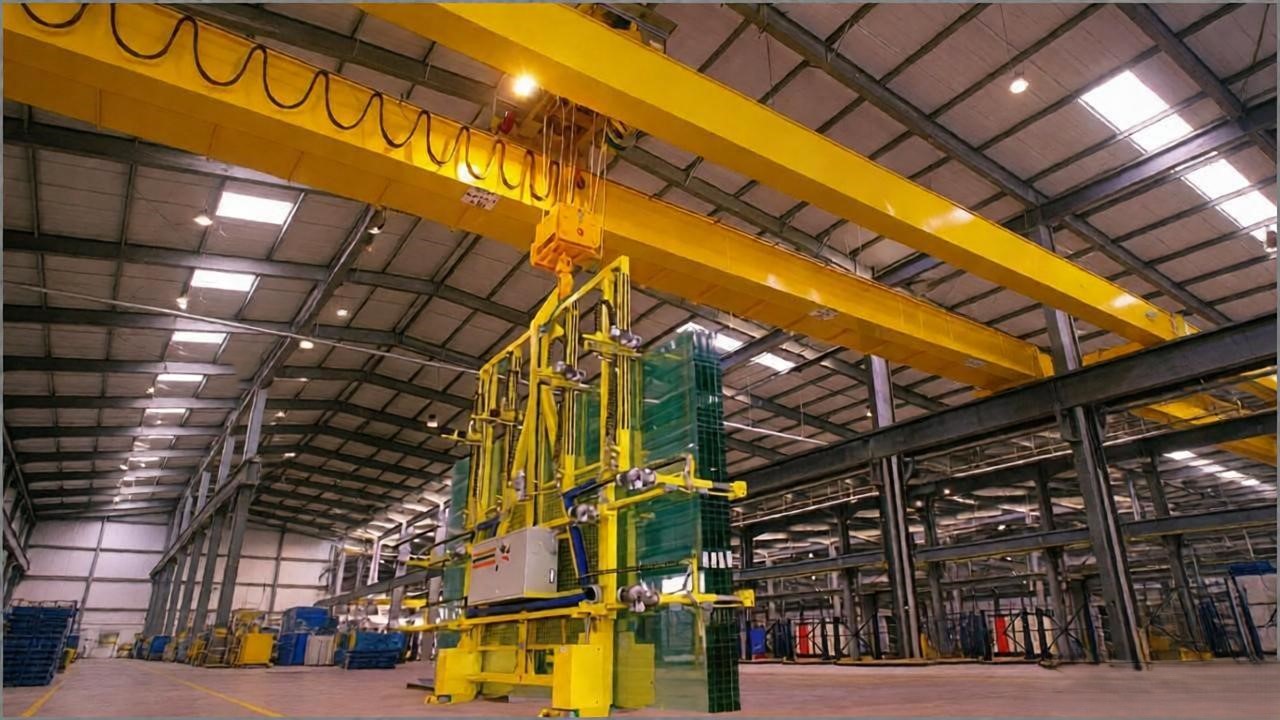
FAQ
Which cranes can be used as fully automated cranes?
| Crane Type | Feasibility for Full Auto |
| Double girder overhead crane | √ Highly feasible |
| Single girder overhead crane | √ Conditional |
| Grab crane | √ Highly feasible |
| Double girder gantry crane | √ Conditional |
| Monorail crane | √ Conditional |
| Single girder gantry crane | Rarely used |
| Jib crane | × |
How long would it take to semi-automate existing bridge cranes?
When you upgrade the bridge crane in an old factory to semi-automatic mode, there is no need to replace the end beams, main beams, trolley, or auxiliary trolley. Only the electrical control system needs modification. Simply add positioning sensors, encoders, and other accessories. This is the most cost-effective method for you. It also has the shortest timeframe, completing the task in 5-10 working days.
How automated cranes work with existing warehouse management systems
When the crane and WMS system are integrated, you only need to list the manual operations required in warehouse management. For example, receiving, issuing, and transferring goods.
Send the logic between these operations to the fully automated crane’s control system.
The system will then send these instructions to the automated crane’s control system.
Upon receiving the instructions, it will automatically complete the tasks of locating materials, grabbing, transferring, unloading, and resetting. The completed data is then transmitted back, and the warehouse is updated.
What kind of building structure is required for a fully automated crane?
Fully automatic cranes place higher demands on your factory building. You need to ensure the factory’s pillars and overall frame are sturdy enough. Because over time, they can become misaligned. The foundation must not be uneven, as this will easily lead to settlement.
For sites with loose soil, the foundation must be reinforced first. Once the foundation settles and becomes misaligned, the tracks will become displaced. This will make it very difficult to repair the fully automatic crane later.
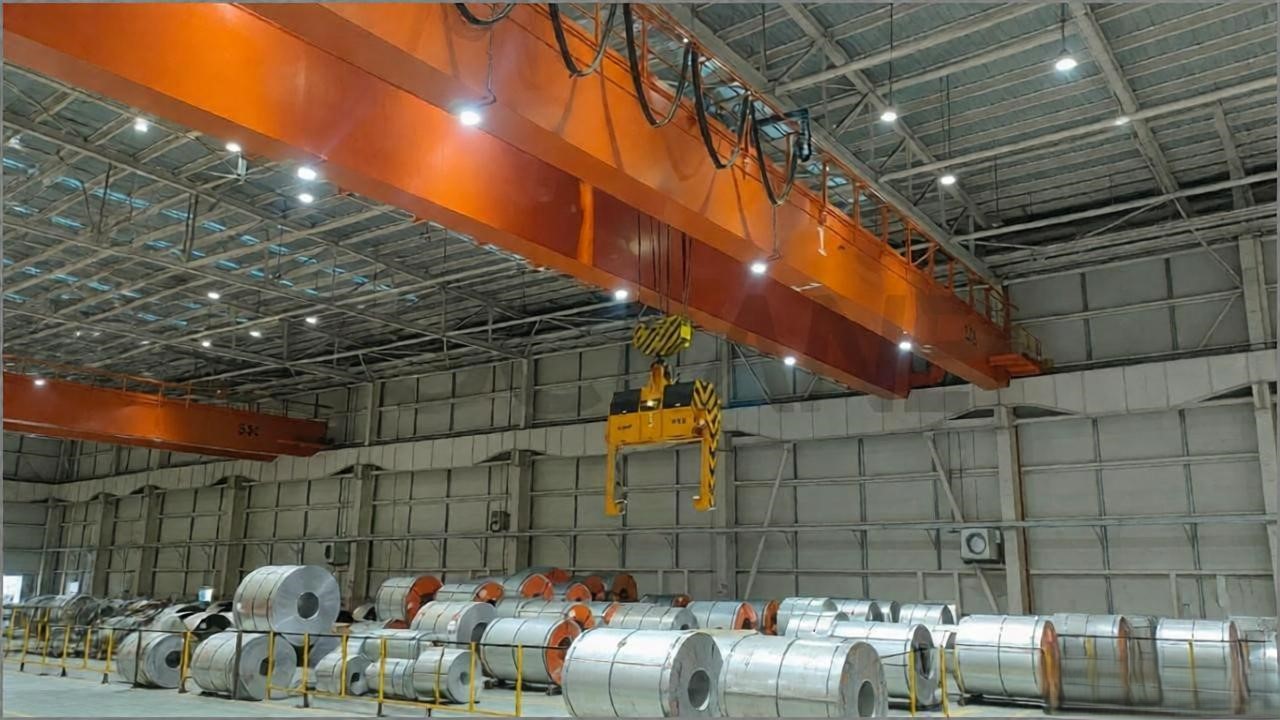
What happens if a sensor fails on an automated crane?
When the sensors on an automated crane malfunction, the equipment won’t know where to stop. The load may sway when the crane starts, stops, accelerates, or decelerates.
It won’t detect obstacles and can’t determine if the actual weight of the cargo is overloaded.
Therefore, you need to immediately stop the machine and replace the sensor parts.
Only after confirming normal operation can fully automated operation be resumed.
Automatic Upgrade of Cranes | Dingya Helps You Improve Efficiency at Low Cost
Dingya offers two types of automation upgrade solutions for bridge cranes: semi-automatic and fully automatic. For existing factory renovations, semi-automatic systems require no replacement of the main beams, end beams, or other steel structures. Only the electrical control system and sensor components need to be upgraded, keeping costs under control. For new factory setups, complete machines can be shipped pre-installed with automation capabilities to perfectly match your production conditions.