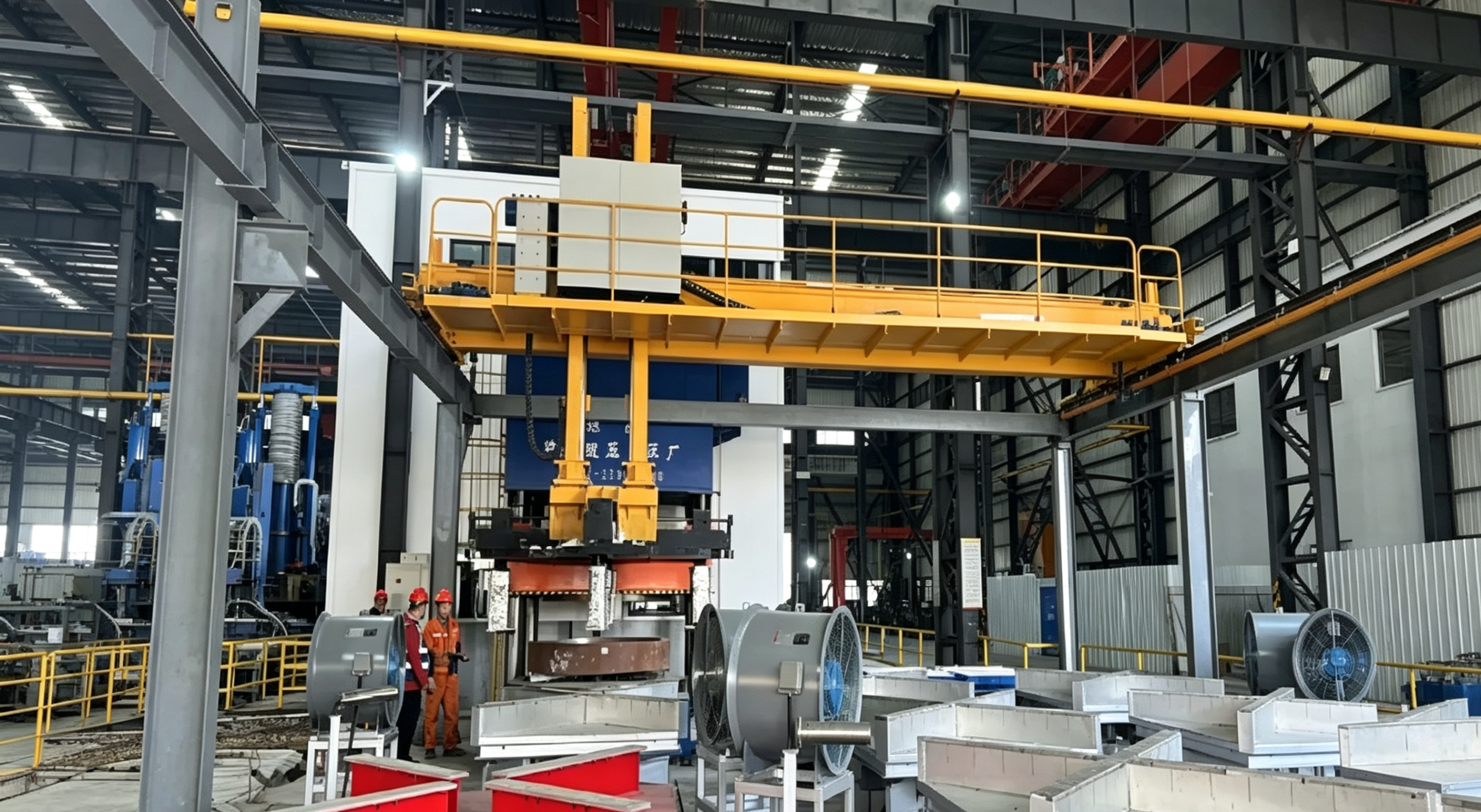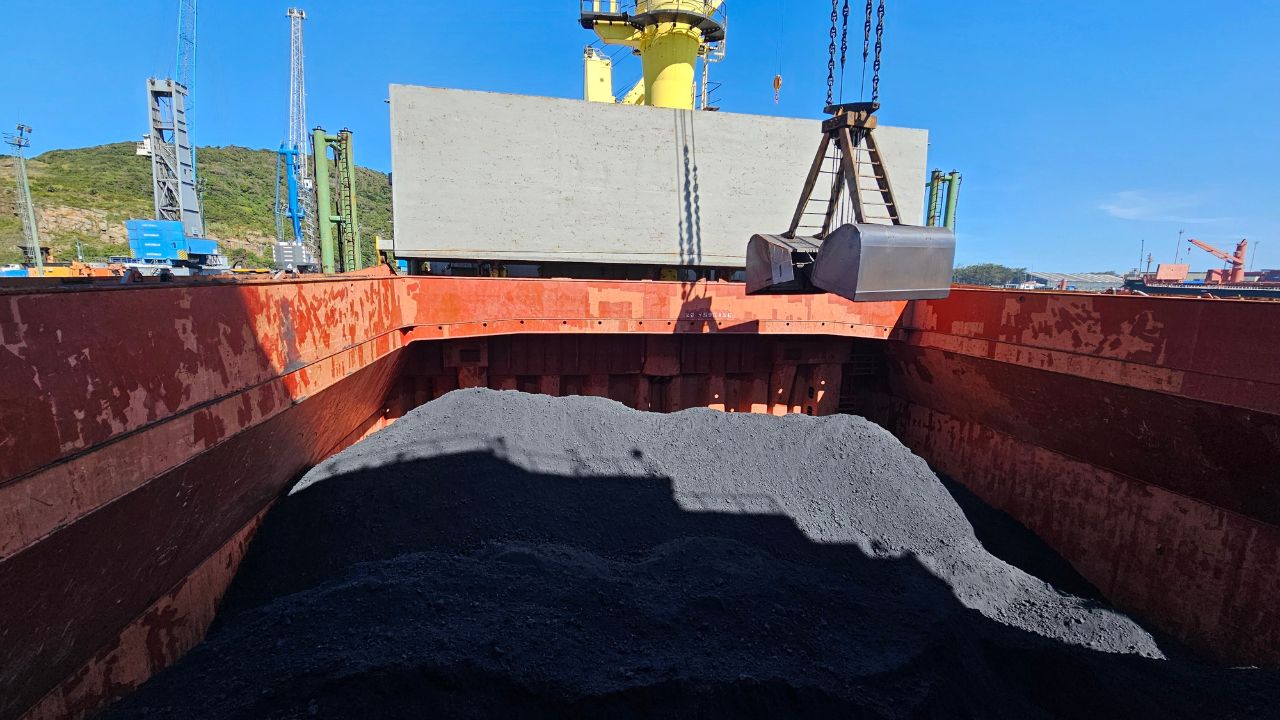
Different types of grab cranes have different workloads and movement methods. If your factory conditions and type are not compatible, it may result in equipment installation failure and frequent downtime for inspections. Only by understanding the types of grab crane applications, working levels, and so on, can we reduce our losses. The following article will help you learn more about the types of grab cranes and how to choose one.
What Is a Grab Crane?
You’re probably used to seeing hook cranes. But some work environments require grab cranes. It’s actually a crane with an opening and closing grab bucket. When the grab bucket opens, it plunges into a sand pile, coal pile, or ore pile and closes the clamps. After hoisting, transport it to another location. Then open the clamps, and the material is dumped out. Grab cranes are better suited for gripping and transporting large quantities of loose material.
How are grab cranes classified?
Grab cranes come in various types; you can categorize them according to their crane structure and rope configuration. Based on their structure, they are divided into grab overhead cranes and grab gantry cranes. Based on rope configuration, they can be divided into: single-rope grab crane, double-rope grab crane, and four-rope grab crane.
Grab Overhead Crane
Grab Bridge EOT Crane is a type of specialized crane. It is a bridge crane used indoors.
Unlike a hook crane, it doesn’t require you to hook the goods for lifting. Grab cranes require no manual intervention and can intelligently and automatically grab bulk objects.
If you see a crane nameplate with a rated load of 20t, do not assume that the grab bucket can only hold 20t of material. In fact, it includes the total weight of the grab bucket and the material. If the grab bucket weighs 3t, then the maximum amount of material it can hold is 17t. The same applies to the rated load of a single-beam crane.
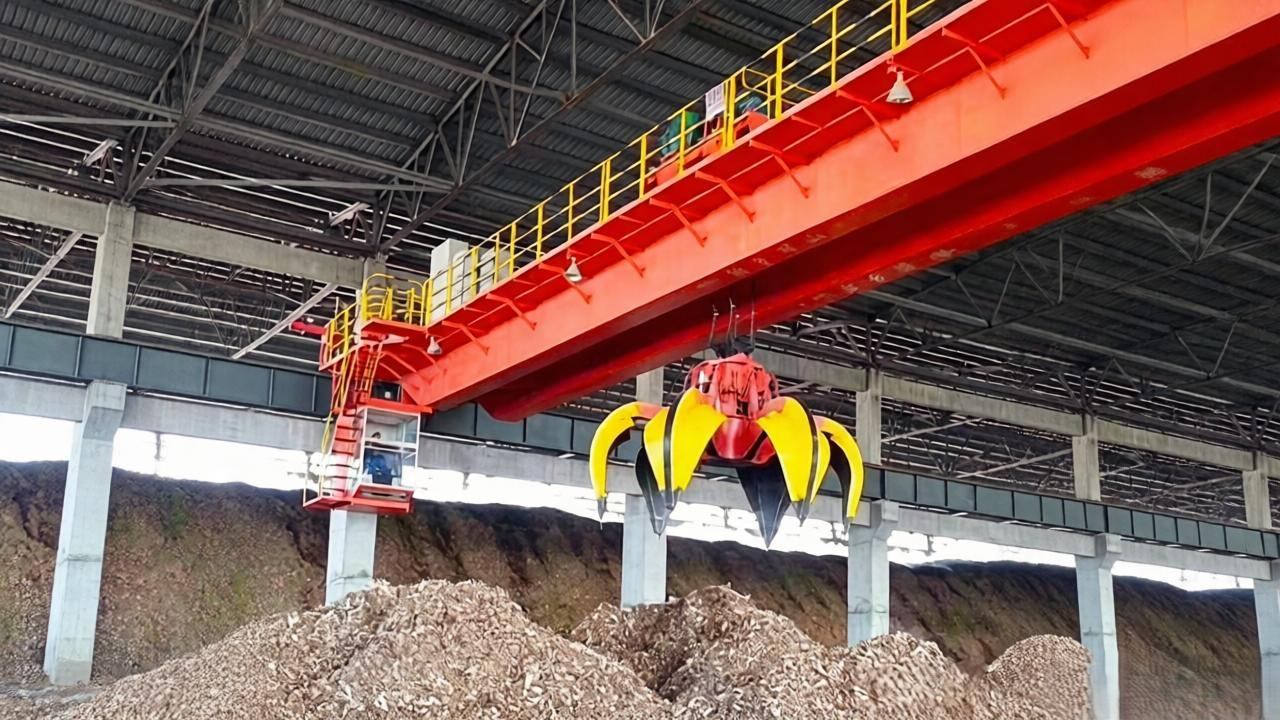
Grab Bucket Overhead Crane can be further divided into two types based on the main beam. It can be further divided into single-beam and double-beam structures.
Single-girder grab overhead cranes
Single-girder grab overhead cranes are suitable for grabbing bulk materials weighing less than 20 tons. They are relatively lightweight. The working class is A3-A4. Suitable for intermittent operation scenarios. The number of times materials are grabbed back and forth per day is not high. If your factory needs to grab bulk materials continuously for 24 hours,
A single-girder crane cannot handle the load. For example, in waste treatment plants and power plants, it would easily accelerate component wear.
Double girder grab overhead crane
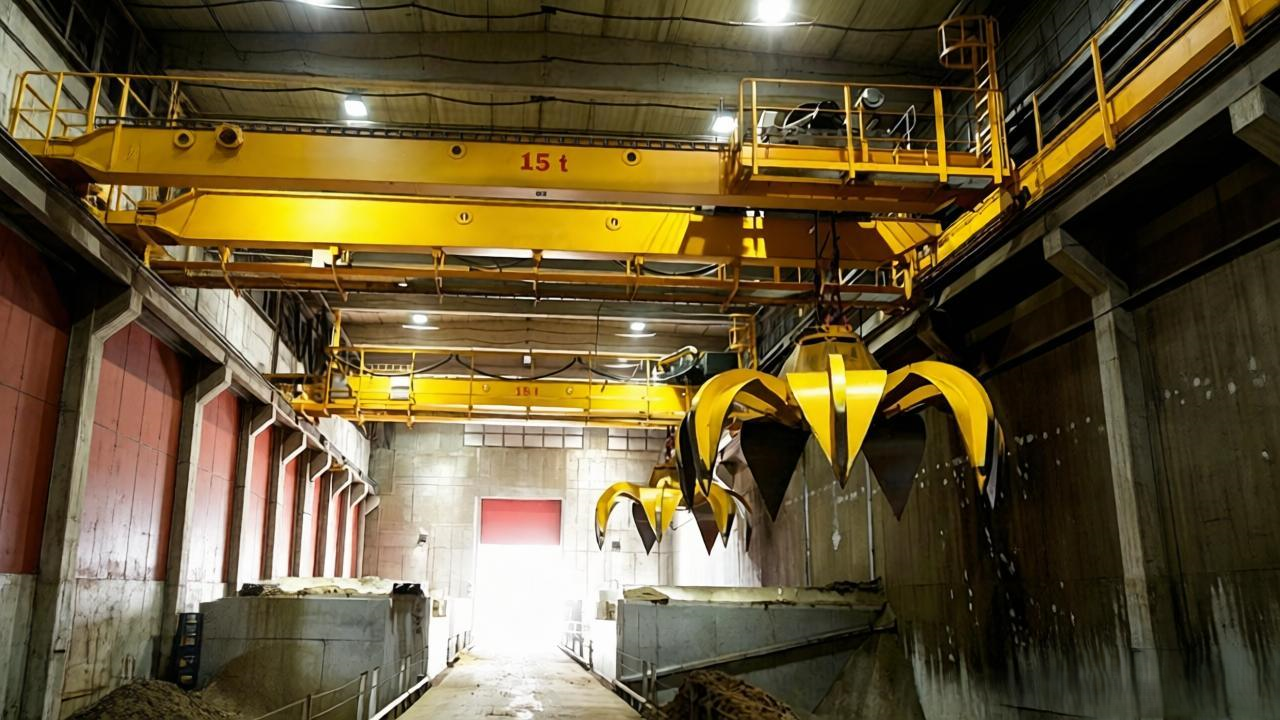
The double girder grab overhead crane can handle a maximum load of 100 tons. A standard hook crane has only one drum. This crane requires two. One drum controls the lifting and lowering of the entire grab bucket. The other drum controls the opening and closing of the grab bucket for material grabbing and unloading. The working class is A5-A6.
It can also reach A7 heavy-duty conditions. Suitable for use in waste incineration plants and cement plants.
Grab Gantry Crane
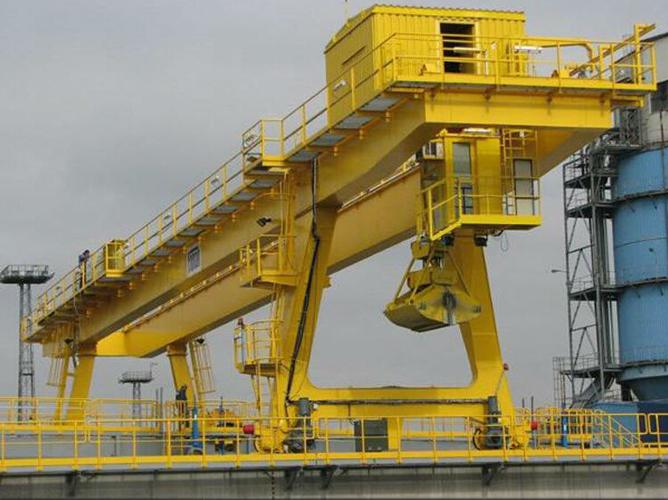
The Grab Bucket Gantry Crane is a dedicated bulk material handling model for gantry cranes. You can use it outdoors. It does not rely on a factory building structure.
It transports goods back and forth on fixed tracks. The rated load is calculated in the same way as that of a grab gantry crane. Types include single-girder grab gantry crane and double-girder grab gantry crane.
Single-girder grab gantry crane
Suitable for handling materials weighing up to 20 tons.Lightweight and low material cost.
More competitive equipment purchase price. If you have a limited budget, this is a good option. However, it is only suitable for small outdoor locations. Such as small-scale sand and gravel yards.Small waste disposal areas, etc.Not suitable for high-intensity working conditions. The working class is A3-A4.
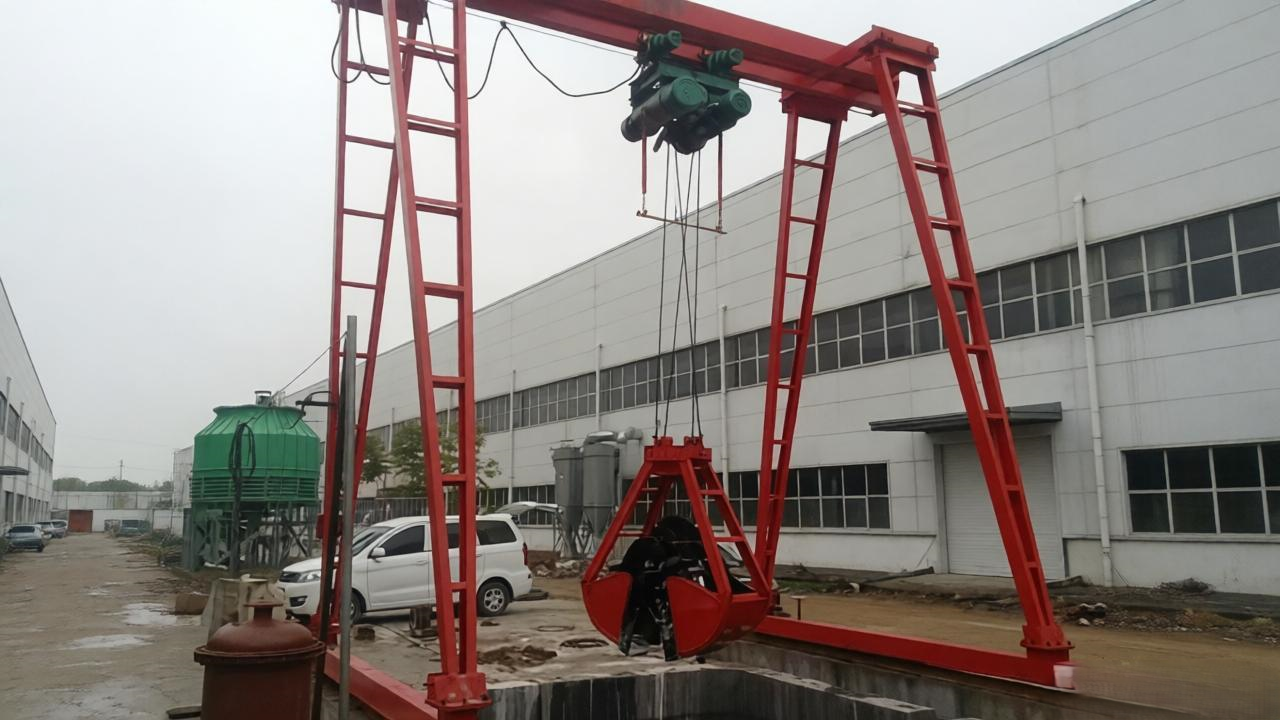
Double-girder grab gantry crane
The double girder grab gantry crane is suitable for conveying materials weighing over 50 tons. It can also be customized to meet your site requirements for even larger tonnages.
Operating class A5-A7.Highly corrosion-resistant and impact-resistant.Able to withstand harsh outdoor environments exposed to wind and rain.
To withstand typhoons.To prevent strong winds from shifting or overturning the entire machine. In coastal areas, rail clamps, wind-resistant anchoring devices, and anemometers are installed at the bottom of the outriggers. The rail clamps and wind-resistant anchoring devices firmly lock the crane to the ground. The anemometer monitors the wind speed. An alarm will sound if the wind speed exceeds the limit.
Single-Rope Grab Crane
The Single-Rope Grab Crane requires only a single steel cable to lift and lower materials.
It features grab opening and closing functions. The grab has an internal spring and locking slide. It can open and close autonomously. However, this action is only activated when the grab is lowered to the ground or the surface of the material.
Double-Rope Grab Crane
A Double-Rope Grab Crane refers to a crane with one support rope and one opening/closing rope. The support rope suspends the entire grab. The other rope specifically controls the opening and closing of the grab. Its key difference from a single-rope grab crane lies in its ability to open and close the grab in mid-air. This allows for flexible control of the grab. It can adapt to high-frequency operating scenarios. Furthermore, spare parts are readily available. There are fewer potential points of failure.
Four-Rope Grab Crane
The Four-Rope Grab Crane comes with four ropes. Two support ropes and two opening/closing ropes. It is safer than the double-rope grab crane. Suitable for ultra-large material handling operations.For example, port bulk cargo terminals, thermal power plants, and large open-pit coal yards.
If you require high throughput, high frequency, and high safety, you can choose the Four Rope Grab crane. However, it is not recommended if you have a limited budget, as the cost is very high.
How to Choose the Right Type of Grab Crane?
Please confirm whether your workplace is indoors or outdoors.
- If you are handling materials inside a factory, a grab bucket gantry crane is recommended. For loads under 20 t, use a single-girder crane. For loads over 20 t, use a double-girder crane.
- If your work is outdoors, a grab bucket gantry crane is recommended. Again, 20t is the dividing line. For loads over 20 t, with a working class higher than A4, or for high-capacity operations, a double-girder grab bucket gantry crane is preferred. For loads under 20 tons with a lower working class, a single-girder grab bucket gantry crane is recommended.
Choose the number of wire ropes based on your work frequency.
- If you don’t work frequently or if you want to upgrade older equipment but don’t have a large budget, you can choose a single-rope grab crane.
- If you need to release materials in the air and the operation frequency is moderate, you can switch to a dual-rope grab crane.
- If you need to work 24 hours a day and the entire lifting process is very stable, you can choose a 4-rope grab crane.
FAQ
Can grab cranes be customized to fit an existing workshop?
Yes, but we need to measure the existing factory’s load-bearing capacity, clearance height, span, operating distance, and power supply conditions. If the measurement results meet the construction requirements, a grab crane can be customized. However, it’s not possible in the following situations:
- If the workshop’s load-bearing capacity is too weak, it’s impossible to build a crane.
- When the workshop’s ceiling height is too low, leaving no space for the grab bucket to open.
Can a single grab crane lift different materials?
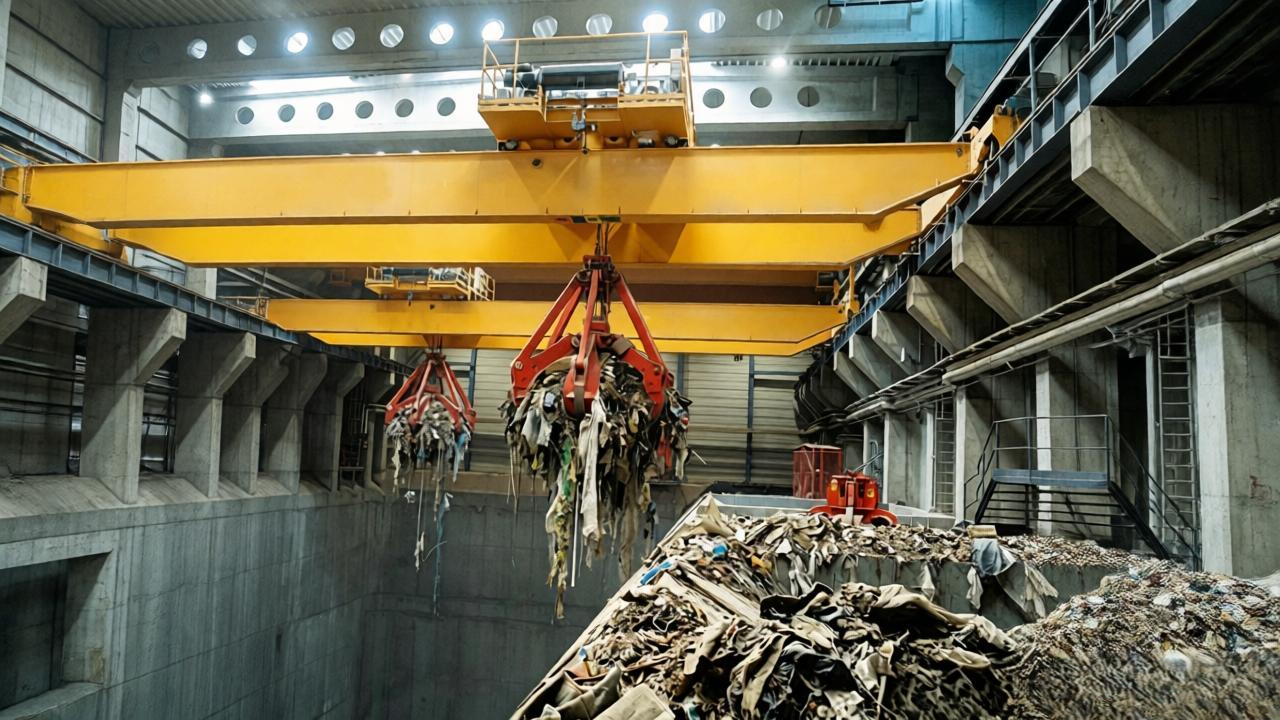
Yes, a grab crane can handle a variety of materials; you just need to choose a better type of grab. For example, double-lobed clamshell grab buckets are suitable for handling small, bulk materials such as coal, sand, and grain. For construction waste, large stones, household waste, and large particles, multi-lobed grab buckets are preferable.
How do I calculate the required grab bucket capacity?
You should never choose a grab bucket based on your gut feeling. A bucket that is too small will reduce production efficiency. A bucket that is too large will not fit the crane. You can calculate the appropriate grab bucket volume based on the density of the bulk material and your production needs.
The calculation formula is as follows: Grab bucket volume = Weight of material per bucket ÷ Bulk density of material ÷ Filling factor. The filling factor for small particles is 0.8-0.9, and the filling factor for large particles is 0.5-0.7.
For example, processing 100 tons of sand and gravel per hour. One hour actually involves 10 cycles. The bulk density of the sand and gravel is 1.5 tons/cubic meter. The filling coefficient is 0.8.The weight of material per bucket = 100 ÷ 10 ÷ 1.5 ÷ 0.8 ≈ 8.3 m³
What safety devices are typically installed on grab cranes?
Safety features for grab cranes are optional extras. Each one requires additional cost.
It is recommended that you choose these features at your discretion. Safety devices include the following:
- Overload limiter
- Load indicator
- Lifting upper and lower limits
- Trolley and crane travel limits
- Buffer
- Collision avoidance device
- Windproof safety device
- Broken rope protection device
- Grab bucket emergency interlocking device
- Safety electrical devices
Can grab cranes be integrated with automated material handling systems?
Yes. Grab cranes can be integrated into automated material handling systems. You need to complete the safety settings. And the working area must be free of obstructions.
- If you have a limited budget, you can choose the semi-automatic mode.
- If you have a higher budget, you can choose the fully automatic intelligent unmanned mode.
Dingya Crane|CE‑Compliant Overhead, Gantry & Grab Crane Supplier
Dingya is a professional crane manufacturer. We provide bridge cranes, gantry cranes, and grab cranes that meet CE-ISO standards. We offer customized lifting solutions for factories, ports, and bulk material yards. Our main focus is on safe, energy-saving, and stable performance through variable frequency technology. We provide full-chain support from design and production to after-sales service. Welcome to obtain a reliable lifting equipment quote.