If you are unfamiliar with festoon cable systems and their various types, you’ve come to the right place. This guide will explain the components and types of Festoon Cable Systems to help you better understand them. Finally, we’ll also teach you how to choose the right one.
What Is a Festoon Cable System?
A festoon cable system is designed to supply power and transmit control signals to moving equipment while keeping cables safely organized. As the machine travels, the cable trolleys move smoothly along the track, allowing the cables to extend and retract. This ensures a stable power supply, protects your cables from mechanical damage, and improves the overall safety and reliability of the equipment. Because of its durable design, a festoon cable system is suitable for both indoor and outdoor industrial applications.
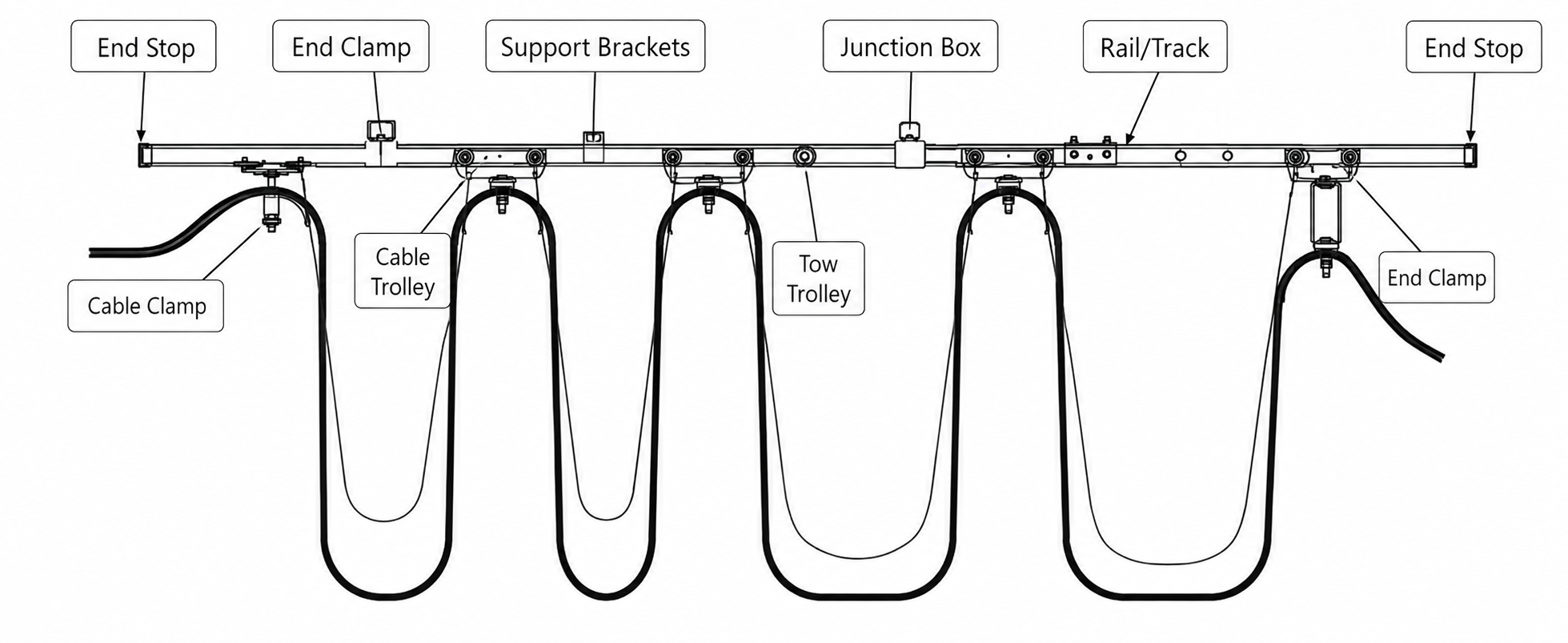
Main Components of Festoon Cable System
Rail/Track
The track supports the cables, and all cable trolleys travel along it. It is made of steel or galvanized sheet metal to ensure structural strength while preventing rust.
During installation, you must ensure the track remains level and straight; otherwise, cable wear and noise will increase, and the trolleys will not operate smoothly.
Cable Trolley
Each cable is secured to a cable trolley. When the crane is moving, the trolley will roll along the track, and the tow trolley will follow.
Cable trolleys provide 4 key functions for you.
- Supports the weight of the cables.
- Keeps cables tidy.
- Prevents cables from dragging on the ground.
- Reduces cable bending and wear.
Without a cable trolley, it is highly susceptible to damage, which can lead to electrical leakage.
Tow Trolley
It can be called a Leading Trolley/Drive Trolley/Tow Carriage. Installed at the front end of the system. It connects to the crane trolley, hoist, or other moving equipment.
Working steps:
When the crane travels, the tow trolley pulls the entire festoon system along the track, causing each cable trolley to move in sequence. This keeps the cables properly supported while allowing them to extend and retract smoothly during operation.
Cable Clamp
Cable clamps hold your cables tight on cable trolleys. They prevent cables from moving or slipping and protect the outer sheath of the cable. They also keep your work area neat and safer. High-quality cable clamps keep cables securely in place, reducing wear and extending their service life during long-term operation.
End Clamp
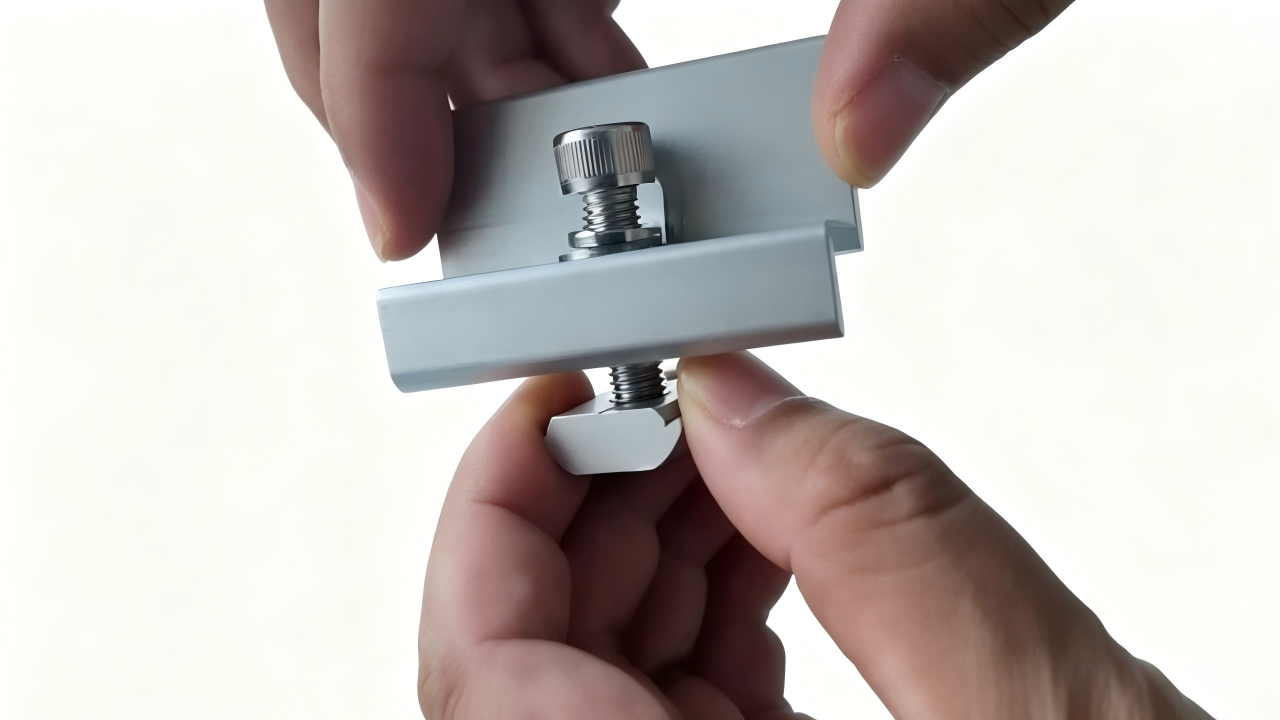
You can install the end clamp at both ends of the rail. This accessory securely locks the rail and its matching cable, keeping your whole track system stable. Prevents rail movement and cable displacement during operation.
End Stop
The end stop is installed at the end of the track. It provides multiple safety functions to ensure safe operation. Such as:
- Prevents the trolley from sliding off the track, avoiding jumping off the track.
- Prevents collisions and protects various components of the trolley.
- Reduces the risk of equipment failure at the source.
Junction Box
If you are setting up a system with multiple control loops, it is standard practice to install junction boxes. They help organize cable connections and properly protect electrical terminals, making future maintenance and line troubleshooting much easier.
Support Brackets
Support brackets secure the rail to the crane’s main girder or other structural steel components. When selecting and arranging these brackets, three key factors must be considered:
- Rail alignment.
- Installation spacing between brackets.
- Load distribution.
As long as the support brackets are planned properly. This can effectively reduce the stress and deformation of the track. This ensures smooth trolley movement along the rail throughout the entire travel without sticking.
Types of Festoon Cable Systems
They can generally be classified into five types: C-Rail festoon cable system, I-Beam Festoon Cable System, wire rope festoon cable system, flat festoon cable system, and round festoon cable system.
C-Rail Festoon Cable System
C-Rail festoon cable systems are commonly used on:
- Single-girder overhead cranes.
- Double-girder overhead cranes.
- European cranes.
- Workstation cranes.
- Electric hoists.
If you require a reliable and cost-effective method for managing power and control cables, this system is often a good choice. Its enclosed C-rail design ensures smooth trolley running, while effectively protecting the trolleys from dust and accidental impact.
Compared to other systems, this system is easy to install and requires very little maintenance.
Suitable for most indoor industrial environments.
Whether for new crane installations or the replacement of existing cable management systems.
I-Beam Festoon Cable System
Runs under high loads or in harsh environments. An I-beam trolley cable system is usually your highly recommended choice . Standard I-beams can support larger cable trolleys and heavier cables. This design offers superior strength and stability.
Suitable for long travel distances and continuous operation. Such as single girder gantry cranes, double girder gantry cranes, rail-mounted gantry cranes, rubber-tired gantry cranes, goliath cranes, and other heavy-duty lifting equipment.
Although installation costs may be slightly higher. However, its outstanding durability and load-bearing capacity are excellent.
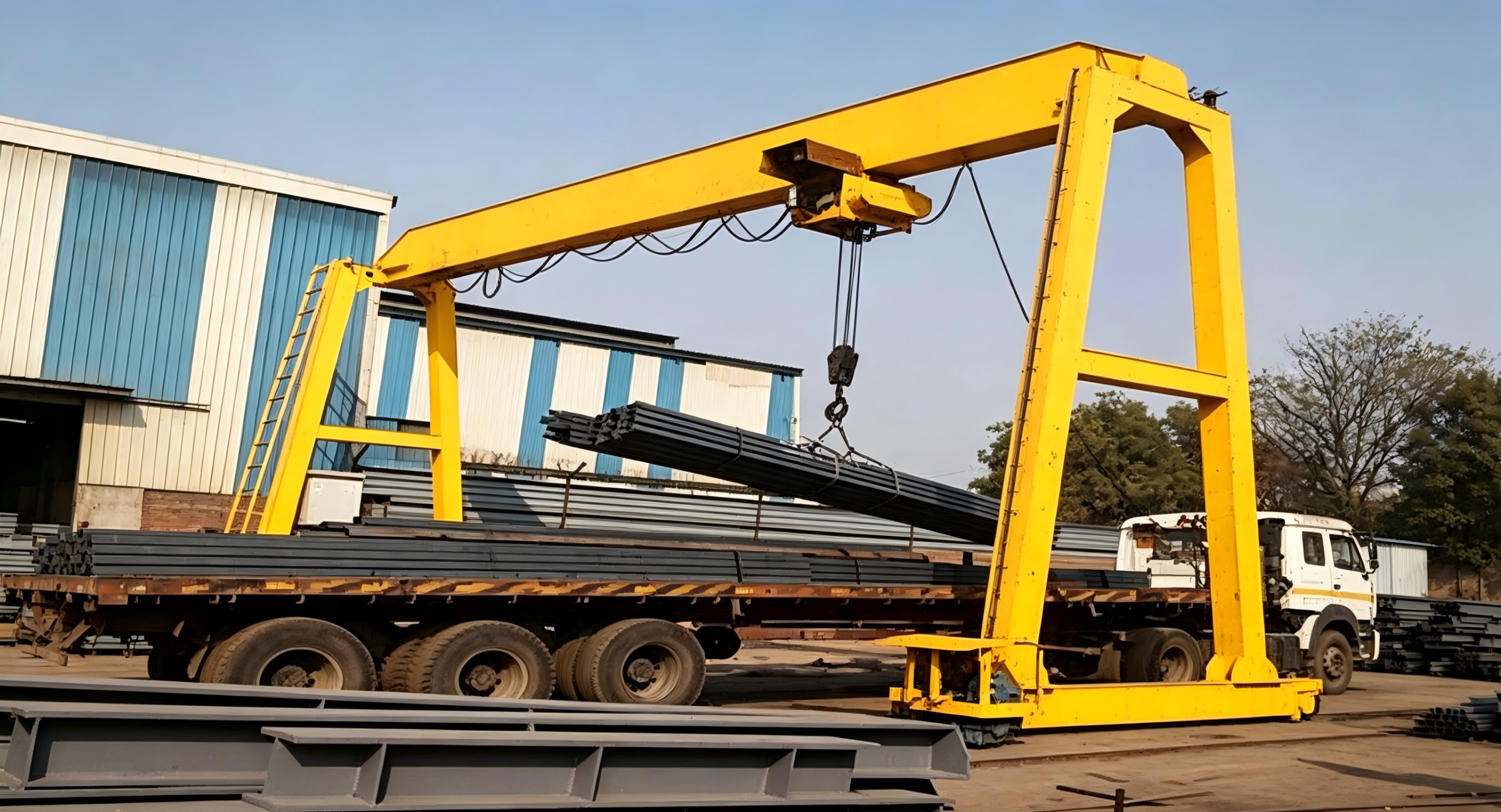
Wire Rope Festoon Cable System
The wire rope festoon cable system is designed for applications where installing rigid tracks (such as steel rails) is not feasible. It does not utilize steel rails. Instead, cable trolleys travel along a wire rope. If you need a solution suitable for temporary equipment or light-load conditions, this system is an good choice.
It is lightweight, highly flexible, and easy to install, making it especially suitable for long-distance applications. However, due to the inherent flexibility of the wire rope compared to rail, it is generally not recommended for high-speed or heavy-duty crane operations. It is best suited for light industrial equipment and projects with low operating requirements.
Flat Festoon Cable System
The flat festoon cable system features flat conductors and abrasion-resistant protective sheaths. The design allows for repeated bending and flexing, helping you save installation space. Even in narrow or space-constrained work areas, you can maintain a tidy setup. A neat and orderly cable layout without tangles also helps avoid overlapping or sagging. Flat festoon cable systems are widely used for electric wire rope hoists, low headroom hoists, explosion proof hoists, and clean room hoists
Round Festoon Cable System
Round festoon cable systems are commonly used for cranes and mobile industrial equipment.
The round cables supplied with the system offer excellent flexibility, enabling them to adapt to your complex working environment. They are designed for long-travel back-and-forth runs, offering great multiple functionality and ease of installation.
Which Festoon Cable System Is Right for You?
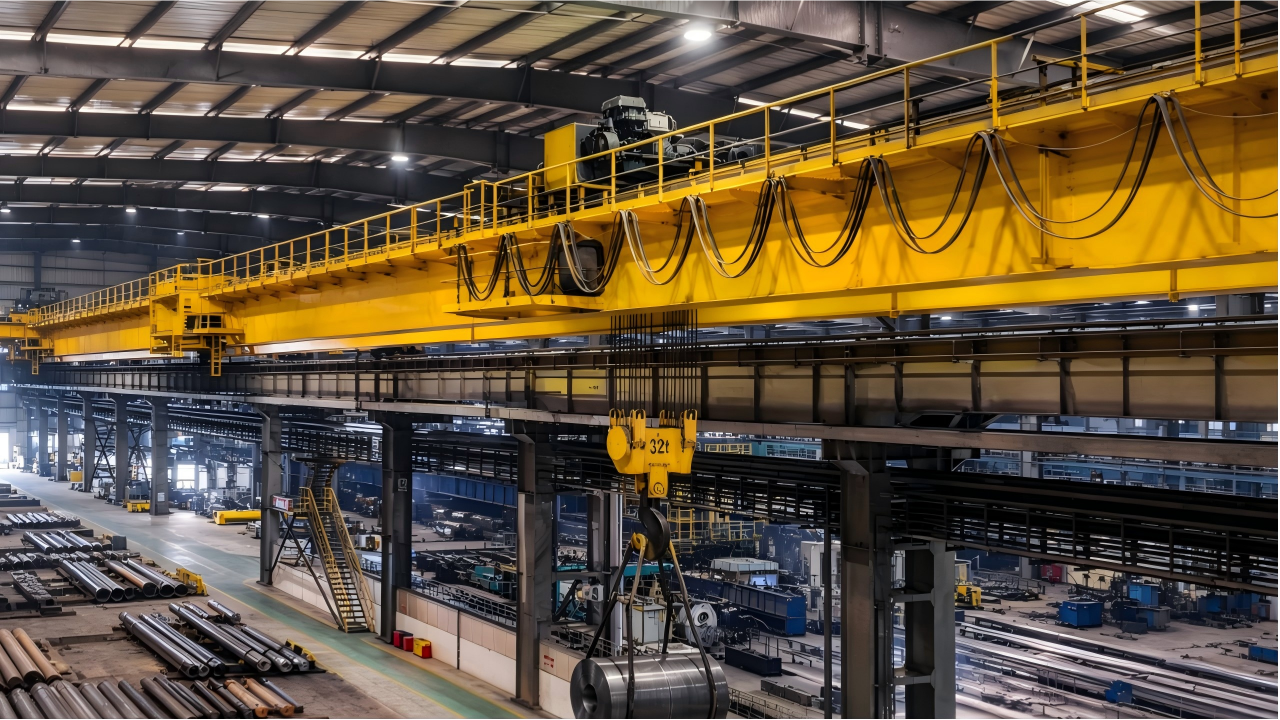
Industrial festoon cable systems are widely used in overhead cranes, gantry cranes, electric hoists, steel mills, shipyards, and automated production lines. You can select the appropriate type based on the table below.
| Your Application | Travel Distance | Cable Load | Environment | Recommended Solution |
| Single Girder Overhead Crane | Short to Medium | Light | Indoor | C-Rail Festoon Cable System |
| Double Girder Overhead Crane | Medium | Medium | Indoor | C-Rail Festoon Cable System |
| Electric Hoist | Short | Light | Indoor | Flat Cable Festoon System |
| Gantry Crane | Long | Heavy | Outdoor | I-Beam Festoon Cable System |
| Steel Mill Crane | Long | Heavy | High Temperature | I-Beam Festoon System |
| Shipyard Crane | Long | Heavy | Corrosive Environment | I-Beam Festoon System |
| Temporary Equipment | Short | Light | Indoor/Outdoor | Wire Rope Festoon Cable System |
| Automated Production Line | Short to Medium | Light | Indoor | Flat Festoon Cable System |
| Retrofitting an Existing System with Round Cables | Varies | Medium | Depends on Site | Round Festoon Cable System |
FAQ
What certifications should you look for when choosing a festoon cable system supplier?
When we choose suppliers, you should look for internationally recognized certifications such as ISO 9001, CE, RoHS & REACH, and IEC Standard Certification. You should also consider manufacturing experience, quality control processes, customization capabilities, and after-sales technical support rather than focusing on price alone.
How can you extend the service life of your festoon cable system?
You can extend the life of your system by keeping the track clean, inspecting cable trolleys regularly, replacing worn components promptly, and ensuring cables are properly supported without excessive tension. Regular preventive maintenance reduces unexpected failures and lowers your overall costs.
How often should you inspect your festoon cable system?
Regular inspections help prevent unexpected downtime and extend the service life of your equipment.
For normal industrial applications, you should visually inspect the system every month.
A more detailed inspection should be conducted every six to twelve months, with a focus on cable wear, trolley operation, fasteners, and track condition.
How do you know when your festoon cable system needs to be replaced?
If you notice frequent cable failures, unsteady trolley movement, or a need for repeated repairs, then replacing the entire system may be more cost-effective than replacing individual components. However, in harsh environments, replacement may be required sooner.
How to Install a Festoon Cable System?
The installation of the festoon cable systems includes: installing the rail, support brackets, cable trolleys, securing the cables with clamps, connecting the power supply, and finally testing the entire system. Proper installation ensures smooth trolley movement, reliable power transmission, and long-term operating safety.
DingYa helps you optimize your production processes
If you are planning a crane system upgrade or wish to learn how cable festoon systems can enhance production efficiency, please feel free to contact us; we also invite you to explore our product range and comprehensive one-stop services.
DingYa specializes in crane festoon cable systems and provides complete cable management solutions for overhead cranes, gantry cranes, hoists, and industrial automation equipment.